


This search combines search strings from the content search (i.e. "Full Text", "Author", "Title", "Abstract", or "Keywords") with "Article Type" and "Publication Date Range" using the AND operator.
Beilstein J. Nanotechnol. 2025, 16, 2199–2206, doi:10.3762/bjnano.16.152
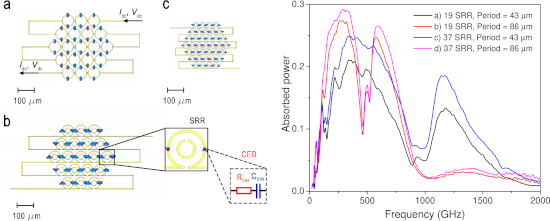
Figure 1: Schematic layout of the investigated metamaterial arrays. (a) 19-element array of single-ring anten...
Figure 2: Amplitude–frequency characteristics of the metamaterial receiver. (a) 19-element array of single-ri...
Figure 3: Top: AFC of the 19 single-ring antenna metamaterial for different geometric scaling factors. (a, bl...
Figure 4: The amplitude–frequency characteristics of the 37-element array of SRR-based metamaterial for diffe...
Figure 5: Dependence of the absorbed power on the number of elements in the SRR array.
Beilstein J. Nanotechnol. 2022, 13, 865–872, doi:10.3762/bjnano.13.77
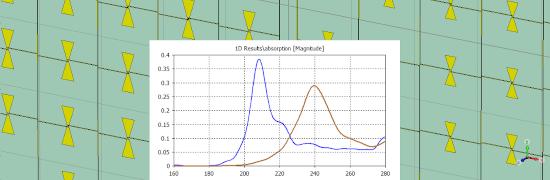
Figure 1: The front part and the constriction of the back-to-back horn of the LSPE-SWIPE receiving system [3] us...
Figure 2: The mode composition of the electromagnetic field in the constriction of a bidirectional horn as a ...
Figure 3: Receiving system of the LSPE-SWIPE145 GHz main channel. a) A quarter of receiving cells matrix on t...
Figure 4: Frequency response of the LSPE-SWIPE 145 GHz main frequency channel.
Figure 5: a) Receiving cell array based on bow-tie antennas; half of the 7 mm plate on the left are 210 GHz a...
Figure 6: Frequency response of a matrix of receiving cells based on bow-tie antennas for 210 GHz and 240 GHz...
Figure 7: NEP estimations for the 145 GHz channel with 11 pW power load. Dashed curves are for 44 SINS CEBs; ...
Figure 8: NEP estimations for the 210 GHz channel with 12.4 pW power load. Dashed curves are for 44 SINS CEBs...
Figure 9: NEP estimations for the 240 GHz channel with 16 pW power load. Dashed curves are for 44 SINS CEBs; ...



