


This search combines search strings from the content search (i.e. "Full Text", "Author", "Title", "Abstract", or "Keywords") with "Article Type" and "Publication Date Range" using the AND operator.
Beilstein J. Nanotechnol. 2025, 16, 1557–1566, doi:10.3762/bjnano.16.110
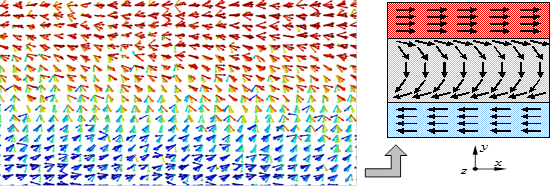
Figure 1: Appearance of a cobalt fcc crystallite (500 atoms) together with the orientation of atomic spins at...
Figure 2: Variation of magnetic energy (a) and magnetization modulus (b) of a cobalt fcc crystallite (500 ato...
Figure 3: Dependences of the deviation of the relative normalized magnetic energy (a) and magnetization modul...
Figure 4: Variation of the magnetic energy of cobalt (fcc) normalized by the number of atoms in the system fo...
Figure 5: Variation of the magnetization modulus of cobalt (fcc) normalized by the number of atoms in the sys...
Figure 6: Variation of magnetization vector components (in absolute values) Mα,α = {x,y,z} as a function of c...
Figure 7: Formation of Neel domain walls in a cobalt nanofilm after the relaxation stage.
Figure 8: Variation of cobalt magnetic energy as a function of nanofilm thickness measured in crystalline lay...
Beilstein J. Nanotechnol. 2023, 14, 23–33, doi:10.3762/bjnano.14.3
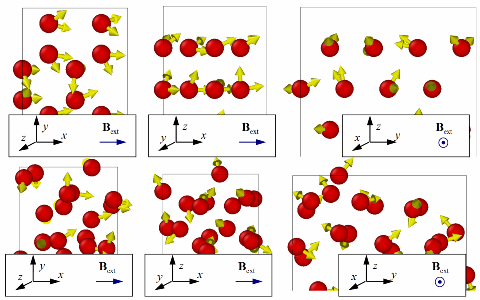
Figure 1: Problem statement for the complex study of cobalt and niobium heterostructures. The sketch of the N...
Figure 2: Variation of the average value of the crystal lattice ideality parameter in horizontal layers of a ...
Figure 3: Multilayer nanocomposite of niobium and cobalt (a) formed in a numerical experiment during depositi...
Figure 4: Spatial distribution of cobalt atom spins for ideal crystal hexagonal close-packed lattice (a), (b)...
Figure 5: Changes in spin temperature under a constant external magnetic field of 1.0 T for ideal hexagonally...
Figure 6: Changes in the magnetization vector modulus under a constant external magnetic field with an induct...



