Search results
Search for "Fe" in Full Text gives 491 result(s) in Beilstein Journal of Nanotechnology. Showing first 200.
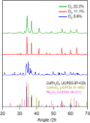
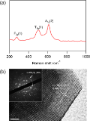
Oxidative atmosphere-driven formation of single-phase spinel CuRh2O4 nanofibers for alkaline water oxidation
Beilstein J. Nanotechnol. 2026, 17, 737–743, doi:10.3762/bjnano.17.50
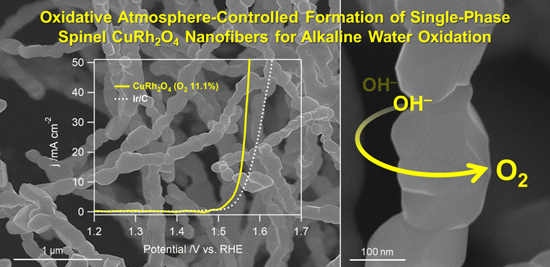
- characterization Morphology and elemental composition of the synthesized nanomaterials were examined using field-emission scanning electron microscopy (FE-SEM; JEOL JSM-6700F) and high-resolution transmission electron microscopy (HRTEM; JEOL JEM-2100F). Surface chemical states and crystallographic structures were




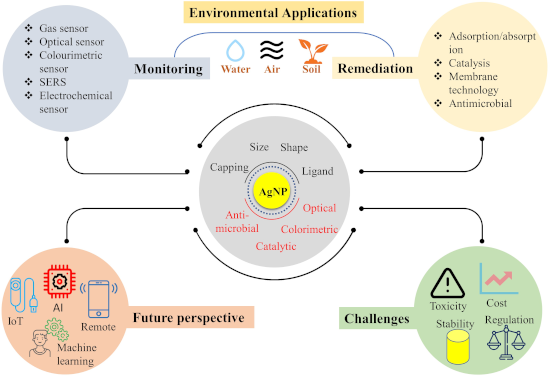
Environmental applications of silver nanoparticles: state-of-the-art review and emerging trends
Beilstein J. Nanotechnol. 2026, 17, 697–736, doi:10.3762/bjnano.17.49


Laser–material interactions in liquids for the synthesis of nanomaterials: current status and perspectives
Beilstein J. Nanotechnol. 2026, 17, 571–575, doi:10.3762/bjnano.17.38

- [33]. Representative examples of this approach include the combination of pump–probe measurements with atomistic simulations to reveal spallation and phase explosion regimes during pulsed laser ablation of Fe–Ni alloys [39], the identification and experimental confirmation of two mechanisms of
Synthesis of Cu–Mo/TiO2 and Co–Mo/TiO2 photocatalysts for the efficient degradation of organic pollutants in water
Beilstein J. Nanotechnol. 2026, 17, 559–570, doi:10.3762/bjnano.17.37
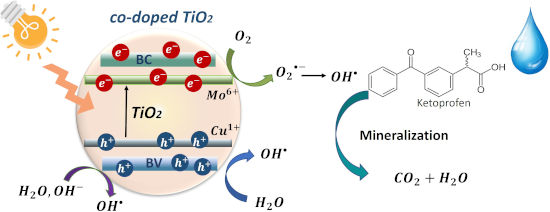
- the bandgap of TiO2 [36]. The new energy levels can act as recombination centers for electrons and holes, affecting the emission and absorption of photons [37]. Doping metal ions such as Fe, Ni, Co, and Cu into TiO2 introduces mid-gap or surface states and defects, such as oxygen vacancies [38]. The



Defects and defect-mediated engineering of two-dimensional materials: challenges and open questions
Beilstein J. Nanotechnol. 2026, 17, 454–488, doi:10.3762/bjnano.17.31
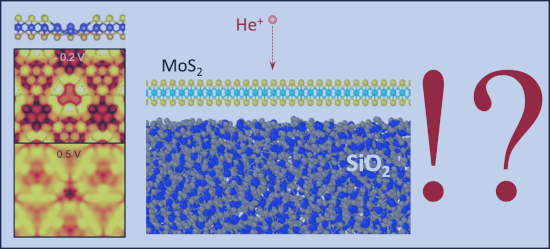
- , after growth and at about 7 K, a small number of additional Fe atoms were deposited. On MoS2, these atoms are immobile after deposition. Approaching an Fe adatom with the STM tip until a sudden change in the measured tip height is detected removes the Fe adatom from the MoS2 and transfers it to the STM
- tip. When leaving the sample surface, each Fe adatoms rips out an S atom of MoS2 such that a single S vacancy is left behind. The method has a very high probability of success and creates one and the same vacancy defect. If the adatom species could be easily moved laterally with the STM tip on the 2D
- material (unlike Fe adatoms on MoS2), one could create strings and lattices of single vacancy defects with atomic precision, thereby effectively making a material with new global properties. It is likely that a suitable 2D material–adatom combination exists. One even might speculate that, using a properly





Beam shaping techniques for pulsed laser ablation in liquids: Unlocking tunable control of nanoparticle synthesis in liquids
Beilstein J. Nanotechnol. 2026, 17, 309–342, doi:10.3762/bjnano.17.22
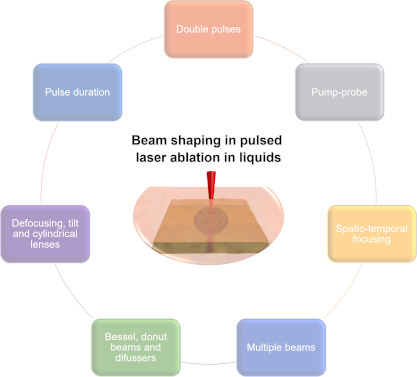
- air-related formula is often used, but complemented by an empirical correction factor to account for liquid effects as proved by Intartaglia et al. for Si NP production with a picosecond laser [138] and Kanitz et al. for Fe NP production with femtosecond laser [20]. Up to now, control of the fluence


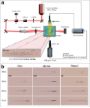

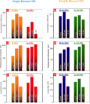


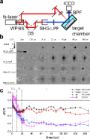


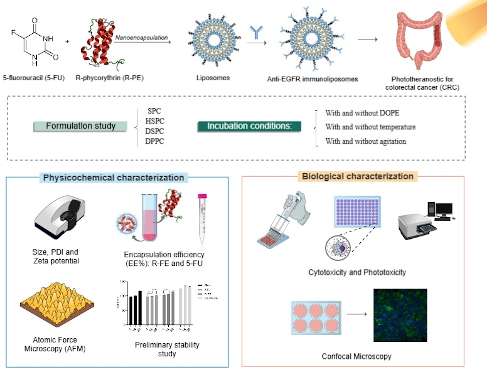
Development and in vitro evaluation of liposomes and immunoliposomes containing 5-fluorouracil and R-phycoerythrin as a potential phototheranostic system for colorectal cancer
Beilstein J. Nanotechnol. 2026, 17, 97–121, doi:10.3762/bjnano.17.7
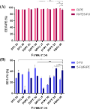
- 50% [31]. The EE% results for both 5-FU and R-FE are shown in Figure 1. The EE% significantly varied depending on the lipid composition and the nature of the encapsulated compound. Formulations containing HSPC exhibited statistically different EE% values for 5-FU and R-PE. However, no significant
- population [45]. When carrying out a statistical evaluation of the PDI values obtained, in the case of the formulation with 5-FU and R-FE encapsulated in HSPC 50-based liposomes, the lowest PDI value refers to the combination of the two encapsulated molecules when compared with the DPPC formulations, which



Functional surface engineering for cultural heritage protection: the role of superhydrophobic and superoleophobic coatings – a comprehensive review
Beilstein J. Nanotechnol. 2026, 17, 63–96, doi:10.3762/bjnano.17.6

- principles. Ethyl lactate acts as the organic solvent, PHB as the gelator, and DFO as a chelating agent for Fe(III), all functioning effectively at a mildly acidic pH (~4.8). The authors prepared several mock-ups of mild steel by chemically inducing corrosion and coating with Paraloid® B72, replicating real






Improving magnetic properties of Mn- and Zn-doped core–shell iron oxide nanoparticles by tuning their size
Beilstein J. Nanotechnol. 2025, 16, 2285–2295, doi:10.3762/bjnano.16.157
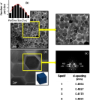
- evaluation of the Mössbauer spectra was performed by least-square fitting of lines using the Winnormos (Wissel) program. The error on all Fe Mössbauer spectra was ±0.1 mm·s−1. High-resolution transmission electron microscopy (HRTEM) and scanning transmission electron microscopy (STEM) images were performed
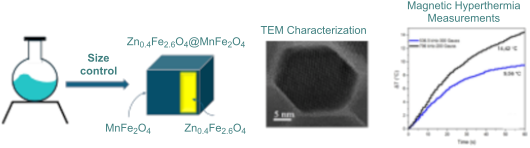
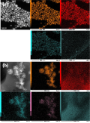
- Figure 3, Fe, Zn, and O are homogeneously distributed in the Zn0.4Fe2.6O4 NPs (Figure 3a). For Zn0.4Fe2.6O4@MnFe2O4 NPs (Figure 3b), a clear distinction is observed, where Mn is exclusively located in the shell. This confirms the successful deposition of the MnFe2O4 shell on the Zn0.4Fe2.6O4 core. Such
- their structural properties and confirms the successful formation of both core and core–shell structures (Figure 4). The Fe–O stretching vibrations in spinel ferrites typically appear within the range of 500–650 cm−1, with tetrahedral Fe–O bonds generally observed around 550–600 cm−1. However, in the



Molecular and mechanical insights into gecko seta adhesion: multiscale simulations combining molecular dynamics and the finite element method
Beilstein J. Nanotechnol. 2025, 16, 2055–2076, doi:10.3762/bjnano.16.141
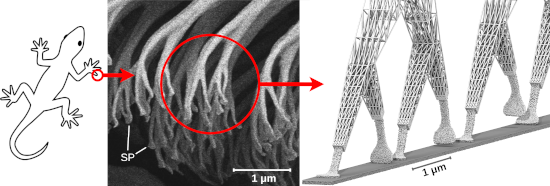
- orientations with their substrates were simulated in 16 parallel MD calculations. The skeleton of our multiscale seta was created by distributing branching points along two parabolas (Figure 3) as described by Sauer and colleagues [21]. Figure 3 illustrates the construction of the seta FE mesh. The seta was
- was the midpoint of one of these intervals. The height of each branching point, starting from the first (highest) branching level, decreased progressively according to Equation 2: where i represents the branching level, Hsp is the total spatula height, including both the final tiny FE branch that
- constructed, the top portion of the seta above a height (H0) of 22.8 μm was removed. The 45 FE nodes on this cross-sectional area received the prescribed displacement for preloading and pull-off during simulations. They effectively drove the simulation and are referred to as driver FE nodes. Portions of the







Laser ablation in liquids for shape-tailored synthesis of nanomaterials: status and challenges
Beilstein J. Nanotechnol. 2025, 16, 1963–1997, doi:10.3762/bjnano.16.137
- nanosheets of elliptical shape as a result of fs laser ablation of a MoS2 target in FeCl3 solution. Despite the ablation in an aqueous solution, nanosheets preserved the MoS2 composition. Electron diffraction results reported in the cited work revealed the formation of an FeS2 phase, suggesting that Fe ions





Evaluating metal-organic precursors for focused ion beam-induced deposition through solid-layer decomposition analysis
Beilstein J. Nanotechnol. 2025, 16, 1942–1951, doi:10.3762/bjnano.16.135
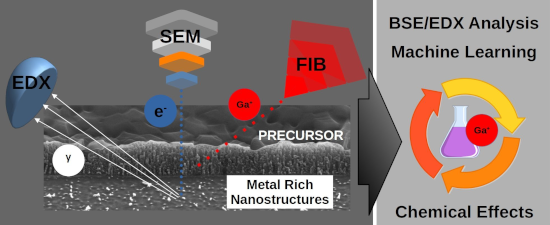
- decomposition mechanisms are proposed. Studies have been conducted on ion–molecule interactions in both solid and gas phases. Ultrahigh vacuum experiments on a few monolayers of FIBID precursors, such as [Ru(CO)4I2], [(η5-C5H5)Fe(CO)2Re(CO)5], and [Fe(CO)5], have been used to elucidate decomposition pathways
- . Gas-phase interactions between [Fe(CO)5] molecules and ions of helium, neon, argon, and krypton were carried out. However, the authors noted that these results may not accurately reflect the behavior of the precursor on the surface during actual FIBID processing since the conditions under which the


Current status of using adsorbent nanomaterials for removing microplastics from water supply systems: a mini review
Beilstein J. Nanotechnol. 2025, 16, 1837–1850, doi:10.3762/bjnano.16.127
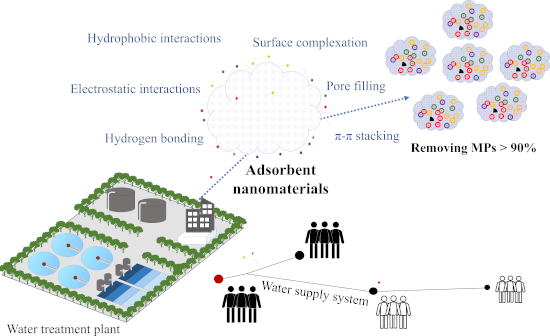
- , applying magnetic nanoparticles for treatment purposes may release toxic metal ions (Ni or Mn) or highly soluble metal ions (Zn or Mg) into the treated water, which can then enter water bodies and cause harm [74]. Similarly, MOFs, such as materials combined with Fe, Cu, or Zr, may release toxic ions into


Piezoelectricity of layered double hydroxides: perspectives regarding piezocatalysis and nanogenerators
Beilstein J. Nanotechnol. 2025, 16, 1812–1817, doi:10.3762/bjnano.16.124

- authors’ claims have been excluded from the table and the figure but left in the text. A Ni/Fe-LDH piezoelectric nanogenerator was used to charge an asymmetric supercapacitor made from the as-prepared Ni/Fe-LDH and biomass-derived activated carbon as the positive and negative electrode [7]. The Ni/Fe-LDH
- emerging area of catalysis utilizes the ability of piezoelectric materials to convert mechanical energy into electrical energy for subsequent electrochemical reactions [13]. Liu et al. suggested that ultrathin Ni/Fe-LDH modified with polyethylene glycol (PEG) for better water solubility and
- ultrasound exposure broke the inversion symmetry of Ni/Fe-LDH, causing positive and negative polarization charges to arise. The migration of created charges in opposite directions under external mechanical force caused an intrinsic electric field. The authors also hypothesized that LDHs, as some 2D layered

Beyond the bilayer: multilayered hygroscopic actuation in pine cone scales
Beilstein J. Nanotechnol. 2025, 16, 1695–1710, doi:10.3762/bjnano.16.119
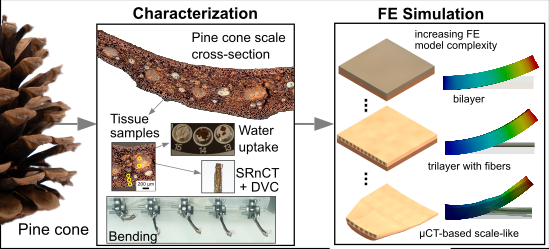
- points. These were located at the two adaxial apical corners of each geometry and at the adaxial apical center (Figure S2, Supporting Information File 2). In order to assess the sensitivity of the FE analyses with respect to the expansion coefficients in the measured ranges, two comparative simulations
- , Supporting Information File 2). A lower expansion coefficient resulted in negligible lateral curvature, while a higher expansion coefficient resulted in increased lateral curvature. To validate the FE simulations, a mesh sensitivity analysis was performed based on the trilayer geometry with fibers. Further


Nanotechnology-based approaches for the removal of microplastics from wastewater: a comprehensive review
Beilstein J. Nanotechnol. 2025, 16, 1607–1632, doi:10.3762/bjnano.16.114
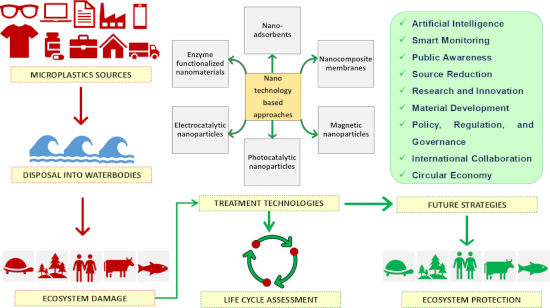
- membrane by integrating sustainably synthesized MIL-100 (Fe) MOF nanoparticles into a polysulfone (PSF) matrix. This PSF/MIL-100 (Fe) membrane exhibited substantial improvements over the unmodified PSF membrane (M0), particularly in terms of membrane structure, surface hydrophilicity (with the water
- contact angle decreasing from 84.6° ± 1° to 64.2° ± 1.2°), work of adhesion, wetting energy, porosity, and pore dimensions. Among various loadings, the membrane with 0.5 wt % MIL-100 (Fe) (M0.5) showed the best overall performance. It delivered a pure water flux over ten times higher than M0 and achieved
- concludes that PSF/MIL-100 (Fe) composite membrane offers a promising solution for the removal of MPs [117]. Chen et al. [118] developed a series of zirconium-based MOF foam materials with interconnected pores, excellent stability, and high structural uniformity for the removal of MPs from both seawater and



Bioinspired polypropylene-based functionally graded materials and metamaterials modeling the mistletoe–host interface
Beilstein J. Nanotechnol. 2025, 16, 1592–1606, doi:10.3762/bjnano.16.113
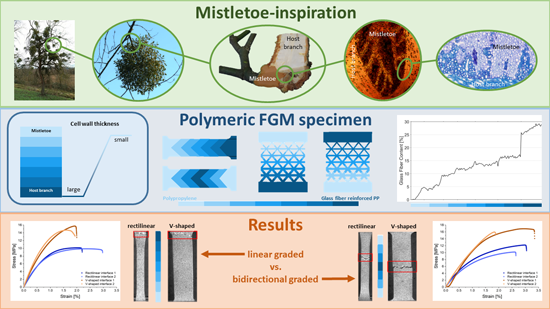
- and material gradients, finite element (FE) simulations were performed using small deformation implicit modeling. The linear solver of the ANSYS static structural module was used for the FE simulations. Due to the low thickness of the metamaterial structures, the plane stress 2D model (PLANE 183
- elements) was chosen for the FE analysis. The quadratic elements were implemented to generate the mesh through the metamaterial geometry in order to obtain a better agreement in complex and difficult parts of the geometry, such as the sharp corners at the beam joints. The mesh size was chosen to have at
- conditions for the metamaterial structures at the gripping points and free sides. To better illustrate the effect of the opposing structural and material gradients, we performed idealized FE simulations using the PP and PPGF material properties provided by the manufacturer. These show strain accumulation


Modeling magnetic properties of cobalt nanofilms used as a component of spin hybrid superconductor–ferromagnetic structures
Beilstein J. Nanotechnol. 2025, 16, 1557–1566, doi:10.3762/bjnano.16.110
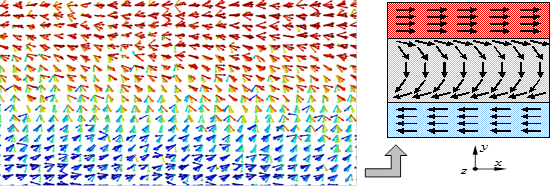
- structure and composition of Co–Ni–Fe films were evaluated, and it was found out how the deposition rate affects the conversion of a weak magnetic field into magnetic induction. In addition, thin-film structures based on Fe and Co are among the most promising materials that can be applied in the creation of


Cross-reactivities in conjugation reactions involving iron oxide nanoparticles
Beilstein J. Nanotechnol. 2025, 16, 1504–1521, doi:10.3762/bjnano.16.106
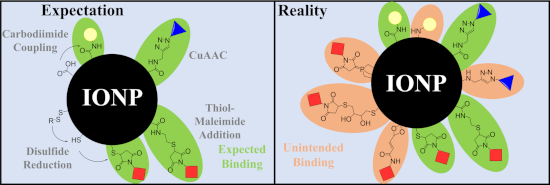
- . Through the judicious use of controls, we demonstrate significant cross-reactivities of amines, thiols, maleimides, and common disulfide reducing agents with surface Fe of IONPs and show how these unwanted interactions can produce false positive results. Without proper controls, these can lead to
- clear that a binding affinity exists between these groups and surface Fe. From this standpoint, it is evident that proper controls are necessary to determine the cross-reactivity of these groups with IONPs. Herein, we report on the cross-reactivities of amines, thiols, maleimides, and common disulfide
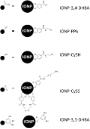
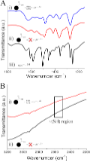
- in mind, we propose that the binding mode observed in the control sample involves only PPA bound directly to the IONP surface through Fe–amine coordination (Fe-PPA), and this configuration does not allow for sufficient coverage to promote extensive H-aggregate formation on the IONP surface. In the







Laser processing in liquids: insights into nanocolloid generation and thin film integration for energy, photonic, and sensing applications
Beilstein J. Nanotechnol. 2025, 16, 1428–1498, doi:10.3762/bjnano.16.104
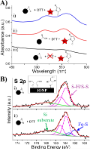
- particles gradually becoming more homogeneous over time. The advantages of submicrometer particles produced by PLML over NPs synthesized by conventional PLAL, can be explained using Au–Fe systems [61], where the bulk thermodynamic contribution leads to an Au-enriched core and Fe-rich surface [46]. In
- contrast, conventional PLAL methods are dominated by surface energy, resulting in a Fe core–Au shell structure. The study identifies the limitations of lower fluence, inhomogeneous heating, and insufficient particle association during laser irradiation, and clarifies the mechanism behind PLML. For single
- -component materials, spherical particles are easily formed through laser melting, while two-component alloys, like Au–Fe, show distinct morphologies due to differences in heating behavior and optical absorption. Additionally, reactive fabrication of SMSPs with compositions differing from raw materials, such






The role of biochar in combating microplastic pollution: a bibliometric analysis in environmental contexts
Beilstein J. Nanotechnol. 2025, 16, 1401–1416, doi:10.3762/bjnano.16.102

- [44]. Magnetic biochar modification follows two main routes, that is, direct impregnation of feedstock or post-synthesis modification. Direct impregnation: Feedstock is washed and impregnated with 0.012 mol Fe(NO3)3·9H2O, stirred overnight, dried at 105 °C and heated at 550 °C for 2 h, yielding



Parylene-coated platinum nanowire electrodes for biomolecular sensing applications
Beilstein J. Nanotechnol. 2025, 16, 1392–1400, doi:10.3762/bjnano.16.101
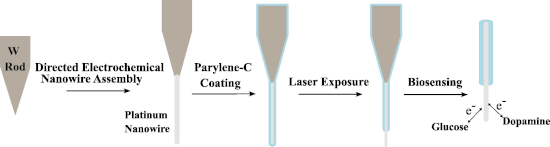
- , Pt, Fe, Cu, or Ir) solution are used for nanowire growth, where adjustments to the AC field parameters and solution composition allow the fabrication of either single cylindrical nanowires (ranging from 15 to 600 nm in diameter and up to several hundreds of micrometers in length) or dendritic


Synthesis and antibacterial properties of nanosilver-modified cellulose triacetate membranes for seawater desalination
Beilstein J. Nanotechnol. 2025, 16, 1380–1391, doi:10.3762/bjnano.16.100
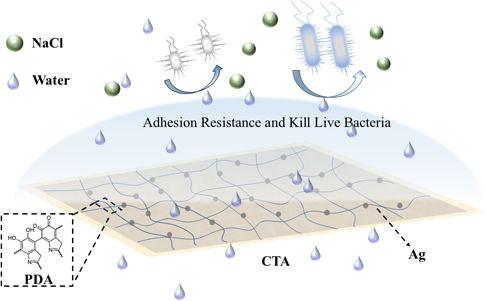
- (FE-SEM, JEOS JSM6700F). An InoLab Cond 7310 conductivity meter was used to measure ion concentration. Fabrication of CTA membrane The membranes were prepared according to previous protocols with modifications [67]. Initially, the raw materials for the CTA film were dried in a vacuum oven at 80 °C for


Ferroptosis induction by engineered liposomes for enhanced tumor therapy
Beilstein J. Nanotechnol. 2025, 16, 1325–1349, doi:10.3762/bjnano.16.97
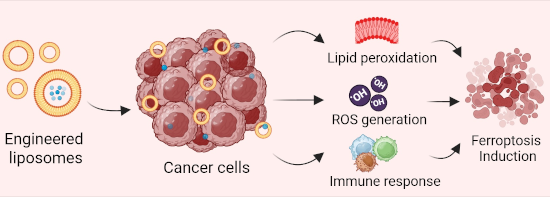
- increase the activity of the enzyme lipoxygenase, which, as mentioned in the previous section, is associated with ferroptosis [49]. To investigate the role of iron in ferroptosis, we should first familiarize ourselves with its metabolism within the cell. Transferrin is responsible for ferric iron (Fe+3
- transferrin receptor 1 (TFR1) during receptor-bound endocytosis. In addition to this pathway, iron absorption can also occur with the help of actin filaments, one of the components of the cytoskeleton, via the receptor (TFRC) [36]. The iron required by the cell, in the form of ferrous iron (Fe+2), is produced
- by six transmembrane epithelial antigens of the prostate 3 (STEAP3) in the acidic environment in the endosome. Fe+2 is then transported into the cytoplasm by the transporter for divalent metals (DMT1). Iron has various functions in the cell and can be used in different enzymatic processes or stored


Wavelength-dependent correlation of LIPSS periodicity and laser penetration depth in stainless steel
Beilstein J. Nanotechnol. 2025, 16, 1302–1315, doi:10.3762/bjnano.16.95
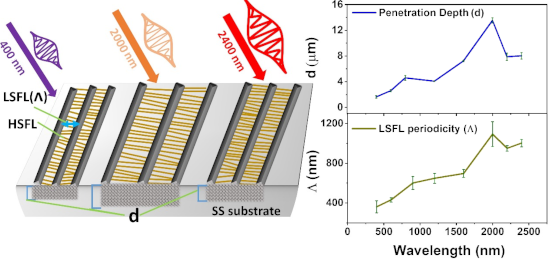
- investigate this, we conducted energy-dispersive X-ray spectroscopy (EDS) analysis on laser-treated stainless steel samples across different wavelengths alongside untreated stainless steel for comparison, as outlined in Table 3. Specifically, we examined the weight percentage of Cr, Fe, and Ni in three
- weight percentages of Cr, Fe, and Ni across all three areas. This uniformity suggests that the elemental composition remains unchanged throughout the whole laser-treated surface. For a comparative study, we also measured the elements on a polished stainless steel surface, depicted in Figure 10e. Figure
- 10f–h exhibits the EDS spectra of three different regions of the untreated surface, highlighting the presence of Cr, Fe, Ni, Mg, and C. However, magnesium and carbon are comparatively lower in abundance and not uniformly distributed in the unablated sample, and these peaks do not appear after the