Search results
Search for "amorphous" in Full Text gives 519 result(s) in Beilstein Journal of Nanotechnology. Showing first 200.
Nanoglasses: a trail towards uncharted regions of vitreous materials and their properties?
Beilstein J. Nanotechnol. 2026, 17, 1047–1062, doi:10.3762/bjnano.17.72

- structure, thermodynamics, and stability of glass–glass interfaces and examine their implications for the design and properties of nanoglasses, highlighting that this approach represents a novel pathway for modifying amorphous materials more broadly. Particular attention is given to columnar thin-film
- as internal interfaces and dislocations. In contrast, amorphous materials such as metallic glasses have largely been overlooked in the aspect of microstructure and defect engineering. Yet, glasses are ubiquitous in both our daily life and in nature, and they have accompanied humanity’s technological
- theoretical concepts to real-world materials [4][5][6]. Nanoglasses consist of vitreous cores (or “glass grains”) connected by amorphous regions, referred to as “glass–glass interfaces (GGIs)”, which exhibit structures and properties that go beyond those achievable in conventional, structurally uniform


Synthesis and characterization of RF-sputtered ZnTe/Cu2−xTe thin films for solar cell applications
Beilstein J. Nanotechnol. 2026, 17, 1016–1027, doi:10.3762/bjnano.17.69
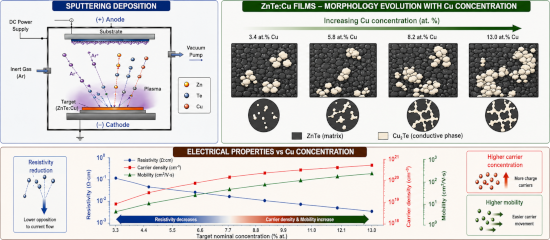
- the sputtering chamber was maintained at 11 sccm, and an RF power of 50 W was applied to the target. The target-to-substrate distance was 8 cm, and the substrate temperatures were 300 and 350 °C. These substrate temperatures were chosen to prevent the formation of the amorphous phases, which have been
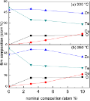
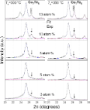
- distortion. Crystalline structure Figure 2 shows the XRD patterns of ZnTe and CuZnTeO films grown on glass substrates as a function of the nominal Cu and O concentration and substrate temperature. In general, ZnTe films grown at substrate temperatures below 300 °C are reported to exhibit amorphous or poorly



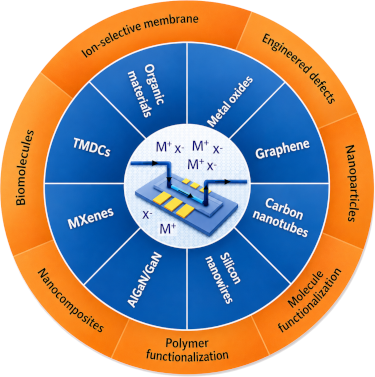
Materials challenges in solid-state sensors for continuous monitoring of ions in water
Beilstein J. Nanotechnol. 2026, 17, 935–973, doi:10.3762/bjnano.17.66


Enhanced erosion resistance and radiation stability of WC–WO3 nanocomposite films under 100 keV Kr+ ion irradiation
Beilstein J. Nanotechnol. 2026, 17, 922–934, doi:10.3762/bjnano.17.65
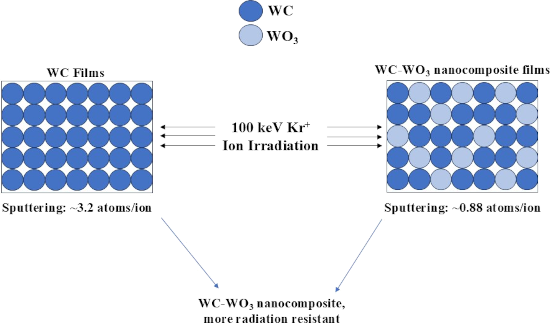
- annealing at ~700 °C in a tubular furnace in air atmosphere. The oxygen in air facilitates the growth of the carbide and oxide phases simultaneously at high temperature. Otherwise, the as-deposited films were amorphous as shown in Figure 2a. A description of the synthesized samples of typical sizes of 1 cm
- pristine WC–WO3 nanocomposite and WC films The GIXRD pattern of the as-deposited WC films, shown in Figure 2a, reveals that the room-temperature-deposited films were amorphous as no reflection peak was observed in the pattern. However, after thermal annealing of these films at ~700 °C, grain growth took



Nanocarrier strategies to overcome P-glycoprotein-mediated drug resistance in cancer therapy
Beilstein J. Nanotechnol. 2026, 17, 882–921, doi:10.3762/bjnano.17.64
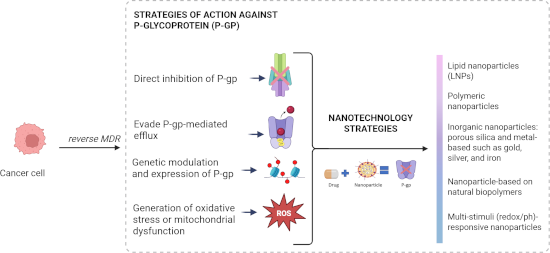
- carriers (NLCs), which incorporate liquid lipids into a solid lipid matrix. This design prevents excessive crystallization, enhances stress resistance, and allows for more efficient and controlled release of active compounds. NLCs are typically categorized into amorphous, imperfect, and multitype


Light-driven ammonia electrooxidation via carbon nitride–ruthenium molecular interfaces
Beilstein J. Nanotechnol. 2026, 17, 854–862, doi:10.3762/bjnano.17.61
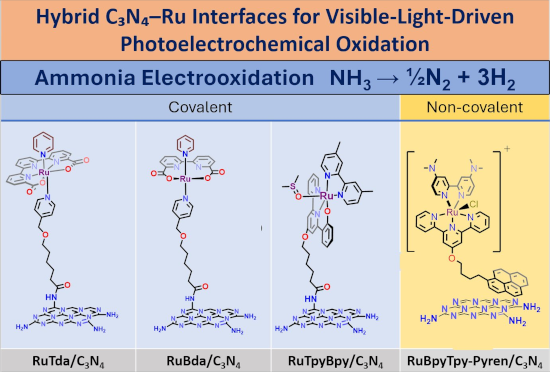
- , electronic coupling, and catalyst stability differently. This perspective article examines how the structural diversity of the C3N4 allotropes, spanning semicrystalline polymeric C3N4, highly ordered poly(heptazine imide), and high-surface-area amorphous sulfur-doped C3N4, offers a tunable platform for
- photoelectrocatalytic performance [19]. Amorphous sulfur-doped C3N4 (S-C3N4, Table 1), prepared from sulfur-containing precursors such as purpald, achieves a narrower bandgap of 1.8–2.0 eV and a higher surface area, accessing a larger fraction of the solar spectrum at the cost of somewhat reduced charge transport
- of support, an atom efficiency figure that makes the use of a precious metal economically defensible [16]. Crystalline PHI is a promising support for non-covalent anchoring: Its highly ordered aromatic surface, free of the structural disorder that characterises amorphous C3N4, presents a


Cellulose as a photocatalyst support material: extraction, structural features, and environmental applications
Beilstein J. Nanotechnol. 2026, 17, 635–652, doi:10.3762/bjnano.17.44
- (CNFs) [7]. CNCs and CNFs differ mainly in their size and crystallinity, as CNFs contain both amorphous and crystalline cellulose chains and can extend to several micrometers in length. In contrast, CNCs exhibit high crystallinity, with lengths typically measuring below 500 nm. Both materials offer
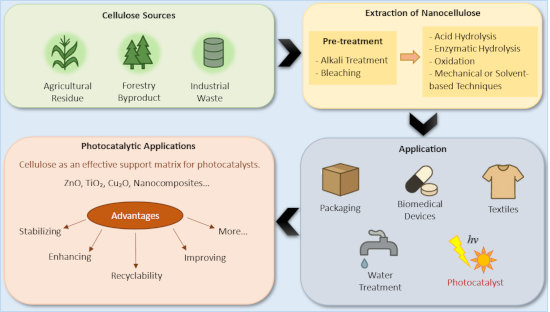
- ]. Before hydrolysis, the raw materials usually undergo several pre-treatment steps, including washing, drying, dewaxing, alkali treatment, and bleaching, to remove impurities and enhance accessibility. During hydrolysis, the acid selectively breaks down the amorphous regions of cellulose while preserving
- method, the derived cellulose may exist in both amorphous and crystalline forms with various structural variations such as macrofibers, fibrils, pores, and both micro- and nanocrystals, each offering distinct advantages for medical applications. Within drug delivery research, nanoscale systems have


Recent progress in enhancing built-in electric fields of perovskite solar cells via junction engineering
Beilstein J. Nanotechnol. 2026, 17, 602–621, doi:10.3762/bjnano.17.42
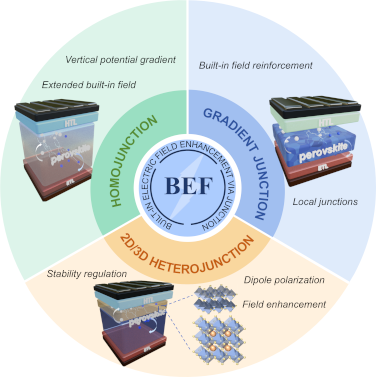
- amorphous phases and optimizing energy alignment, but highly soluble solutions may still damage the 3D lattice and introduce defects [63][64][65]. To balance surface planarization with lattice preservation, Wang et al. [66] employed the long-chain ammonium salt decane-1,10-diammonium diiodide (DDADI) in an



Upcycling agroindustrial waste into graphene oxide supports for gold nanoparticles: toward sustainable nanomaterials
Beilstein J. Nanotechnol. 2026, 17, 489–504, doi:10.3762/bjnano.17.32
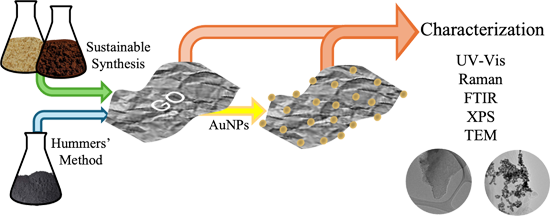
- pyrolysis process (350 °C for 1 h and 900 °C for 3 h), producing amorphous carbon that required further oxidation; this route is energy-intensive and generates impurities, making a modified Tour treatment necessary, with the drawback of strong oxidants and substantial chemical waste [18]. Similarly, Sujiono
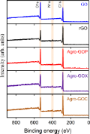
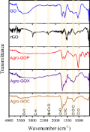
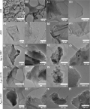
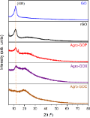
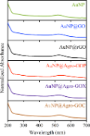
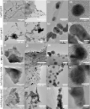
- rough and compact morphology. The lamellae are well defined and contain regions that clearly display stacked sp2-hybridized carbon sheets with locally ordered domains that evidence the presence of few-layer graphitic structures. However, regions of amorphous carbon are also observed, consistent with the
- 650 °C, indicating the coexistence of oxidized graphitic domains and amorphous carbon. At higher temperatures (≥600 °C), the agroindustrial waste-derived samples retain a slightly higher residual mass than GO, consistent with the presence of more thermally stable carbon fractions derived from the



Defects and defect-mediated engineering of two-dimensional materials: challenges and open questions
Beilstein J. Nanotechnol. 2026, 17, 454–488, doi:10.3762/bjnano.17.31
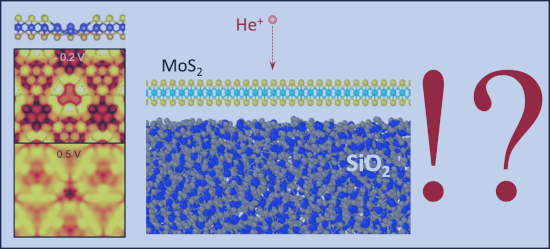
- multilayer films into the bulk are poorly understood. In relatively unstable TMDs, such as MoTe2 and WTe2, an ultrathin amorphous layer of MoO3 or TeO2 is immediately formed when CVD or MBE-grown MoTe2 is exposed to ambient environments [53][68]. However, the barrier for S vacancy diffusion between TMD





Nanoinformatics: spanning scales, systems and solutions
Beilstein J. Nanotechnol. 2026, 17, 423–427, doi:10.3762/bjnano.17.28
- nanomaterial’s behaviour, preparation, or test conditions) [2]. Voyiatzis et al. computationally studied, using atomistic molecular dynamics simulations, the morphological transformations (from molten/amorphous to crystalline) during rapid cooling of 1–8 nm spherical gold and platinum nanoparticles (NPs), which

Advancing nanolithography: a comprehensive review of materials for local anodic oxidation with AFM
Beilstein J. Nanotechnol. 2026, 17, 275–291, doi:10.3762/bjnano.17.19
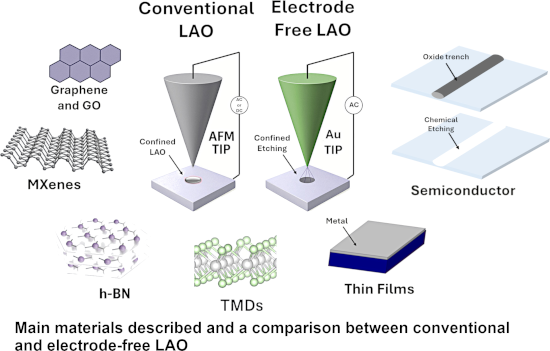
- [29]. A more recent study demonstrates the use of LAO to nanostructure thin amorphous vanadium oxide (VOx) films [97], converting them locally to vanadium pentoxide (V2O5) for selective removal. Achieving sub-50 nm lateral precision and sub-0.3 nm depths, the process is influenced by humidity, film


Reduced graphene oxide paper electrode for lithium-ion cells – towards optimized thermal reduction
Beilstein J. Nanotechnol. 2026, 17, 24–37, doi:10.3762/bjnano.17.3
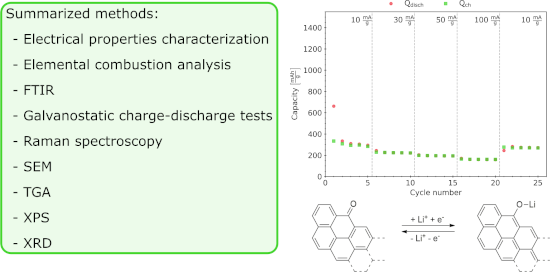
- influenced by graphite oxidation [36]. The D'' peak is related to amorphous phases [36]. As described by Ferrari et al. [45], the G peak refers to sp2-bonded atoms present in both the rings and chains (functional groups). The 2D peak can be considered as representing the second order of this mode [36] or the
- increased number of sp3-hybridized carbon atoms and amorphous areas bonded to sp2-hybridized carbon atoms [36]. A significant increase of the D peak in the case of the T800 sample needs to be considered regarding the oxygen percentage change; the removal of such a large number of functional groups resulted



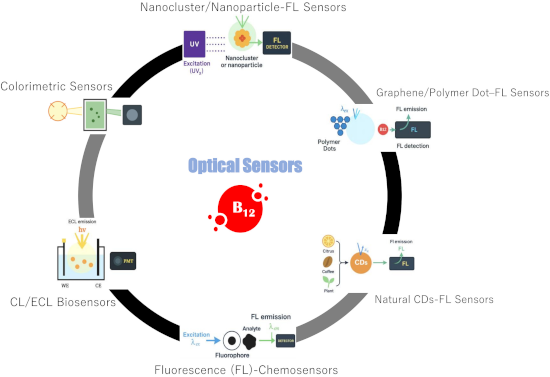
Optical bio/chemical sensors for vitamin B12 analysis in food and pharmaceuticals: state of the art, challenges, and future outlooks
Beilstein J. Nanotechnol. 2025, 16, 2207–2244, doi:10.3762/bjnano.16.153


Molecular and mechanical insights into gecko seta adhesion: multiscale simulations combining molecular dynamics and the finite element method
Beilstein J. Nanotechnol. 2025, 16, 2055–2076, doi:10.3762/bjnano.16.141
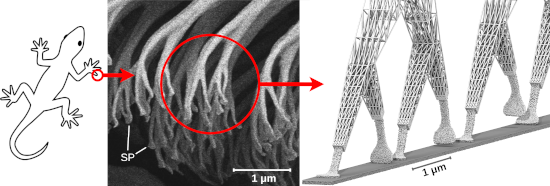
- structure similar to a fiber-reinforced elastomer, with a fibrillar nature that leads to anisotropic mechanical properties [40][41][42]. Rather than explicitly resolving individual fibers and the surrounding amorphous matrix, we represented the spatula with a coarse-grained bead network whose anisotropic
- surface, and a 13 nm thick amorphous bulk below, which matched the same bead density as our previous random-substrate model. All substrate beads had identical interactions with the spatula, and both layers were held fixed in space. Since the regular top monolayer differed from the fully random arrangement
- ) does not interact with the spatula beads; therefore, any substrate thicker than the spatula–substrate potential cutoff (rcutoff ≤ thickness ≤ ∞) would result in identical dynamics and forces. Our substrate (1 monolayer + 13 nm amorphous bulk) exceeds the cutoff, fully representing all interactions






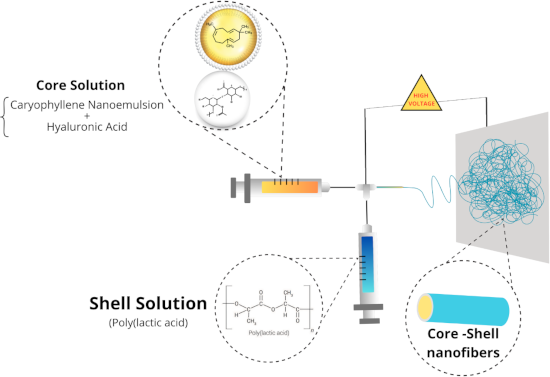
Beyond the shell: exploring polymer–lipid interfaces in core–shell nanofibers to carry hyaluronic acid and β-caryophyllene
Beilstein J. Nanotechnol. 2025, 16, 2015–2033, doi:10.3762/bjnano.16.139
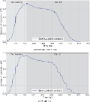
- , featuring an endothermic peak corresponding to the melting of crystallites, an exothermic peak related to the crystallization of polymer chains into spherulites, and a baseline shift indicative of the glass transition of the amorphous regions. Due to the high PLA content in the fibers, all three analyzed
- glass transition temperature (Tg) of PLA and related to enthalpic relaxations in the amorphous regions. X-ray diffraction (XRD) analysis was also performed to compare the crystallinity and characteristic peaks of the produced nanofibers. Figure 9 presents the diffractograms of the NF-PLA, NF-HA/PLA, and
- NF-HA+NE2/PLA nanofibers, as well as the HA and PLA powders for comparison purposes. As expected, the HA powder exhibited the typical profile of an amorphous polymer, with a broad amorphous halo between 2θ = 15° and 30°. The PLA powder displayed a characteristic semicrystalline PLA diffraction




Mechanical property measurements enabled by short-term Fourier-transform of atomic force microscopy thermal deflection analysis
Beilstein J. Nanotechnol. 2025, 16, 1952–1962, doi:10.3762/bjnano.16.136
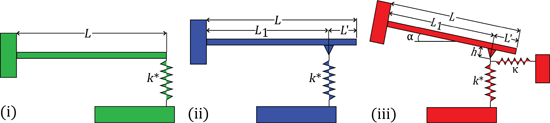
- 5.0 with the JKR model [29], we use the COS model, which has been shown to more accurately fit contacts having material properties between the DMT and JKR extremes. The fits to the experimental data are provided in Figure 5. In each case, all materials for tip and substrate were pure amorphous




Piezoelectricity of layered double hydroxides: perspectives regarding piezocatalysis and nanogenerators
Beilstein J. Nanotechnol. 2025, 16, 1812–1817, doi:10.3762/bjnano.16.124

- of layered structure. The remaining reflections are barely discernible, broad, and of low intensity, further suggesting that the obtained material is predominantly amorphous phase rather than crystalline LDH. The piezocatalytic performance of the abovementioned LDHs is quite impressive in many cases

Electrical, photocatalytic, and sensory properties of graphene oxide and polyimide implanted with low- and medium-energy silver ions
Beilstein J. Nanotechnol. 2025, 16, 1794–1811, doi:10.3762/bjnano.16.123
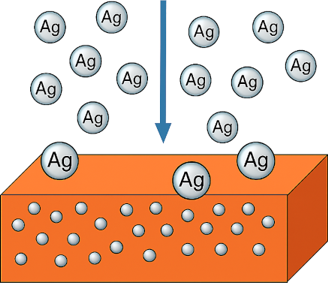
- , and C–O) and the simultaneous transformation of the amorphous polymer phase into a graphitized structure with higher electrical parameters [9]. This results in carbon regions rich in conjugated π-electron systems, which allow for efficient charge delocalization and the formation of conducting pathways
- and Ag ion interstitials. The discrepancy between the SRIM-simulated and RBS-measured Ag depth profiles can be attributed to several factors. SRIM simulations are based on an idealized model that assumes a homogeneous, amorphous target with constant density and does not account for structural or


Exploring the potential of polymers: advancements in oral nanocarrier technology
Beilstein J. Nanotechnol. 2025, 16, 1751–1793, doi:10.3762/bjnano.16.122
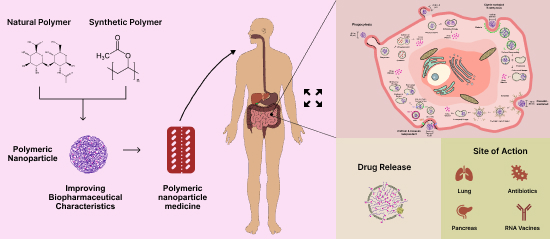
- transfer throughout the entire polymer matrix. However, in NPs, a balance between amorphous and crystalline states is necessary to optimize mechanical strength and drug release rates. The glass transition temperature reflects the polymer chain’s permeability and mobility, influencing its susceptibility to


Transient electronics for sustainability: Emerging technologies and future directions
Beilstein J. Nanotechnol. 2025, 16, 1545–1556, doi:10.3762/bjnano.16.109
- silicon, while amorphous silicon exhibits the highest degradation rate among them [45]. Interestingly, doping can lead to a retardation of degradation [42], resembling the etch-stop phenomenon in the potassium hydroxide process. This newfound understanding of biodegradability of electronic-grade silicon
- has prompted further exploration of chemically analogous materials, such as germanium [45][46], silicon–germanium alloys [45], amorphous semiconductors [45], indium–gallium–zinc oxide (IGZO) [47], and metal oxides such as zinc oxide [48], for their potential as bioresorbable semiconductors. These
- but also of electrical and mechanical performance. For instance, Mg-3Zn, which suffers from phase separation in bulk form, can be synthesized as a uniform alloy in thin films, offering improved corrosion resistance [61]. Moreover, bioresorbable amorphous metal (metallic glass) films have demonstrated


Influence of laser beam profile on morphology and optical properties of silicon nanoparticles formed by laser ablation in liquid
Beilstein J. Nanotechnol. 2025, 16, 1533–1544, doi:10.3762/bjnano.16.108
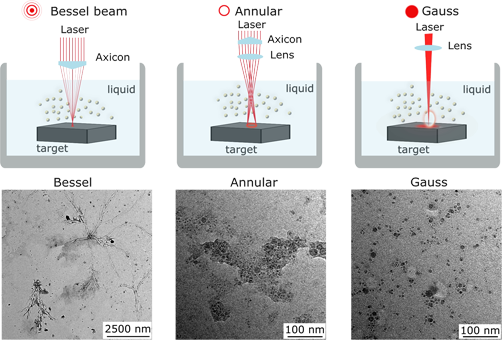
- compared with the vibrational modes of the unablated bulk Si target. Figure 5 presents the obtained Raman spectra. In general, when bulk crystalline Si is transformed into Si NPs, an amorphous phase in Si nanocomposites can be formed [41]. Usually, amorphous Si Raman modes are shifted to lower wavenumbers
- compared to crystalline Si. For example, according to [12], Si NPs exhibit both crystalline and amorphous Raman peaks at 517 and 477 cm−1, respectively. All major peaks in the Raman spectrum are attributable to the spectrum of silicon. The peaks are located in the ranges of 502–518, 284–285, and 925–950 cm
- contribution from the amorphous phase, with the intensity variation among them representing variations in the ratio of amorphous and crystalline phases. For example, the 2TA and 2TO phonon modes of Si NPs obtained by Gaussian laser beam ablation are higher in intensity in comparison with those of the samples


Laser processing in liquids: insights into nanocolloid generation and thin film integration for energy, photonic, and sensing applications
Beilstein J. Nanotechnol. 2025, 16, 1428–1498, doi:10.3762/bjnano.16.104






Chitosan nanocomposite containing rotenoids: an alternative bioinsecticidal approach for the management of Aedes aegypti
Beilstein J. Nanotechnol. 2025, 16, 1197–1208, doi:10.3762/bjnano.16.88
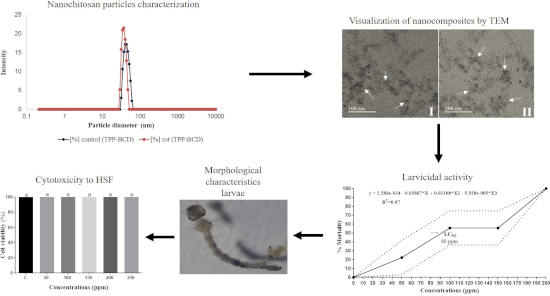
- filaments to aid in the excretion of unabsorbed insecticides, unlike susceptible strains that released little or no PM [32]. Additionally, amorphous feces were reported in larvae fed with Derris urucu extracts (rich in rotenoids), suggesting a potential link between exposure to rotenoid-type phytochemicals



Crystalline and amorphous structure selectivity of ignoble high-entropy alloy nanoparticles during laser ablation in organic liquids is set by pulse duration
Beilstein J. Nanotechnol. 2025, 16, 1141–1159, doi:10.3762/bjnano.16.84
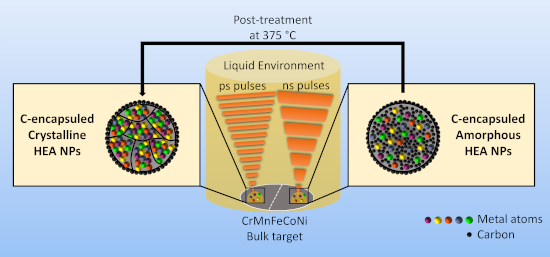
- unknown, particularly the underexplored preference of amorphous over crystalline structures warrants further investigation. Herein, we present a systematic study of laser-generated equimolar CrMnFeCoNi nanoparticles, focusing on structural differences, arising from varying pulse durations during synthesis
- produces polycrystalline HEA NPs, nanosecond-pulsed laser ablation favors a metastable amorphous structure. Particle cores in all cases exhibit a homogeneous distribution of the metals Cr, Mn, Fe, Co, and Ni, while particle shells were found to vary between manganese-enriched oxide layers and thin
- graphitic carbon coatings. The discovery of the structure-directing mechanism allows one to select between crystalline or amorphous HEA NP products, simply by choice of the laser pulse duration in the same, well-scalable setup, giving access to colloidal particles that can be further downstream processed to