Search results
Search for "branching" in Full Text gives 58 result(s) in Beilstein Journal of Nanotechnology.
Probing internal continua and atomic ultrafast charge transfer within size-controlled nanoparticles by post-collision interaction in core-hole clock spectroscopy
Beilstein J. Nanotechnol. 2026, 17, 505–514, doi:10.3762/bjnano.17.33
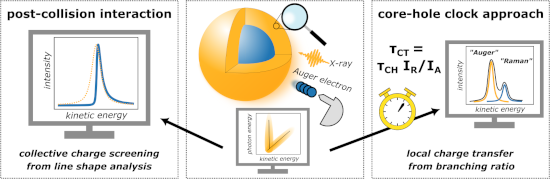
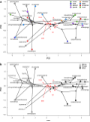
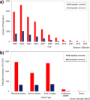
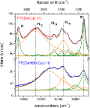
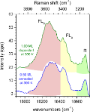
- distribution. As indicated below in Figure 1, resonant Auger electron spectra are used to determine atomic charge transfer times based on the branching into localized and delocalized final states during the core-hole lifetime. We observe a significant reduction of charge transfer times within the ZnS shell for
- within the core-hole lifetime, a dispersionless S 1s22p43p(deloc) final state is reached, whereas, without charge transfer, it results in a dispersing S 1s22p43p+1 final state, referred to as the resonant Raman Auger effect [18][19]. The branching ratio of these final states, as depicted below in Figure
- . The branching ratio relates charge transfer and core-hole life times. The atomic localized Raman Auger channels have a symmetric Voigt line shape. The Auger channels are asymmetric to higher kinetic energy. We assign this to post-collision interaction (PCI) via the internal charge transfer continuum



Subdigital integumentary microstructure in Cyrtodactylus (Squamata: Gekkota): do those lineages with incipiently expressed toepads exclusively exhibit adhesive setae?
Beilstein J. Nanotechnol. 2026, 17, 38–56, doi:10.3762/bjnano.17.4
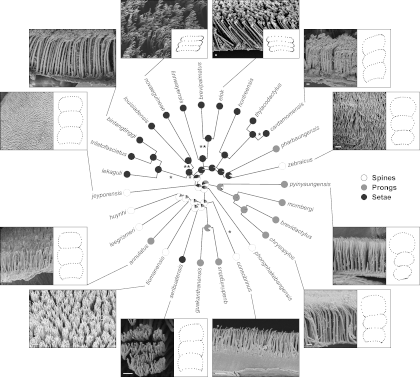
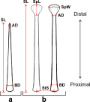
- show a gradation in morphometric attributes related to the position within the setal field. The apical diameter measured for setae is the diameter of the stalk prior to the distal branching that occurs, giving rise to the fine branches that support the spatulae. Thus, while all of the other epidermal


Visualizing nanostructures in supramolecular hydrogels: a correlative study using confocal and cryogenic scanning electron microscopy
Beilstein J. Nanotechnol. 2025, 16, 2274–2284, doi:10.3762/bjnano.16.156
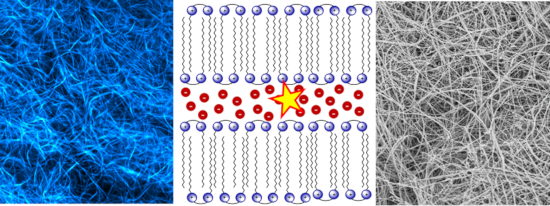
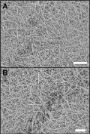
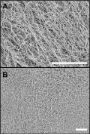
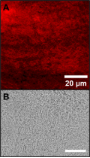
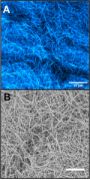
- ]. However, using plunge freezing in nitrogen slush, followed by sublimation, effectively preserved gel morphology with minimal observable artefacts. In DPP-BC-loaded gels (Figure 4), cryo-SEM similarly captured the fibrous supramolecular morphology, often with curved and branching networks that resemble



Molecular and mechanical insights into gecko seta adhesion: multiscale simulations combining molecular dynamics and the finite element method
Beilstein J. Nanotechnol. 2025, 16, 2055–2076, doi:10.3762/bjnano.16.141
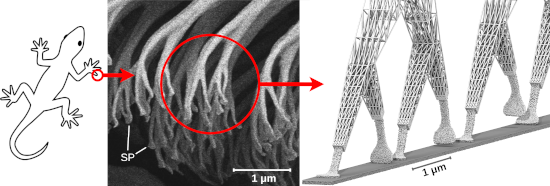
- further branch into hundreds to thousands of spatulae [32][33][34][35]. Our seta geometry (Figure 2) was inspired by the branching geometry in Sauer et al. [21], which simplified the seta into distinct branching levels. While this captured key structural features, it did not fully represent the intricate
- natural hierarchy of real gecko setae, which includes finer branches, varying cross sections, and region-specific material anisotropy. Real setae possess complex cross-sectional shapes and non-uniform branching angles, which could lead to variations in force distributions. Nonetheless, this idealized
- orientations with their substrates were simulated in 16 parallel MD calculations. The skeleton of our multiscale seta was created by distributing branching points along two parabolas (Figure 3) as described by Sauer and colleagues [21]. Figure 3 illustrates the construction of the seta FE mesh. The seta was






Beyond the bilayer: multilayered hygroscopic actuation in pine cone scales
Beilstein J. Nanotechnol. 2025, 16, 1695–1710, doi:10.3762/bjnano.16.119
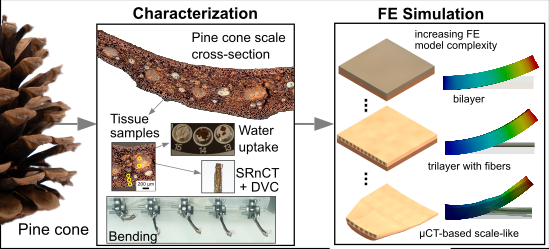
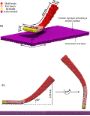
- , they were simplified by allowing branching only at the cross sections used as control points (Figure S1, Supporting Information File 2). The response of the involved tissues of the five scale-derived geometries during expansion and the influence of the involved tissues were characterized by simulative


Prospects of nanotechnology and natural products for cancer and immunotherapy
Beilstein J. Nanotechnol. 2025, 16, 1644–1667, doi:10.3762/bjnano.16.116
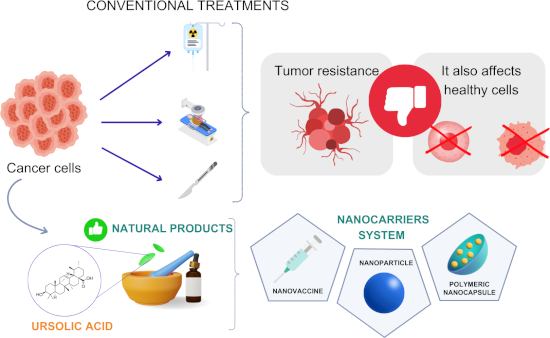
- ][85]. Furthermore, in polysaccharides such as chitin, hyaluronic acid, and alginate, factors such as molecular weight, degree of branching, monosaccharide composition, and processes like sulfation or phosphorylation significantly influence their ability to modulate the tumor microenvironment and


Venom-loaded cationic-functionalized poly(lactic acid) nanoparticles for serum production against Tityus serrulatus scorpion
Beilstein J. Nanotechnol. 2025, 16, 1633–1643, doi:10.3762/bjnano.16.115
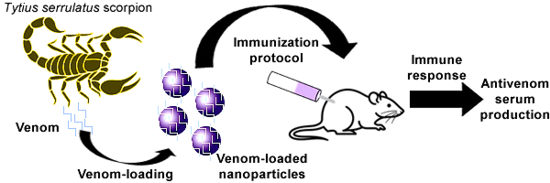
- cationic nanoparticles prepared by ionic gelation with 100% encapsulation efficiency [1][2]. Additionally, PEI with high branching density has been shown to enhance complexation and transfection efficiency [23]. The morphology obtained by AFM and FEGSEM showed particles with a smooth surface, spherical


Nanotechnology-based approaches for the removal of microplastics from wastewater: a comprehensive review
Beilstein J. Nanotechnol. 2025, 16, 1607–1632, doi:10.3762/bjnano.16.114
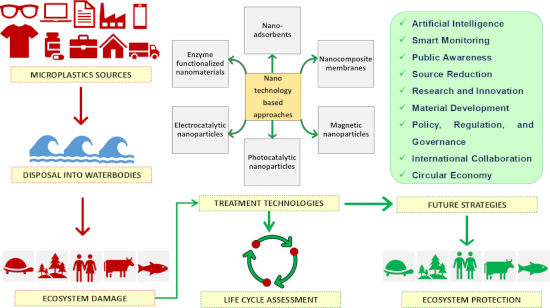
- radicals attack weak points in the polymer chains, typically structural flaws or chromophoric sites. This attack generates low-molecular-weight alkyl radicals within polyethylene. These reactive species then trigger various transformations, including chain cleavage, branching, crosslinking, and oxidation


Dendrimer-modified carbon nanotubes for the removal and recovery of heavy metal ions from water
Beilstein J. Nanotechnol. 2025, 16, 1522–1532, doi:10.3762/bjnano.16.107

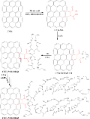
- in the Experimental section. First, 10 mg of the synthesized dendrimerized CNTs (CNTs-G1, CNTs-G2, CNTs-G3, and CNTs-G5) with different degrees of branching were added to respective vials as adsorbents, each containing 20 mL of a 100 ppm solution of Pb2+ and Cd2+ diluted from a 1000 ppm stock. The


Instance maps as an organising concept for complex experimental workflows as demonstrated for (nano)material safety research
Beilstein J. Nanotechnol. 2025, 16, 57–77, doi:10.3762/bjnano.16.7

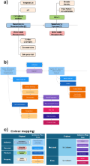
- processing schedules and data management plans. The flexibility of the instance map system means that maps can be extended to include any further branching to processes, such as adding any later analysis of collected samples by extending a branch for that sample, for example, transcriptomic analysis on


Functional fibrillar interfaces: Biological hair as inspiration across scales
Beilstein J. Nanotechnol. 2024, 15, 664–677, doi:10.3762/bjnano.15.55
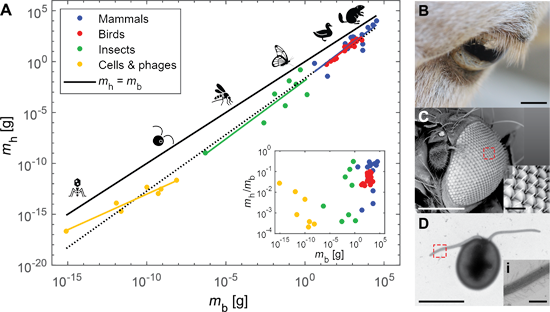
- , which branch into spatulae at the tips [60]. The branching ensures a high density of hairs to generate high adhesive forces [61]. With advances in fabrication techniques at the micrometer scale, gecko-inspired adhesive hairs have been developed, which are capable of generating adhesion without the use


Comparative analysis of the ultrastructure and adhesive secretion pathways of different smooth attachment pads of the stick insect Medauroidea extradentata (Phasmatodea)
Beilstein J. Nanotechnol. 2024, 15, 612–630, doi:10.3762/bjnano.15.52
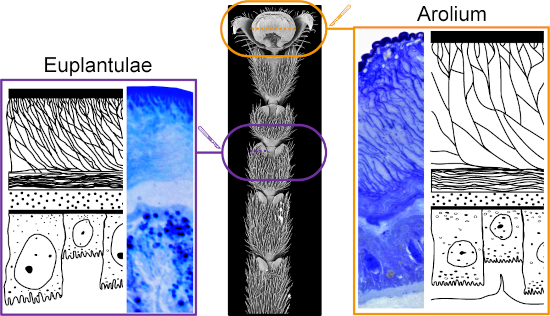
- present in varying mixture ratios, which would also influence its properties and thus its functions [38]. Secretion with more long-chain carbons and higher branching bonds is more viscous and would potentially exert stronger viscous forces [39][40]. The functional differentiation of the smooth attachment
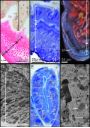
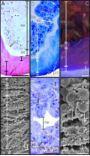
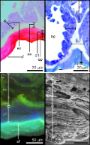
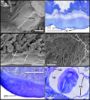
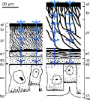
- in the light microscope (Figure 3B). In CLSM, the endocuticle layer 1 exhibits a relatively low degree of sclerotization (Figure 3C). On top of the endocuticle layer 1 there is a ≈30 µm thick primary rod layer (pr) consisting of wide rods extending towards the surface of the arolium and branching
- into finer rods forming another ≈10 µm thick branching rod layer (br) (Figure 3). The primary rod layer and the branching rod layer are notably stained red by Cason stain (Figure 3A) and blue by toluidine blue stain (Figure 3B), confirming their cuticular origin. The CLSM images further revealed that



Hierarchically patterned polyurethane microgrooves featuring nanopillars or nanoholes for neurite elongation and alignment
Beilstein J. Nanotechnol. 2023, 14, 1157–1168, doi:10.3762/bjnano.14.96
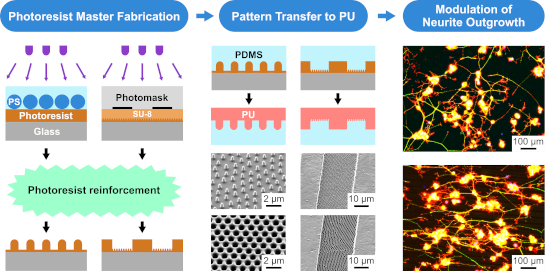
- ,C). There were also no significant differences in the amount of neurite branching among the nanopatterned substrates and the flat PU (Supporting Information File 1, Figure S10). The number of cells and primary neurites was lower on the nanopillar substrate compared with flat PU (Supporting
- (Supporting Information File 1, Figure S16B,C). Moreover, there were also no significant differences in the amount of neurite branching among the substrates (Supporting Information File 1, Figure S17). Similar to the non-grooved substrate, the pillar–groove substrate had lower cell and primary neurite counts


Exploring internal structures and properties of terpolymer fibers via real-space characterizations
Beilstein J. Nanotechnol. 2023, 14, 1004–1017, doi:10.3762/bjnano.14.83
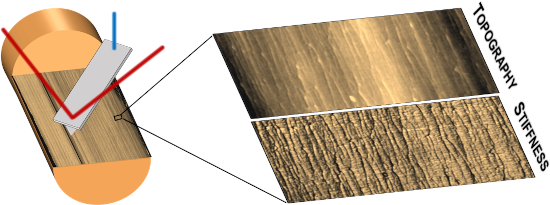
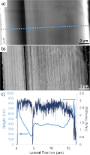
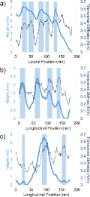
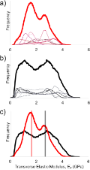
- aligned with the fiber axis with significant fibril branching, junctions, and weaving in and out of the exposed surface. Combining topography maps with stiffness maps, we find that locally elevated regions exhibit higher stiffness, regardless of scanning direction, orientation with the fiber axis, or the
- structure. Comparisons of AFM maps from each fiber class revealed that the Technora® nanostructure includes (i) more fibril branching, (ii) less-defined interfaces, and (iii) more homogeneous stiffness profiles than in Kevlar® K29. These semiquantitive comparisons of stiffness were further supported by






Fragmentation of metal(II) bis(acetylacetonate) complexes induced by slow electrons
Beilstein J. Nanotechnol. 2023, 14, 980–987, doi:10.3762/bjnano.14.81
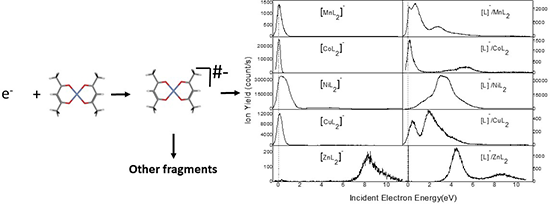
- pathways (e.g., branching ratio), will be helpful for using this family of organometallic compounds. Results and Discussion The interaction of low-energy electrons with gaseous compounds ML2 (M: Mn, Co, Ni, Cu, and Zn; L: acac) produces the parent anion [ML2]− and the fragment anion [L]− as the predominant
- summarizes all the observed anion products. As the anion yields shown below in Figures 1–6 show structures characteristic of resonant mechanisms, Table 1 also reports the peak positions of the fragment anions and their branching ratios derived by integration of the ion yield over the respective peaks. At the
- at this energy are compared with the sum of all integrated yields produced, we can provide the branching ratios for fragment production. The [MnL2]#− TNI decomposes into the negative fragments [L]−, [L-C3H3]−, and [C3H3]− at ca. 2.6 eV (Figure 5). For instance, at this energy, we estimate the


Nanotechnology – a robust tool for fighting the challenges of drug resistance in non-small cell lung cancer
Beilstein J. Nanotechnol. 2023, 14, 240–261, doi:10.3762/bjnano.14.23
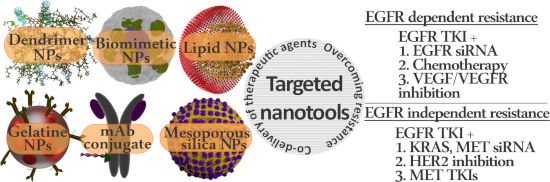
- the chemical properties (head structure, tail length, degree of unsaturation, and degree of branching) of lipidoids (i.e., above cationic lipid-like materials) and the lipidoid tail structure on biodistribution and efficacy of the NPs. It has been found that imidazole-based synthetic lipidoids


A TiO2@MWCNTs nanocomposite photoanode for solar-driven water splitting
Beilstein J. Nanotechnol. 2022, 13, 1520–1530, doi:10.3762/bjnano.13.125
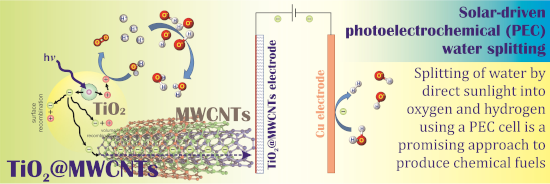
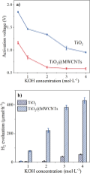
- in Figure 2. They confirm that the TiO2@MWCNTs nanocomposite catalyst is successfully prepared via the hydrolysis reaction. It can be seen from Figure 2a that the morphology of MWCNTs is incoherent, curved, interlaced, and with little branching. Furthermore, a non-uniform decoration of TiO2 clusters
- conjunctional bridges. TiO2 particles deposit only on the outside wall surface of the MWCNTs. Additionally, an agglomeration of TiO2 particles is only observed at the branching points, zigzag regions, and the end of MWCNTs where the defects are identified. However, the observation differs from previous studies



Morphology-driven gas sensing by fabricated fractals: A review
Beilstein J. Nanotechnol. 2021, 12, 1187–1208, doi:10.3762/bjnano.12.88
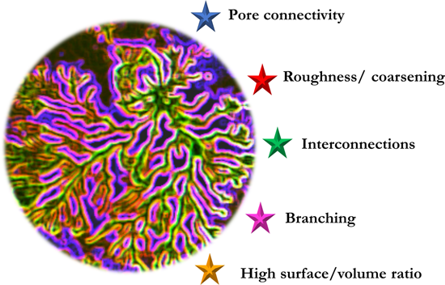
- provided a large surface area while the branching of the structures helped in diffusion and transport of gas molecules within the sensing material. The samples had fractal dimensions of 1.59 (after two hours of reaction) and 1.38 (after six hours of reaction). Zang et al. demonstrated the mass production
- , roughness, porosity, branching, network structure, and fractal dimensions. The fractal dimensions estimated in the present article show that structures with D in the range of 1.3–1.8 exhibit better gas sensing responses. For fractal dimensions greater than 2, gas sensing behavior is not significant, and










Revealing the formation mechanism and band gap tuning of Sb2S3 nanoparticles
Beilstein J. Nanotechnol. 2021, 12, 1021–1033, doi:10.3762/bjnano.12.76
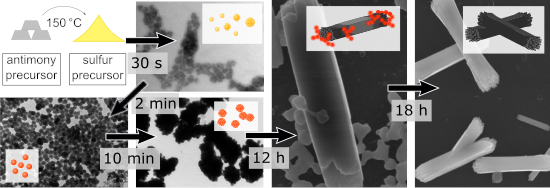
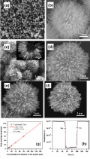
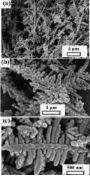
- the bristle-like shape, even after the growth stopped after 18 h reaction time, a merging process was excluded. The growth of individual particle fragments, such as bristles, has been described in the literature as a dendrite-like splitting or branching of primary particles in an autoclave synthesis


Uniform arrays of gold nanoelectrodes with tuneable recess depth
Beilstein J. Nanotechnol. 2021, 12, 957–964, doi:10.3762/bjnano.12.72
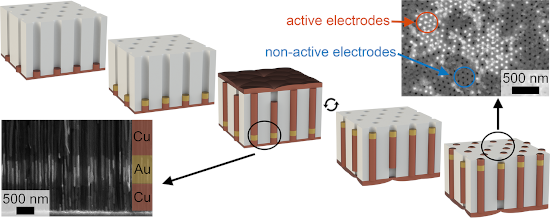
- active nanoelectrodes in the array can be achieved by modification of the AAO structure and artificial pore branching [34]. Conclusion Templated electrodeposition was successfully applied for the fabrication of recessed Au NEAs. The proposed preparation protocol includes a three-stage electrodeposition


Self-assembly of Eucalyptus gunnii wax tubules and pure ß-diketone on HOPG and glass
Beilstein J. Nanotechnol. 2021, 12, 939–949, doi:10.3762/bjnano.12.70
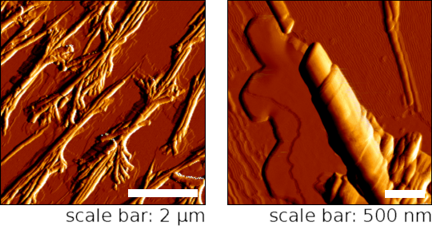
- respect to the substrate and were branched in typical acute angles (Figure 2d). The branching of the tubules was also observed by Jetter and Riederer [15] in a recrystallization study of nonacosanol tubules. There, the formation of side branches was explained by the kinetic regime of crystallization, in




Physical constraints lead to parallel evolution of micro- and nanostructures of animal adhesive pads: a review
Beilstein J. Nanotechnol. 2021, 12, 725–743, doi:10.3762/bjnano.12.57
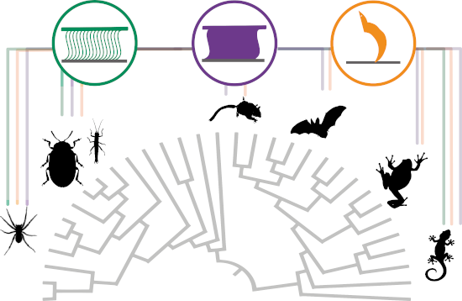
- natural substrata. However, the convergent basic architecture of the pads can be tuned into different needs and constraints in the evolution of individual animal groups and species. The structural principle based on branching rods in smooth pads may, for example, additionally contribute to holding the


The influence of an interfacial hBN layer on the fluorescence of an organic molecule
Beilstein J. Nanotechnol. 2020, 11, 1663–1684, doi:10.3762/bjnano.11.149
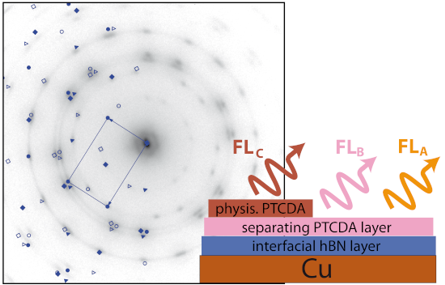
- overlap of states becomes evident in the experiment as it causes a reduction of the FL yield (i.e., quenching). The degree of quenching may vary and, hence, lead to different branching ratios between the radiative and non-radiative channels. In order to obtain high FL yields of molecules on metallic





A 3D-polyphenylalanine network inside porous alumina: Synthesis and characterization of an inorganic–organic composite membrane
Beilstein J. Nanotechnol. 2020, 11, 938–951, doi:10.3762/bjnano.11.78
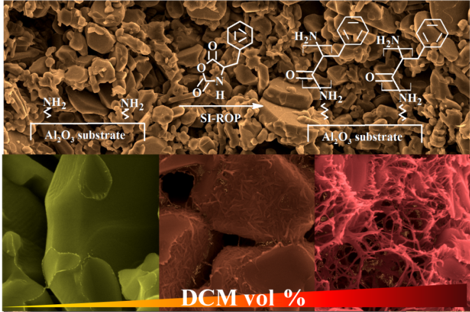
- "crosslinking" due to branching and rejoining of fibrillar supramolecular aggregates occurs. Nevertheless "end-to-end" and "side-to-side" interactions of the pBzg-α-helices are essential for the formation of fibrillar networks. Supported hydrogels that were attached to a porous substrate have been reported by




Hierarchically structured 3D carbon nanotube electrodes for electrocatalytic applications
Beilstein J. Nanotechnol. 2019, 10, 1475–1487, doi:10.3762/bjnano.10.146
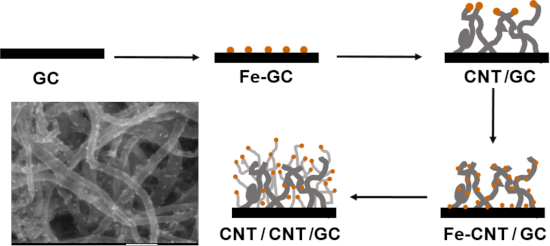
- , bottom-up synthesis approaches have been suggested, including branching or hierarchical structuring of carbon-based catalyst supports. In these approaches, one-dimensional (1D, e.g., CNTs or nano-/microfibers) or two-dimensional carbon materials (2D, e.g., graphene) are transformed into three-dimensional