


Search results
Search for "crystallization" in Full Text gives 213 result(s) in Beilstein Journal of Nanotechnology. Showing first 200.
Nanocarrier strategies to overcome P-glycoprotein-mediated drug resistance in cancer therapy
Beilstein J. Nanotechnol. 2026, 17, 882–921, doi:10.3762/bjnano.17.64
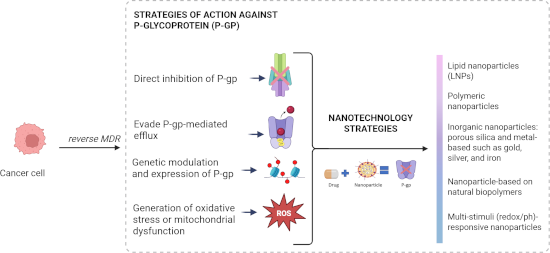
- carriers (NLCs), which incorporate liquid lipids into a solid lipid matrix. This design prevents excessive crystallization, enhances stress resistance, and allows for more efficient and controlled release of active compounds. NLCs are typically categorized into amorphous, imperfect, and multitype


Recent progress in enhancing built-in electric fields of perovskite solar cells via junction engineering
Beilstein J. Nanotechnol. 2026, 17, 602–621, doi:10.3762/bjnano.17.42
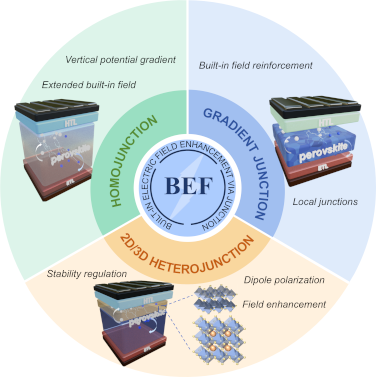
- cyclopentylmethylamine (CMA) post-treatment to induce homojunction formation at the lateral microinterfaces between the carbon electrode and the perovskite. After crystallization, the perovskite within the mesoscopic framework forms numerous microcontacts with the carbon electrode. CMA infiltration from the carbon side
- absorber layer, while recombination losses and improving stability are suppressed. A modification strategy based on two-dimensional black phosphorus nanosheets (BP NSs) proposed by Fan et al. [38] exemplifies this combination of interface-induced and bulk modulation. During perovskite crystallization, BP
- ] introduced methylammonium acetate (MAAc) and methylammonium thiocyanate (MASCN) into perovskite precursors containing both Pb and Sn. MAAc volatilized rapidly, inducing surface crystallization, while SCN− accumulated in the bulk and passivated deep defects. Together, these effects promoted vertically



Functional surface engineering for cultural heritage protection: the role of superhydrophobic and superoleophobic coatings – a comprehensive review
Beilstein J. Nanotechnol. 2026, 17, 63–96, doi:10.3762/bjnano.17.6
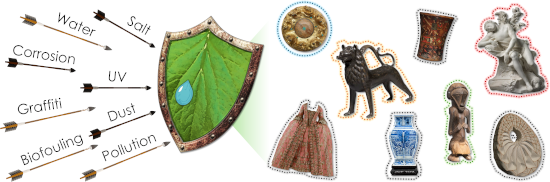
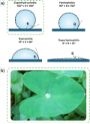
- and durability under acid exposure, weathering, and salt crystallization, and is composed of nontoxic, biocompatible constituents, thus addressing safety and ethical considerations. Reversibility is only partially achieved as removal is possible under certain conditions but cannot be guaranteed
- . Concerning the outdoor environment for preservation of inorganic materials used in cultural heritage monuments and artworks from damages, such as alveolation, erosion, rising damp, or salt crystallization, Lettieri et al. [60] presented a partially eco-friendly, water-based fluoropolymer coating to protect




Rapid synthesis of highly monodisperse AgSbS2 nanocrystals: unveiling multifaceted activities in cancer therapy, antibacterial strategies, and antioxidant defense
Beilstein J. Nanotechnol. 2025, 16, 2105–2115, doi:10.3762/bjnano.16.145
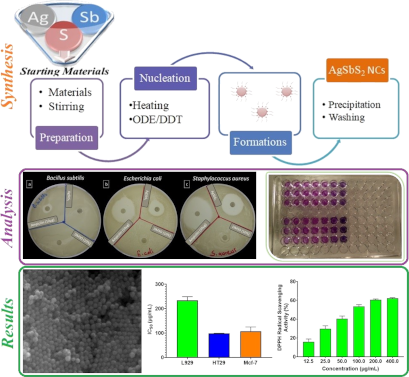
- , indicating robust crystallization. Moreover, the presence of prominent peaks aligning with (220), (311), (420), and (511) planes confirmed alignment with XRD results. Furthermore, utilizing particle size distribution analysis, the crystallite size of average particles was estimated, as illustrated in the


Stereodiscrimination of guests in chiral organosilica aerogels studied by ESR spectroscopy
Beilstein J. Nanotechnol. 2025, 16, 2034–2054, doi:10.3762/bjnano.16.140
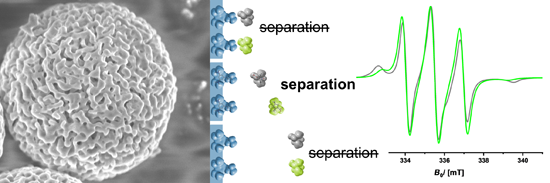
- according to [64], and the racemate was separated by fractional crystallization using (S)-(−)-1-phenylethylamine for (+)-3CP and (R)-(+)-1-phenylethylamine for (−)-3CP as indicated in Supporting Information File 1, Figure S10. The enantiomeric purity was checked after each crystallization step using the
- , followed by crystallization. The precipitate is filtered off and washed with acetone. (The acetone phase can be used to obtain (−)-3CP). The filtrate is dissolved in water, acidified with hydrochloric acid to pH 3 and extracted three times with diethyl ether. The ether phase is dried with MgSO4, and the




Beyond the shell: exploring polymer–lipid interfaces in core–shell nanofibers to carry hyaluronic acid and β-caryophyllene
Beilstein J. Nanotechnol. 2025, 16, 2015–2033, doi:10.3762/bjnano.16.139
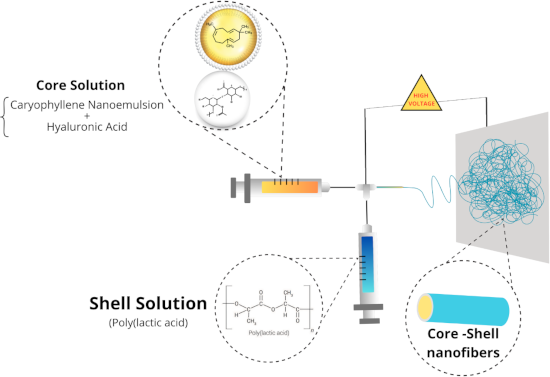
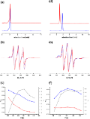
- , featuring an endothermic peak corresponding to the melting of crystallites, an exothermic peak related to the crystallization of polymer chains into spherulites, and a baseline shift indicative of the glass transition of the amorphous regions. Due to the high PLA content in the fibers, all three analyzed
- samples exhibited thermal behavior similar to that of monolithic PLA nanofibers. In the first heating cycle (Figure 8C), all three samples displayed an exothermic peak between 72–77 °C, corresponding to the cold crystallization temperature (Tcc), which indicates the crystallization of chains that were not
- more prone to defects due to crystallization within a confined space [75]. As a result, water diffusion in these amorphous regions increases, and the catalytic effect of the carboxyl groups may accelerate the hydrolytic degradation of semicrystalline samples [20][65][73]. Furthermore, the crystallinity




Laser ablation in liquids for shape-tailored synthesis of nanomaterials: status and challenges
Beilstein J. Nanotechnol. 2025, 16, 1963–1997, doi:10.3762/bjnano.16.137


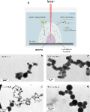



Electrical, photocatalytic, and sensory properties of graphene oxide and polyimide implanted with low- and medium-energy silver ions
Beilstein J. Nanotechnol. 2025, 16, 1794–1811, doi:10.3762/bjnano.16.123
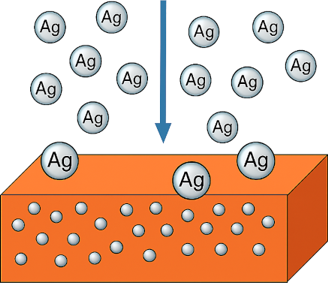
- surface electrical resistivity [8]. During implantation, the kinetic energy of the implanted particles is transferred to the matrix, causing local crystallization and carbonization of the polymer structures. This process is associated with the destruction of the original covalent bonds (e.g., C–N, C=O


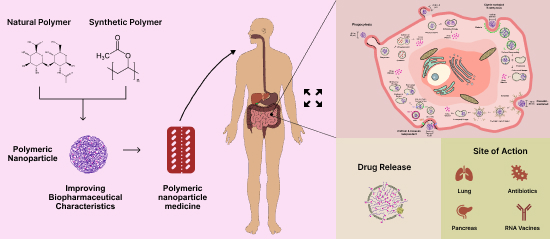
Exploring the potential of polymers: advancements in oral nanocarrier technology
Beilstein J. Nanotechnol. 2025, 16, 1751–1793, doi:10.3762/bjnano.16.122


Photochemical synthesis of silver nanoprisms via green LED irradiation and evaluation of SERS activity
Beilstein J. Nanotechnol. 2025, 16, 1417–1427, doi:10.3762/bjnano.16.103
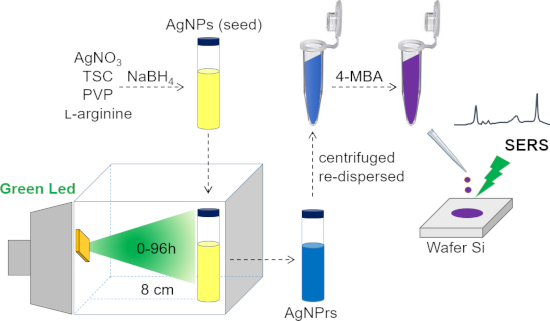
- , violet, green, and blue. This makes AgNPrs highly suitable for optical sensing applications [2]. The formation mechanism of AgNPrs in solution typically proceeds through three stages, namely, nucleation, seeding, and crystallization, with the crystallization phase being the slowest and rate-determining


Crystalline and amorphous structure selectivity of ignoble high-entropy alloy nanoparticles during laser ablation in organic liquids is set by pulse duration
Beilstein J. Nanotechnol. 2025, 16, 1141–1159, doi:10.3762/bjnano.16.84
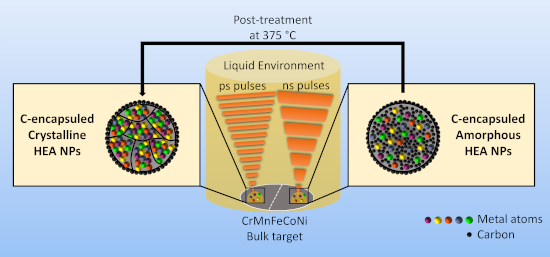
- . Furthermore, metalloid elements, such as phosphorous, silicon, boron, and carbon were shown to retard crystallization and favor the formation of long-range disordered structures. Organic solvent molecules used in LSPC can serve as a carbon source which strongly affects the stabilization of amorphous
- indicates the formation of larger crystallites in SAED. As shown in the differential scanning calorimetry (DSC) measurement in Figure 4D, the crystallization of the amorphous particles is an exothermic process and begins at approximately 375 °C, which is exactly the same temperature where the rapid decrease
- the difference in pressure was shown to not affect the formation and crystallization of the particles but rather dictates the presence or absence of thermal and stress confinement during ps- and ns-LAL and, thus, plays a crucial role in the heating and mixing behavior of the ablation plume [64]. Also




Soft materials nanoarchitectonics: liquid crystals, polymers, gels, biomaterials, and others
Beilstein J. Nanotechnol. 2025, 16, 1025–1067, doi:10.3762/bjnano.16.77






Multifunctional properties of bio-poly(butylene succinate) reinforced with multiwalled carbon nanotubes
Beilstein J. Nanotechnol. 2025, 16, 1014–1024, doi:10.3762/bjnano.16.76
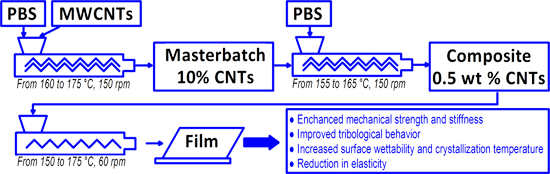
- mechanical strength and stiffness, improved the tribological properties by reducing friction, and increased the crystallization temperature. However, it also resulted in a decrease in elasticity. Morphological analysis confirmed the uniform dispersion of the nanotubes. These findings underscore the potential
- many researchers [9][10][11][12][13][14][15][16]. Regarding PBS-based nanocomposites, most studies focus on the influence of CNTs (including modified CNTs) on their thermal behavior [17][18][19], crystallization [20][21][22], structure [14][17][21][22][23], and biodegradability [12]. PBS/CNT
- viscoelastic properties of PBS. Wang et al. [19] reported similar results when melt mixing 0.5, 1.0, 2.0, and 3.0 wt % pristine raw MWCNTs with PBS in a mixer. Additionally, they observed an increase in the thermal stability and crystallization temperature of PBS. Champa-Bujaico et al. [18] and Zeng et al. [22



Changes of structural, magnetic and spectroscopic properties of microencapsulated iron sucrose nanoparticles in saline
Beilstein J. Nanotechnol. 2025, 16, 762–784, doi:10.3762/bjnano.16.59
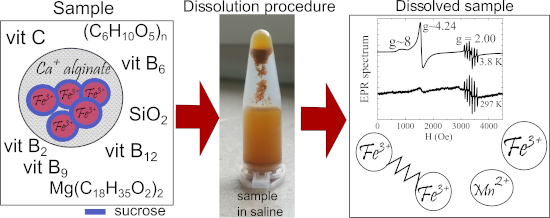
- correspond to sodium chloride [29]. Their intensity significantly increases after the dissolution procedure, which indicates the crystallization of NaCl from saline. The identification of the iron-containing phase based on the XRD data for the FS0 sample is problematic, as the most intense peaks predicted
- appearance of specific bands at lower frequencies in the Raman spectra of FS0 and FST. These bands suggest crystallization of goethite oxyhydroxide (α-FeOOH)-like structure with bands at 297, 393 cm−1 (Eg symmetry), and 498 cm−1 related to symmetric bending Fe–OH and symmetric stretching Fe–O–Fe/–OH





Tailoring of physical properties of RF-sputtered ZnTe films: role of substrate temperature
Beilstein J. Nanotechnol. 2025, 16, 333–348, doi:10.3762/bjnano.16.25
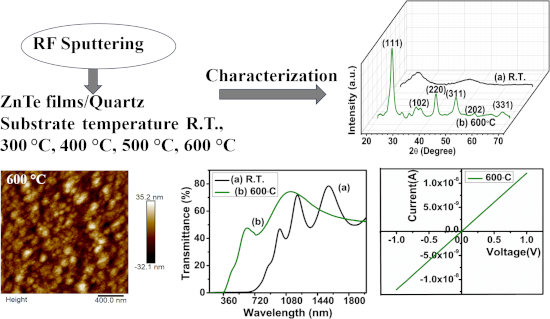
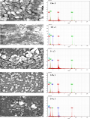
- steps, namely, condensation, nucleation, and crystallization on the substrate surface. The mobility of atoms on the substrate surface is very much affected by the substrate temperature. At low substrate temperatures, because of the low diffusion rate and low mobility of atoms, columnar microstructures




Enhancing mechanical properties of chitosan/PVA electrospun nanofibers: a comprehensive review
Beilstein J. Nanotechnol. 2025, 16, 286–307, doi:10.3762/bjnano.16.22

- chains in the fibers are not properly aligned, resulting in non-uniform mechanical and structural properties [23]. The incomplete crystallization of the fibers caused by the short and weak stretch process gives the fibers poor mechanical properties [24]. Last, there is the fibers’ random orientation


Preferential enrichment and extraction of laser-synthesized nanoparticles in organic phases
Beilstein J. Nanotechnol. 2025, 16, 254–263, doi:10.3762/bjnano.16.20
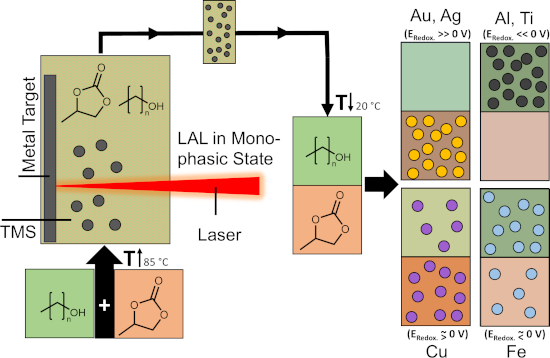
- depends on where in the plume they stem from, and there is a distribution of cooling rates ranging at least over three orders of magnitude, from less than 1011 to 1013 K·s−1, evidencing undercooling effects and defect-rich nanoparticle crystallization [59]. One may hypothesize that the different cooling




TiO2 immobilized on 2D mordenite: effect of hydrolysis conditions on structural, textural, and optical characteristics of the nanocomposites
Beilstein J. Nanotechnol. 2025, 16, 128–140, doi:10.3762/bjnano.16.12
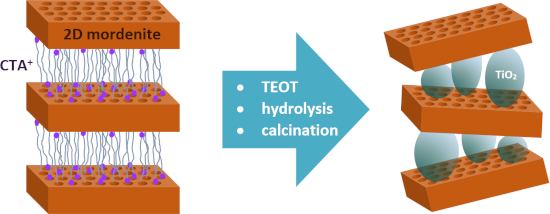
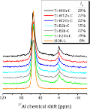
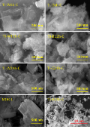
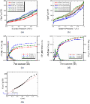
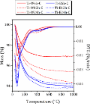
- treatment in air is eliminated in the process of crystallization at 400–550 °C; thus, titanium dioxide nanoparticles are obtained [29]. In this study we investigate in detail the influence of the hydrolysis medium and the duration of the hydrolytic process on composition, local structure, morphology



Bioinspired nanofilament coatings for scale reduction on steel
Beilstein J. Nanotechnol. 2025, 16, 25–34, doi:10.3762/bjnano.16.3

- only 4.0 ± 1.5 mg. This corresponds to a scale reduction of 75.5% by the SNF coating. Ostensibly, the non-wetting properties of the SNF films prevent attachment and growth of scale. Calcium carbonate scale formation starts with crystallization nuclei, small clusters of ions which can homogeneously form


Attempts to preserve and visualize protein corona on the surface of biological nanoparticles in blood serum using photomodification
Beilstein J. Nanotechnol. 2024, 15, 1654–1666, doi:10.3762/bjnano.15.130

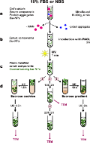
- to find published data on the effect of sucrose on the ultrastructure of bio-NPs (as well as artificial lipid NPs), and there is no information on the crystallization of sucrose during the UC process. We can suppose that long-term (18 h) exposure to 30% sucrose solutions under UC resulted in the



Effect of radiation-induced vacancy saturation on the first-order phase transformation in nanoparticles: insights from a model
Beilstein J. Nanotechnol. 2024, 15, 1453–1472, doi:10.3762/bjnano.15.117

- ]. Additionally, high radiation tolerance was observed in crystalline Fe/amorphous SiOC nanolaminates [8]. Long-term irradiation treatments have revealed phase transformations in HDCMs, such as the crystallization of an earlier formed amorphous state (re-crystallization) or a change in the basic crystalline state


Nanotechnological approaches for efficient N2B delivery: from small-molecule drugs to biopharmaceuticals
Beilstein J. Nanotechnol. 2024, 15, 1400–1414, doi:10.3762/bjnano.15.113

- the low drug loading capacity and drug expulsion during storage because of an increased crystallization tendency [102]. Researchers developed a second generation of lipid-based drug carriers called nanostructured lipid carriers (NLCs). Unlike the SLNs, the core structure of the NLCs is composed of


Mn-doped ZnO nanopowders prepared by sol–gel and microwave-assisted sol–gel methods and their photocatalytic properties
Beilstein J. Nanotechnol. 2024, 15, 1283–1296, doi:10.3762/bjnano.15.104
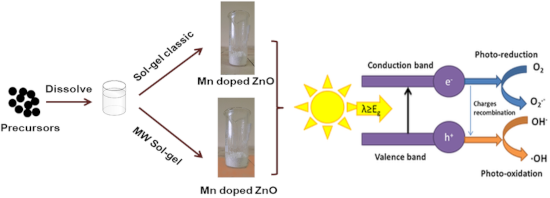
- distribution, improved purity, tailored shape, and morphological uniformity [21]. More crucially, the crystallization can be influenced by varying reaction temperature, reaction duration, and system composition [18][22]. According to the literature, MW has been predominantly employed for the thermal treatment
- % and an exothermic effect around 405 °C. At higher temperatures, above 500 °C, there is one thermal effect noticed on the DTA curves, namely, an exothermal effect at 904 °C, which is assigned to ZnO crystallization. The decomposition ranges of the studied powders, the mass loses, and the corresponding
- crystallization, consistent with the results from XRD and SEM analyses. Additionally, bands at 3437 and 1613 cm−1 correspond to the vibrational modes of hydroxy groups (OH) bonded to the surface of the ZnO powders. X-ray diffraction The crystalline structure of the samples thermally treated at 500 °C was analyzed


The role of a tantalum interlayer in enhancing the properties of Fe3O4 thin films
Beilstein J. Nanotechnol. 2024, 15, 1253–1259, doi:10.3762/bjnano.15.101

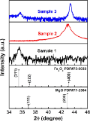
- interlayer has an effect on the crystallization of the Fe3O4 film. XRD patterns provide further information about the structural properties of a material, such as lattice constant (a), dislocation density (δ), and microstrain (ε). Bragg’s law was used to calculate the d-spacing of the Fe3O4(311) and Fe3O4
- the crystallization temperature can help to reduce the number of APBs in Fe3O4 thin films [43]. Besides, the increased grain size in sample 3 also results in an increased Ms as described in [44]. The change in Hc also depends on two factors, that is, APBs and grain size [45]. Thanks to the prevention
- ) at room temperature using RF sputtering. Our finding highlights the role of the Ta buffer layer in the multilayered structure. Ta helps to decrease the crystallization temperature of the Fe3O4 film and prevents the diffusion of oxygen atoms from SiO2 to MgO, resulting in an enhancement in grain size


Atomistic insights into the morphological dynamics of gold and platinum nanoparticles: MD simulations in vacuum and aqueous media
Beilstein J. Nanotechnol. 2024, 15, 995–1009, doi:10.3762/bjnano.15.81
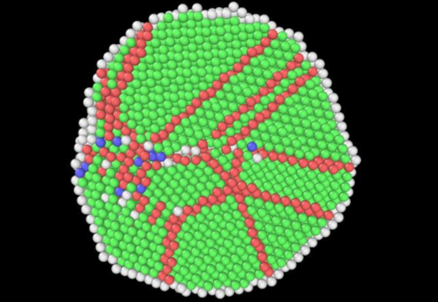
- possess a higher level of crystallinity than the gold counterparts under the same conditions because of the stronger cohesive forces that drive the crystallization process. This observation is also supported by the simulated X-ray powder diffraction patterns of the nanomaterials. The larger NPs have a
- employed to study other metallic and metal oxide nanomaterials. Keywords: crystallization; gold; molecular dynamics; nanoparticles; platinum; Introduction Nanomaterials, that is, materials with dimensions in the range of 1–100 nm [1][2], are central to a variety of developments in science and technology
- molecular dynamics [44]. The strong decrease of the melting point of small Au NPs compared to bulk Au was quantified by Qiao et al. [45]. Nayebi and Zaminpayma [46] as well as Shim et al. [47] studied the crystallization of liquid Au NPs. The dependence of the surface energy of gold NPs on their size and





