


Search results
Search for "electron beam" in Full Text gives 387 result(s) in Beilstein Journal of Nanotechnology. Showing first 200.
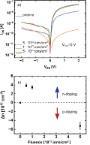
Sustainable fabrication of 2D-based devices through reuse of substrates with microfabricated electrodes
Beilstein J. Nanotechnol. 2026, 17, 818–827, doi:10.3762/bjnano.17.58
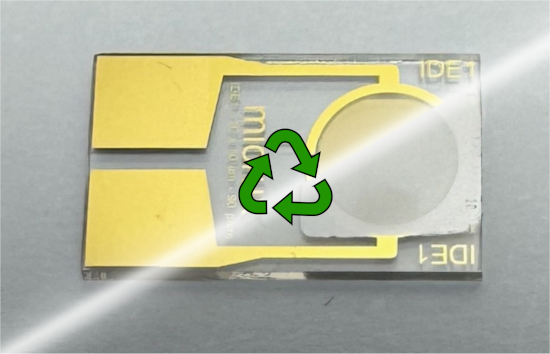
- in this work employed a 5 nm Ti/45 nm Au stack deposited by electron-beam evaporation. The interdigitated electrodes on glass were supplied from Micrux Technologies and also employed a 50 nm Ti/150 nm Au stack. The interdigitated ITO electrodes on glass were purchased from Ossila (S161-20). Materials


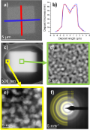
Substrate-dependent pore formation in molybdenum disulfide monolayers under ion irradiation
Beilstein J. Nanotechnol. 2026, 17, 769–780, doi:10.3762/bjnano.17.54
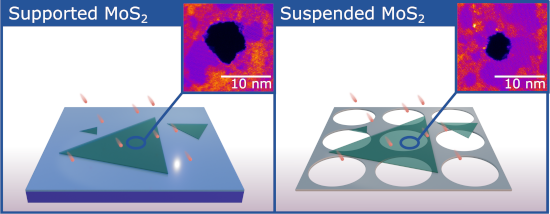
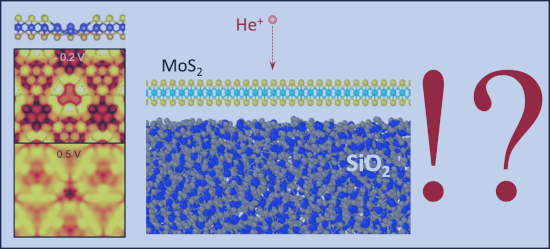
- the HICS beamline at the University of Duisburg-Essen [42][66][67]. The ions with charge states q = 28+ up to q = 44+ are provided by an electron beam ion source (EBIS). Samples were irradiated under perpendicular incidence with a fluence of Φ = 5 × 1011 cm−2. At this fluence, the density of pores is


Decontamination from water pollutants and pathogens by electrospun nanofibers doped with heavy-atom-free borafluorene-BODIPY photosensitizers
Beilstein J. Nanotechnol. 2026, 17, 668–682, doi:10.3762/bjnano.17.46
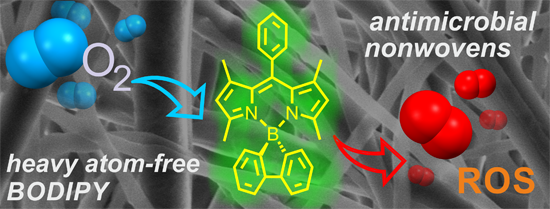
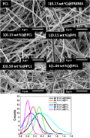
- Beam microscope (ThermoFisher) equipped with a focused electron beam and a Xe ion beam. The EDS experiments were performed with a working distance of 4 mm, an accelerating voltage of 15 kV, a probe current of 0.2 nA, a magnification of 15000×, and a collection time of 30 min. Prior to ToF SIMS



Two-step laser synthesis of Ag@TiO2 nanomaterials for the photocatalytic degradation of rhodamine B
Beilstein J. Nanotechnol. 2026, 17, 622–634, doi:10.3762/bjnano.17.43
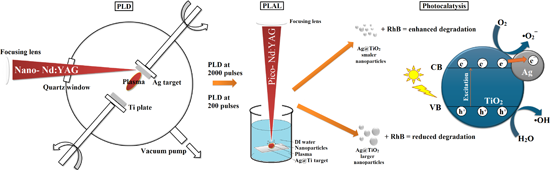
- the titanium plate are given in Figure 2a and Figure 3a alongside the distribution of titanium (pink) and oxygen (blue), and silver (yellow) according to the elemental mapping obtained from the EDS analysis. SEM-SE images generated using a focused electron beam to image sample surfaces at high


Defects and defect-mediated engineering of two-dimensional materials: challenges and open questions
Beilstein J. Nanotechnol. 2026, 17, 454–488, doi:10.3762/bjnano.17.31
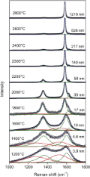
- and the mechanisms of defect formation. This indicates that defects can also be created deliberately during exposure to the electron beam, which can be used for engineering structure and properties of materials with potentially atomic resolution [34][35][36][37]. It should be pointed out that many
- of defects, for example, TEM [80], STM [81], or atomic force microscopy (AFM) [82]; but, normally, only a small part of the sample can be probed [83][84][85]. Moreover, these techniques can create defects themselves, for example, when the energy of the electron beam exceeds the displacement threshold





Advancing nanolithography: a comprehensive review of materials for local anodic oxidation with AFM
Beilstein J. Nanotechnol. 2026, 17, 275–291, doi:10.3762/bjnano.17.19
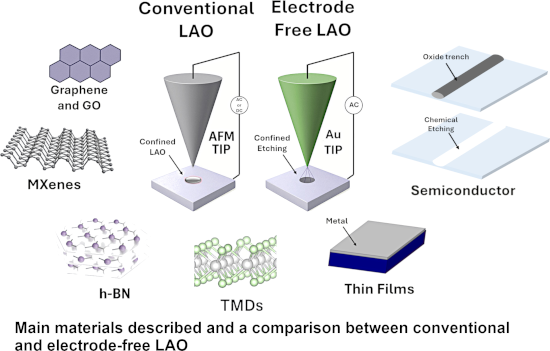
- -SPL), the fastest SPL technique, can reach writing speeds of up to 1 mm·s−1, enabling patterning rates of the order of 10–100 mm2·h−1 under optimal conditions [5]. This puts it in a similar throughput range to electron beam lithography (EBL), which, depending on beam current and pattern complexity


Multilayered hyperbolic Au/TiO2 nanostructures for enhancing the nonlinear response around the epsilon-near-zero point
Beilstein J. Nanotechnol. 2026, 17, 251–261, doi:10.3762/bjnano.17.17
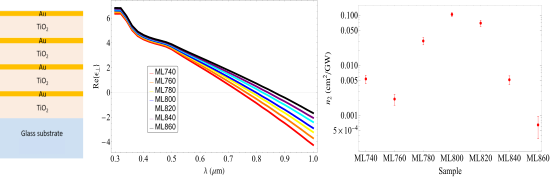
- –dielectric Au/TiO2 structures. The samples were fabricated using Joule effect evaporation for gold and electron beam evaporation for titanium dioxide. Their structure was designed to have an epsilon-near-zero (ENZ) point at different wavelengths around 800 nm, in order to study their nonlinear response as a
- electron beam and Au layers via Joule effect deposition, both at a deposition rate of 0.15 nm·s−1 and a base pressure of 2 µTorr. The target thickness for Au was 10 nm, while that of TiO2 was varied from 44 to 72 nm to achieve ENZ properties at or around the working wavelength of 800 nm. Every structure
- oscillator as a starting material for Au, and with TiO2 with Cody–Lorentz oscillators as starting material for TiO2. Scanning electron microscopy (Hitachi SU8030) was used to obtain the cross-sectional image (below in Figure 4a), with the sample oriented to expose the ENZ material edge to the electron beam


Chiral plasmonic nanostructures fabricated with circularly polarized light
Beilstein J. Nanotechnol. 2025, 16, 2245–2264, doi:10.3762/bjnano.16.154
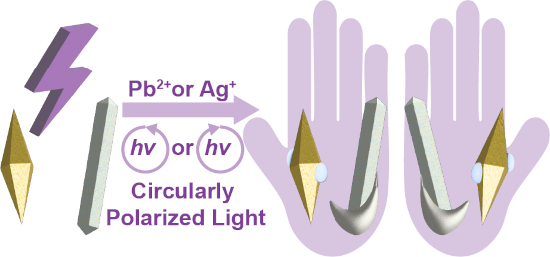
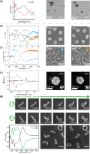
- that the sites of Au deposition ( reduction) are the locations of electrons from the nanoparticle transferred via PVP. Researchers made similar observations when electron beam lithography resist was exposed to hot electrons from AuNRs [86]. This study found hydrogen silsesquioxane underwent water
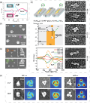
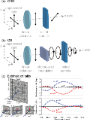
- LDOS [127]. The spatially localized electron beam excitation on PNSs allows for nanometer-scale spatial resolution. When an electron beam is incident on PNSs, plasmon modes are excited, and radiative photon emission is detected [128]. The intensity of this emission depends on LDOS. The polarization of
- CL can be resolved to correlate the chirality of the local electric field distribution to CPL excitation on PNSs [129][130]. The correlation between the chiral LDOS distribution and polarization-resolved CL is based on the reciprocity relation between electron beam excitation and optical plane wave





Evaluating metal-organic precursors for focused ion beam-induced deposition through solid-layer decomposition analysis
Beilstein J. Nanotechnol. 2025, 16, 1942–1951, doi:10.3762/bjnano.16.135
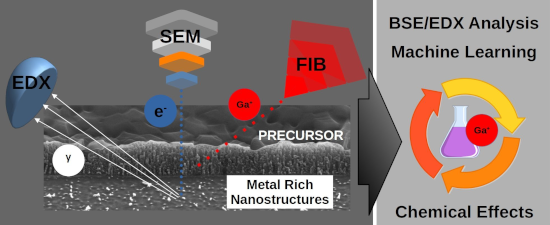
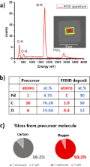
- Copernicus University in Toruń, Gagarina 7, 87-100 Toruń, Poland 10.3762/bjnano.16.135 Abstract The development of modern metal deposition techniques like focused ion/electron beam-induced deposition (FIBID/FEBID) relies heavily on the availability of metal-organic precursors of particular properties. To
- -dispersive X-ray spectroscopy (EDX); focused ion beam (FIB); focused ion beam-induced deposition (FIBID); machine learning; scanning electron microscopy (SEM); Introduction A variety of nanomanufacturing techniques, such as optical and electron-beam lithography, nanoimprint lithography, atomic layer
- % [5][15][22][23][24][25][26]. This shows that the electron beam-induced decomposition is influenced by the ligand and also by the coordination center. Due to the key role played by secondary electrons in the decomposition of FIBID precursors, FIBID precursor compounds are limited to those used and


Low-temperature AFM with a microwave cavity optomechanical transducer
Beilstein J. Nanotechnol. 2025, 16, 1873–1882, doi:10.3762/bjnano.16.130
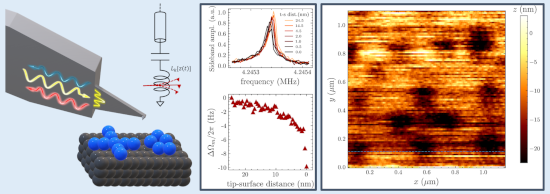
- edge of the plate, giving rise to a modulation of its kinetic inductance due to surface strain generated by cantilever bending. A Pt–C tip with curvature radius below 10 nm at its apex is formed at the free end of the cantilever through a series of electron-beam-assisted depositions. Figure 1d shows a


Laser processing in liquids: insights into nanocolloid generation and thin film integration for energy, photonic, and sensing applications
Beilstein J. Nanotechnol. 2025, 16, 1428–1498, doi:10.3762/bjnano.16.104






Influence of ion beam current on the structural, optical, and mechanical properties of TiO2 coatings: ion beam-assisted vs conventional electron beam evaporation
Beilstein J. Nanotechnol. 2025, 16, 1097–1112, doi:10.3762/bjnano.16.81
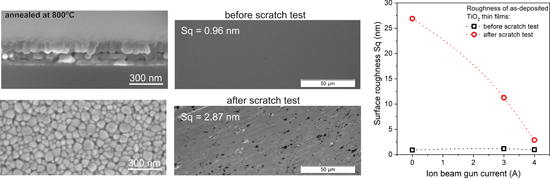
- ) coatings deposited using electron beam evaporation (EBE) and ion beam-assisted deposition (IBAD) are presented. Post-process annealing at 800 °C was also conducted to examine its impact on the properties of the prepared coatings. After annealing at 800 °C, a transition from amorphous to the anatase phase
- , adhesive, and durable TiO2 coatings with improved optical and mechanical properties, suitable for applications requiring enhanced wear resistance. Keywords: electron beam evaporation; ion beam-assisted deposition; mechanical properties; nanocrystalline anatase; optical properties; TiO2 coatings
- ; Introduction One of the commonly used methods for the deposition of various materials for thin film optical coatings, is electron beam evaporation (EBE) [1][2][3][4][5]. Today, in many applications, including medicine, telecommunications, optoelectronics, photovoltaics, the requirements for optical coatings




Time-resolved probing of laser-induced nanostructuring processes in liquids
Beilstein J. Nanotechnol. 2025, 16, 968–1002, doi:10.3762/bjnano.16.74
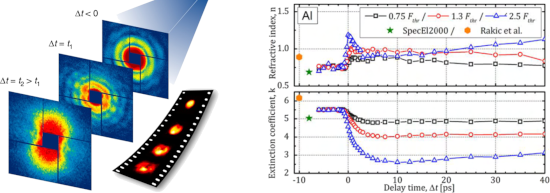
- MeV-UED facility of SLAC National Accelerator Laboratory. This setup features a high brightness, femtosecond electron beam operating at 3–4 MeV energies, coupled with a rapid-flow liquid sheet jet system, which ensures that the sample is refreshed before each pump–probe shot sequence. The scattering


Focused ion beam-induced platinum deposition with a low-temperature cesium ion source
Beilstein J. Nanotechnol. 2025, 16, 910–920, doi:10.3762/bjnano.16.69
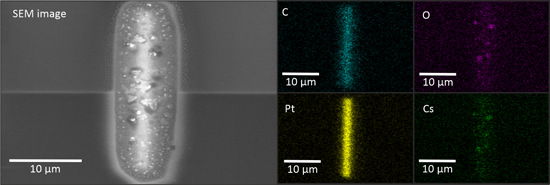
- of the Cs+ FIBID-Pt deposits using focused electron beam-induced deposition (FEBID). Therefore, a C-rich region exists in the lower-left corner of the C map. EDS spectra were taken at five points within the bulk deposit and then averaged to determine the chemical composition. Figure 6 displays these


Changes of structural, magnetic and spectroscopic properties of microencapsulated iron sucrose nanoparticles in saline
Beilstein J. Nanotechnol. 2025, 16, 762–784, doi:10.3762/bjnano.16.59
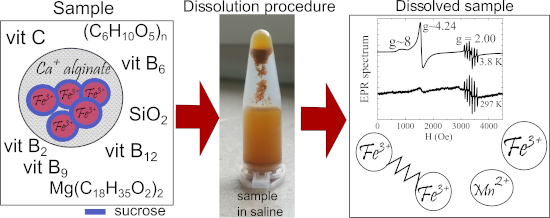
- various shapes and dimensions of several dozens of micrometers. The surfaces of the grains are notably rough and torn, and during the measurement displayed high susceptibility to electron beam charging, which is a characteristic of organic compounds. Consequently, these grains were recognized as





Synthesis of a multicomponent cellulose-based adsorbent for tetracycline removal from aquaculture water
Beilstein J. Nanotechnol. 2025, 16, 728–739, doi:10.3762/bjnano.16.56
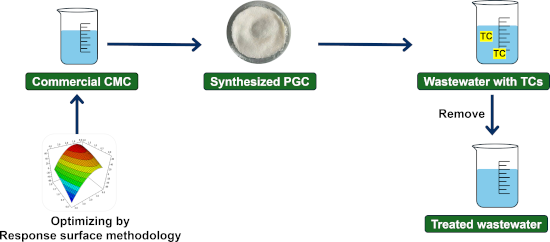
- the lateral bonding effect of GA and PVA, as well as the dissolution of cellulose by Zn2+. The rough, wrinkled surface and cracks are likely due to the focused high-energy electron beam during the FE-SEM imaging process [22]. Larger agglomerates, possibly ZnSO4 residues, are also apparent, which


Focused ion and electron beams for synthesis and characterization of nanomaterials
Beilstein J. Nanotechnol. 2025, 16, 613–616, doi:10.3762/bjnano.16.47

- the best of times, it was the worst of times" [2] – onto a 200 × 200 micron square of plastic using an electron beam. This achievement prompts a reflection: is nowadays the best or the worst of times for the development of electron and ion beam technologies? With the hope to contribute addressing this
- question, the co-guest editors Dr. Ivo Utke, Dr. Katja Höflich, Dr. Gregor Hlawacek, Dr. Nico Klingner, and myself organized a thematic issue in connection with the work presented at the joint meeting of the FIT4NANO (fit4nano – Focused Ion Technology for Nanomaterials) and FEBIP (Focused Electron Beam
- by Oddur Ingólfsson’s group [6], supported by quantum chemical calculations, revealed that chlorine removal during focused electron beam induced deposition (FEBID) was nearly complete, in contrast to the limited chlorine loss observed in gas-phase experiments. Previous studies have shown that gas

Retrieval of B1 phase from high-pressure B2 phase for CdO nanoparticles by electronic excitations in CdxZn1−xO composite thin films
Beilstein J. Nanotechnol. 2025, 16, 551–560, doi:10.3762/bjnano.16.43

- spectrometer (Bruker), equipped with an Ar ion laser (532 nm) with 0.2 mW laser operating power. Scanning electron microscopy (SEM) analysis was carried out with a HITACHI SU8020 model, using an electron beam energy of 3.0 keV. X-ray photoelectron spectroscopy (XPS) was performed using an ESCA-5000 Versa Probe


Electron beam-based direct writing of nanostructures using a palladium β-ketoesterate complex
Beilstein J. Nanotechnol. 2025, 16, 530–539, doi:10.3762/bjnano.16.41
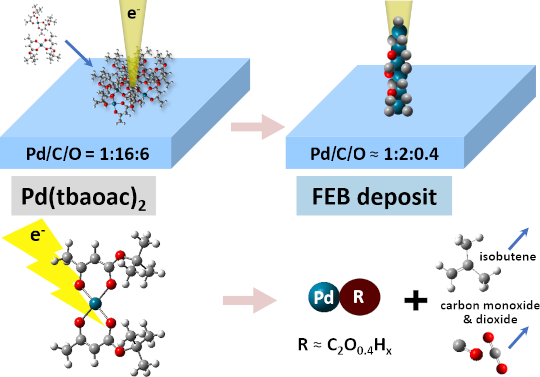
- Rennes, CNRS, IPR (Institut de Physique de Rennes) - UMR 6251, Rennes, France Faculty of Chemistry, Nicolaus Copernicus University in Toruń (NCU), Toruń, Poland 10.3762/bjnano.16.41 Abstract Gas-assisted focused electron beam-induced deposition (FEBID) as a direct, minimally invasive 3D nanopatterning
- promising precursor for nanoprinting 3D structures with finely focused electron beams. Keywords: 3D nanoprinting; electron-induced molecule dissociation; focused electron beam-induced deposition; metal nanostructures; metalorganic complexes; Introduction Direct fabrication of nanostructures without the
- ][11][12] properties at the nanometer scale. One method that is capable of creating such nanostructures is focused electron beam-induced deposition (FEBID) [13][14][15][16][17][18][19][20][21][22][23]. In this technique, a focused electron beam decomposes adsorbed molecules on a substrate in vacuum


N2+-implantation-induced tailoring of structural, morphological, optical, and electrical characteristics of sputtered molybdenum thin films
Beilstein J. Nanotechnol. 2025, 16, 495–509, doi:10.3762/bjnano.16.38
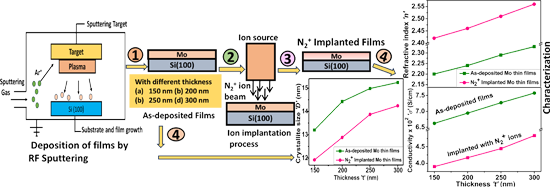
- electron beam evaporation [10] have been reported in the literature. RF sputtering is the predominant technique for thin film deposition because of its benefits regarding layer adhesion, uniformity, composition, and deposition rate compared to other methods [11]. In the deposition of molybdenum films, RF


Tailoring of physical properties of RF-sputtered ZnTe films: role of substrate temperature
Beilstein J. Nanotechnol. 2025, 16, 333–348, doi:10.3762/bjnano.16.25
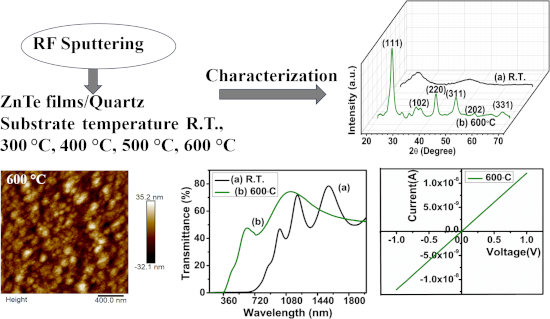
- physical and chemical methods such as molecular beam epitaxy [8], electron-beam evaporation [9], thermal evaporation [10], pulsed laser deposition (PLD) [11], and RF sputtering [12]. RF sputtering is a versatile technique because various process parameters such as RF power, deposition time, substrate




Precursor sticking coefficient determination from indented deposits fabricated by electron beam induced deposition
Beilstein J. Nanotechnol. 2025, 16, 35–43, doi:10.3762/bjnano.16.4

- Alexander Kuprava Michael Huth Physics Institute, Goethe University Frankfurt, Max-von-Laue-Str. 1, 60438 Frankfurt am Main, Germany 10.3762/bjnano.16.4 Abstract A fast simulation approach for focused electron beam induced deposition (FEBID) numerically solves the diffusion–reaction equation
- the center region of an intentionally defocused electron beam. We employ the method to determine the precursor sticking coefficient for bis(benzene)chromium, Cr(C6H6)2, and trimethyl(methylcyclopentadienyl)platinum(IV), Me3CpPtMe, and find a value of about 10−2 for both precursors, which is
- density, τ is the average precursor residence time, σ is the energy-averaged dissociation cross section, and D is the surface diffusion coefficient. This rate equation makes up the balance between all processes that contribute to replenishment and depletion of precursor molecules. The electron beam is


Fabrication of hafnium-based nanoparticles and nanostructures using picosecond laser ablation
Beilstein J. Nanotechnol. 2024, 15, 1639–1653, doi:10.3762/bjnano.15.129
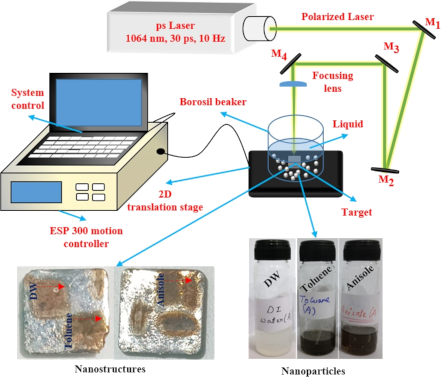
- mbar) using an electron beam melting furnace having a beam power of 60 kW (ELIT 60) at an accelerating voltage of 24 kV in a water-cooled crucible with feeding mechanism and an extraction system [32]. All operations were conducted at the Centre for Materials for Electronics Technology (CMET), Hyderabad




Ion-induced surface reactions and deposition from Pt(CO)2Cl2 and Pt(CO)2Br2
Beilstein J. Nanotechnol. 2024, 15, 1427–1439, doi:10.3762/bjnano.15.115

- Focused ion beam-induced deposition (FIBID) and focused electron beam-induced deposition (FEBID) are vacuum-based, charged-particle bottom-up nanofabrication techniques that directly fabricate metal containing nanostructures as a consequence of the reactions between ions or electrons and organometallic



Investigation of Hf/Ti bilayers for the development of transition-edge sensor microcalorimeters
Beilstein J. Nanotechnol. 2024, 15, 1353–1361, doi:10.3762/bjnano.15.108

- samples with bridges of different shapes and lengths were fabricated simultaneously in an electron beam evaporator at a vacuum of 5 × 10⁻⁸ Torr. The sample with the film was made separately but with the same parameters, including the thickness and evaporation rates. On the bridged samples
- , photolithography was performed on a Karl Suss MJB3 lithography aligner before deposition. We used AZ5214E photoresist, which was subsequently developed with MIF726. We then deposited 85 nm of hafnium and 5 nm of titanium onto the substrates through developed areas in the resist, using an electron beam evaporator





