


Search results
Search for "electrostatic interactions" in Full Text gives 139 result(s) in Beilstein Journal of Nanotechnology.
Glycerol photoelectrochemical oxidation reaction at carbon nitrides/BiVO4 materials
Beilstein J. Nanotechnol. 2026, 17, 806–817, doi:10.3762/bjnano.17.57
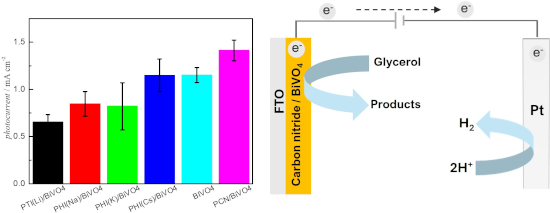
- that PHI synthesized in the presence of smaller cations, such as Na+, exhibits a higher degree of crystallinity compared to those prepared with larger cations, such as K+. This trend can be attributed to the stronger electrostatic interactions and more efficient packing of smaller cations within the




Environmental applications of silver nanoparticles: state-of-the-art review and emerging trends
Beilstein J. Nanotechnol. 2026, 17, 697–736, doi:10.3762/bjnano.17.49
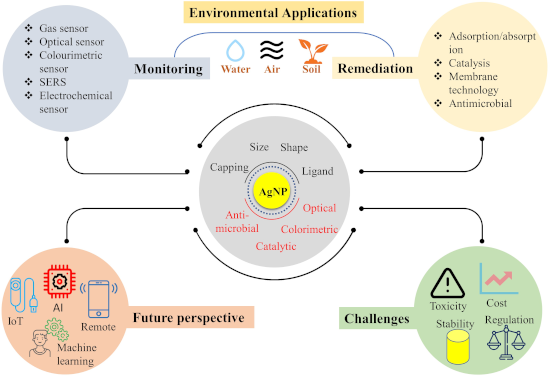
- critical factor influencing the behaviour and toxicity of AgNPs in ecological systems [64]. Surface charge affects the electrostatic interactions between nanoparticles and other charged species in the environment, influencing their aggregation behaviour and mobility. The surface chemistry of silver
- mechanism underlying removal was surface complexation via electrostatic interactions in both dyes, with hydrogen bonding occurring only in CR [98]. MB removal was achieved using AgNPs mediated by Salvinia molesta. The maximum adsorption of 121.04 mg/g was obtained at pH 4 and 35 °C. Additionally, the


Cellulose as a photocatalyst support material: extraction, structural features, and environmental applications
Beilstein J. Nanotechnol. 2026, 17, 635–652, doi:10.3762/bjnano.17.44


Nanocarrier-integrated multilayer films produced by 3D printing for improved skin adhesion and curcumin photostability
Beilstein J. Nanotechnol. 2026, 17, 440–453, doi:10.3762/bjnano.17.30
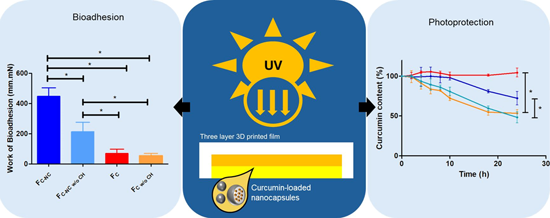
- , exploiting its cationic nature, which promotes electrostatic interactions with the negatively charged stratum corneum. This mechanism underlies its well-established bioadhesive behaviour, as well as its antimicrobial and wound-healing properties, which have been widely reported in the literature [32]. The


Ferroelectric nanodot reservoir for neuromorphic computing
Beilstein J. Nanotechnol. 2026, 17, 352–364, doi:10.3762/bjnano.17.24
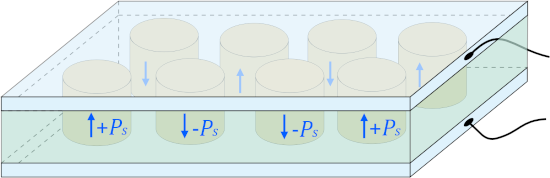
- response to various sequences of electrical charge pulses. These transitions exemplify the non-commutative and history-dependent behavior intrinsic to the system, stemming from the interplay of electrostatic interactions and local switching thresholds. Figure 4a depicts a two-nanodot system with an initial
- , coercive field inhomogeneity, and global electrostatic interactions. Such dynamics provide the essential nonlinear temporal memory required for time-dependent information processing in neuromorphic systems. Signal processing We now turn to large systems where the collective behavior of many interacting


Advancing nanolithography: a comprehensive review of materials for local anodic oxidation with AFM
Beilstein J. Nanotechnol. 2026, 17, 275–291, doi:10.3762/bjnano.17.19
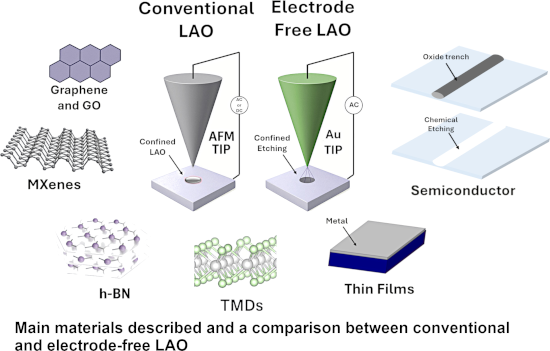
- tissue growth, or enable selective biomolecule immobilization. As an example, Martínez et al. [115] combined top-down oxidative nanolithography techniques and bottom-up electrostatic interactions to pattern single molecules of ferritin on silicon surfaces. Furthermore, biocompatible materials such as


Internal 3D temperature mapping in biological systems using ratiometric light-sheet imaging and lipid-coated upconversion nanothermometers
Beilstein J. Nanotechnol. 2025, 16, 2306–2316, doi:10.3762/bjnano.16.159
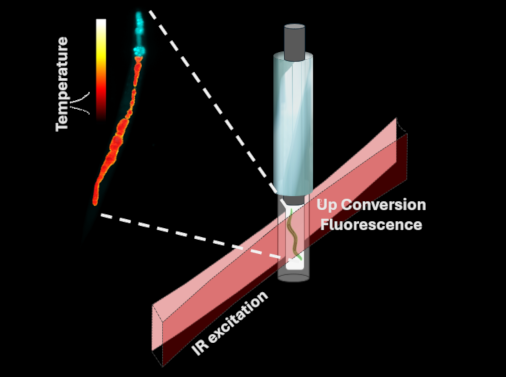
- electrostatic interactions between the cationic PEI coating and negatively charged cell surfaces. The positive charge of PEI can be enhanced at lower pH levels, such as those found in parts of the C. elegans digestive tract [60], potentially promoting further endocytosis. In contrast, the UCNPs@lipids


Optical bio/chemical sensors for vitamin B12 analysis in food and pharmaceuticals: state of the art, challenges, and future outlooks
Beilstein J. Nanotechnol. 2025, 16, 2207–2244, doi:10.3762/bjnano.16.153


Ultrathin water layers on mannosylated gold nanoparticles
Beilstein J. Nanotechnol. 2025, 16, 2183–2198, doi:10.3762/bjnano.16.151
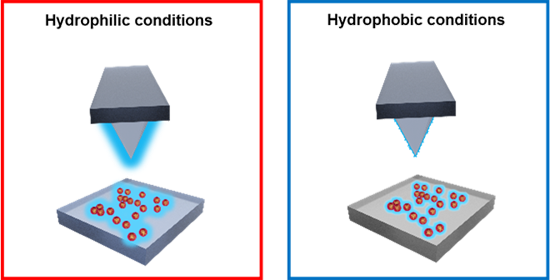
- electrostatic interactions between the NH3+ groups and the carboxylate residues on the NPs, and hydrogen bonds. Hence, there are relatively few differences between dimanno-AuNPs and PEG AuNPs, which are related to the particle dispersion in solution. The clustered PEG AuNPs cannot disperse well on a surface



Current status of using adsorbent nanomaterials for removing microplastics from water supply systems: a mini review
Beilstein J. Nanotechnol. 2025, 16, 1837–1850, doi:10.3762/bjnano.16.127
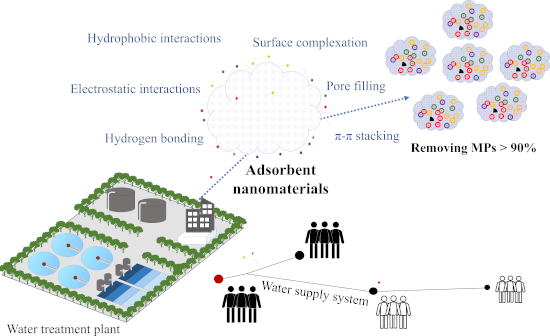
- conventional treatments removing only 40–70%, especially struggling with smaller particles. Based mainly on mechanisms like electrostatic interactions, hydrophobic interactions, pore filling, hydrogen bonding, π–π stacking, and surface complexation, adsorbent nanomaterials achieve over 90% removal of MPs and
- bonding through oxygen-containing groups (oxidized biochar), pore filling, and electrostatic interactions [53]. GO materials, such as a nickel/reduced graphene oxide (Ni/rGO) nanocomposite, also exhibited high adsorption efficiency, achieving 80.3% removal of PS from water containing 100 mg·L−1 PS. The
- ]. Similarly, You et al. reported on MOFs grown on a wood aerogel, ZIF-8@Aerogel, achieving removal efficiencies for polyvinylidene fluoride (PVDF) and PS particles of 91.4% and 85.8%, respectively [62]. Through electrostatic interactions, mesoporous UiO-66-NH2/P123 exhibited exceptional performance, achieving


Exploring the potential of polymers: advancements in oral nanocarrier technology
Beilstein J. Nanotechnol. 2025, 16, 1751–1793, doi:10.3762/bjnano.16.122
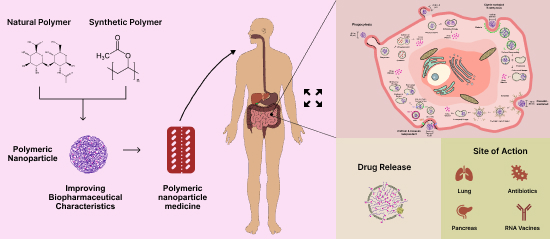
- , chitosan has been studied for its ability to protect nucleic acids from nuclease degradation, facilitating cellular entry through the formation of polyplexes driven by strong electrostatic interactions [138]. The positive charge of chitosan enables interactions with negatively charged nucleic acids
- , forming polymeric complexes. Consequently, the incorporation of genetic material can occur via encapsulation, adsorption, or electrostatic interactions, resulting in nanocapsules, micelles, and diverse morphologies and shapes, as well as varying release profiles [139]. Considering that, to reach their


Multifunctional anionic nanoemulsion with linseed oil and lecithin: a preliminary approach for dry eye disease
Beilstein J. Nanotechnol. 2025, 16, 1711–1733, doi:10.3762/bjnano.16.120
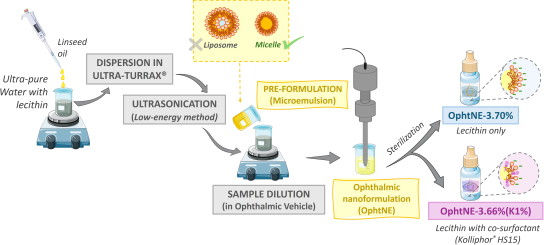
- to stabilize the tear film and provide antioxidant and osmoprotective effects. Cationic emulsions are known to enhance residence time on the ocular surface via electrostatic interactions with negatively charged mucins [25][87][88], while anionic nanoemulsions offer better compatibility with the



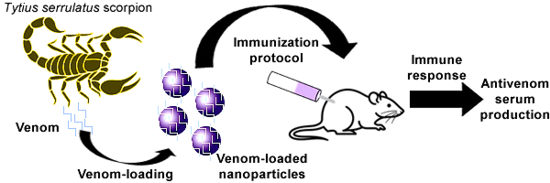
Venom-loaded cationic-functionalized poly(lactic acid) nanoparticles for serum production against Tityus serrulatus scorpion
Beilstein J. Nanotechnol. 2025, 16, 1633–1643, doi:10.3762/bjnano.16.115
- , peptides, DNA, RNA, antigens, and oligonucleotides to be efficiently incorporated through electrostatic interactions [35][36]. Moreover, some studies showed the interesting association of nanoparticles containing PEI for incorporation of DNA in gene transfection and BSA protein [14][37]. The


Nanotechnology-based approaches for the removal of microplastics from wastewater: a comprehensive review
Beilstein J. Nanotechnol. 2025, 16, 1607–1632, doi:10.3762/bjnano.16.114
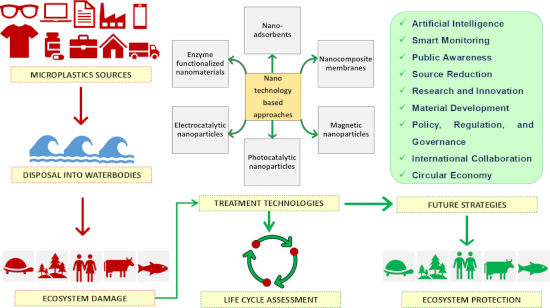
- capabilities due to electrostatic interactions, making them highly effective in capturing MPs. Their fast adsorption kinetics support rapid water purification, and surface modifications can further enhance their performance and selectivity. These membranes are also versatile and applicable in various treatment
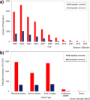


The role of biochar in combating microplastic pollution: a bibliometric analysis in environmental contexts
Beilstein J. Nanotechnol. 2025, 16, 1401–1416, doi:10.3762/bjnano.16.102
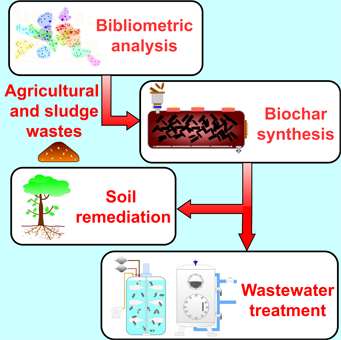
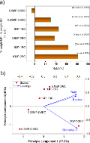
- ) further enhance removal through electrostatic interactions, forming metal–O–PS–MP bonds. These advanced materials demonstrated removal efficiencies of 96.24% and 84.77%, respectively, outperforming traditional biochar models like banana peel biochar, which achieved a removal rate of 96.5% for PS at a
- structure, facilitates enhanced physical and chemical adsorption, as well as electrostatic interactions, thereby improving the removal of small MP particles [34]. Additionally, PS adsorption mechanisms suggest that MP self-polymerization and the strengthened metal–O bonding in nano-iron-modified biochar
- , microbial-enriched biochar exhibits the highest enzymatic activity, presenting significant opportunities for application in soil remediation. In experimental setups for MP removal, biochar has proven highly effective. Modified biochars, such as magnetic biochar and Zn-modified biochar, enhance electrostatic



Enhancing the therapeutical potential of metalloantibiotics using nano-based delivery systems
Beilstein J. Nanotechnol. 2025, 16, 1350–1366, doi:10.3762/bjnano.16.98
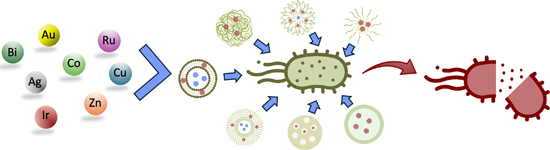
- resistance mechanisms that involve reduced membrane permeability. These complexes may bypass conventional porin-mediated pathways, enabling drug entry through alternative mechanisms, primarily controlled by electrostatic interactions with the membrane surface [117]. In 2022, Ghosh et al. described the


Hydrogels and nanogels: effectiveness in dermal applications
Beilstein J. Nanotechnol. 2025, 16, 1216–1233, doi:10.3762/bjnano.16.90
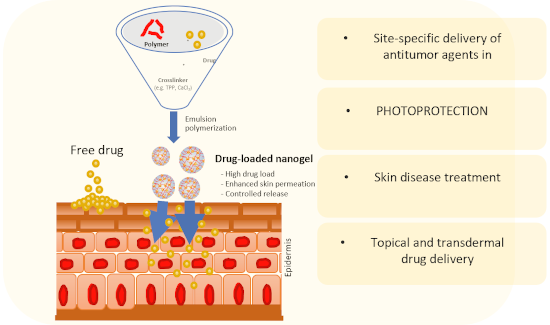
- (intramolecular) [44][57][148]. The process of nanogel particle formation may involve physical methods [164] or chemical reactions [165]. For example, nanogels can be obtained through electrostatic interactions generated by the ionization technique with electrospray [166]. Ionizing radiation can also be used for


Soft materials nanoarchitectonics: liquid crystals, polymers, gels, biomaterials, and others
Beilstein J. Nanotechnol. 2025, 16, 1025–1067, doi:10.3762/bjnano.16.77






Tendency in tip polarity changes in non-contact atomic force microscopy imaging on a fluorite surface
Beilstein J. Nanotechnol. 2025, 16, 944–950, doi:10.3762/bjnano.16.72
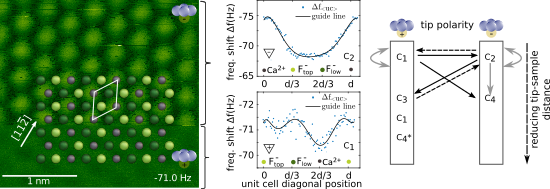
- over many years based on theoretical simulations of NC-AFM data for a variety of plausible tip models [9][19][20][21][22]. Through further endeavors, a qualitative distance-dependent approach involving electrostatic interactions and Pauli repulsion has recently been exemplified on CaF2(111) [10]. As a


Synthesis of a multicomponent cellulose-based adsorbent for tetracycline removal from aquaculture water
Beilstein J. Nanotechnol. 2025, 16, 728–739, doi:10.3762/bjnano.16.56
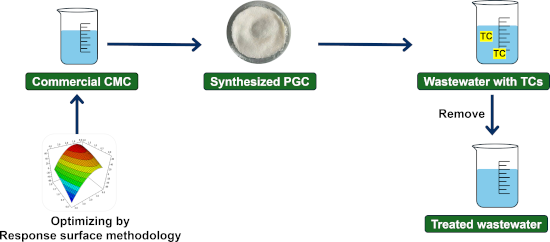
- were characterized, and the TC adsorption efficiency of PGC was assessed using high-performance liquid chromatography–mass spectroscopy (HPLC-MS). Elemental analysis of PGC identified four key mechanisms governing its endothermic TC adsorption mechanism: surface complexation, electrostatic interactions
- involves van der Waals forces, which primarily represent electrostatic interactions. Notably, TC is an aromatic organic compound with an amino group that can accept protons (H+) from the environment, acquiring a positive charge. The CMC network within PGC includes oxygen-containing functional groups (‒OH
- , ‒C=O, and ‒COOH), which confer a negative charge, enabling electrostatic interactions (Figure 6b). FTIR spectroscopy (Figure 2g) confirms the presence of these oxygen-containing functional groups on PGC, supporting this explanation. Thus, electrostatic attraction between the positively charged TC–N


Nanoscale capacitance spectroscopy based on multifrequency electrostatic force microscopy
Beilstein J. Nanotechnol. 2025, 16, 637–651, doi:10.3762/bjnano.16.49

- frequencies and beyond. Our results show a significant reduction of signal background from long-range electrostatic interactions, resulting in highly localized measurements. Combined with refined tip–sample capacitance models, MFH-EFM will enhance the precision of quantitative studies on dielectric effects in
- measures such as improved tip–sample models or full numerical simulations will be required. Here, the suppression of long-range electrostatic interactions in MFH-EFM could simplify the simulations. Thus, MFH-EFM could further improve quantitative studies on dielectric effects in nanoscale systems across




Development of a mucoadhesive drug delivery system and its interaction with gastric cells
Beilstein J. Nanotechnol. 2025, 16, 371–384, doi:10.3762/bjnano.16.28

- intermolecular hydrogen bonding and secondary interactions resulting from the interpenetration of polymer chains of mucin into the structure of the nanoparticles. The presence of positively charged Eudragit polymer on the surface of nanoparticles yield additional electrostatic interactions, which are known to be
- one of the driving force behind mucoadhesion [57]. Therefore, the presence of the Eudragit polymer layer on the designed nanoparticles is beneficial for the enhancement of the electrostatic interactions between the nanoparticles and the gastric mucus, thus increasing their entrapment into the mucus


Mechanistic insights into endosomal escape by sodium oleate-modified liposomes
Beilstein J. Nanotechnol. 2024, 15, 1667–1685, doi:10.3762/bjnano.15.131
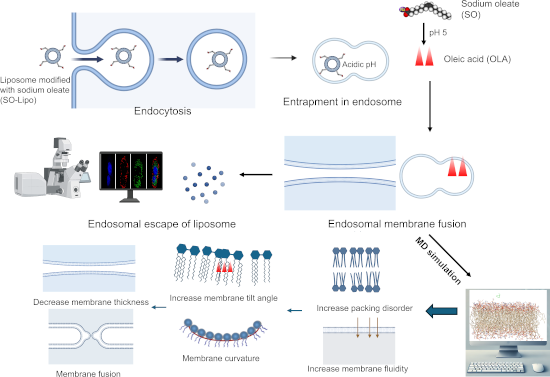
- highlights the importance of the peptide’s protonation state regarding its membrane-binding affinity and subsequent insertion depth. Non-protonated AUR fails to engage effectively with the membrane, underscoring the role of electrostatic interactions in facilitating the peptide’s insertion into the lipid




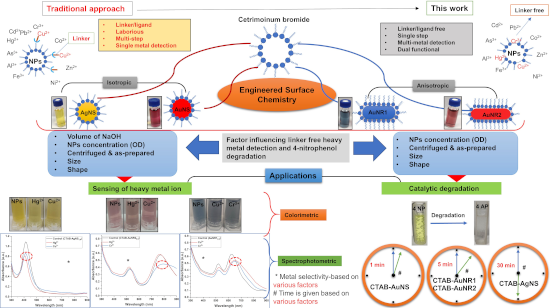
Nanoarchitectonics with cetrimonium bromide on metal nanoparticles for linker-free detection of toxic metal ions and catalytic degradation of 4-nitrophenol
Beilstein J. Nanotechnol. 2024, 15, 1312–1332, doi:10.3762/bjnano.15.106




Interaction of graphene oxide with tannic acid: computational modeling and toxicity mitigation in C. elegans
Beilstein J. Nanotechnol. 2024, 15, 1297–1311, doi:10.3762/bjnano.15.105
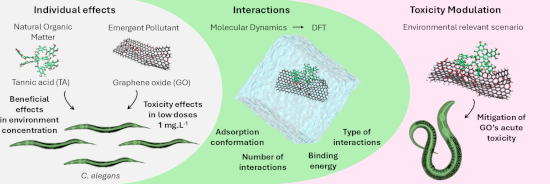
- in hydrogen bonding as well as hydrophobic and electrostatic interactions; also, they are responsible for TA’s high solubility, reactivity to metal cations, binding capacity to molecules and surfaces, and significant reducing and radical scavenging properties [19][21][22][23][24]. This range of





