Search results
Search for "monolayers" in Full Text gives 339 result(s) in Beilstein Journal of Nanotechnology. Showing first 200.
Tuning the electronic properties of defect-rich MoS2
Beilstein J. Nanotechnol. 2026, 17, 796–805, doi:10.3762/bjnano.17.56
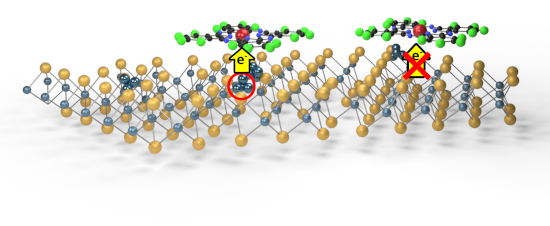
- they represent, for example, traps for charge carrier transport [17]. However, it is challenging to produce nearly defect-free TMDC monolayers or multilayers. In particular, natural, exfoliated MoS2 crystals exhibit a variety of intrinsic defects [18]. Moreover, p- and n-type defects can be formed


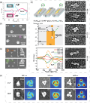
Substrate-dependent pore formation in molybdenum disulfide monolayers under ion irradiation
Beilstein J. Nanotechnol. 2026, 17, 769–780, doi:10.3762/bjnano.17.54
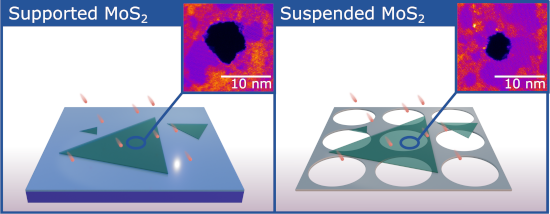
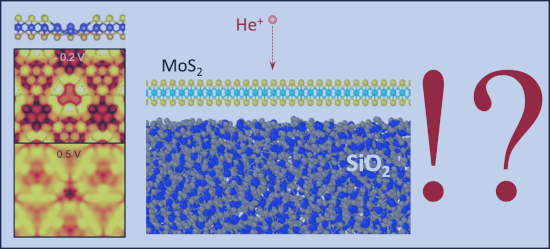
- -)electronic and catalytic functionality [14][15][16][17][18]. Ion irradiation has already proven effective for defect engineering across different energy regimes: Low-energy ions enable implantation with near-atomic precision [19][20][21], kiloelectronvolt ions primarily create point defects in monolayers [22
- -induced disorder and charge trapping are expected to increase carrier scattering, thereby limiting lateral spreading of the non-equilibrium electronic excitation. This is known from several studies [48][49] on charge transport in MoS2 that report higher carrier mobility in suspended monolayers than in
- are expected to deposit in the order of ≈10 keV (0.7 MeV/u Xe23+) and ≈20 keV (4.8 MeV/u Au25+) in a monolayer [13]. In Figure 3, representative multilayer regions after HCI and SHI irradiation are shown. Pores in monolayers are of comparable size, while the perforation behavior differs strongly


Interface-engineered Caco-2 cell culture on a collagen-coated liquid–liquid interface in a microfluidic device
Beilstein J. Nanotechnol. 2026, 17, 760–768, doi:10.3762/bjnano.17.53
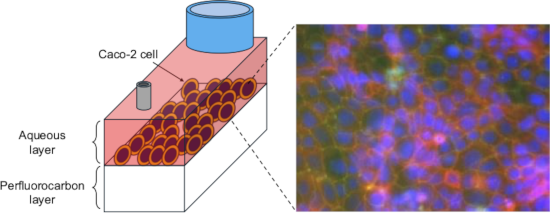
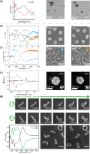
- Caco-2 cells in the device, we show that the liquid interface supports cell attachment and the formation of monolayers. Immunofluorescence observation reveals the development of tight junctions and organized actin cytoskeletons, indicating early-stage epithelial maturation. Our new microfluidic system
- demonstrate that cells can adhere and form monolayers on the liquid–liquid interface. Immunofluorescence images reveal the formation of tight junctions and organized actin cytoskeletons, indicating epithelial early-stage maturation. Our results establish liquid–liquid interfaces as viable and functional
- , such as tight junction formation, after approximately seven days of culture [12]. In the present study, we therefore chose a period of seven days of culture to assess the early-stage maturation of Caco-2 monolayers from a proof-of-concept perspective. Here, the liquid–liquid interface remained intact


Impacts of annealing on structural and photophysical properties of zinc phthalocyanine adsorbed on graphene
Beilstein J. Nanotechnol. 2026, 17, 576–585, doi:10.3762/bjnano.17.39
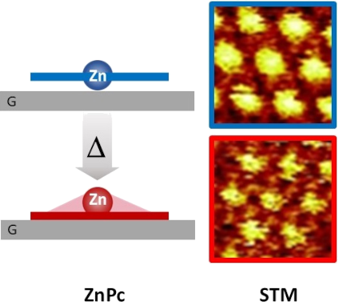
- shown to form highly reproducibly honeycomb guest–host monolayers (Scheme 1c, denoted ZnPc:TSB35-C12) that are robust in air under ambient conditions [40] and in which the guest ZnPc molecules are confined at a distance of 4.3 nm center-to-center from each other [39]. The measurements were performed on
- brings two changes. Firstly, as observed by comparing Figure 3a and Figure 3d, the average size of the domains increases and disordered areas tend to disappear. Such trends are expected for self-assembled monolayers in general and have been reported and analyzed in detail in the specific case of the
- TSB35 monolayers [46]. Given the robustness of the TSB35-C12 matrices, it is not surprising that such behaviors are preserved in the presence of trapped ZnPc. The lattice constant, 4.3 nm, is also preserved, as imposed by the TSB35-C12 matrix [39]. Secondly, and more pointedly, the high-resolution STM


Defects and defect-mediated engineering of two-dimensional materials: challenges and open questions
Beilstein J. Nanotechnol. 2026, 17, 454–488, doi:10.3762/bjnano.17.31
- ], which can propagate further the formation of larger vacancy clusters. It is expected that the mechanisms of oxidation will be similar for multilayer films and defective monolayers and driven by the effective charges of W atoms exposed by S vacancy clusters. However, changes in the positions of the





Advancing nanolithography: a comprehensive review of materials for local anodic oxidation with AFM
Beilstein J. Nanotechnol. 2026, 17, 275–291, doi:10.3762/bjnano.17.19
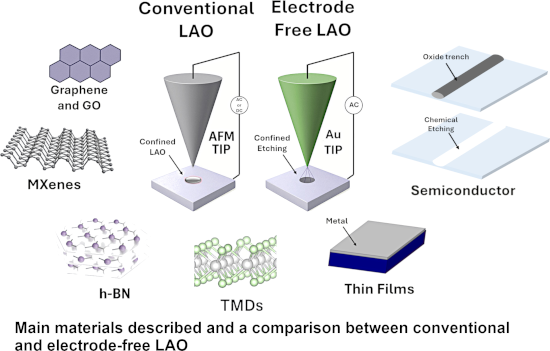
- applications. This review focuses on metallic, semiconducting, and 2D materials, while excluding significant efforts on organic semiconductors [79] and functionalized substrates [80][81][82] (like self-assembled monolayers [83]), which fall beyond the scope of this work. Nevertheless, it is worth mentioning
- that tip-induced electrochemical oxidation has also been demonstrated on organic monolayers, most notably in the seminal work of Sagiv and coworkers. They showed that alkylsilane monolayers can be patterned nondestructively by converting terminal –CH3 groups into –COOH functions [84], enabling chemical
- templating and subsequent selective self-assembly of organic or inorganic species [85]. Follow-up work further demonstrated that such patterned monolayers can even support single-layer ionic conduction along predefined nanoscale paths [86]. These studies extend LAO-type surface modification to molecular


Influence of surface characteristics on the in vitro stability and cell uptake of nanoliposomes for brain delivery
Beilstein J. Nanotechnol. 2026, 17, 139–158, doi:10.3762/bjnano.17.9
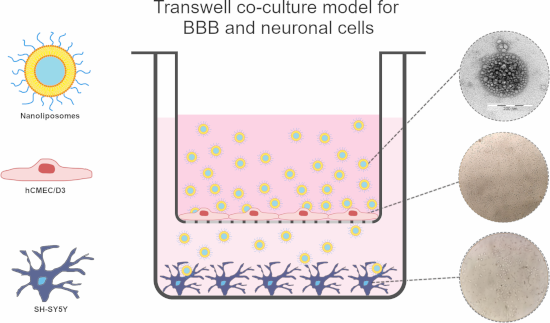
- × 104 cells/well) and cultured in 1 mL DMEM for the same period of time, until reaching confluence. Furthermore, the inserts with hCMEC/D3 cells were placed in the plates with formed monolayers of SH-SY5Y. Nile red labelled NLs previously diluted in PBS and dispersed in EBM-2 (final NL concentration of




Chiral plasmonic nanostructures fabricated with circularly polarized light
Beilstein J. Nanotechnol. 2025, 16, 2245–2264, doi:10.3762/bjnano.16.154
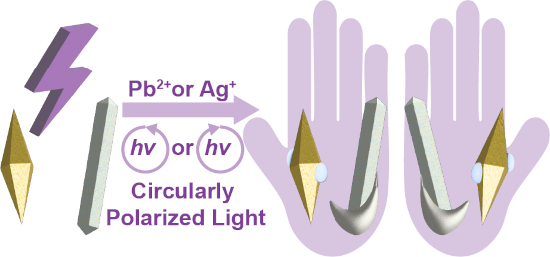
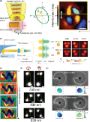
- generating detailed information on biomolecules, such as the hierarchy of protein structures [146][147][148]. The superchiral field of cPNSs has also been utilized to selectively modulate the excitation and spontaneous emission rate of valley excitons in transition metal dichalcogenide (TMDC) monolayers [156





Ultrathin water layers on mannosylated gold nanoparticles
Beilstein J. Nanotechnol. 2025, 16, 2183–2198, doi:10.3762/bjnano.16.151
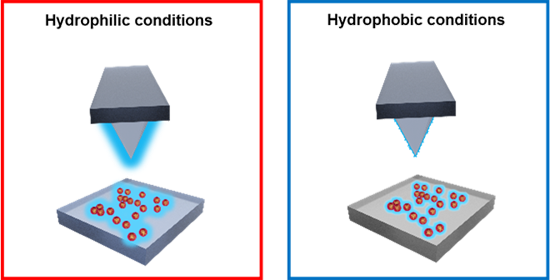
- amplitude–distance curves are accessed. Second, tips with different hydrophilicity complement topographic information with accurate height determination. Third, the same is true for surfaces; self-assembled monolayers (SAMs) of silanes are well suited to assess the water layer contribution in AFM
- adsorbed on the PEG AuNPs. A quantification is not possible; however, there cannot be more than a few monolayers, otherwise the band would completely dominate the spectrum. This is also in agreement with the absence of the band in the FTIR spectra. Hence, the hydrophilic PEG chain binds water, but can



Evaluating metal-organic precursors for focused ion beam-induced deposition through solid-layer decomposition analysis
Beilstein J. Nanotechnol. 2025, 16, 1942–1951, doi:10.3762/bjnano.16.135
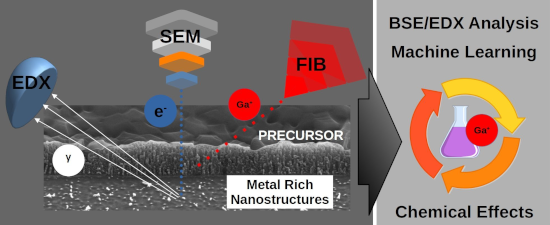
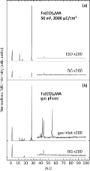
- decomposition mechanisms are proposed. Studies have been conducted on ion–molecule interactions in both solid and gas phases. Ultrahigh vacuum experiments on a few monolayers of FIBID precursors, such as [Ru(CO)4I2], [(η5-C5H5)Fe(CO)2Re(CO)5], and [Fe(CO)5], have been used to elucidate decomposition pathways


Exploring the potential of polymers: advancements in oral nanocarrier technology
Beilstein J. Nanotechnol. 2025, 16, 1751–1793, doi:10.3762/bjnano.16.122
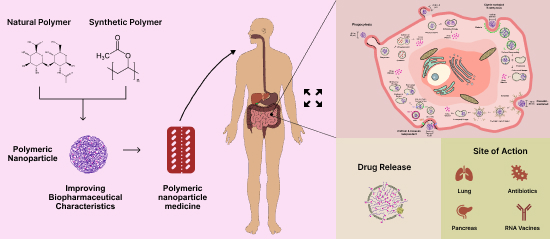
- , making it a candidate of interest for oral delivery systems. In this study, the authors reported that zein NPs, measuring approximately 100 nm, promote intestinal translocation. Permeability studies indicated that the NPs effectively retain mometasone during transport across cell monolayers, resulting in


Modeling magnetic properties of cobalt nanofilms used as a component of spin hybrid superconductor–ferromagnetic structures
Beilstein J. Nanotechnol. 2025, 16, 1557–1566, doi:10.3762/bjnano.16.110
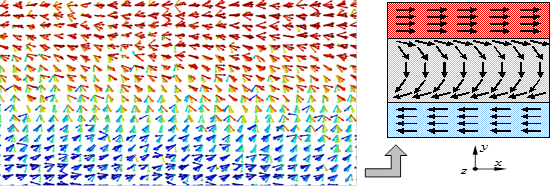
- 1.8 nm becomes unstable, and in the monolayer limit, it can be completely destroyed. When the film thickness is less than 1–2 monolayers (≈0.2–0.4 nm), the nanofilm ceases to be continuous, forming islands. This leads to random fluctuations in magnetization. Additionally, in monolayers and sub
- -monolayers, the number of nearest neighbors for cobalt atoms sharply decreases. This weakens the exchange interaction that stabilizes the ferromagnetic order. Disruption of lattice periodicity and a high density of defects exacerbate this problem. For these reasons, such studies are not included in this


Soft materials nanoarchitectonics: liquid crystals, polymers, gels, biomaterials, and others
Beilstein J. Nanotechnol. 2025, 16, 1025–1067, doi:10.3762/bjnano.16.77
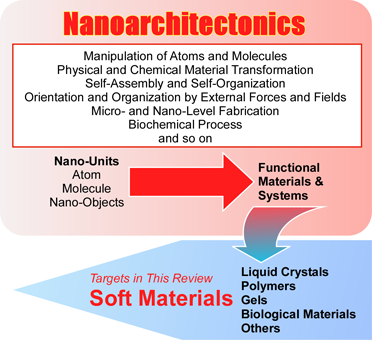
- such as self-assembled monolayers (SAMs) [75][76][77][78][79], Langmuir–Blodgett (LB) method [80][81][82][83][84], and layer-by-layer (LbL) assembly [85][86][87][88][89]. The science and technology of creating and structuring soft materials has advanced in parallel with the growing demand for the
- presented an overview of research activities utilizing azobenzene-containing monolayers and liquid crystal polymer films [243]. The linking of azobenzene molecules to liquid crystal and polymer systems has enabled the realization of a number of fascinating new motional functions. The use of photostimulation
- photoisomerization of azobenzene monolayers can be amplified to the material level. Azobenzene molecules present at the molecular level on a substrate can alter the orientation of nematic liquid crystals over a micrometer-level thickness in the overlying liquid crystal cell (Figure 8B). As a consequence of this






Thickness dependent oxidation in CrCl3: a scanning X-ray photoemission and Kelvin probe microscopies study
Beilstein J. Nanotechnol. 2025, 16, 749–761, doi:10.3762/bjnano.16.58
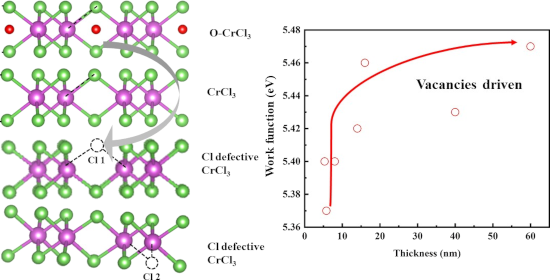
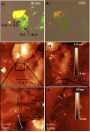
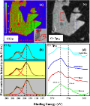
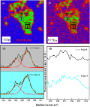
- properties for 2D magnets by manipulating factors such as layer thickness, applied strain, and induced defect sites. Numerous theoretical studies predict that magnetic order in monolayers occurs at temperatures significantly higher than the bulk Curie temperature (i.e., 17 K). In their work, Liu et al
- . employed Monte Carlo methods to observe ferromagnetic behavior in monolayers below 66 K and proposed that hole doping could further enhance the Curie temperature [21]. Similarly, another Monte Carlo study found that the transition temperature for monolayer CrCl3 is 49 K, proposing that the Curie





Nanostructured materials characterized by scanning photoelectron spectromicroscopy
Beilstein J. Nanotechnol. 2025, 16, 700–710, doi:10.3762/bjnano.16.54
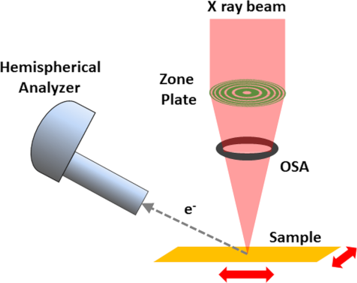
- probing depth typically stays in the range of 3–10 monolayers. It is straightforward to understand that such feature may uniquely enhance the results of some characterization parameters, but may represent a limit for others. As shown in Figure 4, the SPEM at Elettra uses a fixed incoming focused X-ray


Water in nanoporous hexagonal boron nitride nanosheets: a first-principles study
Beilstein J. Nanotechnol. 2025, 16, 510–519, doi:10.3762/bjnano.16.39
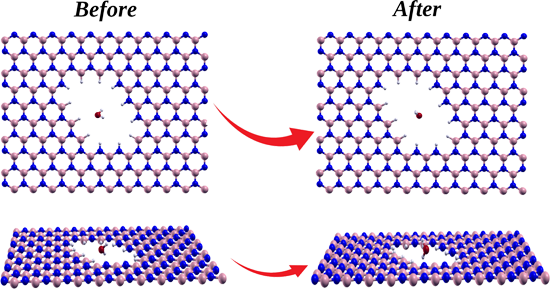
- contact with water molecules. Our investigation revealed that triangular and rhombic pores induce wrinkles in non-deposited h-BN monolayers because of the repulsion between hydrogen orbitals at their 60° vertices. We found that the addition of N–H or B–H pairs at 60° vertices mitigates these out-of-plane
- values, the transition from a B-rich to a N-rich environment has a small effect on the formation energy of the two most stable porous h-BN structures. These structures remain significantly more energetically stable than the other triangular porous h-BN monolayers. The adsorption energy, Eads, was
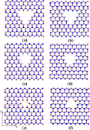
- obtained from the constraint μBN = μB + μN. Rhombic nanopores in free-standing h-BN monolayers. (a) Rhombic pore with B–H and N–H edges. (b) Rhombic pore with B–H and N–H pairs at 60° vertices. (c) Rhombic pore with B–OH and N–H terminations. Triangular nanopores in free-standing h-BN monolayers




Synthetic-polymer-assisted antisense oligonucleotide delivery: targeted approaches for precision disease treatment
Beilstein J. Nanotechnol. 2025, 16, 435–463, doi:10.3762/bjnano.16.34


Advanced atomic force microscopy techniques V
Beilstein J. Nanotechnol. 2025, 16, 54–56, doi:10.3762/bjnano.16.6

- monolayers (SAMs) and conducting AFM [10]. The authors find that rougher surfaces lead to stronger variations in conductivity, and it is suggested that a correlation of topography and conductivity maps is carried out to identify suitable areas for a representative averaging of conductivity values. Müller et
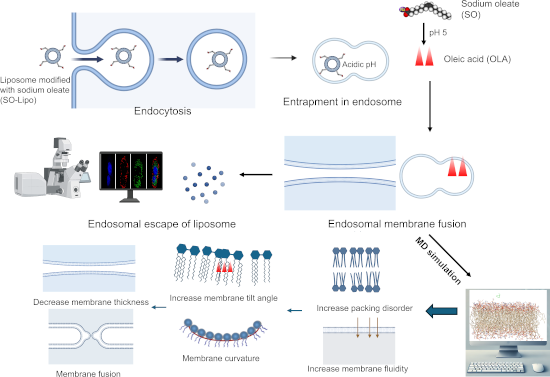
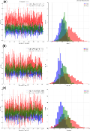
Mechanistic insights into endosomal escape by sodium oleate-modified liposomes
Beilstein J. Nanotechnol. 2024, 15, 1667–1685, doi:10.3762/bjnano.15.131




Out-of-plane polarization induces a picosecond photoresponse in rhombohedral stacked bilayer WSe2
Beilstein J. Nanotechnol. 2024, 15, 1362–1368, doi:10.3762/bjnano.15.109
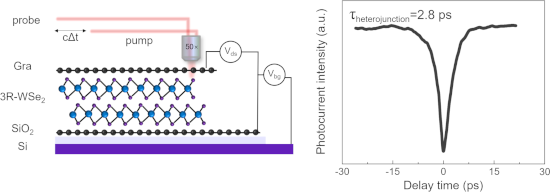
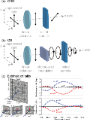
- photogenerated carriers and have the potential to advance related device applications. Results and Discussion Out-of-plane polarization of 3R WSe2 Precisely controlling the stacking angle of two monolayers in TMDs can modify the symmetry and induce unique physical properties. Depending on the stacking order
- angle of two monolayers of WSe2. The crystal structures of 3R WSe2 leads to the breaking of OOP symmetry, confirmed by SHG measurements. Subsequently, the bulk photovoltaic effect in the graphene/3R WSe2/graphene vertical heterojunction was confirmed through the output characteristic curve and
- monolayers of WSe2 were aligned at a 0° angle to form the 3R phase. The graphene/3R WSe2/graphene heterojunctions were aligned and assembled onto a SiO2/Si substrate by the all-dry transfer method. Au/Cr (50/10 nm) electrodes were patterned using standard electron-beam lithography (EBL, Raith 150 Two) and


Quantum-to-classical modeling of monolayer Ge2Se2 and its application in photovoltaic devices
Beilstein J. Nanotechnol. 2024, 15, 1153–1169, doi:10.3762/bjnano.15.94
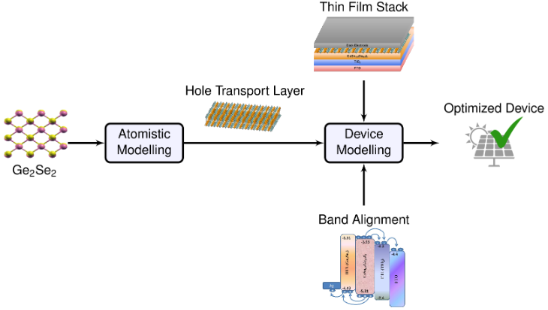
- 2004, the unique properties of two-dimensional materials have sparked intense research interest regarding their use as alternative materials in various photonic applications. Transition metal dichalcogenide monolayers have been proposed as transport layers in photovoltaic cells, but the promising
- reported in [33] for an SnS monolayer across the direct absorption edge at 1.3–1.5 eV, rendering it potentially applicable in solar cells and photodetectors. Similarly, Huang et al. [34] showed that a band transition (from indirect to direct) occurs in SnSe2 when moving from bulk to monolayers, elucidating
- its application potential in optoelectronic devices. More group IV–VI dichalcogenides have been discussed in [35][36][37][38][39][40] for different applications. Although some inceptive work has been done using monolayers of metal dichalcogenides, there are still plenty of opportunities to explore. In




Electrospun polysuccinimide scaffolds containing different salts as potential wound dressing material
Beilstein J. Nanotechnol. 2024, 15, 781–796, doi:10.3762/bjnano.15.65
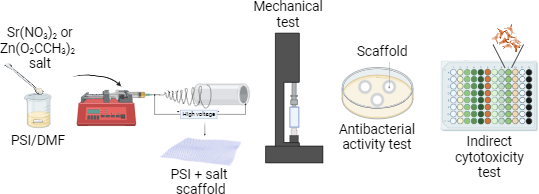
- 24 h of incubation. The msalt is the calculated mass of the salts in a scaffold disc (6 mm in diameter). In vitro cell studies Cell cultures An osteosarcoma cell line (MG-63, ECACC 86051601) and skin fibroblasts (155BR, ECACC 90011809), both of human origin, were cultured as monolayers at 37 °C and 5



Directed growth of quinacridone chains on the vicinal Ag(35 1 1) surface
Beilstein J. Nanotechnol. 2024, 15, 556–568, doi:10.3762/bjnano.15.48
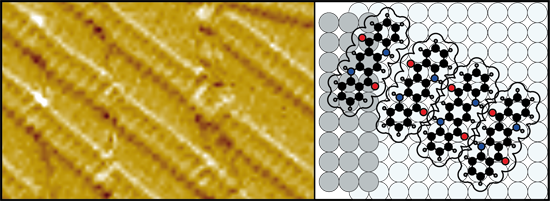
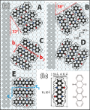
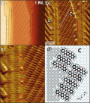
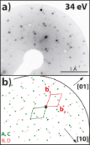
- temperature. The deposition process was monitored by the QMS, and the integrated QMS signal was used to calculate the QA coverage θQA. It is given in numbers of monolayers (ML) of the α-phase, as explained in detail in [23]. A more detailed description of the experimental procedures can be found in [23]. The


Cholesterol nanoarchaeosomes for alendronate targeted delivery as an anti-endothelial dysfunction agent
Beilstein J. Nanotechnol. 2024, 15, 517–534, doi:10.3762/bjnano.15.46
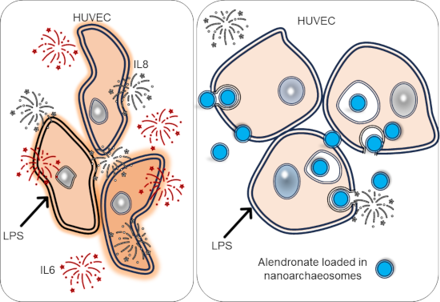
- 30 min at 37 °C. Then, cells were washed with PBS, and the fluorescence intensity of whole cells was measured using a Cytation™ 5 instrument at λex = 490 nm and λem = 520 nm. Confocal microscopy was performed to study the morphology of HUVECs. Briefly, after incubation, cell monolayers were washed





Electron-induced deposition using Fe(CO)4MA and Fe(CO)5 – effect of MA ligand and process conditions
Beilstein J. Nanotechnol. 2024, 15, 500–516, doi:10.3762/bjnano.15.45
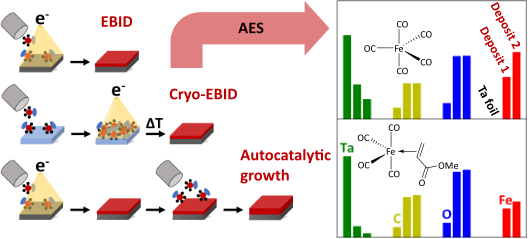
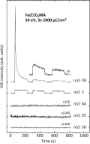
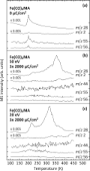
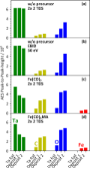
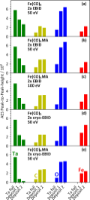
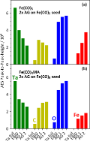
- A) and using the EAL in Fe (see section Experimental), the TaNNN signal would approach baseline levels for a deposit thickness of the order of 2 nm (Supporting Information File 1, Figure S6). This corresponds to roughly ten monolayers of Fe [56]. The increase of the FeLMM AES intensity can be used
- for the attenuation of the TaNNN signal, which reaches up to 50% in the case of Fe(CO)4MA (Figure 6d). Such an attenuation would indicate a surface coverage of roughly 0.3 nm of iron (one to two monolayers [56]) or 0.5 nm of carbon assuming a homogeneous thickness according to scenario A (Supporting