


Search results
Search for "quantum dots" in Full Text gives 232 result(s) in Beilstein Journal of Nanotechnology. Showing first 200.
Molecular engineering of individual dye-based nanoparticle photostability for ultrabright two-photon fluorescence
Beilstein J. Nanotechnol. 2026, 17, 688–696, doi:10.3762/bjnano.17.48
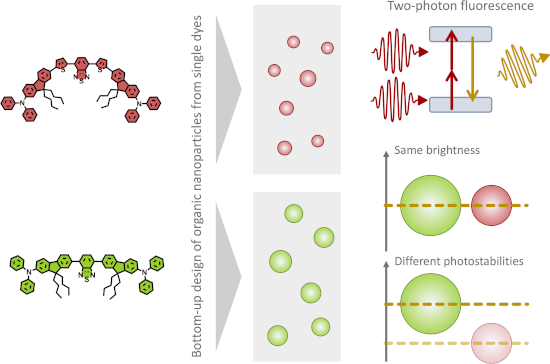
- . This effect can be explained by a local-field correction factor in the nanoparticle. However, one of the main challenges of using organic probes such as dFONs in SPT experiments, compared to inorganic probes like gold nanoparticles [23], fluorescent nanodiamonds [24][25], quantum dots [26], or


Electrochemical determination of ciprofloxacin using a MIL-101/reduced graphene oxide-modified electrode
Beilstein J. Nanotechnol. 2026, 17, 541–554, doi:10.3762/bjnano.17.35
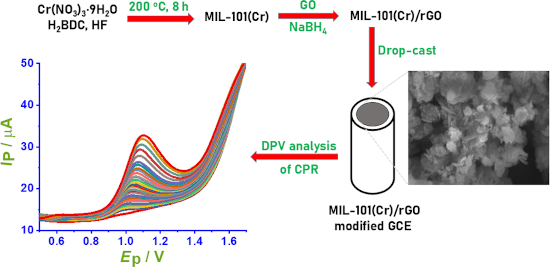
- affordable analytical methods for detecting ciprofloxacin is very important. Conventional analytical techniques for CPR determination, including a fluorescence sensor based on CsPbBr3 quantum dots embedded in a molecularly imprinted polymer [5], and ultrasound-assisted magnetic dispersive micro-solid phase
- extraction based on carbon quantum dots/zeolite imidazolate framework-90/polyvinyl pyrrolidone/iron(II,III) oxide with high-performance liquid chromatography [6][7] or chromatography–tandem mass spectrometry [8] offer high accuracy and reliability. However, these techniques often need expensive equipment


Fractional shot noise of an SU(N) Kondo system
Beilstein J. Nanotechnol. 2026, 17, 515–540, doi:10.3762/bjnano.17.34
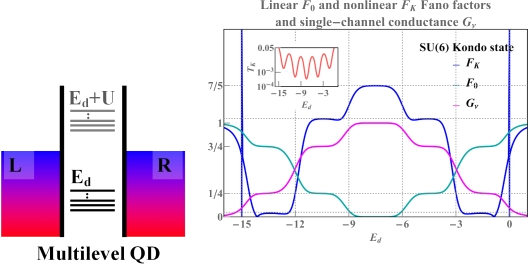
- . However, we demonstrate that for occupation regions distant from the electron–hole symmetry point, the role of three-body correlations must be considered. Keywords: Fermi liquid; Kondo effect; quantum dots; shot noise; Introduction Quantum dot (QD) structures are being intensively investigated regarding
- systems. We address our calculations to multilevel two-dimensional electron gas (2DEG) quantum dots [49] and to single-walled and multiwalled carbon nanotube QDs [50][51]. It is worth mentioning that these symmetries are of a fundamental nature and concern systems from various, sometimes very distant
- nanotube-based quantum dots (SU(4)) by Delattre et al. [62] confirm this result and prove that F0 calculated by SBMFA, describing shot noise of renormalized independent particles, accurately estimates the noise in the low-temperature, low-voltage regime. The earlier calculations of partition noise for SU(4


![[Graphic 127]](/bjnano/content/inline/2190-4286-17-34-i187.svg?max-width=637&scale=1.18182)

Probing internal continua and atomic ultrafast charge transfer within size-controlled nanoparticles by post-collision interaction in core-hole clock spectroscopy
Beilstein J. Nanotechnol. 2026, 17, 505–514, doi:10.3762/bjnano.17.33
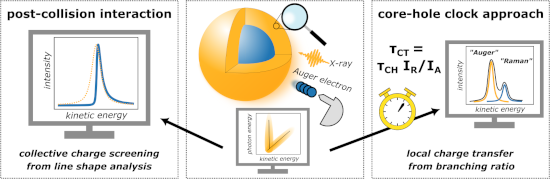
- -Liebknecht-Straße 24/25, 14476 Potsdam-Golm, Germany 10.3762/bjnano.17.33 Abstract This study investigates size-controlled, quantum-confined CdSe/ZnS core–shell quantum dots using core-hole clock spectroscopy in combination with post-collision interaction (PCI) line shape analysis, providing insights into
- local charge transfer dynamics and internal continuum states. We observe an acceleration of charge transfer times by almost one order of magnitude in thin-shell quantum dots, comprising only one or three double layers of ZnS, before reaching a size-independent limit. This size-dependence is governed by
- -collision-interaction; quantum dots; resonant Auger spectroscopy; Introduction The interplay of electron localization, itinerance, and charge transfer is essential to functional nanoparticles and quantum dots (QDs) [1][2][3][4][5][6]. In terms of electronic structure properties, materials on the nanoscale



Biomimetic nanoparticles in cancer photodynamic therapy: a review of targeted delivery systems and therapeutic outcomes
Beilstein J. Nanotechnol. 2026, 17, 396–422, doi:10.3762/bjnano.17.27


Internal 3D temperature mapping in biological systems using ratiometric light-sheet imaging and lipid-coated upconversion nanothermometers
Beilstein J. Nanotechnol. 2025, 16, 2306–2316, doi:10.3762/bjnano.16.159
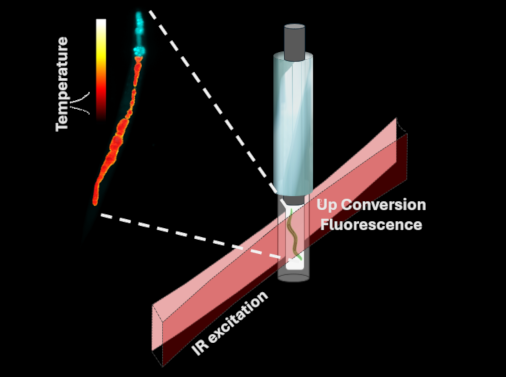
- materials have been developed, including nanodiamonds [32], quantum dots [17][28], nanodots [11][13][33], fluorescent-based molecular systems [1][8][34], and lanthanide (Ln3+)-doped materials [10][35][36][37]. Among all these alternatives, lanthanide-doped materials offer a distinct advantage: upconversion


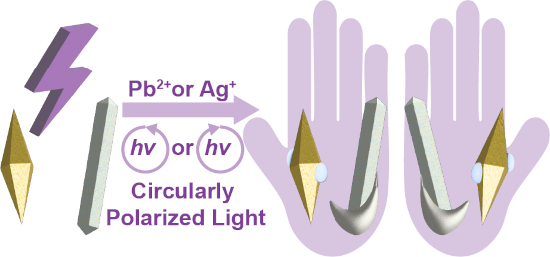
Chiral plasmonic nanostructures fabricated with circularly polarized light
Beilstein J. Nanotechnol. 2025, 16, 2245–2264, doi:10.3762/bjnano.16.154
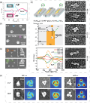
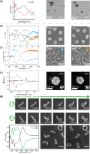
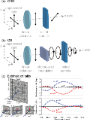
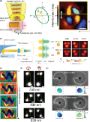
- contribute to the enhancement of the degree of circular polarization by suppressing the intervalley scattering rate and accelerating the valley-polarized exciton decay rate. Though the circular polarization-selective PL of achiral quantum dots has been demonstrated when coupled to cPNSs [161][162][163][164





Optical bio/chemical sensors for vitamin B12 analysis in food and pharmaceuticals: state of the art, challenges, and future outlooks
Beilstein J. Nanotechnol. 2025, 16, 2207–2244, doi:10.3762/bjnano.16.153


Missing links in nanomaterials research impacting productivity and perceptions
Beilstein J. Nanotechnol. 2025, 16, 2168–2176, doi:10.3762/bjnano.16.149
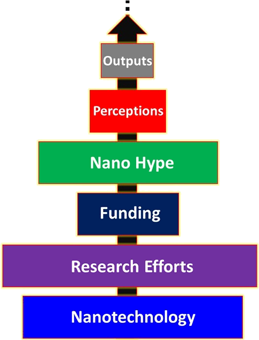
- nanotubes, graphene, metal oxides, quantum dots, and MXenes are among the most extensively studied and explored nanomaterials. These materials have been researched in nearly every discipline, leading to the establishment of numerous startups and companies focused on their production, processing, and
- , though nanomaterials research has made impressive scientific advances, its translation into mass-market products remains partial. Therefore, it raises a vital and valid question: Why are heavily researched nanomaterials such as carbon nanotubes, graphene, metal oxides, quantum dots, and MXenes still so
- underutilized? Surprisingly, many of us working on nanomaterials often believe that materials such as graphene, quantum dots, and MXenes are widely used in various engineering and domestic products; however, this is a misconception. The contribution of these new materials, even to cutting-edge technologies
Laser ablation in liquids for shape-tailored synthesis of nanomaterials: status and challenges
Beilstein J. Nanotechnol. 2025, 16, 1963–1997, doi:10.3762/bjnano.16.137
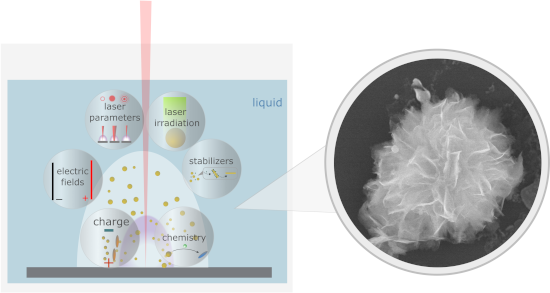
- explained by the decrease of the adhesion of NPs. The variation of the NP shape can be more significant in organic liquids. For example, Singh et al. [33] produced drop-shaped ZnO quantum dots by laser ablation of Zn in methanol, which were prone to spontaneous self-assembly after the end of the synthesis




Advances of aptamers in esophageal cancer diagnosis, treatment and drug delivery
Beilstein J. Nanotechnol. 2025, 16, 1734–1750, doi:10.3762/bjnano.16.121
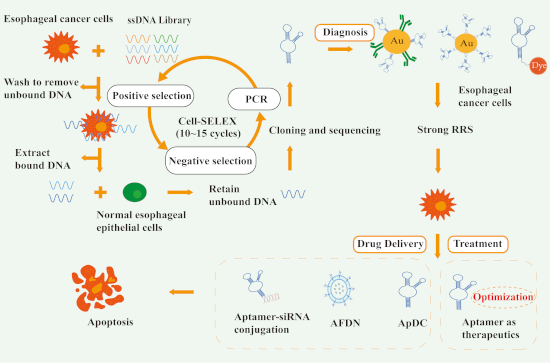
- structural modification. [26]. Aptamer-based biosensors [27] fully utilize these characteristics by combining various signal amplification techniques and nanomaterials (such as metal nanoparticles, quantum dots, silica nanoparticles, and carbon nanotubes), enabling highly sensitive detection of biomarkers
- optimize aptamer performance [135]. The second strategy is encapsulation of nanocarriers, such as metal nanoparticles, quantum dots, silica nanoparticles and liposomes. Gold nanoparticles (AuNPs) have different morphologies, among which gold nanospheres are the most popular. Spherical AuNPs are synthesized


Prospects of nanotechnology and natural products for cancer and immunotherapy
Beilstein J. Nanotechnol. 2025, 16, 1644–1667, doi:10.3762/bjnano.16.116
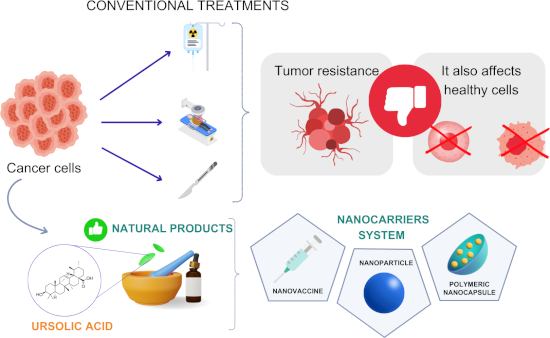
- tissues [157][158]. Regarding the use of natural products, carbon quantum dots, the main type of nanoparticles derived from bioactive compounds, show promising activity for cancer treatment due to their biocompatibility, photostability, and fluorescent characteristics [159]. Bergenin (BER) is a natural
- compound extracted from cinnabar root. It has been combined with carbon quantum dots to treat lung cancer in the patent CN427216811 (2023). BER is a glycosidic derivative of hydroxybenzoic acid found in various plant families and species worldwide, with Bergenia purpurascens and Ardisia japonica being its


Influence of laser beam profile on morphology and optical properties of silicon nanoparticles formed by laser ablation in liquid
Beilstein J. Nanotechnol. 2025, 16, 1533–1544, doi:10.3762/bjnano.16.108
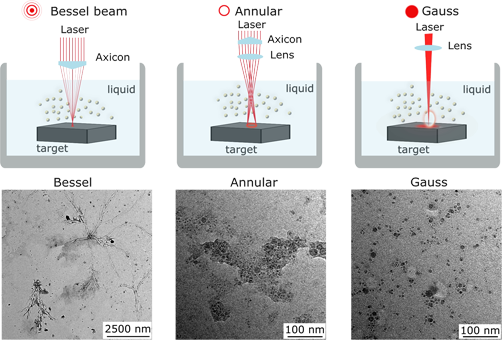
- become an emerging field of research [3][4][5][6][7]. The expanding application areas require silicon nanomaterials of different morphologies, including quantum dots, nanowires, and nanocrystalline films. Si nanowires, for example, are considered as a promising alternative to silicon electrodes in Li-ion


Nanomaterials for biomedical applications
Beilstein J. Nanotechnol. 2025, 16, 1499–1503, doi:10.3762/bjnano.16.105

- ]. Polymeric nanoparticles, dendrimers, and carbon-based structures such as carbon nanotubes are very promising when it comes to delivering drugs and genes to certain parts of the body [3]. Conversely, metallic nanoparticles such as gold and iron oxide, and fluorescent quantum dots have applications in
- conditions such as cancer, neurological disorders, and infections. Quantum dots are a widely studied type of nanomaterial used in biomedical diagnostics. When these semiconductor particles are exposed to light, they strongly and stably emit fluorescence. Unlike regular dyes, quantum dots do not quickly fade
- usage in everyday healthcare is becoming more evident. Liposomes and polymeric nanoparticles are already being used in certain cancer and vaccine treatments [41]. Detection of diseases at an early stage is becoming more possible with gold nanoparticles or quantum dots. Scaffolds made from nanofibers and
Laser processing in liquids: insights into nanocolloid generation and thin film integration for energy, photonic, and sensing applications
Beilstein J. Nanotechnol. 2025, 16, 1428–1498, doi:10.3762/bjnano.16.104
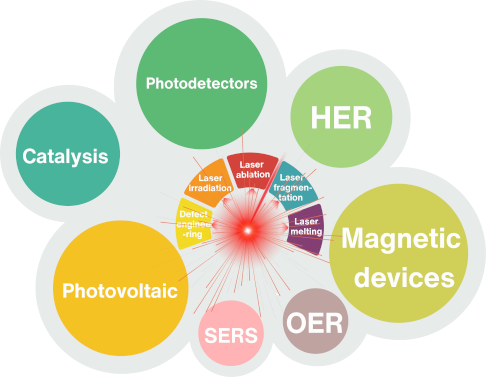
- particle size through a relatively simple process, further advancing the field of laser-based nanoparticle synthesis. The first report on the fabrication of ZnO quantum dots (QDs) through laser irradiation of ZnO hollow nanospheres in a liquid medium highlighted a rapid, simple process conducted at room






Parylene-coated platinum nanowire electrodes for biomolecular sensing applications
Beilstein J. Nanotechnol. 2025, 16, 1392–1400, doi:10.3762/bjnano.16.101
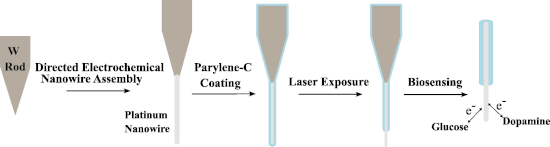
- stability of metal nanoparticles limits their application in biological systems and decreases their performance [12]. Other materials like silicon quantum dots, ion-imprinted polymer, and hydrogels have unique biocompatibility and specificity advantages, but long-term stability and cost make them


Enhancing the therapeutical potential of metalloantibiotics using nano-based delivery systems
Beilstein J. Nanotechnol. 2025, 16, 1350–1366, doi:10.3762/bjnano.16.98
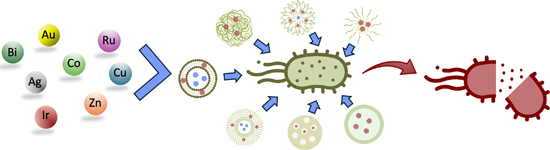
- targeted release, coupled with the ability to efficiently deliver drugs to cells like macrophages, make MSiNPs an attractive option for overcoming drug delivery challenges, such as those encountered with bacterial infections [91]. Quantum dots. Quantum dots (QDs) are semiconductor nanocrystals generally
- complexes. In another example, a nano-based delivery system was developed comprising the zinc–rifampicin complex (Zn-RIF) 16 (Figure 4) encapsulated within transferrin-functionalized silver quantum dots (Zn-RIF-Tf-QDs) [122]. This formulation markedly enhanced antimycobacterial activity, with at least a


Better together: biomimetic nanomedicines for high performance tumor therapy
Beilstein J. Nanotechnol. 2025, 16, 1246–1276, doi:10.3762/bjnano.16.92
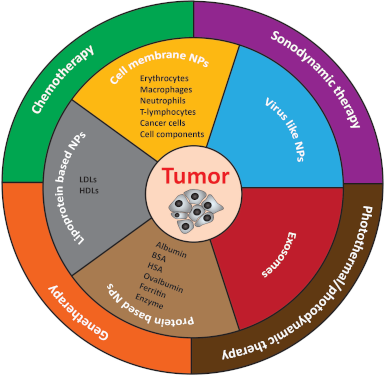
- , a ligand of transferrin receptor, and NGR peptide, a ligand of CD13 [127]. Dual modification with the peptides yielded the ability to overcome the BBB and target the glioma. In another study, RBC-covered graphene oxide quantum dots (GTDC@M) were investigated regarding the targeted therapy of






Soft materials nanoarchitectonics: liquid crystals, polymers, gels, biomaterials, and others
Beilstein J. Nanotechnol. 2025, 16, 1025–1067, doi:10.3762/bjnano.16.77
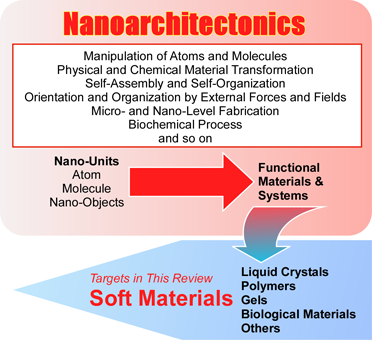
- such as quantum dots [95][96][97][98][99], the nanoscale of size and dimensions can result in properties that are not attainable with bulk materials. In other words, the key to developing functionality and improving properties lies in controlling the nanostructure in addition to the creation of the






Structural and magnetic properties of microwave-synthesized reduced graphene oxide/VO2/Fe2O3 nanocomposite
Beilstein J. Nanotechnol. 2025, 16, 921–932, doi:10.3762/bjnano.16.70
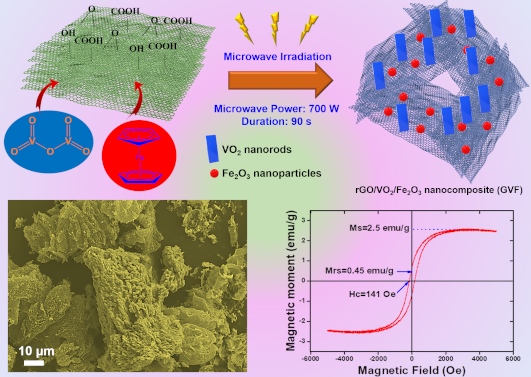
- unlocked a new era in the field of materials science. The synthetic approaches of graphene materials including graphene quantum dots, graphene oxide, and reduced graphene oxide (rGO) can be categorized into two classes: top-down and bottom-up processes. The top-down approaches are found to be comparatively



Nanomaterials in targeting amyloid-β oligomers: current advances and future directions for Alzheimer's disease diagnosis and therapy
Beilstein J. Nanotechnol. 2025, 16, 561–580, doi:10.3762/bjnano.16.44
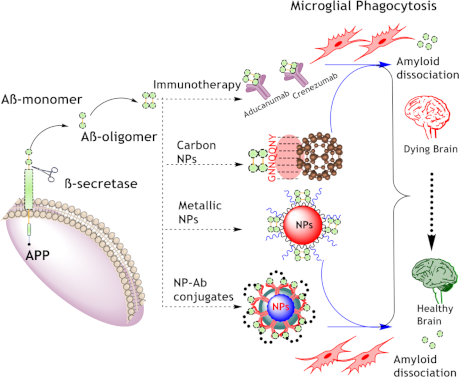
- promoting the aggregation of less harmful conformations [73]. Moreover, the development of positively charged carbon quantum dots has shown promise in preventing the aggregation of amyloid proteins, specifically by inhibiting the formation of hetero-oligomers between islet amyloid polypeptide (IAPP) and


Emerging strategies in the sustainable removal of antibiotics using semiconductor-based photocatalysts
Beilstein J. Nanotechnol. 2025, 16, 264–285, doi:10.3762/bjnano.16.21
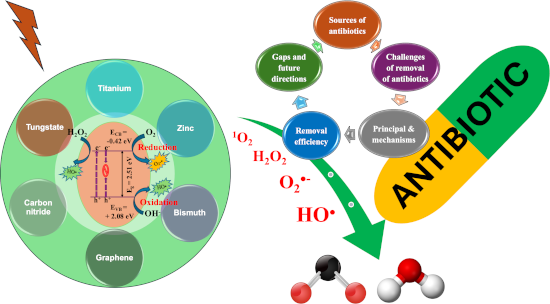
- bandgap of 2.77 eV. The research community has shown significant interest in zero-dimensional Bi2WO6 quantum dots and one-dimensional Bi2WO6 nanofibers. Bismuth tungstate exhibits excellent thermal and chemical stability in addition to its activity in visible light. It is typically synthesized through



Radiosensitizing properties of dual-functionalized carbon nanostructures loaded with temozolomide
Beilstein J. Nanotechnol. 2025, 16, 229–251, doi:10.3762/bjnano.16.18
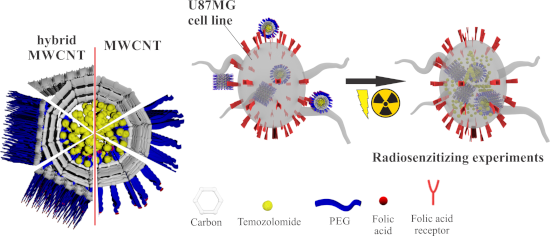
- nanostructures; cytotoxicity; glioblastoma multiforme; radiosensitizing properties; temozolomide; Introduction Carbon-based nanostructures (CNs) such as graphene and its derivatives, carbon nanotubes (CNTs), fullerenes, carbon quantum dots, carbon nanohorns and nanodiamonds (NDs), and their hybrids are becoming
- . Despite the beneficial properties, CNs have not been extensively researched as inherent drugs or drug/TMZ carriers for the treatment of GBM. In two papers, a hybrid made of carbon quantum dots functionalized with chitosan, polyethylene oxide, and carboxymethyl cellulose–polyvinyl alcohol provided
- release was also provided through loading TMZ in a hybrid compound of carbon quantum dots, chitosan, polyethylene oxide, and carboxymethyl cellulose–polyvinyl alcohol (CS-PEO-CQDs/CMC-PVA) via coaxial spinning, and a transport system of CMC-PVA coating and CS-PEO-CQDs core was formed [41][42]. In a study




Recent advances in photothermal nanomaterials for ophthalmic applications
Beilstein J. Nanotechnol. 2025, 16, 195–215, doi:10.3762/bjnano.16.16
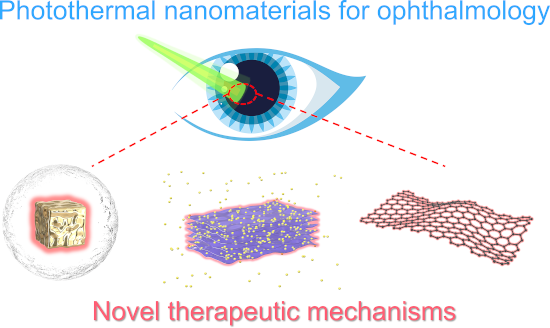
- heat (see below in Figure 2d) [57]. The presence of a high density of loosely bound electrons and the narrow energy level spacing of the π electrons endow carbon materials (such as graphene, carbon nanotubes, carbon quantum dots, and fullerenes) and polymer materials (like polydopamine, polyaniline
- narrowing of the bandgap, thereby enhancing visible light absorption [83]. For example, pristine TiO2 hardly absorbs visible light with wavelengths greater than 400 nm, while N-doped TiO2 quantum dots exhibit significant visible light absorption between 400 and 1000 nm [84]. Semiconductors that rely on
- ablate the injected collagen opacities [122]. Cationic carbon quantum dots, known for their robust light absorption across a broad spectrum of wavelengths, have also been proven effective in breaking down collagen fibers and vitreous opacities through the VNBs generated by low-flux pulsed lasers [69][123


Biomimetic nanocarriers: integrating natural functions for advanced therapeutic applications
Beilstein J. Nanotechnol. 2024, 15, 1619–1626, doi:10.3762/bjnano.15.127

- differences in key characteristics. The National Nanotechnology Initiative (NNI) emphasizes that nanomaterials hold promising potential across various fields of knowledge [1][5]. Materials such as liposomes, nanoparticles, polymer–drug conjugates, inorganic noble metals, and quantum dots may improve





