Search results
Search for "STEM" in Full Text gives 301 result(s) in Beilstein Journal of Nanotechnology. Showing first 200.
Polyurethane/silk fibroin-based electrospun membranes for wound healing and skin substitute applications
Beilstein J. Nanotechnol. 2025, 16, 591–612, doi:10.3762/bjnano.16.46
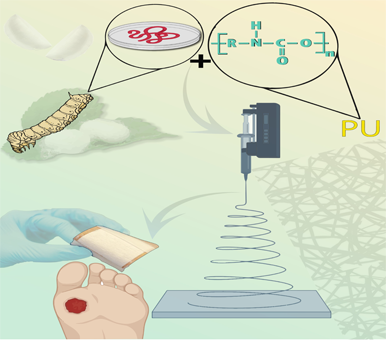
- factors, drugs, and stem cells to facilitate the process of growth and regeneration [87]. Fitzpatrick et al. develop a scaffold by combining silk–hydroxyapatite bone cement with growth factors such as bone morphogenetic protein-2 (BMP2), vascular endothelial growth factor (VEGF), and neural growth factor
- scaffold was cytocompatible and osteoconductive. In vitro studies showed that the scaffold successfully supported the osteogenic differentiation of human mesenchymal stem cells, migration and proliferation of endothelial cells, and growth of neural stem cells. The combination of BMP2, VEGF, and NGF
- cross-linking were used to develop a silk fibroin/chitosan/nanohydroxyapatite (SF/CS/nHA) scaffold in three different concentrations (3%, 4%, and 5%). The 4% SF/CS/nHA scaffold was shown to be the most effective for bone repair. In vitro studies involved seeding bone marrow mesenchymal stem cells (BMSCs



Nanomaterials in targeting amyloid-β oligomers: current advances and future directions for Alzheimer's disease diagnosis and therapy
Beilstein J. Nanotechnol. 2025, 16, 561–580, doi:10.3762/bjnano.16.44
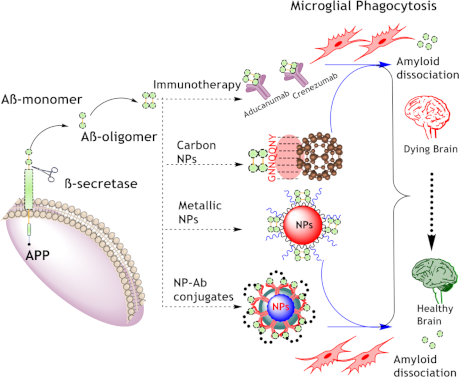
- largely been confined to biologics, particularly monoclonal and polyclonal antibodies. The advantages of using antibodies stem from their remarkable capacity to recognize conformational epitopes that are unique to various oligomeric forms, thereby facilitating the selective targeting of pathogenic AβOs
- early detection of AD [83]. However, recent research has begun to investigate the therapeutic potential of exosomes themselves in mitigating AβO-induced toxicity. For instance, Bodart-Santos et al. isolated and characterized EVs from human Wharton’s jelly mesenchymal stem cells (hMSC-EVs) and assessed


Electron beam-based direct writing of nanostructures using a palladium β-ketoesterate complex
Beilstein J. Nanotechnol. 2025, 16, 530–539, doi:10.3762/bjnano.16.41
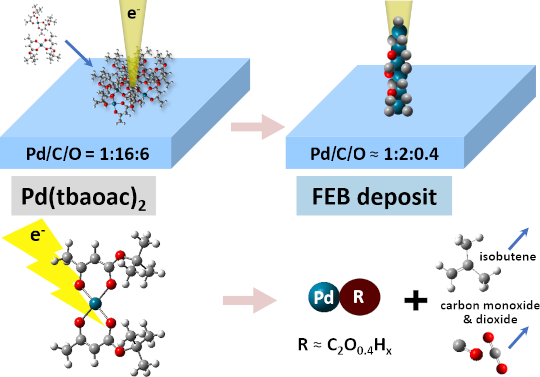
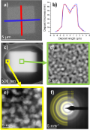
- geometry is primarily due to surface diffusion processes and directional gas flux adsorption [44][45]. No halo region was observed. The volume growth rate was approximately 0.032 µm3·min−1 or 7.62 × 10⁻⁴ µm3·nC−1, with a vertical growth rate of 0.02 nm·s−1. For the STEM analysis, a square deposit was
- prepared on an ultrathin carbon support film spanning a lacey carbon membrane (Figure 2c). The deposit appears smeared because of drift caused by charging effects during the deposition process. High-resolution STEM imaging (Figure 2d,e) revealed a granular nanostructure with nanograins of around 2 nm in
- profiles along vertical and horizontal directions. (c) STEM image of the FEB deposit on a carbon membrane. (d) High-resolution STEM image from the center of the deposit. (e) High-resolution STEM image from the edge of the deposit. (f) SAED pattern from the edge of the deposit. Enlarged version of the


Effect of additives on the synthesis efficiency of nanoparticles by laser-induced reduction
Beilstein J. Nanotechnol. 2025, 16, 464–472, doi:10.3762/bjnano.16.35
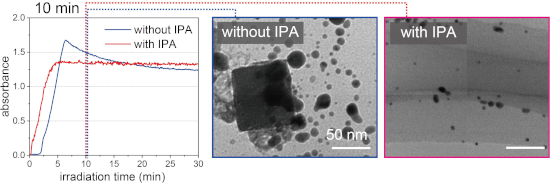
- alloy nanoparticles by LRL with the addition of IPA as a radical scavenger to a solution containing multiple metal ions, and the structure of the synthesized nanoparticles was evaluated by scanning transmission electron microscopy-energy dispersive spectroscopy (STEM-EDS). In this case, we selected an
- Au–Pt alloy (atomic ratio, Au/Pt = 1:1) that has an immiscible gap in the binary phase diagram and is difficult to form a solid–solution alloy in a bulk form. Figure 6 shows a a) TEM image and b) STEM-EDS mappings of the particles produced after laser irradiation. The TEM results (Figure 6a
- ) confirmed the formation of nanoparticles with a diameter of less than 20 nm. The STEM-EDS mappings (Figure 6b) clearly showed that Au and Pt were uniformly present within each particle, and the atomic ratio was Au/Pt = 1:1, which was consistent with the mixing ratio of the precursor ions. Namely, it was


Development of a mucoadhesive drug delivery system and its interaction with gastric cells
Beilstein J. Nanotechnol. 2025, 16, 371–384, doi:10.3762/bjnano.16.28

- was characterized by STEM, where transmitted electrons are used to create the image [30]. In STEM micrographs, alginate nanoparticles appeared with sharp edges; however, the edges of the EudAlg nanoparticles revealed secondary projections (Figure 1C,D). Similar micrographs in which the edge of the
- nanoparticles Morphology of nanoparticles The morphological characterization of nanoparticles was done via scanning electron microscopy (SEM, Zeiss, GeminiSEM500) and scanning transmission electron microscopy (STEM, Ziess, GeminiSEM500). For SEM analysis, nanoparticles were air-dried on SEM stabs and coated
- with gold (4 nm). STEM micrographs were obtained from one drop of nanoparticle suspension dripped on an ultrathin carbon-coated copper grid. Surface composition of nanoparticles For the analysis of various functional groups on the surface of nanoparticles before and after coating, attenuated total


Graphene oxide–chloroquine conjugate induces DNA damage in A549 lung cancer cells through autophagy modulation
Beilstein J. Nanotechnol. 2025, 16, 316–332, doi:10.3762/bjnano.16.24
- acetylation of histone in the nucleus causing increased decondensing of chromatin, making cancer cells more susceptible to DNA damage [15]. Graphene oxide has also been shown to selectively target cancer stem cells among multiple cell types by inhibiting a number of different signal transduction pathways



Enhancing mechanical properties of chitosan/PVA electrospun nanofibers: a comprehensive review
Beilstein J. Nanotechnol. 2025, 16, 286–307, doi:10.3762/bjnano.16.22

- improved the antimicrobial activity of the nanofibers against a wide range of bacteria [190]. In tissue engineering applications, aligned fibers are particularly effective as they better mimic the inductive environment, such as that of human tendon stem/progenitor cells, compared to random fibers [191
- ]. Aligned fibers also guide human mesenchymal stem cells toward cardiomyogenesis and enhance myoblast differentiation [192][193]. Research has demonstrated that aligned nanofibers can accelerate the recovery of highly organized structures, such as nerve cells, tendons, and ligaments. Additionally, aligned


Preferential enrichment and extraction of laser-synthesized nanoparticles in organic phases
Beilstein J. Nanotechnol. 2025, 16, 254–263, doi:10.3762/bjnano.16.20
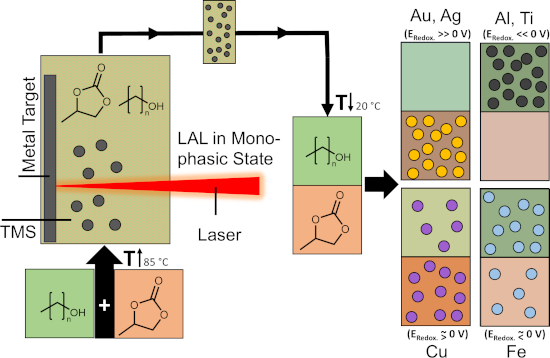
- depends on where in the plume they stem from, and there is a distribution of cooling rates ranging at least over three orders of magnitude, from less than 1011 to 1013 K·s−1, evidencing undercooling effects and defect-rich nanoparticle crystallization [59]. One may hypothesize that the different cooling




Recent advances in photothermal nanomaterials for ophthalmic applications
Beilstein J. Nanotechnol. 2025, 16, 195–215, doi:10.3762/bjnano.16.16
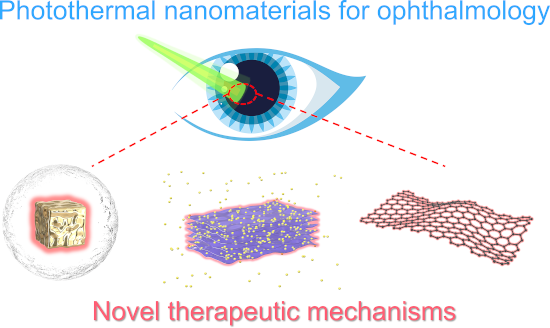
- through safe laser irradiation. Delivering stem cells to the trabecular meshwork to regenerate tissue and restore its function can treat glaucoma [207]. Labeling stem cells with the PAI contrast agent AuNSs allows for real-time monitoring of stem cell delivery and circulation in the anterior chamber


Nanocarriers and macrophage interaction: from a potential hurdle to an alternative therapeutic strategy
Beilstein J. Nanotechnol. 2025, 16, 97–118, doi:10.3762/bjnano.16.10



Biomimetic nanocarriers: integrating natural functions for advanced therapeutic applications
Beilstein J. Nanotechnol. 2024, 15, 1619–1626, doi:10.3762/bjnano.15.127

- , leukocytes, stem cells, tumor components) or other biocomponents (e.g., platelets), can enhance the functionality of carriers and meet the requirements for human applications [19]. The cellular membranes of cancer cells exhibit adhesion molecules crucial to cancer development and metastasis. Heterotypic or


Polymer lipid hybrid nanoparticles for phytochemical delivery: challenges, progress, and future prospects
Beilstein J. Nanotechnol. 2024, 15, 1473–1497, doi:10.3762/bjnano.15.118
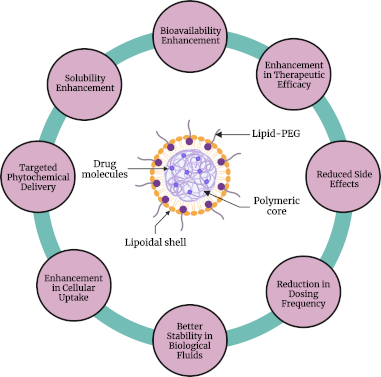
- therapeutic efficiency in mouse models bearing 4T1 breast tumors. Hydroxycamptothecin Hydroxycamptothecin (HCT) is a natural alkaloid derived from the bark and stem of the Chinese tree Camptotheca acuminata, also known as the “happy tree” [122]. It is part of the camptothecin family and is renowned for its


Nanotechnological approaches for efficient N2B delivery: from small-molecule drugs to biopharmaceuticals
Beilstein J. Nanotechnol. 2024, 15, 1400–1414, doi:10.3762/bjnano.15.113

- modification with PEG and RVG29 improved the intranasal delivery of the NPs [163]. Li et al. also worked on RVG29 and developed core–shell lesion-recognizing NPs consisting of RVG29 peptide-modified mesenchymal stem cell-derived exosomes as the shell and a reactive oxygen species-responsive polymer loaded with


A biomimetic approach towards a universal slippery liquid infused surface coating
Beilstein J. Nanotechnol. 2024, 15, 1376–1389, doi:10.3762/bjnano.15.111
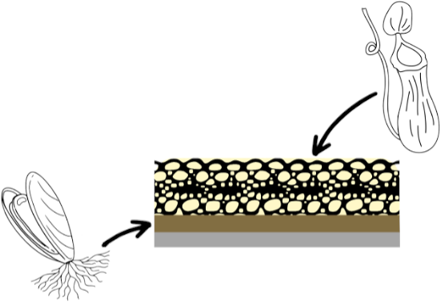
- stem from the PDA layer, while the fluorinated species can be attributed to the FDT layer covalently attached the PDA film. This covalent attachment is also confirmed by the XPS S 2p high-resolution spectra (Supporting Information File 1), which exhibited the same peak envelope across all the three




Enhanced catalytic reduction through in situ synthesized gold nanoparticles embedded in glucosamine/alginate nanocomposites
Beilstein J. Nanotechnol. 2024, 15, 1227–1237, doi:10.3762/bjnano.15.99
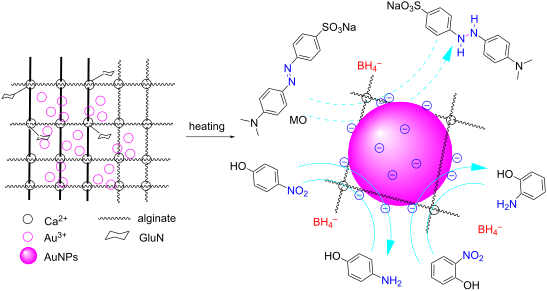
- reduction of 4-NiP (2.05 × 10⁻³ s−1, R2 = 0.995). This variance may stem from the hindrance caused by the interaction between the hydroxy group in 4-NiP and functional groups in the polysaccharide chains, impeding the adsorption/desorption dynamics on the surface of the AuNPs. The rate constant for MO



Quantum-to-classical modeling of monolayer Ge2Se2 and its application in photovoltaic devices
Beilstein J. Nanotechnol. 2024, 15, 1153–1169, doi:10.3762/bjnano.15.94
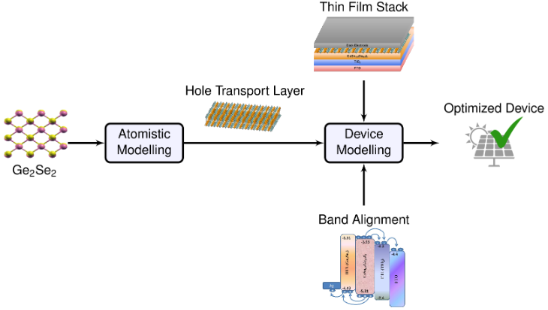
- large plane-wave mesh cutoff of 120 Ry is considered throughout the calculations. We computed the optical parameters within the range of 0–30 eV. They stem from the dielectric function (using the Kramers–Kronig relations [86]), further estimated through the susceptibility tensors. The susceptibility




Direct electron beam writing of silver using a β-diketonate precursor: first insights
Beilstein J. Nanotechnol. 2024, 15, 1117–1124, doi:10.3762/bjnano.15.90

- ). As this growth rate was only about two times larger than that of the thermal emitter, a precursor-limited growth regime and, thus, enhanced co-dissociation of the ligands is expected. For later TEM investigations, the deposition was carried out directly on a TEM grid. The STEM image in Figure 3 shows
- rectangles. Electron micrographs of deposition results using (hfac)AgPMe3 in a commercial gas injection system and a field-emission microscope. (a) Pillar with smooth side walls and without noticeable halo, (b) dark-field STEM image of the pillar with silver nanocrystals appearing as bright spots with


Water-assisted purification during electron beam-induced deposition of platinum and gold
Beilstein J. Nanotechnol. 2024, 15, 884–896, doi:10.3762/bjnano.15.73
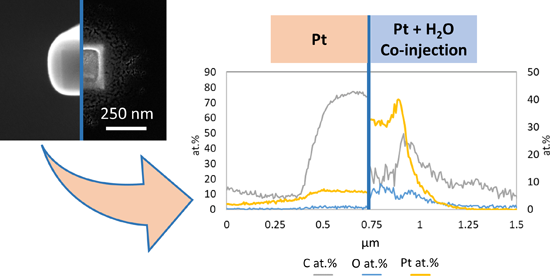
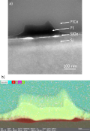
- % ratio correction can be found in Supporting Information File 1 (pp S3–S5). TEM A TEM lamella was prepared in a TFS Helios dual-beam system. A PtCx layer was deposited from MeCpPtMe3 as a protection layer. Transmission electron microscopy (TEM) and STEM-EDX analysis were performed in an FEI Titan Cubed
- Cs-corrected TEM at 300 keV. STEM-EDX was performed with a Thermo Fisher Scientific EDX super-X detector in the ChemiSTEM configuration. For EDX mapping, three-pixel averaging was used. Results and Discussion Water-assisted purification of gold deposits In order to validate the compatibility of the
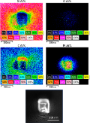
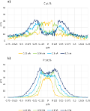
- increase the electron flux while keeping the precursor supply constant, such as increasing the dwell time [56], were not explored further. The composition of the material was confirmed by STEM-EDX of a lamella cut from deposit 1g. The C/Pt atom % ratio in this deposit is consistently in the range of 0.22





A review on the structural characterization of nanomaterials for nano-QSAR models
Beilstein J. Nanotechnol. 2024, 15, 854–866, doi:10.3762/bjnano.15.71
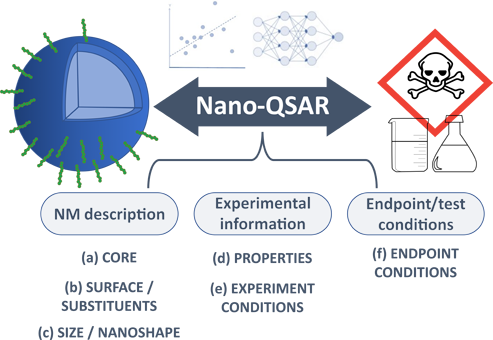
- statistical significance in the predictivity of models is not consistent. This ambiguity might stem from the fundamental shift in properties when transitioning from bulk materials to nanoparticles, making it a quantum leap in terms of behavior. While having a nanoscale size is crucial for exhibiting distinct


Intermixing of MoS2 and WS2 photocatalysts toward methylene blue photodegradation
Beilstein J. Nanotechnol. 2024, 15, 817–829, doi:10.3762/bjnano.15.68
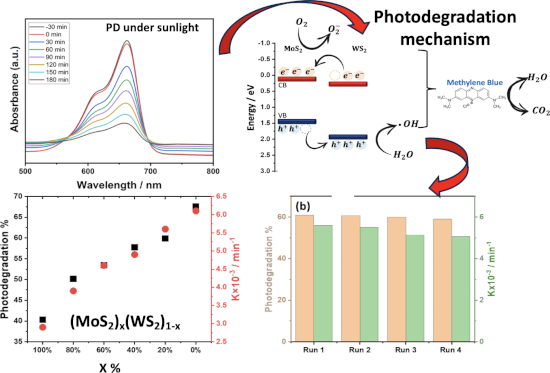
- Figure 5f represent the MoS2/WS2 composite sample. Typical shapes and sizes corresponding to grown MoS2 and WS2 structures are also observed. High-resolution images indicate different planes corresponding to the composite sample with a corresponding d-spacing. Further, scanning TEM (STEM) images along
- with energy-dispersive spectroscopy (EDS) mapping were carried out on the MoS2/WS2 composite. High-annular angle dark-field (HAADF-STEM) allowed the identification of atomic positions with Z differences [35][36], and in particular here, the W sites as shown in Figure 5g. This is confirmed by EDS maps
- composite. g–i) High-resolution STEM-EDS mapping of the MoS2/WS2 composite depicting a random presence of W atoms (marked by circles). PD of MB recorded under solar simulator excitation: MB absorbance variation at various durations using a) MoS2 and b) WS2 photocatalysts. The relative MB concentration


Synthesis of silver–palladium Janus nanoparticles using co-sputtering of independent sources: experimental and theorical study
Beilstein J. Nanotechnol. 2024, 15, 808–816, doi:10.3762/bjnano.15.67
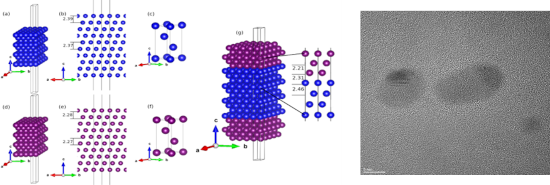
- crossed Ag–Pd interactions [16]. The final structures were used to generate simulated TEM micrographs using the SimulaTEM package [17] and approximated STEM micrographs, with the assumption that the signal intensity, I, of atoms of atomic number Z goes as I = Zn, where n is a number close to 2 [18]. To
- silver–palladium sample was also performed on a TITAN FEI Analytical (Low-Base) device in STEM mode. Figure 4a shows the micrograph with the area in which the scan was performed is marked by the box “Spectrum Image”; the section that serves for the correction of spatial distortion has the legend “Spatial
- thermalized the structure at 300 K using molecular dynamics in the NVT ensemble. The atomic coordinates of the final configuration of the MD run were fed to a proprietary software to build STEM-like micrographs, and simulated TEM micrographs were created with the SimulaTEM program. The analysis of the




Exploring surface charge dynamics: implications for AFM height measurements in 2D materials
Beilstein J. Nanotechnol. 2024, 15, 767–780, doi:10.3762/bjnano.15.64
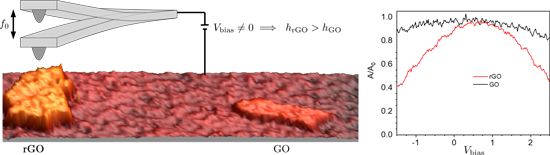
- has sparked considerable interest spanning from fundamental research to practical device applications. The distinctive physical and chemical properties of 2D materials, composed of one atom- or a few atom-thick sheets, stem from their thin, flat structure, providing an exceptional surface-to-volume


Level set simulation of focused ion beam sputtering of a multilayer substrate
Beilstein J. Nanotechnol. 2024, 15, 733–742, doi:10.3762/bjnano.15.61
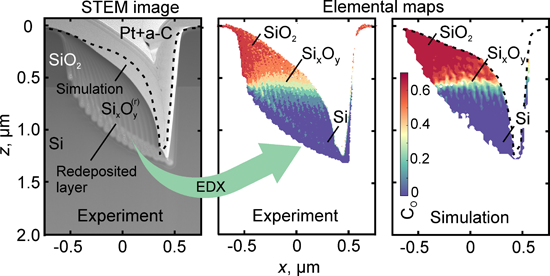
- sputtering of a multilayer substrate under FIB irradiation. The results of the calculations for narrow trenches and rectangular boxes with varying aspect ratios were compared with cross-sectional scanning transmission electron microscopy (STEM) images of experimental test structures fabricated in the silicon
- microscopy (SEM) image of the trenches with a superimposed line depicting the position of the prepared cross section. Figure 3b–d presents the corresponding cross-sectional STEM images of trenches, where the silicon dioxide is visualized as the dark layer. The shape of trenches was mainly determined by the
- crystalline silicon substrate covered by an approximately 600 nm thick silicon dioxide layer. The plan-view SEM image corresponding to M = 2 and cross-sectional STEM images of the prepared boxes are shown in Figure 3e and Figure 3f–h, respectively. As can be seen from Figure 3e–h, V-like boxes cutting through

![[Graphic 55]](/bjnano/content/inline/2190-4286-15-61-i68.svg?max-width=637&scale=1.18182)


Laser synthesis of nanoparticles in organic solvents – products, reactions, and perspectives
Beilstein J. Nanotechnol. 2024, 15, 638–663, doi:10.3762/bjnano.15.54





Stiffness calibration of qPlus sensors at low temperature through thermal noise measurements
Beilstein J. Nanotechnol. 2024, 15, 580–602, doi:10.3762/bjnano.15.50
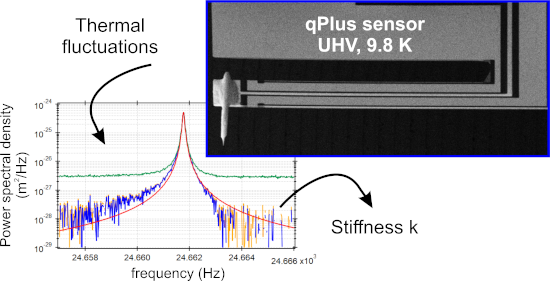
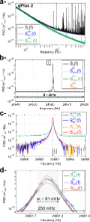
- buffer of N samples. The windowing duration is then: In UHV and at low temperature, the qPlus sensor’s thermal fluctuations stem from stochastic phonons of the quartz in thermal equilibrium with the thermostat at the energy kBT. The phonons excite the qPlus sensor and statistically repeat over time with