


Search results
Search for "X-ray absorption fine structure" in Full Text gives 31 result(s) in Beilstein Journal of Nanotechnology.
Characterization of electroforming-free titanium dioxide memristors
Beilstein J. Nanotechnol. 2013, 4, 467–473, doi:10.3762/bjnano.4.55
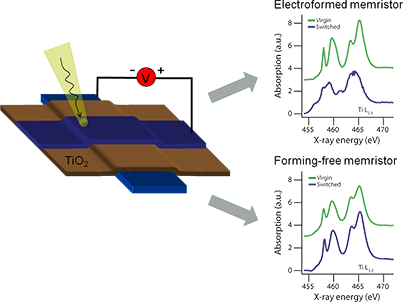
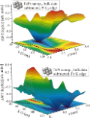
- technique has been used for previous studies of the single layer TiO2 memristor devices and can identify the presence of spatially-localized channels of oxygen vacancy rich Ti–O phases through analysis of the near-edge X-ray absorption fine structure (NEXAFS) [26]. After electrical operation of the



Towards atomic resolution in sodium titanate nanotubes using near-edge X-ray-absorption fine-structure spectromicroscopy combined with multichannel multiple-scattering calculations
Beilstein J. Nanotechnol. 2012, 3, 789–797, doi:10.3762/bjnano.3.88
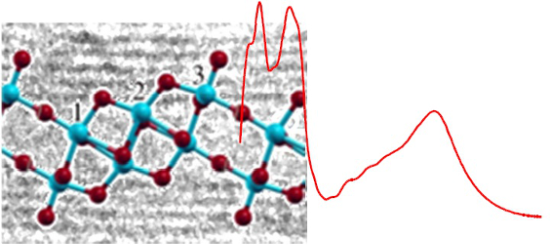
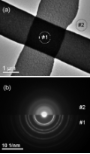
- Functional Materials, Albert-Einstein-Str. 15, 12489 Berlin, Germany 10.3762/bjnano.3.88 Abstract Recent advances in near-edge X-ray-absorption fine-structure spectroscopy coupled with transmission X-ray microscopy (NEXAFS–TXM) allow large-area mapping investigations of individual nano-objects with spectral
- resolution in similar techniques with lower spectral resolution [9][10]. We investigate here the electronic structure of sodium titanate nanotubes ((Na,H)TiNTs) by means of near-edge X-ray-absorption fine-structure spectroscopy (NEXAFS) coupled with first-principles NEXAFS calculations (density functional
- oxygen bonding within individual layers of the (Na,H)TiNT. In summary, we have shown that near-edge X-ray-absorption fine-structure spectroscopy combined with transmission X-ray microscopy (NEXAFS–TXM) is a powerful technique to investigate the electronic structure of titanate nanostructures when



X-ray absorption spectroscopy by full-field X-ray microscopy of a thin graphite flake: Imaging and electronic structure via the carbon K-edge
Beilstein J. Nanotechnol. 2012, 3, 345–350, doi:10.3762/bjnano.3.39
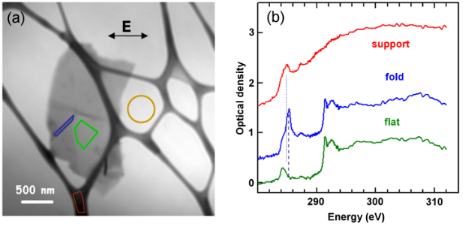
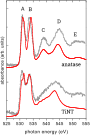
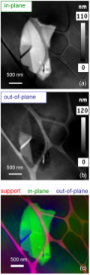
- Jean Rouxel (IMN), Université de Nantes, CNRS, Nantes, France Helmholtz-Zentrum Berlin für Materialien und Energie GmbH, Institute for Soft Matter and Functional Materials, D-12489 Berlin, Germany 10.3762/bjnano.3.39 Abstract We demonstrate that near-edge X-ray-absorption fine-structure spectra
- graphene-based materials [14]. The near-edge X-ray-absorption fine-structure technique (NEXAFS) is ideally suited for the study of graphene-based materials, because the carbon K-edge is very sensitive to the bonding environment, providing diagnostic information about the structure, defects and doping [15


X-ray spectroscopy characterization of self-assembled monolayers of nitrile-substituted oligo(phenylene ethynylene)s with variable chain length
Beilstein J. Nanotechnol. 2012, 3, 12–24, doi:10.3762/bjnano.3.2
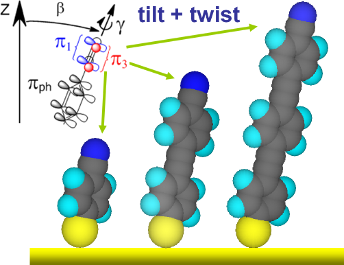
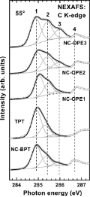
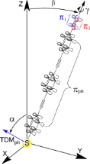
- ) SAMs on Au(111). Furthermore, in addition to the STM/AFM characterization, molecular organization in OPE3/Au was probed by infrared-reflection spectroscopy (IRS) [36] and near-edge X-ray absorption fine-structure (NEXAFS) spectroscopy [37]. The average tilt angle of the OPE3 backbone was estimated at
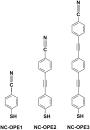
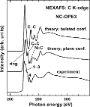
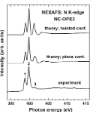
- procedures. The reference SAMs included those formed from DDT [50], HDT [71], TPT [42][43], and NC-BPT [30]. The SAMs were characterized by several complementary spectroscopic techniques, viz., high-resolution X-ray photoelectron spectroscopy (HRXPS), angle-resolved near-edge X-ray absorption fine-structure



Extended X-ray absorption fine structure of bimetallic nanoparticles
Beilstein J. Nanotechnol. 2011, 2, 237–251, doi:10.3762/bjnano.2.28
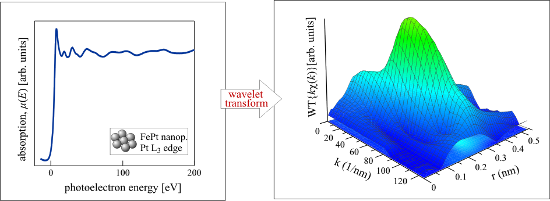
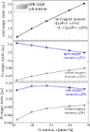
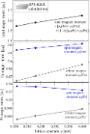
- absorption spectroscopy. In this review, recent developments in the field of extended X-ray absorption fine structure measurements and in the analysis methods for structural investigations of bimetallic nanoparticles are highlighted. The standard analysis based on Fourier transforms is compared to the
- structure (XANES). In the energy range above the XANES region – typically from 100 eV to 1000 eV above the absorption edge – the extended X-ray absorption fine structure (EXAFS) contains information about the type and distance of atoms in the local environment of the absorbing atom. In the literature
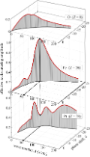
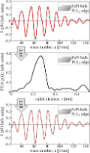
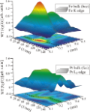
- types of dichroism can be found, e.g., in [31]. Extended X-ray absorption fine structure (EXAFS) In a simplistic picture, the outgoing photoelectron of the atom excited by X-rays can interfere with the backscattered waves from neighbouring atoms. That leads to the oscillatory structure in X-ray



Zirconium nanoparticles prepared by the reduction of zirconium oxide using the RAPET method
Beilstein J. Nanotechnol. 2011, 2, 198–203, doi:10.3762/bjnano.2.23
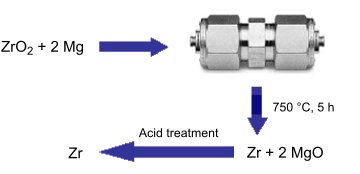
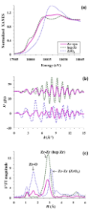
- employed to confirm the formation of metallic Zr synthesized (Zr-syn) by RAPET of ZrO2. The techniques of XAS, namely X-ray absorption near edge structure (XANES) and extended X-ray absorption fine structure (EXAFS), are used to probe local structural details [13] around specific metal atoms and to discern



Other Beilstein-Institut Open Science Activities



