


Search results
Search for "X-ray absorption spectroscopy" in Full Text gives 33 result(s) in Beilstein Journal of Nanotechnology.
Characterization of electroforming-free titanium dioxide memristors
Beilstein J. Nanotechnol. 2013, 4, 467–473, doi:10.3762/bjnano.4.55
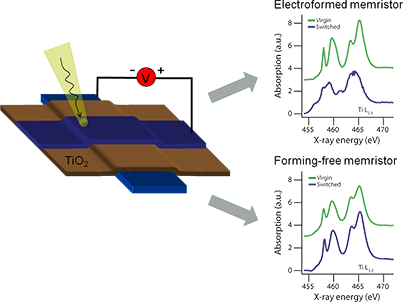
- performed using scanning transmission X-ray microscopy (STXM) at the Advanced Light Source in the Lawrence Berkeley National Laboratory. STXM allows spatially-resolved X-ray absorption spectroscopy (XAS) to be performed on a sample and is well-suited for chemical and structural characterization of the thin
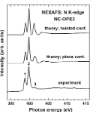
- were observed. X-ray absorption spectroscopy was also performed for both types of devices. In this work the NEXAFS of the Ti L2,3 edges of the film were integrated within the junction area. Figure 3 shows the spectra for electroformed (a) and forming-free (b) devices, in both cases comparing the Virgin
- ). More detailed X-ray absorption spectroscopy for these junction regions are shown below in Figure 3. X-ray absorption spectroscopy within the junction region of an electroformed and forming-free device. The Ti L3 absorption edge is shown, which is sensitive to chemical composition and structure state



Antiferromagnetic coupling of TbPc2 molecules to ultrathin Ni and Co films
Beilstein J. Nanotechnol. 2013, 4, 320–324, doi:10.3762/bjnano.4.36
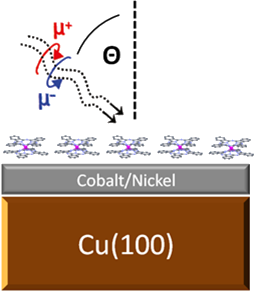
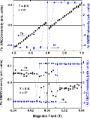
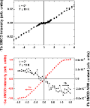
- , CNRS UMP 7504, 23 Rue du Loess, 67034 Strasbourg Cedex 2, France 10.3762/bjnano.4.36 Abstract The magnetic and electronic properties of single-molecule magnets are studied by X-ray absorption spectroscopy and X-ray magnetic circular dichroism. We study the magnetic coupling of ultrathin Co and Ni
- films that are epitaxially grown onto a Cu(100) substrate, to an in situ deposited submonolayer of TbPc2 molecules. Because of the element specificity of the X-ray absorption spectroscopy we are able to individually determine the field dependence of the magnetization of the Tb ions and the Ni or Co film
- demonstrate that it is possible to block this relaxation and conserve the magnetization without any external field by coupling the molecules to a ferromagnetic substrate. By X-ray absorption spectroscopy and X-ray magnetic circular dichroism we study the electronic and magnetic properties of a submonolayer

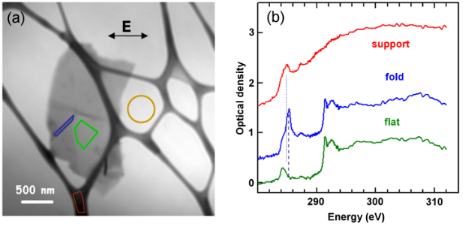
X-ray absorption spectroscopy by full-field X-ray microscopy of a thin graphite flake: Imaging and electronic structure via the carbon K-edge
Beilstein J. Nanotechnol. 2012, 3, 345–350, doi:10.3762/bjnano.3.39



X-ray spectroscopy characterization of self-assembled monolayers of nitrile-substituted oligo(phenylene ethynylene)s with variable chain length
Beilstein J. Nanotechnol. 2012, 3, 12–24, doi:10.3762/bjnano.3.2
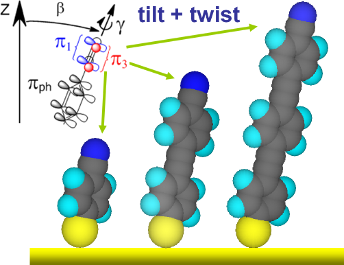
- nitrile moiety, which served as a spectroscopic marker group, to the OPEn backbone did not significantly affect the molecular orientation in the SAMs. Keywords: nitrile substitution; oligo(phenylene ethynylene); self-assembled monolayers; twist angle; X-ray absorption spectroscopy; Introduction Current
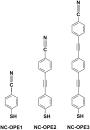


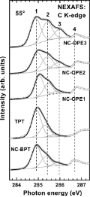

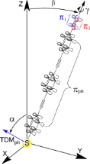
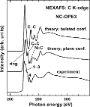
Nanostructured, mesoporous Au/TiO2 model catalysts – structure, stability and catalytic properties
Beilstein J. Nanotechnol. 2011, 2, 593–606, doi:10.3762/bjnano.2.63
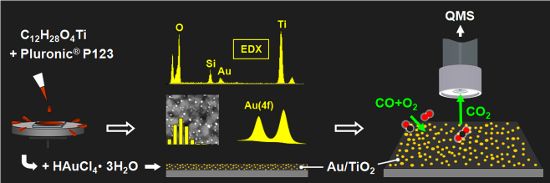
- -modulation infrared reflection absorption spectroscopy (PM-IRAS) [15][16][17] or X-ray absorption spectroscopy (XAS) techniques [18][19], which allow us to gain detailed information on the structure, elemental/molecular chemical composition and electronic/vibrational properties of the catalyst surface and






Nanoscaled alloy formation from self-assembled elemental Co nanoparticles on top of Pt films
Beilstein J. Nanotechnol. 2011, 2, 473–485, doi:10.3762/bjnano.2.51
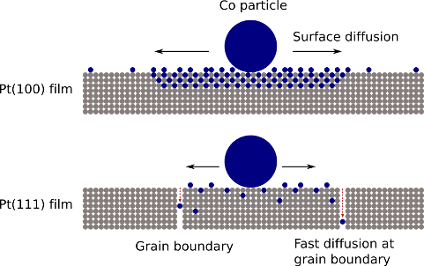
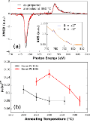
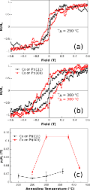
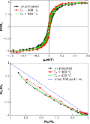
- alloy formation by X-ray absorption spectroscopy and SQUID magnetometry. The excellent sensitivity of SQUID magnetometers can be exploited, at suitably selected temperatures, to detect the magnetic response corresponding to the Co particles and nanoscale alloys. X-ray magnetic circular dichroism (XMCD




Extended X-ray absorption fine structure of bimetallic nanoparticles
Beilstein J. Nanotechnol. 2011, 2, 237–251, doi:10.3762/bjnano.2.28
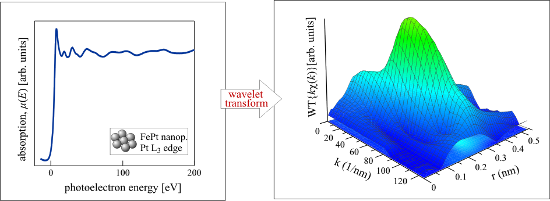
- on state-of-the-art X-ray absorption spectroscopy (XAS) on 3rd generation synchrotron sources such as the ESRF and BESSY II. In general, XAS deals with the excitation of core-level electrons, with their element-specific binding energies, by incident X-rays. After absorption of an X-ray photon, a core
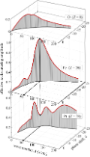
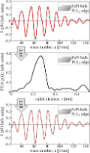
- detailed study of the (local) structure for data interpretation in terms of magnetic or electronic characterisation was discussed on the basis of magnetic moments of FexPt1−x alloys measured by XMCD [68] and calculated using the SPR-KKR method. In summary, the different aspects of X-ray absorption
- crystal symmetry and chemical environment. In nanoparticles, the break of symmetry at the surface may yield different physical properties with respect to the corresponding bulk material. A useful tool to investigate the electronic structure, magnetic behaviour and local crystallographic structure is X-ray



Zirconium nanoparticles prepared by the reduction of zirconium oxide using the RAPET method
Beilstein J. Nanotechnol. 2011, 2, 198–203, doi:10.3762/bjnano.2.23
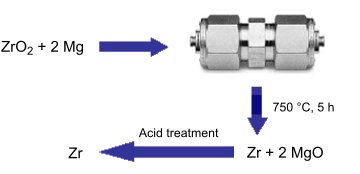
- reaction of commercial ZrO2 with Mg powder was carried out in a closed stainless steel cell, at 750 °C. On completion of the reaction, the additionally formed MgO is removed by treatment with acid. The characterization of the product was performed by XRD, X-ray absorption spectroscopy, SEM, TEM and
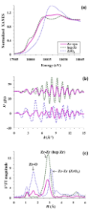
- between 20° and 24° in Figure 1b, is due to the mylar layer that covers the sample in the specially inert XRD cell [12] designed to avoid the oxidation of the Zr sample. However, further proof for the successful fabrication of metallic zirconium is required. X-ray absorption spectroscopy (XAS) was



Other Beilstein-Institut Open Science Activities



