Search results
Search for "acetone" in Full Text gives 366 result(s) in Beilstein Journal of Nanotechnology. Showing first 200.
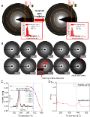
Crystalline and amorphous structure selectivity of ignoble high-entropy alloy nanoparticles during laser ablation in organic liquids is set by pulse duration
Beilstein J. Nanotechnol. 2025, 16, 1141–1159, doi:10.3762/bjnano.16.84
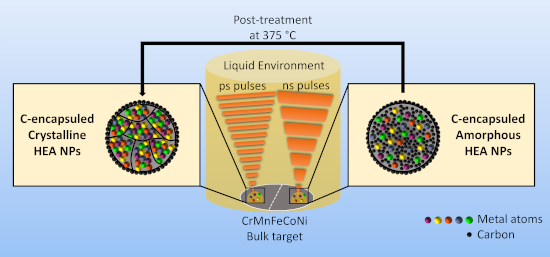
- in organic solvents (acetone, ethanol, acetonitrile). In a systematic experimental series using high-resolution transmission electron microscopy, scanning transmission electron microscopy with energy-dispersive X-ray spectroscopy, selected-area electron diffraction, X-ray diffraction, electron energy
- dominant α-Fe structure could not be observed after LFL, and solely amorphous structures were found [76]. Ps-LAL of FeSiB in organic solvents, however, yielded amorphous NPs directly after ablation in acetone, ethanol, and acetonitrile, while nanocrystalline byproducts of α-Fe/Fe3C phases were also
- on the laser synthesis of colloidal Cantor alloy (CrMnFeCoNi) NPs, systematically varying pulse duration (ps and ns pulses) in laser ablation in organic solvents (acetone, ethanol, acetonitrile), aiming to deduce general design rules triggering the formation of crystalline or amorphous structures in




Shape, membrane morphology, and morphodynamic response of metabolically active human mitochondria revealed by scanning ion conductance microscopy
Beilstein J. Nanotechnol. 2025, 16, 951–967, doi:10.3762/bjnano.16.73
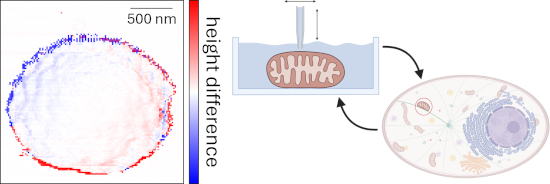
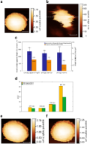
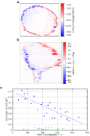
- intermittency effect. Because of the immobilisation protocol using acetone vapour, the 1 μm microspheres “melted” and adopted a more cell-like shape. Discussion SICM topographies and mitochondrial characteristics The SICM topographies reflect the well-documented diversity of mitochondrial shapes and represent a
- intermittency occurs with fixed mitochondria and with 3 μm microspheres treated with acetone (non-living systems with similar geometry). The effect does not occur with 1 μm microspheres treated with acetone vaporisation. In this case, the microspheres’ shape becomes more cell-like, reducing the steep slope and
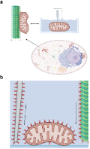
- (1:10 for 3 μm microspheres, 1:100 for 1 μm microspheres) was transferred to the imaging dish and left to dry, allowing the ethanol to evaporate. As immobilisation was insufficient, the samples were exposed to acetone vapour for 30 min at room temperature in air. The 3 μm polystyrene microspheres



Heat-induced transformation of nickel-coated polycrystalline diamond film studied in situ by XPS and NEXAFS
Beilstein J. Nanotechnol. 2025, 16, 887–898, doi:10.3762/bjnano.16.67
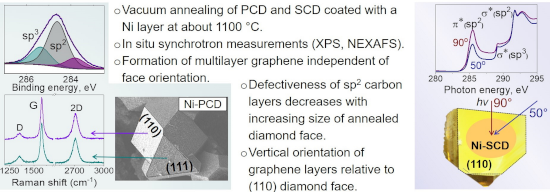
- transformation of bare and nickel-coated polycrystalline diamond films under high-vacuum annealing The PCD film was produced by plasma-enhanced chemical vapor deposition (PE CVD) using acetone (CH3)2CO, hydrogen, and air as the precursor gases for the plasma [37]. The film consists of crystallites with
- 1150 °C [27] and for the (111) face of SCD annealed at 1250 °C [15]. Conclusion Polycrystalline diamond films with mixed grain orientations were synthesized by the PE CVD method from hydrogen/acetone/air plasma and coated with a 40 nm thick nickel layer. In situ XPS and NEXAFS data revealed the
- hydrogen/acetone/air mixture. The deposition parameters were typical of those previously employed for an “Astex” system (2.45 GHz, 4.5 kW): a pressure of 115 Torr, hydrogen, acetone, and air flow rates of 500, 18, and 0.3 sccm, respectively, and substrate temperature in the range of 940–980 °C [28][37


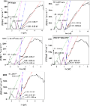
Ar+ implantation-induced tailoring of RF-sputtered ZnO films: structural, morphological, and optical properties
Beilstein J. Nanotechnol. 2025, 16, 872–886, doi:10.3762/bjnano.16.66
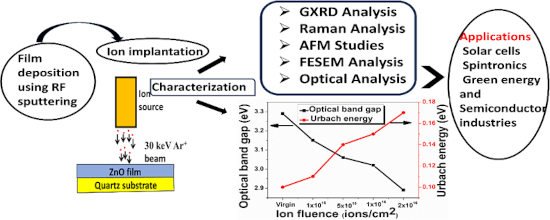
- cleaned using acetone and, finally, isopropyl alcohol before the experiment. The sputtering chamber is pumped to a base pressure of 1.2 × 10⁻⁶ Torr; then a mixture of nitrogen and argon gas is introduced into the sputtering chamber with flows of 1.8 and 10.0 sccm, respectively. When the pressure inside






Facile one-step radio frequency magnetron sputtering of Ni/NiO on stainless steel for an efficient electrode for hydrogen evolution reaction
Beilstein J. Nanotechnol. 2025, 16, 837–846, doi:10.3762/bjnano.16.63
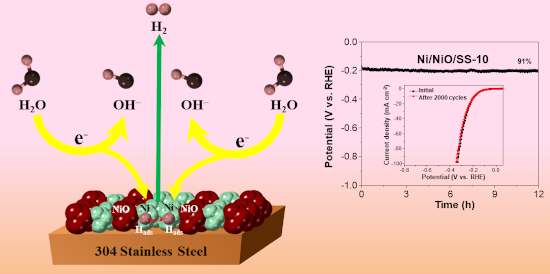
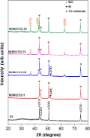
- with a thickness of 1 mm was used as a substrate for catalyst growth. Fabrication of the Ni/NiO/SS samples Grade 304 SS was cut into pieces of 60 mm × 25 mm, washed with soap, and then sonicated in a mixture of acetone and ethanol to remove the impurities left on the SS template. After that, thin films


Morphology and properties of pyrite nanoparticles obtained by pulsed laser ablation in liquid and thin films for photodetection
Beilstein J. Nanotechnol. 2025, 16, 785–805, doi:10.3762/bjnano.16.60
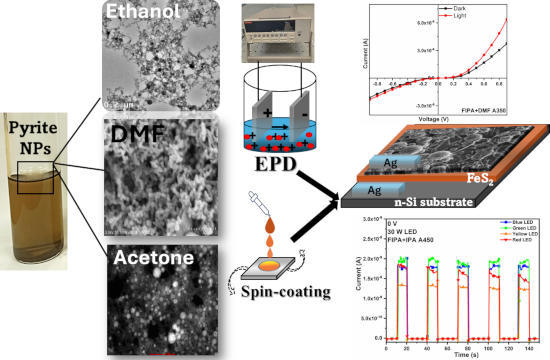
- synthesize pyrite nanoparticles in various solvents, including isopropyl alcohol (IPA), dimethyl formamide (DMF), ethanol, methanol, and acetone, using a 532 nm wavelength output from a Nd:YAG laser. Pulsed laser ablation in liquid has been demonstrated as a reliable alternative to conventional chemical
- % pure, Beijing Goodwill Metals, China) was placed in a 250 mL beaker with 25 mL of solvent (IPA, DMF, ethanol, methanol, and acetone – all from Fermont, 99.9% pure, analytical grade). The FeS2 target surface was polished and washed each time using the respective solvent for ablation to get rid of any
- nanocolloids obtained in different solvents are shown in Supporting Information File 1, Figure S1. The NPs of FeS2 in IPA are referred to as FIPA, in DMF as FDMF, in ethanol as FET, in methanol as FMET, and in acetone as FAC. Morphology and composition of the nanoparticles obtained in all solvents are analyzed






Electron beam-based direct writing of nanostructures using a palladium β-ketoesterate complex
Beilstein J. Nanotechnol. 2025, 16, 530–539, doi:10.3762/bjnano.16.41
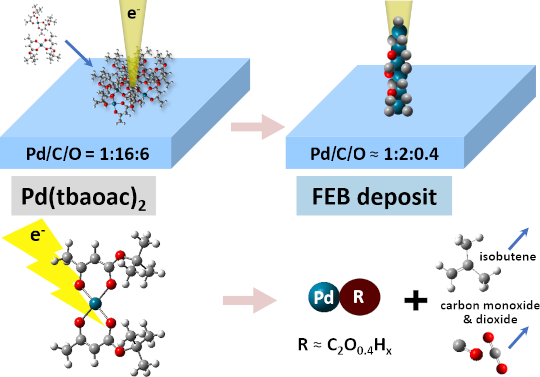
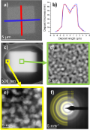
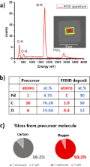
- multiple cycles of water–acetone–isopropanol solvents in an ultrasonification bath and then dried using pressurized N2 gas. For the precursor delivery, we used a heatable, custom-built GIS. Before precursor filling, the GIS underwent the same cleaning procedure as the substrate. The solid precursor was


N2+-implantation-induced tailoring of structural, morphological, optical, and electrical characteristics of sputtered molybdenum thin films
Beilstein J. Nanotechnol. 2025, 16, 495–509, doi:10.3762/bjnano.16.38
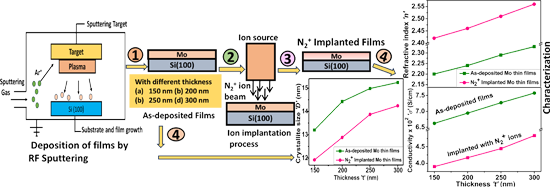
- minimizing the reflected power. Before deposition, the target surface was pre-sputtered for 15 min to remove any surface contamination. The silicon substrates were meticulously cleaned by washing them with distilled water and isopropyl alcohol and rinsing them with acetone. The vacuum chamber was evacuated


ReactorAFM/STM – dynamic reactions on surfaces at elevated temperature and atmospheric pressure
Beilstein J. Nanotechnol. 2025, 16, 397–406, doi:10.3762/bjnano.16.30
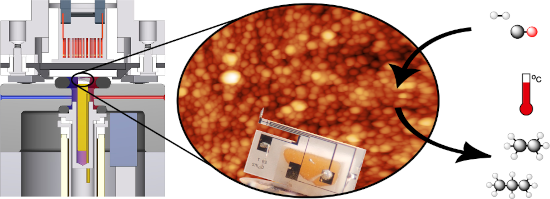
- a CaCl2 electrolytic solution (CaCl2 5 g, H2O 30 mL, acetone 2 mL). An alternating current (AC) voltage (50 Hz, 1–10 V) is applied between the tip and a gold ring electrode with the etching solution in suspension resulting in a sharp tip, which serves as the probe. In a second step, the etched Pt/Ir


Tailoring of physical properties of RF-sputtered ZnTe films: role of substrate temperature
Beilstein J. Nanotechnol. 2025, 16, 333–348, doi:10.3762/bjnano.16.25
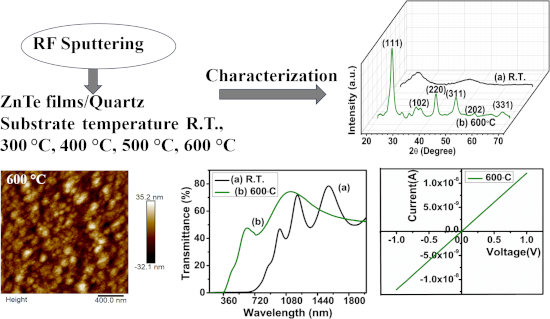
- temperatures. Prior to film deposition, the substrates were cleansed in an ultrasonic cleaner using acetone and isopropyl alcohol sequentially for 10 min at room temperature. The cleaned substrates were then dried in air and placed on the substrate holder in the chamber. A ZnTe target (dimensions 2 inch




Graphene oxide–chloroquine conjugate induces DNA damage in A549 lung cancer cells through autophagy modulation
Beilstein J. Nanotechnol. 2025, 16, 316–332, doi:10.3762/bjnano.16.24
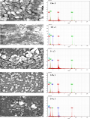
- buffer, post-fixed in 1% osmium tetraoxide for 4 h at 4 °C, and again washed with 0.1 M sodium cacodylate buffer. After that, cells were dehydrated using different percentages of acetone series (15–100%) and incubated with an AralditeR–DDSA mixture overnight at room temperature. The cell blocks were made



Enhancing mechanical properties of chitosan/PVA electrospun nanofibers: a comprehensive review
Beilstein J. Nanotechnol. 2025, 16, 286–307, doi:10.3762/bjnano.16.22

- insoluble in water, alkali, and most mineral acid systems. Additionally, chitosan is soluble in mixtures of water, methanol, ethanol, and acetone [52], making it feasible for the electrospinning process. Unbound amino groups make chitosan a positively charged polyelectrolyte in acidic media, resulting in


Preferential enrichment and extraction of laser-synthesized nanoparticles in organic phases
Beilstein J. Nanotechnol. 2025, 16, 254–263, doi:10.3762/bjnano.16.20
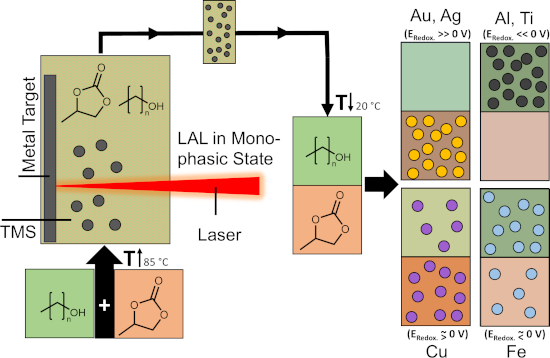
- LAL in alcohols, ketones, or aliphatic hydrocarbons exhibited a carbon shell [7][11][52]. These carbon shells were particularly pronounced for gold and copper nanoparticles synthesized in hydrocarbons without a heteroatom. However, differences were found for the LAL in, for example, acetone. The LAL
- of gold in acetone did not lead to carbon shells, whereas the formation of carbon shells during the LAL of copper in acetone has been reported [35]. This observation was discussed to be linked to the catalytic activity of copper for C–C bond formation [53][54]. Accordingly, a stronger carbon




Bioinspired nanofilament coatings for scale reduction on steel
Beilstein J. Nanotechnol. 2025, 16, 25–34, doi:10.3762/bjnano.16.3

- cleaned by sonication for five minutes in toluene, acetone, and Milli-Q water, and the samples were rinsed with the solvent following in the sequence before each sonication step. Finally, the samples were dipped into ethanol and dried. The samples were washed in toluene, acetone and Milli-Q water, toluene
- the sample holder were cleaned by rinsing in acetone, Milli-Q water, acetone, and afterwards left to air dry. The samples were placed in the sample holder and 100 mL of a mixture of 3 mL toluene and 97 mL Milli-Q water were added to the reaction chamber. The chamber was sealed and, after reaching the
- acetone, Milli-Q water, acetone, and afterwards left to air dry. The samples were placed in the sample holder and a methane flask was attached to the reaction chamber and the pressure was set to 100 bar with a temperature of 100 °C. When the settings were reached, the experiment ran for 24 hours. The


A nanocarrier containing carboxylic and histamine groups with dual action: acetylcholine hydrolysis and antidote atropine delivery
Beilstein J. Nanotechnol. 2025, 16, 11–24, doi:10.3762/bjnano.16.2

- , 134, 126, 124, 120, 108, 61, 46, 41, 39, 34, 30, 18; IR (KBr, cm−1): 3500–3000, 2938, 1608, 1476; Anal. calcd for C64H88Cl4N12O12: C, 56.55; H, 6.53; Cl, 10.43; N, 12.37; found: C, 56.48; H, 6.78; Cl, 10.20; N, 11.89. Synthesis of CA-RA 1. To a solution of 7 g (9.7 mmol) of RA in 100 mL of acetone
- , 10.74 g (77.6 mmol) of K2CO3 and 1.6 g (9.7 mmol) of KI were added. The mixture was stirred at room temperature, and a solution of ethyl bromoacetate (13 g, 77.8 mmol) in 100 mL of acetone was added dropwise. After addition, the mixture was stirred at 80 °C for 24 h, followed by the removal of the


Ion-induced surface reactions and deposition from Pt(CO)2Cl2 and Pt(CO)2Br2
Beilstein J. Nanotechnol. 2024, 15, 1427–1439, doi:10.3762/bjnano.15.115

- a separate UHV chamber equipped with a Stanford Research Instruments RGA200 quadrupole mass spectrometer and a PHI 04-303 ion gun. The base pressure of this chamber was 2.9 × 10⁻⁹ Torr. Si substrates (20 × 20 mm, Ted Pella, Inc.) were cleaned by sonication in acetone, then isopropanol, and finally



A biomimetic approach towards a universal slippery liquid infused surface coating
Beilstein J. Nanotechnol. 2024, 15, 1376–1389, doi:10.3762/bjnano.15.111
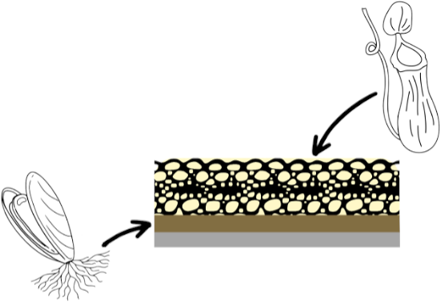
- a 1:1 mixture of ethanol and acetone for 30 min. Si substrates were fabricated via a diamond-tipped blade in a Disco wafer saw (Disco, Tokyo, Japan) from a silicon wafer cut into 1 × 1 cm2 substrates. These Si substrates were left overnight to soak in DI water and then sonicated in 20 min intervals
- with dichloromethane, acetone, and ethanol. 316 SS was purchased from McMaster-Carr (Elmhurst, IL) and ground up to grit 3000 with SiC emery paper and cut by hand into 1 × 1 cm2 chips. The cut SS substrates were rinsed in DI water and ethanol followed by sonication in a 1:1 mixture of chloroform and




Green synthesis of carbon dot structures from Rheum Ribes and Schottky diode fabrication
Beilstein J. Nanotechnol. 2024, 15, 1369–1375, doi:10.3762/bjnano.15.110
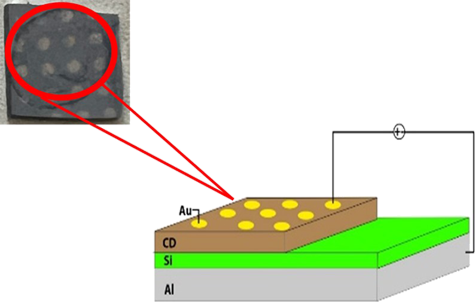
- dried to synthesize CDs. Acetone, methanol, silicon, gold powder, and aluminum were purchased from Sigma-Aldrich, Merck, and Alfa Aesar. All studies were carried out at room temperature. Instruments Various devices were used for the structural, morphological, and optical characterization of the CDs. FEI
- substrate was cut to approximately 1 cm2 in size and cleaned by washing it in acetone, methanol, and pure water for 10 min each. An ohmic contact was made with aluminum on the cleaned sample at 1 × 10⁻⁷ Torr vacuum in a PVD thermal evaporation device. Approximately 30 μL of the CDs stock solution was taken




The role of a tantalum interlayer in enhancing the properties of Fe3O4 thin films
Beilstein J. Nanotechnol. 2024, 15, 1253–1259, doi:10.3762/bjnano.15.101

- impurities. The SiO2/Si(100) substrates were immersed in acetone and 2-propanol for a duration of 2 min in an ultrasonic bath. Subsequently, they were immersed in a solution of methanol at a temperature of 60 °C and then dried in N2 gas flow. A 5 nm thick layer of tantalum was deposited on a SiO2/Si(100


Dual-functionalized architecture enables stable and tumor cell-specific SiO2NPs in complex biological fluids
Beilstein J. Nanotechnol. 2024, 15, 1238–1252, doi:10.3762/bjnano.15.100
- acetone. The compound was dried using a vacuum pump and stored in a desiccator. The product was analyzed by proton nuclear magnetic resonance (1H NMR) in deuterated water (D2O, 600 μL) with the standard trimethylsilyl propionic acid (TMSP). The signal referring to the solvent used, D2O, was omitted from


Photocatalytic methane oxidation over a TiO2/SiNWs p–n junction catalyst at room temperature
Beilstein J. Nanotechnol. 2024, 15, 1132–1141, doi:10.3762/bjnano.15.92
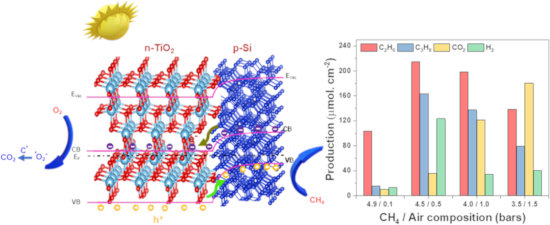
- . Experimental Chemicals and materials Commercial p-type Si 3-inch wafers (⟨100⟩ orientation, boron-doped, resistivity = 0.01–1 Ω·cm) were purchased from Silicon Mitus Corporation, South Korea. Silver nitrate (AgNO3, 0.1 M), hydrofluoric acid HF (50 wt %), nitric acid (HNO3, 63%), acetone, and ethanol were
- provided from Sigma-Aldrich. Deionized (DI) water was used for cleaning steps. Si NWs and TiO2/Si NWs preparation First, a small piece (1 × 2 cm2) was cut from a commercial p-type Si wafer and washed several times using DI water, ethanol, and acetone in a sonication bath. Etching solution containing AgNO3


Direct electron beam writing of silver using a β-diketonate precursor: first insights
Beilstein J. Nanotechnol. 2024, 15, 1117–1124, doi:10.3762/bjnano.15.90

- precursors were cleaned after each use. The cleaning involved mechanical wiping using acetone-wetted tissues, followed by a sequence of sonification in acetone and ethanol, and dry-blowing with nitrogen. Depositions were carried out on silicon with native oxide. The silicon substrates were cleaned using a
- sequence of sonification in acetone, ethanol, and rinsed water, and dry-blowing with nitrogen. In our deposition experiments, faint deposits were visible starting at a GIS temperature of 50 °C for spots of 5 min dwell time, turning into clearly visible deposits starting from about 60 °C. From 80 °C onwards


Effect of wavelength and liquid on formation of Ag, Au, Ag/Au nanoparticles via picosecond laser ablation and SERS-based detection of DMMP
Beilstein J. Nanotechnol. 2024, 15, 1054–1069, doi:10.3762/bjnano.15.86

- laser ablating Au/Fe multilayers with varying thicknesses and deposition orders. Jakobi et al. [26] reported the synthesis of Pt–Ir alloy NPs by femtosecond laser ablation of a Pt9Ir target in acetone and further utilized as PtIr electrodes. In recent years, laser-ablated NPs/NSs have gained prominent
- and cut into 1 cm × 1 cm pieces. The targets were thoroughly cleaned in an ultrasonic bath using ethanol, acetone, and DW for 10 min. After washing, the targets were fixed at the bottom of the glass beaker filled with 5 mL of DW and aqueous NaCl solution (1 mM). The setup was mounted on the motorized
- 13 to 32 nm while ablating the Ag targets in acetone with laser wavelengths of 532 and 1064 nm. Furthermore, the absorption intensity proportionally increases with the increasing wavelength in both DW and NaCl, demonstrating that the yield of NPs is higher at higher wavelengths. Moreover, the


Electrospun nanofibers: building blocks for the repair of bone tissue
Beilstein J. Nanotechnol. 2024, 15, 941–953, doi:10.3762/bjnano.15.77
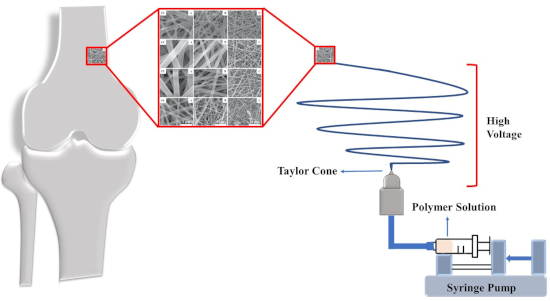
- of the nanofiber. Therefore, shorter spinning distances should be used when working with highly volatile solvents [35]. The most commonly used solvents in electrospinning polymeric nanofibers are methanol, acetone, acetic acid, dichloromethane, dimethylformamide, ethyl acetate, trifluoroethanol


Water-assisted purification during electron beam-induced deposition of platinum and gold
Beilstein J. Nanotechnol. 2024, 15, 884–896, doi:10.3762/bjnano.15.73
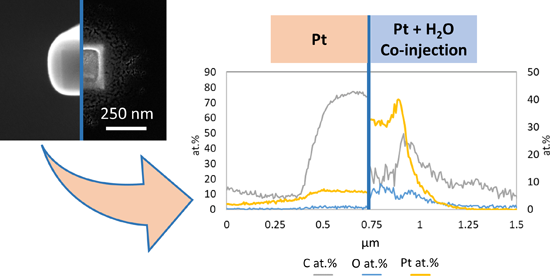
- orientation) with a native silicon oxide layer. Samples of 1 × 1 cm2 were used, on to which an array of annular patterns was lithographically defined, by laser lithography and etching using an SF6–O2 dry-etch, to facilitate location of the deposition areas. The substrates were roughly cleaned in acetone and
- subsequently sonicated for 2 min in acetone and for 2 min in isopropyl alcohol. All depositions were performed with both GIS nozzles inserted. Deposition, imaging, and EDX analysis were performed in immersion mode at a working distance of 5 mm. Deposition conditions In general, the main parameters that control