


Search results
Search for "antimicrobial properties" in Full Text gives 41 result(s) in Beilstein Journal of Nanotechnology.
Gram-scale synthesis of splat-shaped Ag–TiO2 nanocomposites for enhanced antimicrobial properties
Beilstein J. Nanotechnol. 2020, 11, 1119–1125, doi:10.3762/bjnano.11.96
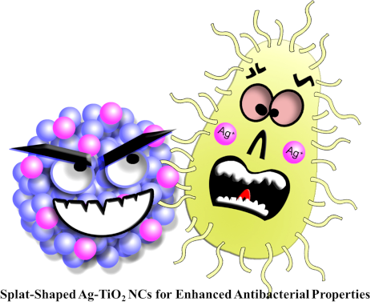
- . The improvement in the antibacterial activity was attributed to the synergistic effect of the hybrid nature of TiO2 nanoparticles in the presence of Ag. Keywords: antimicrobial properties; biomaterials; nanocomposites; silver nanoparticles; titanium dioxide; Introduction The rapid industrial
- concentration was increased. Finally, these Ag–TiO2 NCs were successfully tested in terms of their antimicrobial properties and the results demonstrated that the inhibition zone against both E. coli and S. aureus strongly depended on the Ag concentration and on the synergistic effect of the NCs. These types of


Silver-decorated gel-shell nanobeads: physicochemical characterization and evaluation of antibacterial properties
Beilstein J. Nanotechnol. 2020, 11, 620–630, doi:10.3762/bjnano.11.49
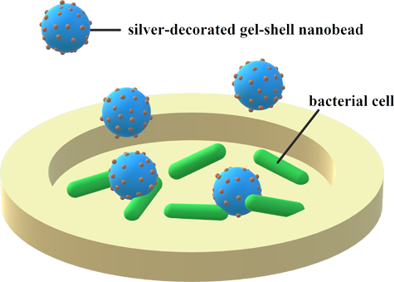
- incorporation of [Ag(NH3)2]+ complexes, followed by the reduction of the silver precursor with polyvinylpyrrolidone [23]. The resulting composite was examined with regard to its antimicrobial properties against Escherichia coli and Staphylococcus aureus bacteria. Similarly, Liao et al. obtained polystyrene
- number of studies has been devoted to non-supported silver nanoparticles and their antimicrobial properties. For example, Martínez-Castañón and co-workers showed that spherical silver nanoparticles of 7 nm in size inhibit the growth of E. coli and S. aureus in concentrations of 6.25 and 7.5 μg/mL
- . Presumably some of the nanobeads sedimented on the bottom of the plate and prevented the formation of the nearby biofilm. The above data clearly show that the silver-decorated nanobeads exhibit considerable antimicrobial properties, comparable or superior to those of non-incorporated silver nanoparticles


Novel hollow titanium dioxide nanospheres with antimicrobial activity against resistant bacteria
Beilstein J. Nanotechnol. 2019, 10, 1716–1725, doi:10.3762/bjnano.10.167
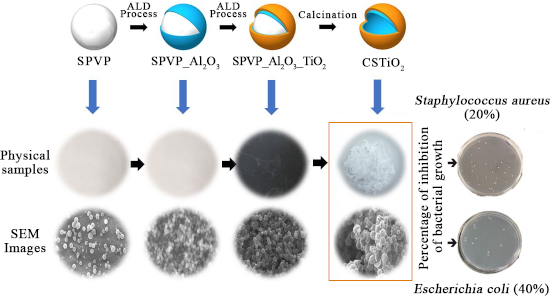
- anatase titanium dioxide crystalline structure. Thermogravimetric analysis and Fourier-transform infrared spectroscopy studies demonstrated the absence of polymer residue after the calcination process. The antimicrobial properties of the developed CSTiO2 hollow nanospheres were evaluated against different


Enhanced inhibition of influenza virus infection by peptide–noble-metal nanoparticle conjugates
Beilstein J. Nanotechnol. 2019, 10, 1038–1047, doi:10.3762/bjnano.10.104
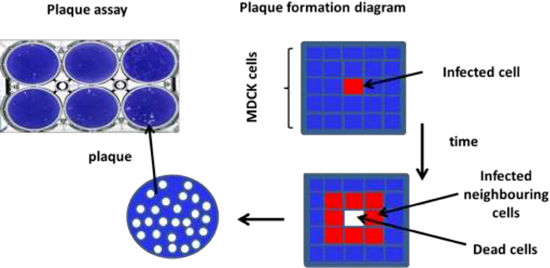
- together, these data indicate that the potency of FluPep ligand on the nanoparticles is greater than that of free FluPep ligand and of the native FluPep peptide (inset of Figure 3 and Table 1). Stability of FluPep functionalised silver nanoparticles Silver has well-established antimicrobial properties [33




Comparative study of antibacterial properties of polystyrene films with TiOx and Cu nanoparticles fabricated using cluster beam technique
Beilstein J. Nanotechnol. 2018, 9, 861–869, doi:10.3762/bjnano.9.80
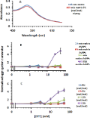
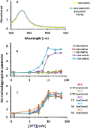
- affecting in a destructive way the cell components but rendering innocuous products (mechanism ii) [5][6]. Thus, both Cu and TiO2 nanoparticles are excellent candidates for the formation of composites with antibacterial and antimicrobial properties. For more convenience in use and extended applications, NPs




Noble metal-modified titania with visible-light activity for the decomposition of microorganisms
Beilstein J. Nanotechnol. 2018, 9, 829–841, doi:10.3762/bjnano.9.77
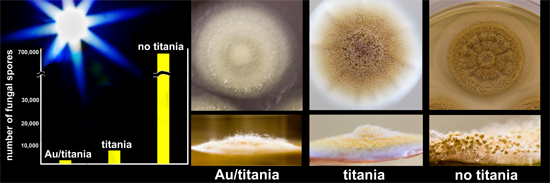
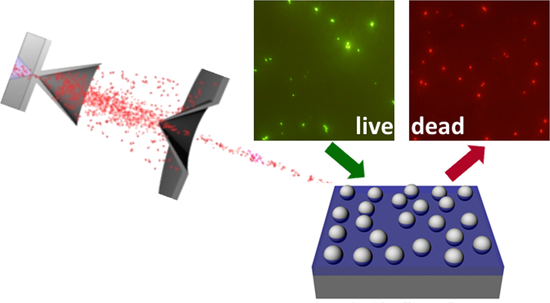
- found that silver-modified titania showed superior antibacterial activity, whereas gold-modified samples were very active against fungi, suggesting that bimetallic photocatalysts containing both gold and silver should exhibit excellent antimicrobial properties. Keywords: antifungal properties
- ; antimicrobial properties; bactericidal effect; noble-metal nanoparticles; plasmonic photocatalysis; Introduction Environmental pollution and the lack of clean potable water are main issues facing human development. Although, various methods of efficient control and monitoring of waste management have been
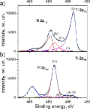
- antimicrobial properties of noble metals with the high photocatalytic activity of modified titania should result in a high purification efficiency of noble metal-modified titania [6][46][47][48][49][50][51][52]. Indeed, in our recent study, noble metal-modified faceted anatase titania (octahedral anatase


Antibacterial activity of silver nanoparticles obtained by pulsed laser ablation in pure water and in chloride solution
Beilstein J. Nanotechnol. 2016, 7, 465–473, doi:10.3762/bjnano.7.40
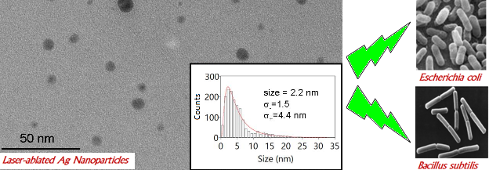
- as antibacterial agents with applications in several fields due to their strong, broad-range antimicrobial properties. AgNP synthesis by pulsed laser ablation in liquid (PLAL) permits the preparation of stable Ag colloids in pure solvents without capping or stabilizing agents, producing AgNPs more
- months, we repeated the same tests previously performed with fresh samples. The MIC values were confirmed, indicating good stability of the antimicrobial properties. As previously reported in the literature, AgNPs toxicity depends on various factors, such as size, surface charge, shape, and capping agent


Green and energy-efficient methods for the production of metallic nanoparticles
Beilstein J. Nanotechnol. 2015, 6, 2354–2376, doi:10.3762/bjnano.6.243
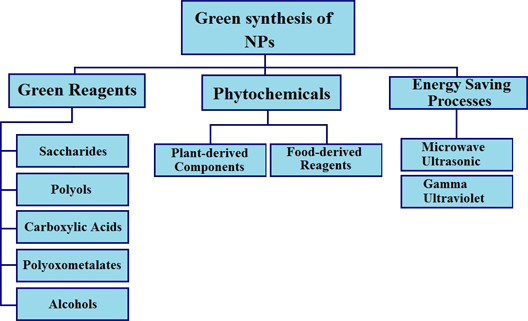
- considerable anticoagulant and inflammatory properties which is promising for various applications [70]. In a similar report, they used DAPHP and HA for production of Ag NPs from AgNO3 and studied their antimicrobial properties. According to this study, Ag–HA and Ag–DAPHP are more stable at physiological salt


Nanotechnology in the real world: Redeveloping the nanomaterial consumer products inventory
Beilstein J. Nanotechnol. 2015, 6, 1769–1780, doi:10.3762/bjnano.6.181

- compositions, silver is also the most frequently advertised nanomaterial component, with 207 products or 14.5% [11]. Silver nanoparticles are popular consumer product additives due to their well-documented antimicrobial properties [22]. Figure 3 shows how the availability of these major nanomaterial





Influence of gold, silver and gold–silver alloy nanoparticles on germ cell function and embryo development
Beilstein J. Nanotechnol. 2015, 6, 651–664, doi:10.3762/bjnano.6.66
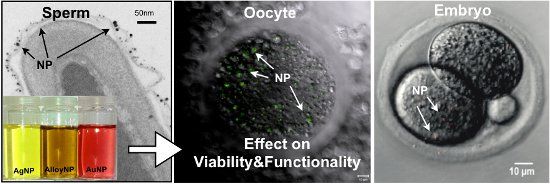
- antimicrobial properties [20][21]. This variety in applications generates several potential exposure routes for gold and silver nanoparticles, including injection and inhalation particularly for biomedical applications, but also ingestion and skin contact for medical and consumer products. The uptake behaviour




Nanobioarchitectures based on chlorophyll photopigment, artificial lipid bilayers and carbon nanotubes
Beilstein J. Nanotechnol. 2014, 5, 2316–2325, doi:10.3762/bjnano.5.240
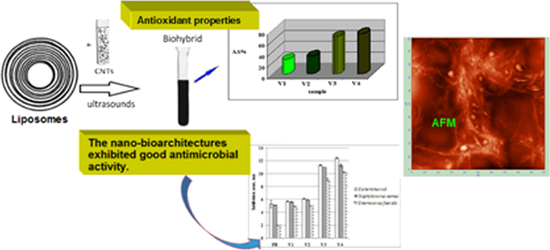
- stability, good antioxidant and antimicrobial properties, and could be used as biocoating materials. As compared to the cholesterol-free samples, the cholesterol-containing hybrid structures demonstrated better stability (i.e., their zeta potential reached the value of −36.4 mV), more pronounced oxygen
- ) showed weak antibacterial activity (see Figure 9), offering inhibition zone diameters in the range of 5.0–6.1 mm. However, their biohybrids with carbon nanotubes exhibited enhanced biocidal features due to the presence of SWCNTs, which are known to possess antimicrobial properties [47][48]. Kang et al
- , and also decreased the mobility in the bilayers. The bio-coating of CNTs with bio-inspired membranes may be an effective method of increasing the biocompatibility of the CNTs, giving rise to bionanocomposites with good physical stability, having both antioxidant and antimicrobial properties. Schematic


Mimicking exposures to acute and lifetime concentrations of inhaled silver nanoparticles by two different in vitro approaches
Beilstein J. Nanotechnol. 2014, 5, 1357–1370, doi:10.3762/bjnano.5.149
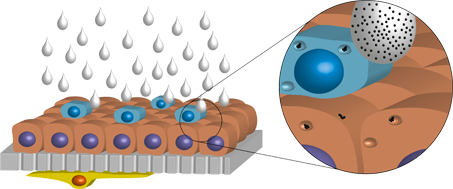
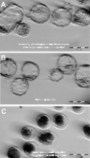
- Medicine, Department of Clinical Research, Inselspital University Hospital, University of Bern, Murtenstrasse 50, 3008 Bern, Switzerland 10.3762/bjnano.5.149 Abstract In the emerging market of nano-sized products, silver nanoparticles (Ag NPs) are widely used due to their antimicrobial properties. Human

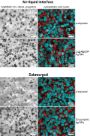


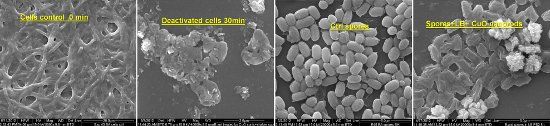
Antimicrobial properties of CuO nanorods and multi-armed nanoparticles against B. anthracis vegetative cells and endospores
Beilstein J. Nanotechnol. 2014, 5, 789–800, doi:10.3762/bjnano.5.91


Injection of ligand-free gold and silver nanoparticles into murine embryos does not impact pre-implantation development
Beilstein J. Nanotechnol. 2014, 5, 677–688, doi:10.3762/bjnano.5.80
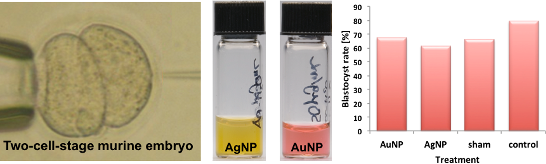
- are currently viewed as promising agents for in vivo imaging purposes and might therefore be in frequent use in the near future. AgNP are already abundantly employed in applications for their antimicrobial properties. Both particle types also represent good models for exploring the extent to which




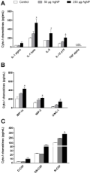
Cytotoxic and proinflammatory effects of PVP-coated silver nanoparticles after intratracheal instillation in rats
Beilstein J. Nanotechnol. 2013, 4, 933–940, doi:10.3762/bjnano.4.105
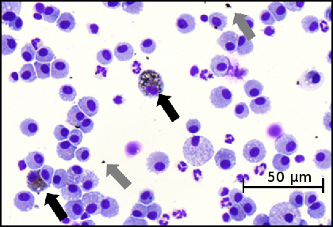
- consumer products is growing rapidly [1]. The antimicrobial properties of AgNP render them useful as a component in wound dressings or as coatings for catheters [2][3][4][5]. In addition, they are used in deodorants or applied in textiles as a protection against odor [6][7]. With regard to the use in




Paper modified with ZnO nanorods – antimicrobial studies
Beilstein J. Nanotechnol. 2012, 3, 684–691, doi:10.3762/bjnano.3.78
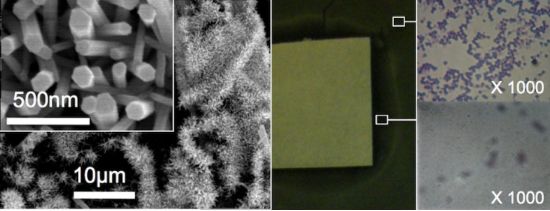
- , Postal Code 123, Al Khoud, Oman 10.3762/bjnano.3.78 Abstract Paper with antimicrobial properties was developed through in situ growth of ZnO nanorods. The targeted application for this type of paper is in health centers as wallpaper, writing paper, facemasks, tissue paper, etc. The paper was tested on
- , fungal infections in books are treated by using chemical methods. Libraries need to be maintained at a temperature and relative humidity that are not conducive to fungal growth [1]. Paper with antimicrobial properties could be an answer to the problems faced by libraries and health centers. Silver (Ag





