


Search results
Search for "applications" in Full Text gives 1941 result(s) in Beilstein Journal of Nanotechnology. Showing first 200.
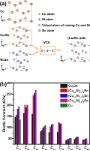
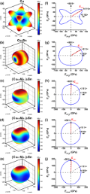
First-principles study on elastic properties of Cu, (Cu1−x,Nix)3Sn and interfacial mechanical properties of (Cu1−x,Nix)3Sn/Cu in the lead-free solder joint
Beilstein J. Nanotechnol. 2026, 17, 428–439, doi:10.3762/bjnano.17.29
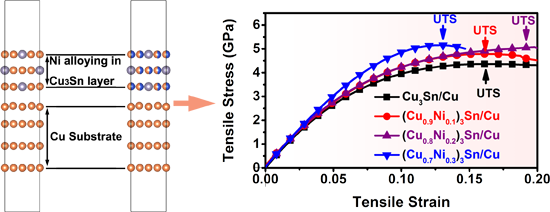
- alloying strategies to meet the requirements for electronic device miniaturization and harsh environmental applications. Keywords: ductility; elastic modulus; interfacial toughness; lead-free solder; work of adhesion; Introduction Due its toxicity, lead has caused serious problems in human health and
- . Therefore, high-lead solder remains the preferred choice for high-temperature applications at present [1]. In view of the fact that Ni and Pb belong to the same group in the periodic table of elements and have similar chemical and electronic properties [10], researchers have been intrigued to enhance the


Nanoinformatics: spanning scales, systems and solutions
Beilstein J. Nanotechnol. 2026, 17, 423–427, doi:10.3762/bjnano.17.28

- (CNPEM), Campinas, Sao Paulo, Brazil Drug Theoretics and Cheminformatics (DTC) Laboratory, Department of Pharmaceutical Technology, Jadavpur University, Kolkata 700032, India Division of Physical Sciences and Applications, Hellenic Military Academy, Vari 16672, Greece 10.3762/bjnano.17.28 Keywords

Biomimetic nanoparticles in cancer photodynamic therapy: a review of targeted delivery systems and therapeutic outcomes
Beilstein J. Nanotechnol. 2026, 17, 396–422, doi:10.3762/bjnano.17.27
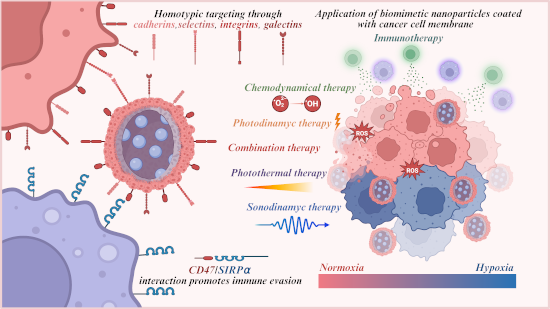
- . Additionally, it explores multifunctional and theranostic nanoplatforms, their applications in various cancers, and advances toward clinical use. By integrating targeted delivery, tumor microenvironment modulation, and immunotherapy, BNP-facilitated PDT holds great potential for advancing precise cancer
- nanostructured materials, significantly expanding the range of agents available for PDT applications [18]. The photochemical pathway for ROS generation involves non-radiative relaxation of the excited PS, typically occurring through two primary mechanisms [19]. Type-I reactions involve electron transfer
- theranostic applications [39] by facilitating tumor visualization through various imaging techniques [40], including fluorescence imaging [41], computed tomography [42], and magnetic resonance imaging (MRI) [43]. The development of nanobiotechnology in PDT opens new horizons for creating more effective and


Eco-efficient materials for agricultural crops based on a mineral rich in MOR- and HEU-type zeolites
Beilstein J. Nanotechnol. 2026, 17, 381–395, doi:10.3762/bjnano.17.26
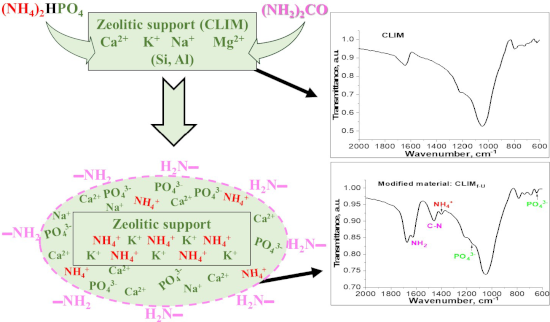
- natural zeolites are a viable alternative for the development of efficient, agroecologically sustainable, and low-cost fertilizer materials for massive applications [3][4]. Natural zeolites are porous crystalline hydrated aluminosilicates. They have a three-dimensional, rigid, negatively charged structure
- time, even multicomponent zeolite-containing rocks (e.g., clinoptilolite, heulandite, mordenite, quartz, and plagioclase) retain high sorption and ion exchange activity, sufficient for a wide range of applications. Local extraction minimizes transportation costs, which is especially important for
- the type of species present. These features affect the rate at which cations are delivered to the external environment. This aspect is relevant for agricultural applications, where zeolites are used as controlled-release fertilizers [28] for a range of nutrients. Besides this, most prior work has



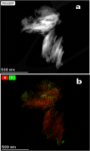

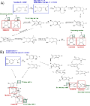
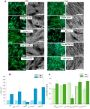
Polycatecholamine nanocoatings on stainless steel: the effect on attachment of human fibroblasts and platelets
Beilstein J. Nanotechnol. 2026, 17, 365–380, doi:10.3762/bjnano.17.25
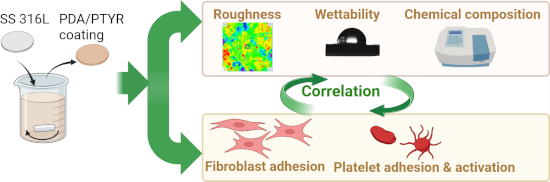
- , manufacturability and relatively low cost, SS 316L is widely used for orthopedic and dental implants, bone plates, screws, oral implants, and vascular stents [1][2][3][4][5]. In dental and orthopedic applications, fibroblast attachment, spreading, migration, and osteointegration are critical for long-term implant
- nanocoatings might thus be more promising than thicker PDA coatings in this respect, and more extensive research is needed to explore their potential in nanoengineered biomaterial applications. In terms of cell adhesion to polycatechol nanocoatings, our study showed that there is a hydrophilicity and roughness




Ferroelectric nanodot reservoir for neuromorphic computing
Beilstein J. Nanotechnol. 2026, 17, 352–364, doi:10.3762/bjnano.17.24
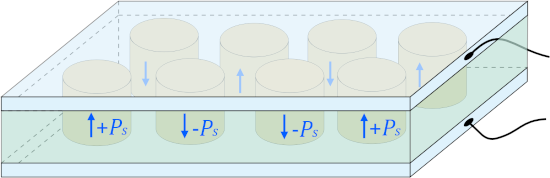
- applications. The reservoir consists of an ensemble of nonlinear ferroelectric nanodots capable of storing information through their stable polarization states. These nanodots are confined between electrodes and form a network of parallel connected capacitive elements, which can either be addressed


Interconnection morphology effects on the radio frequency response of carbon nanotube sponges
Beilstein J. Nanotechnol. 2026, 17, 343–351, doi:10.3762/bjnano.17.23
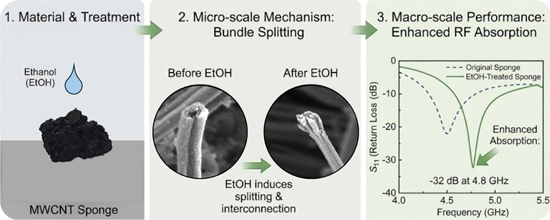
- applied for these tests, and an increase in the response up to 45% was found for the two studied positions. Keywords: carbon nanotube film; carbon nanotube sponge; chemical vapour deposition; monopole RF antenna; Introduction Most radio frequency (RF) applications rely on the use of conductors with low
- resistivity, especially metals, which, when applied in antennas, guarantee good radiation of electromagnetic (EM) waves into free space. Applications of wireless technology are constantly expanding regarding short-range connections, like wireless local area networks and Bluetooth, and wide-area coverage, like
- cellular networks (4G/5G) for mobile and satellite communication. This vast number of applications often requires that the active materials possess additional properties beyond good electrical conductivity, such as flexibility, lightness, and resistance to thermal and mechanical stress or chemically harsh



Beam shaping techniques for pulsed laser ablation in liquids: Unlocking tunable control of nanoparticle synthesis in liquids
Beilstein J. Nanotechnol. 2026, 17, 309–342, doi:10.3762/bjnano.17.22
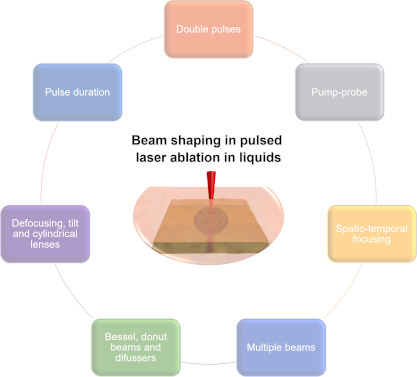
- industrially available picosecond laser sources, still requiring high power sources (100 W) but removing the requirement for high repetition rate and faster scanning speeds [55]. PLAL-produced nanomaterials have broad applications across different nanotechnology fields, including X-ray radiotherapy [62], boron
- ][77] and colorimetric sensors [78][79], surface-enhanced Raman spectroscopy detection [71][80][81], nanofluids for thermal applications [82][83][84], additive manufacturing [85][86][87], or catalysis [88][89]. The previously mentioned applications of PLAL-derived NPs can be grouped into four major
- categories, that is, catalysis [90], advanced materials [91], sensing and filtration [92], and bio-applications [93]. Figure 2 schematically illustrates this classification. However, several limitations remain that hinder the widespread industrial adoption of PLAL, including the overall yield and scalability







Fast vortex dynamics and relaxation times in NbRe-based heterostructures
Beilstein J. Nanotechnol. 2026, 17, 292–302, doi:10.3762/bjnano.17.20
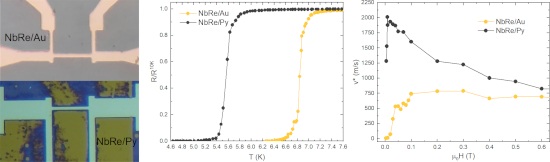
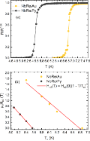
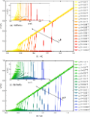
- instability current I*, which corresponds to the instability voltage V*. I* is usually smaller than the depairing current, Id, and, therefore, sets the actual limit for the use of superconductors in applications [1]. When the Larkin–Ovchinnikov instability develops from a well-established flux-flow regime


Advancing nanolithography: a comprehensive review of materials for local anodic oxidation with AFM
Beilstein J. Nanotechnol. 2026, 17, 275–291, doi:10.3762/bjnano.17.19
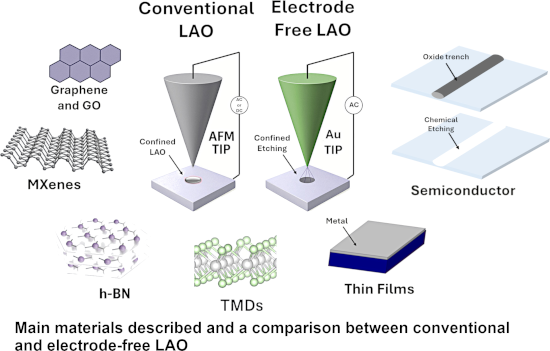
- heterostructures. Semiconductors such as silicon and silicon carbide remain foundational due to their controllable oxidation kinetics, while metals like titanium and aluminum offer opportunities for plasmonic and optical applications. 2D materials, including graphene, graphene oxide, and transition metal
- dichalcogenides, demonstrate unique oxidation behaviors, enabling high-resolution applications in electronics and quantum devices. Recent advancements, such as electrode-free LAO, have expanded the range of applicable materials and improved the precision and scalability of the process. This paper also aims to
- the fabricated device and preserving the intrinsic material properties [35][36]. For semiconductors, the method allows for precise control over oxide thickness, critical for applications in microelectronics and sensor technology. Oxide thickness can be precisely controlled, enabling the formation of


Durable antimicrobial activity of fabrics functionalized with zeolite ion-exchanged nanomaterials against Staphylococcus aureus and Escherichia coli
Beilstein J. Nanotechnol. 2026, 17, 262–274, doi:10.3762/bjnano.17.18
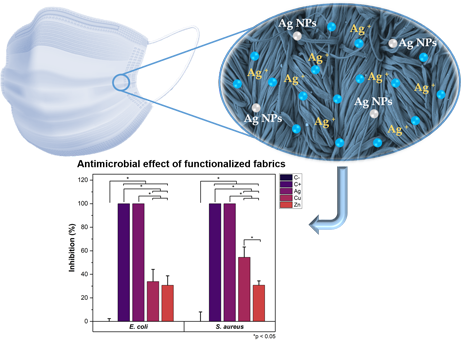
- are currently explored for various biomedical applications, including disease prevention, diagnosis, and the improvement of antiviral drug delivery systems [5][6]. In some cases, the antimicrobial properties of NPs lead to creation of new “nano-antimicrobial” materials [7]. The mechanism by which
- microorganisms are unable to develop mutations for adaptation and are destroyed [8][9]. Recently, several types of NPs, including silver, copper, and zinc, have demonstrated great potential in antimicrobial applications due to their properties such as high specific surface area, safety for human use, multiple
- antimicrobial properties. It was officially recognized in 2008 by the United States Environmental Protection Agency (EPA) as the first metallic antimicrobial agent, highlighting its potential for broad-spectrum antibacterial applications [12]. Since then, copper has been extensively studied for its ability to




Comparative study on 3D morphologies of delignified, single tracheids and fibers of five wood species
Beilstein J. Nanotechnol. 2026, 17, 239–250, doi:10.3762/bjnano.17.16
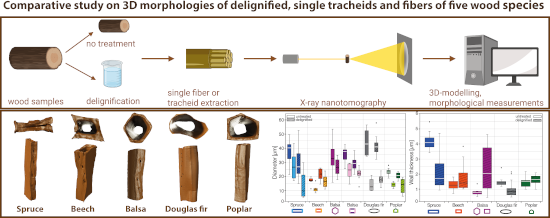
- wood to withstand high stress. This structural resilience makes wood a versatile material for applications ranging from construction to advanced composites. However, a detailed understanding of how delignification affects softwood tracheid and hardwood fiber morphology is crucial for predicting
- delignification. The 3D models provide a valuable resource for (1) understanding interspecies differences of fibers and tracheids, (2) optimizing the use of delignified wood in industrial applications (including bio-based and bio-inspired materials), and (3) physical modeling of wood regarding questions of wood
- biological approaches [11][15][16]. The applications of delignified wood are diverse and expanding; they include, for example, the production of high-quality paper or of nanocellulose with applications in electronics, biomedical devices, and advanced composites [11][14]. Recent research has focused on


Gold nanoparticle-decorated reduced graphene oxide as a highly effective catalyst for the selective α,β-dehydrogenation of N-alkyl-4-piperidones
Beilstein J. Nanotechnol. 2026, 17, 218–238, doi:10.3762/bjnano.17.15
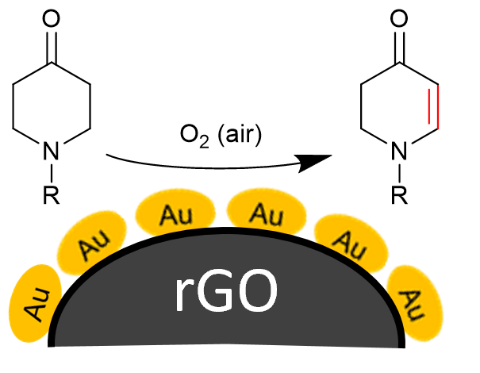
- the dehydrogenation of β-N-substituted saturated ketones and other fine chemical applications. Keywords: oxidative dehydrogenation; reduced graphene oxide; supported gold nanoparticles; β-N-substituted ketones; Introduction The properties related to the high surface area of matter at the nanometric
- tunability, making AuNPs highly versatile in catalytic applications [5][6]. Traditional ligands such as thiols and citrates are commonly used in the synthesis of AuNPs due to their ability to control particle size, prevent aggregation, and enhance stability in solution [7]. Also, polyoxometalates (POMs) have
- heterogeneous catalysts. These findings identify mesoporosity and electron-rich interfaces as key factors driving enhanced catalytic performance and provide a framework for future applications in α,β-dehydrogenation of β-N-substituted saturated ketones. Experimental Catalyst’s preparation All chemicals used in


Micro- and nanoscale effects in biological and bioinspired materials and surfaces
Beilstein J. Nanotechnol. 2026, 17, 214–217, doi:10.3762/bjnano.17.14
- interdisciplinary forum for exploring emerging trends related to biological and bioinspired surfaces. The topics covered ranged across various aspects of biomimetic research from characterization of biological functions to bioinspired technical applications, with central themes including micro- and nanostructured
- Bioinspired Surfaces: From Nature to Theory and Applications" collected a range of studies by symposium attendees and further international colleagues on the scope of the symposium [4]. Due to the enthusiasm of the community and high number of submissions, covering a broad scope related to insect adhesion [5
- its water content, and bears potential for direct industrial applications or inspiration for novel technical adhesives. Some contributions highlighted the explanatory power of computational analysis of biological functional materials. Here, biological phenomena were investigated based on
Time of flight secondary ion mass spectrometry imaging of contaminant species in chemical vapour deposited graphene on copper
Beilstein J. Nanotechnol. 2026, 17, 200–213, doi:10.3762/bjnano.17.13
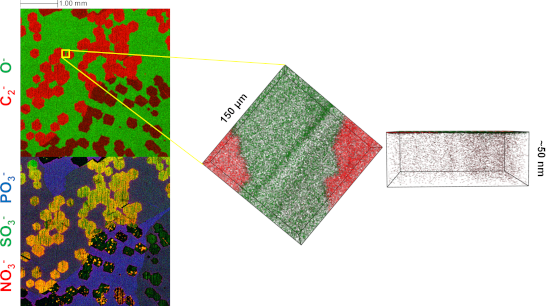
- contaminants in as-grown graphene [29] or contamination associated with processing [30][31][32][33]. Trace contaminants can significantly influence the catalytic growth process, as well as the post-growth processing required for electronics, and can be deleterious for many applications. There is a need for
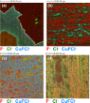
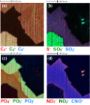
- of these materials to migrate to the surface of the Cu foil at graphene growth temperatures is demonstrated. This has implications for applications using CVD graphene where the presence of different chemical species could impact on the intended application properties, such as electronic devices or
- sensors. Furthermore, the variation in the coverage of chemical species must be addressed for graphene to be reliably used in industry applications. This study highlights the need to further understand the chemical species present during graphene growth to optimise growth processes and to minimise





Structure-dependent thermochromism of PAZO thin films: theory and experiment
Beilstein J. Nanotechnol. 2026, 17, 186–199, doi:10.3762/bjnano.17.12
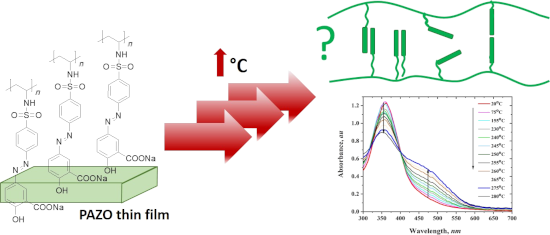
- ]-1,2-ethanediyl, sodium salt] (PAZO) exhibits a range of unique physical properties that are critical for its diverse applications in photonics, optoelectronics, memory devices, and sensing technologies. In this study, we investigate the thermochromic behavior of PAZO thin films, focusing on the
- chemical resistance, making them ideal for specialized applications [3]. Their cost-effectiveness, lightness, flexibility, and unique physical and chemical characteristics make them suitable for a wide range of industry applications including energy, optics, sensors, and microelectronics. The properties of
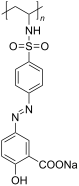
- commercially available poly[1-[4-(3-carboxy-4-hydroxyphenylazo)benzenesulfonamido]-1,2-ethanediyl, sodium salt], usually denoted as PAZO (Figure 1). PAZO possesses a number of unique physical properties, most notably photoinduced birefringence – which are critical for its diverse applications in photonics


Safe and sustainable by design with ML/AI: A transformative approach to advancing nanotechnology
Beilstein J. Nanotechnol. 2026, 17, 176–185, doi:10.3762/bjnano.17.11
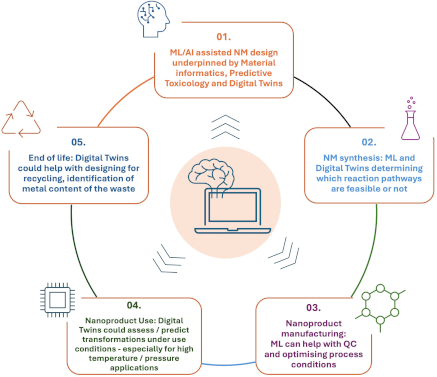
- efficiency. From advanced drug delivery systems to clean energy solutions, the applications of nanotechnology are diverse and transformative. However, these innovations are accompanied by complex challenges regarding safety and sustainability for both the nanoscale materials themselves and for the products
- , engineered nanomaterials (ENMs) have been employed for environmental applications, such as water purification and pollutant removal, addressing some of the most pressing ecological challenges [4][5]. Nanotechnology has significant applications in defence [6], particularly in the development of lightweight
- -driven platforms utilizing deep learning techniques enable real-time processing of dynamic sensor data within Internet-of-Things (IoT) environments, facilitating enhanced monitoring and analysis across various applications, including industrial processes [26]. These insights help identify and mitigate


From shield to spear: Charge-reversible nanocarriers in overcoming cancer therapy barriers
Beilstein J. Nanotechnol. 2026, 17, 159–175, doi:10.3762/bjnano.17.10
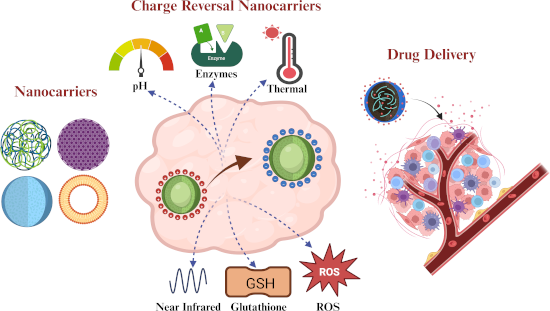
- enhancing the therapeutic efficacy and safety profiles of nanocarriers in clinical applications [15]. The functional mechanism of CRNs (Figure 2) is designed to enhance the selectivity and efficacy of anticancer drug delivery systems, along with their behaviour in response to the acidic environment of
- through pH-sensitive or neutral/zwitterionic designs enhances therapeutic precision, circulation stability, and biocompatibility by enabling controlled drug release while minimising immune recognition and cytotoxicity. CRNs exhibit diverse mechanisms, applications, and advantages that enhance their
- cancer therapy and other clinical applications. 2.6 X-ray-responsive nanocarriers These systems offer innovative mechanisms for targeted drug delivery systems and enhanced therapeutic efficiency. These nanoparticles are designed to release therapeutic agents upon exposure to X-rays, which can generate


Influence of surface characteristics on the in vitro stability and cell uptake of nanoliposomes for brain delivery
Beilstein J. Nanotechnol. 2026, 17, 139–158, doi:10.3762/bjnano.17.9
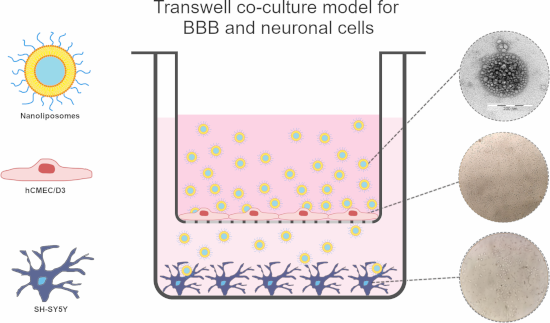
- particularly important when conducting studies that will later be informative for clinical or therapeutic applications [15][16]. It is important to emphasize that the literature data on the physical stability of NLs during their passage through different physiological barriers and compartments is limited
- proteins, viruses, and cells. These applications have facilitated the analysis of liposomes, enabling the separation of populations obtained from the same method synthesis and determination of their size. Optimizing separation variables in AF4–MALS involves several parameters such as cross-flow conditions


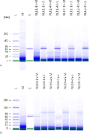
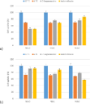


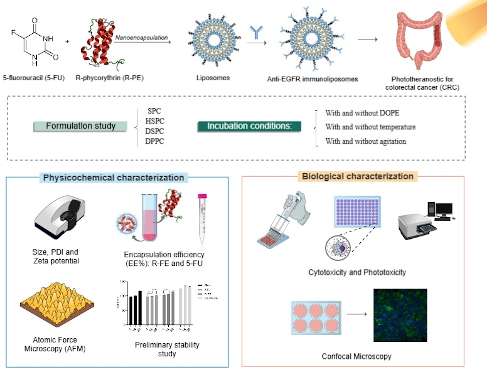
Development and in vitro evaluation of liposomes and immunoliposomes containing 5-fluorouracil and R-phycoerythrin as a potential phototheranostic system for colorectal cancer
Beilstein J. Nanotechnol. 2026, 17, 97–121, doi:10.3762/bjnano.17.7
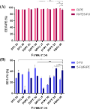
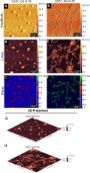
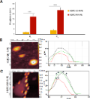
- applications. The presence of PEG in the lipid composition and the control of the initial size are probably important factors in maintaining stability, even after 48 h of exposure to bovine serum. 3.6 In vitro release The release profiles of 5-FU and R-PE were evaluated using the Korsmeyer–Peppas model (Table



Functional surface engineering for cultural heritage protection: the role of superhydrophobic and superoleophobic coatings – a comprehensive review
Beilstein J. Nanotechnol. 2026, 17, 63–96, doi:10.3762/bjnano.17.6
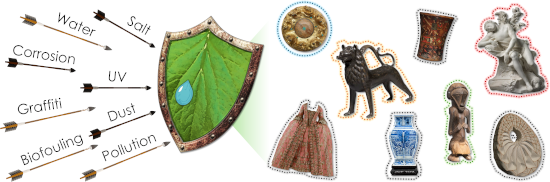
- , contamination, biofouling, and corrosion [43][44], by leveraging the multifunctional shielding capabilities provided by such advanced coatings. Several review papers provide summary of all these materials and techniques, focusing on applications including aerospace, medical, and automotive. Only in the last
- years, the importance of cultural heritage applications has been recognized [45], and material science advancements are being applied in the field of prevention, instead of restoration, of the cultural heritage. At the 15th General Assembly of International Council of Museums (ICOM), held in Buenos
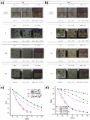
- (2W), an industrially manufactured white earthenware tile (3TS), and a contemporary mass-produced tile (4MW). As a result, the authors claimed that the technique was not suitable for such applications even if the proliferation of the chosen fungus (Cladosporium sp.) was slightly reduced upon the




Reduced graphene oxide paper electrode for lithium-ion cells – towards optimized thermal reduction
Beilstein J. Nanotechnol. 2026, 17, 24–37, doi:10.3762/bjnano.17.3
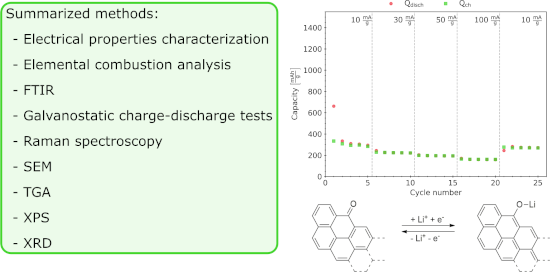
- information depth of XPS). It is worth noting that the samples T600 and T800 contain ca. 22% ketone-related bonds, which predispose them for electrochemical applications. The XRD results of rGO paper sheets are depicted in Figure 7. With increasing reduction temperature, the peak of the (002) plane, which
- the same time, we want to underline that the production of flake graphene materials, their characterization, and the search for further applications are within the scope of the Institute’s activities. The study was partially funded by the Łukasiewicz Research Network – Institute of Microelectronics



Quantitative estimation of nanoparticle/substrate adhesion by atomic force microscopy
Beilstein J. Nanotechnol. 2026, 17, 1–14, doi:10.3762/bjnano.17.1

- , Leoben, Austria 10.3762/bjnano.17.1 Abstract Understanding nanoparticle adhesion to substrates is the key for their stability and performance in many applications, including energy systems, nanofabrication, catalysis, and electronic devices. In this study, we present a methodology for examining adhesion
- gets large compared to their volume, adhesion forces become predominant. Understanding the adhesion of NPs is expected to provide significant benefits in many applications [9][10]. A prerequisite for their application is the ability to measure and to understand their adhesion to suitable support
- materials. Low adhesion could be beneficial for movable parts within micro- and nanoelectromechanical systems to eliminate undesired sticking or friction [9]. In contrast, when NPs need to withstand external forces and/or harsh conditions without detachment, for example, in catalytic applications where NPs



Internal 3D temperature mapping in biological systems using ratiometric light-sheet imaging and lipid-coated upconversion nanothermometers
Beilstein J. Nanotechnol. 2025, 16, 2306–2316, doi:10.3762/bjnano.16.159
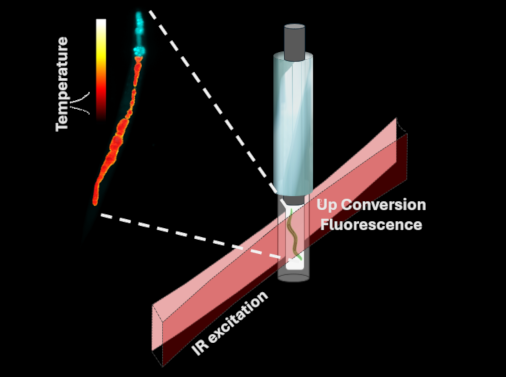
- for accurate 3D analysis of temperature-driven biological processes. It holds significant potential for applications in living organisms, offering a non-invasive tool to monitor intracellular and organ-specific temperature dynamics. Keywords: C. elegans; 3D imaging; fluorescent intensity ratio; light
- and non-biological applications. LNTs rely on the emission properties of a fluorophore and its thermal dependence to measure temperature changes, which can be measured as variations in the emission intensity [10][11][12][13] and lifetime [8][14][15][16], spectral shift [17], as well as intensity
- ratios [18][19][20][21][22][23][24][25][26][27][28][29] and polarization anisotropy [30][31]. In biological applications involving fluorescent nanothermometry, light–tissue interactions must be carefully considered for an accurate temperature measurement. To address this, a wide range of luminescent


Terahertz-range on-chip local oscillator based on Josephson junction arrays for superconducting quantum-limited receivers
Beilstein J. Nanotechnol. 2025, 16, 2296–2305, doi:10.3762/bjnano.16.158
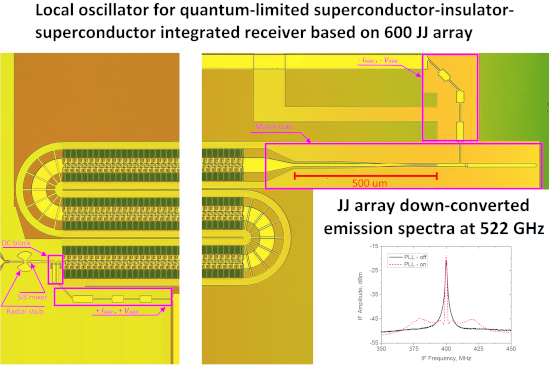
- frequency currents. This allowed to achieve the power of up to 0.4 μW for the array consisting of 200 junctions with an area of 2.8 μm2 and a tunnel current density of approx. 5 kA/cm2. This power is already sufficient for on-chip applications: both for the mixer pump in the receiver and the operation of
- ]. The measurements from the previous section show that this requirement is confidently met. Second, the LO radiation must be sufficiently monochromatic (spectral ratio ≥90%) in order to prevent signal spectra change while down-conversion to IF. Furthermore, for applications in spectroscopy, phase





