


Search results
Search for "chemical modifications" in Full Text gives 32 result(s) in Beilstein Journal of Nanotechnology.
Conformal SiO2 coating of sub-100 nm diameter channels of polycarbonate etched ion-track channels by atomic layer deposition
Beilstein J. Nanotechnol. 2015, 6, 472–479, doi:10.3762/bjnano.6.48
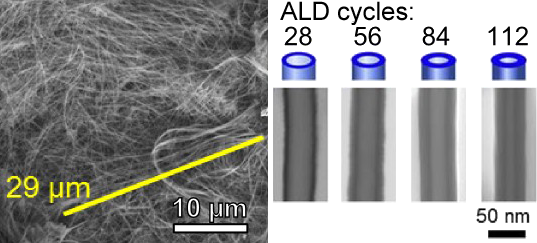
- aspect ratio nanochannels with SiO2 films of a few nanometres thickness in a tailored manner. This information is of great relevance for ALD applications on high-aspect-ratio nanochannels in general as well as for the development of further chemical modifications on the SiO2 coating. Wettability The


Synthesis of boron nitride nanotubes and their applications
Beilstein J. Nanotechnol. 2015, 6, 84–102, doi:10.3762/bjnano.6.9
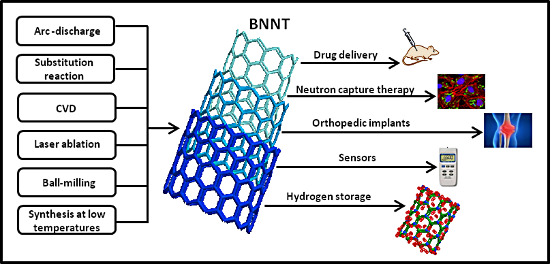
- ; chemical modifications; medical applications; synthesis methods; toxicity; Review Introduction Boron nitride nanotubes (BNNTs) are known as structural analogs of carbon nanotubes (CNTs) but with superior properties [1][2][3]. Although they have structural similarities, they significantly differ in their
- section, examples of these two routes are addressed. Chemical modifications Due to their high resistance to harsh chemical conditions, BNNTs are consequently difficult materials for covalent functionalization (similar to CNTs). However, recent studies demonstrate that covalent modification is possible




PVP-coated, negatively charged silver nanoparticles: A multi-center study of their physicochemical characteristics, cell culture and in vivo experiments
Beilstein J. Nanotechnol. 2014, 5, 1944–1965, doi:10.3762/bjnano.5.205

- radicals whose formation is catalyzed from silver ions generated after uptake of silver by phagocytosis [110]. In contrast to chemical modifications of genomic DNA by reactive oxygen species (ROS) which are difficult to prove, the presence of DSB that result from a radical attack are more easily to detect


Donor–acceptor graphene-based hybrid materials facilitating photo-induced electron-transfer reactions
Beilstein J. Nanotechnol. 2014, 5, 1580–1589, doi:10.3762/bjnano.5.170
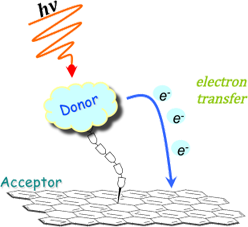
- oxidized under harsh conditions to yield exfoliated graphene oxide sheets that are soluble in aqueous media and amenable to chemical modifications due to the presence of carboxylic acid groups at the edges of the lattice. However, it was obvious that the high-defect framework of graphene oxide cannot be


Visible light photooxidative performance of a high-nuclearity molecular bismuth vanadium oxide cluster
Beilstein J. Nanotechnol. 2014, 5, 711–716, doi:10.3762/bjnano.5.83

- photocatalysts is a well-established method which gives access to materials for which light absorption, catalytic activity and selectivity can be tuned by structural and chemical modifications [1][2][3][4][5][6]. Prime examples for this approach are molecular metal oxides, so-called polyoxometalates (POMs) [7][8


Functionalization of vertically aligned carbon nanotubes
Beilstein J. Nanotechnol. 2013, 4, 129–152, doi:10.3762/bjnano.4.14
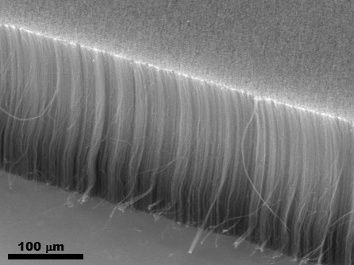
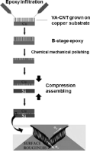
- conductivity, and the uniformly long length. However, practical uses of VA-CNTs are limited by their surface characteristics, which must be often modified in order to meet the specificity of each particular application. The proposed approaches are based on the chemical modifications of the surface by
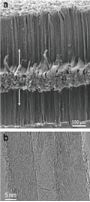
- deposition of V2O5 on the sidewalls of the tubes. Opening the tips facilitates the penetration of the electrolyte inside the composite electrode. Oxygen-based functionalization by plasma techniques can lead to morphological and chemical modifications of the nanomaterials [102][103] (Figure 10








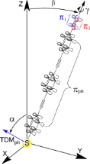
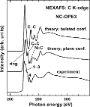
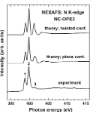
X-ray spectroscopy characterization of self-assembled monolayers of nitrile-substituted oligo(phenylene ethynylene)s with variable chain length
Beilstein J. Nanotechnol. 2012, 3, 12–24, doi:10.3762/bjnano.3.2
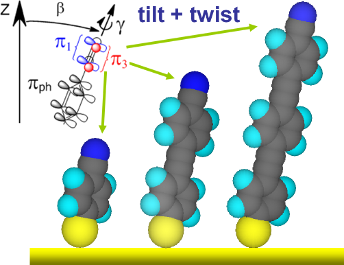
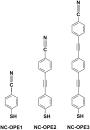
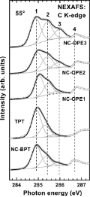
- available molecular wires [22][23]. Second, the electrical properties of the OPE derivatives can be varied significantly by relatively minor chemical modifications [1][13][17][24][25]. In particular, a nonfunctionalized OPE-type molecule behaves as a molecular rectifier [23], whereas, when functionalized in



Other Beilstein-Institut Open Science Activities



