Search results
Search for "colloidal nanoparticles" in Full Text gives 36 result(s) in Beilstein Journal of Nanotechnology.
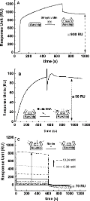
Streptavidin-coated gold nanoparticles: critical role of oligonucleotides on stability and fractal aggregation
Beilstein J. Nanotechnol. 2017, 8, 1–11, doi:10.3762/bjnano.8.1
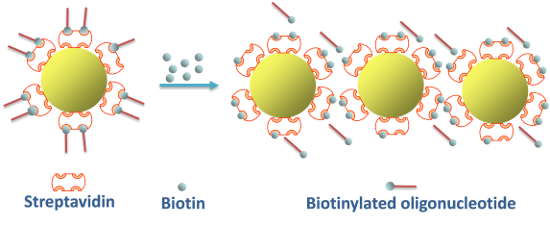
- in contact with free biotin is caused by the displaced BiotinDNA and is not dependent on the high concentration of free biotin (up to 1.28 mM). Displaced BiotinDNA brings negatively charged oligonucleotide strands in solution thus altering the electrostatic environment around colloidal nanoparticles




Chemiresistive/SERS dual sensor based on densely packed gold nanoparticles
Beilstein J. Nanotechnol. 2015, 6, 2498–2503, doi:10.3762/bjnano.6.259
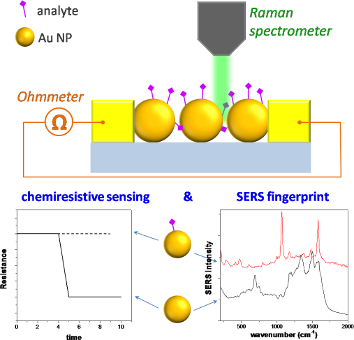
- demonstrated by the detection of a biologically relevant model analyte, 4-mercaptophenyl boronic acid. Keywords: colloidal nanoparticles; convective self-assembly; interparticle gaps; surface enhanced Raman scattering; chemiresistor; Introduction The development of optical sensors is still following an
- : for FA-capped nanoparticles (21 nm) the obtained hydrodynamic diameter was larger than for bare colloidal nanoparticles (18 nm) (Figure S2, Supporting Information File 1). Zeta potential measurements of the concentrated suspension show an average value of ζ = −32 mV, which prove a good electrostatic
- HAuCl4·3H2O was boiled. A solution of 38.8·10−3 M sodium citrate (10 mL) was added under stirring. After the color changed from yellow to burgundy-red, the heat was stopped, and stirring continued until the colloid reached room temperature. Folic acid was mixed with the colloidal nanoparticles and


Selective porous gates made from colloidal silica nanoparticles
Beilstein J. Nanotechnol. 2015, 6, 2105–2112, doi:10.3762/bjnano.6.215
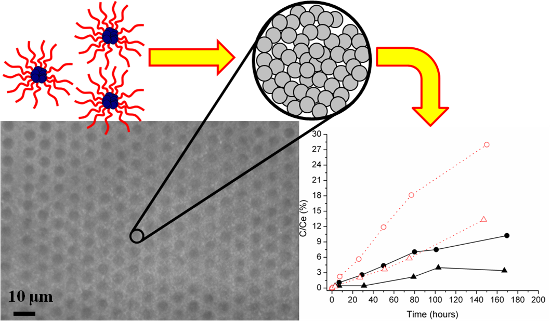
- were obtained, suggesting possible applications of these nanoporous films as selective gates for controlled transport of chemical species in solution. Keywords: block copolymers; coatings; colloidal nanoparticles; silica; sol–gel synthesis; Introduction The development of smart nanoporous devices for
- proved to generate a variety of well-ordered materials by self-assembling processes [31][32][33][34][35]. Here, we describe the synthesis, deposition and physicochemical characterization of silica coatings, obtained by spin-coating deposition of soft-templated silica colloidal nanoparticles onto


Characterization of nanostructured ZnO thin films deposited through vacuum evaporation
Beilstein J. Nanotechnol. 2015, 6, 971–975, doi:10.3762/bjnano.6.100
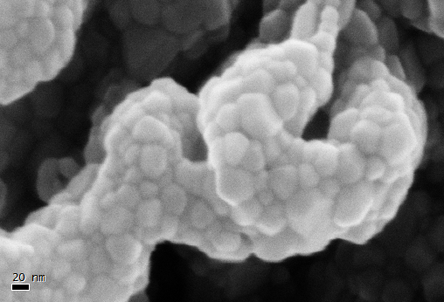
- , Benemérita Universidad Autónoma de Puebla, Ciudad Universitaria Avenida San Claudio y 14 Sur, 72570, Puebla, México 10.3762/bjnano.6.100 Abstract This work presents a novel technique to deposit ZnO thin films through a metal vacuum evaporation technique using colloidal nanoparticles (average size of 30 nm
- was chosen because is easy to handle and only the deposition time is considered a control parameter. Another reason is the use of colloidal nanoparticles with well-controlled size, which were synthesized at the laboratory of the authors [13]. Experimental The proposed thin film deposition is a novel
- The authors successfully deposited worm-shaped nanostructured thin films by vacuum evaporation using colloidal nanoparticles as the source. The transmittance for annealed thin film is up to 80%, and this result is directly correlated with the annealing. The obtained thin films have a thickness between


SERS and DFT study of copper surfaces coated with corrosion inhibitor
Beilstein J. Nanotechnol. 2014, 5, 2489–2497, doi:10.3762/bjnano.5.258
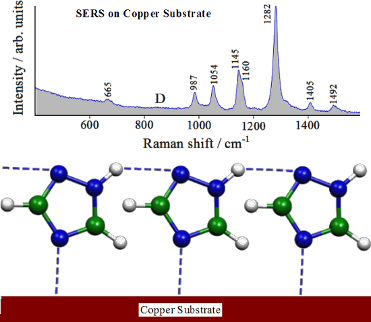
- SERS activation was ensured by the deposition of silver colloidal nanoparticles on the copper substrate where the organic molecules were already stable and present due to chemisorption [9][10][11]. Regardless, it must be taken into account that the deposited silver particles, in addition to promoting


Biopolymer colloids for controlling and templating inorganic synthesis
Beilstein J. Nanotechnol. 2014, 5, 2129–2138, doi:10.3762/bjnano.5.222
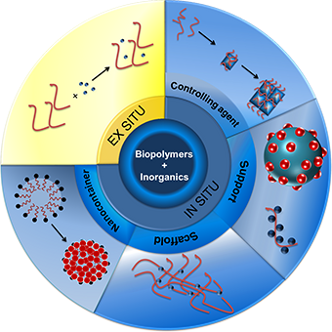
- nanoparticles [7]. In a different approach, biopolymers can also be applied to modify surfaces and induce the deposition of nanoparticles. For instance, Nochomovitz et al. [8] described the deposition and patterning of gold colloidal nanoparticles and carbon nanotubes on surfaces previously modified with


Current state of laser synthesis of metal and alloy nanoparticles as ligand-free reference materials for nano-toxicological assays
Beilstein J. Nanotechnol. 2014, 5, 1523–1541, doi:10.3762/bjnano.5.165
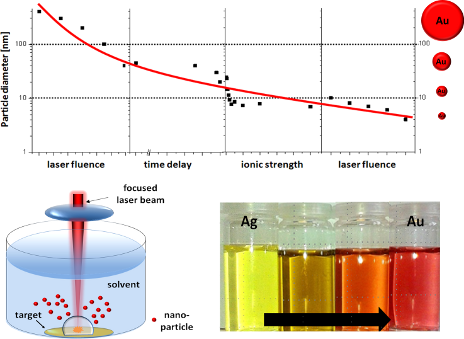
- particle properties, e.g., by inducing aggregation processes in the presence of biomolecules [20], and hence complicating bio-response studies. The removal of surfactants or residual ligands from colloidal nanoparticles is possible, e.g., by centrifugation [21], diafiltration [22] or tangential-flow
- made with nanocomposites and do not necessarily apply to colloidal nanoparticles. Furthermore, it could be demonstrated that the cytotoxicity of AuAg alloy nanoparticles is likewise affected by the presence of surface ligands [148]. Here, citrate reduced cytotoxic and antimicrobial effects, while they
- filtration [23]. However, this process is very time consuming and often results in particle aggregation. Hence, pulsed laser ablation in liquids (PLAL) has proven to be a promising alternative for the synthesis of nanoparticles applicable in toxicity assays as it provides totally ligand-free colloidal


In vitro interaction of colloidal nanoparticles with mammalian cells: What have we learned thus far?
Beilstein J. Nanotechnol. 2014, 5, 1477–1490, doi:10.3762/bjnano.5.161
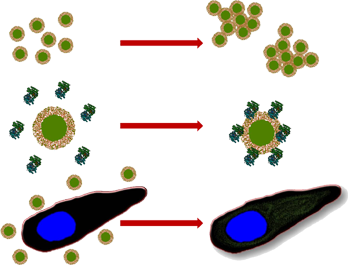
- Center for Bio/Molecular Science & Engineering, Code 6900, U.S. Naval Research Laboratory, 4555 Overlook Avenue Southwest, Washington D.C., 20375, USA 10.3762/bjnano.5.161 Abstract The interfacing of colloidal nanoparticles with mammalian cells is now well into its second decade. In this review our goal
- number of fundamental principles exist, which are outlined in this review. Keywords: colloidal stability; intracellular particle distribution; nanoparticles; protein corona; toxicity of nanoparticles; Introduction There is a multitude of reports about the interaction of colloidal nanoparticles (NPs


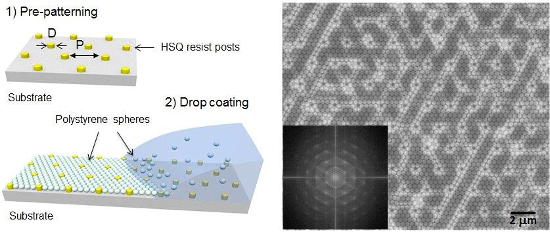
Topology assisted self-organization of colloidal nanoparticles: application to 2D large-scale nanomastering
Beilstein J. Nanotechnol. 2014, 5, 1203–1209, doi:10.3762/bjnano.5.132


Manipulation of isolated brain nerve terminals by an external magnetic field using D-mannose-coated γ-Fe2O3 nano-sized particles and assessment of their effects on glutamate transport
Beilstein J. Nanotechnol. 2014, 5, 778–788, doi:10.3762/bjnano.5.90
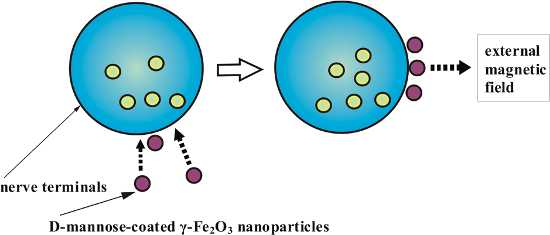
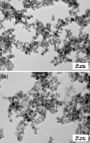
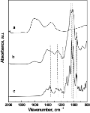
- as a base for the subsequent modification with D-mannose, thus hindering the agglomeration of the particles when stored for long time. The coating of iron oxide colloidal nanoparticles was achieved by a post-synthesis modification with D-mannose [12]. D-mannose-coated nanoparticles were prepared at a



Manipulation of gold colloidal nanoparticles with atomic force microscopy in dynamic mode: influence of particle–substrate chemistry and morphology, and of operating conditions
Beilstein J. Nanotechnol. 2011, 2, 85–98, doi:10.3762/bjnano.2.10
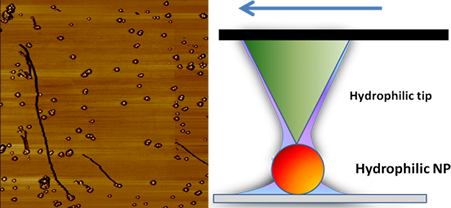
- and depends on several critical physical, mechanical and chemical parameters. However, advances have enabled better control in nanoscale manipulation. In this paper, we have described manipulation of gold colloidal nanoparticles using AFM in tapping mode. The influence of structural characteristics of