


Search results
Search for "colloidal solutions" in Full Text gives 29 result(s) in Beilstein Journal of Nanotechnology.
Preparation of poly(N-vinylpyrrolidone)-stabilized ZnO colloid nanoparticles
Beilstein J. Nanotechnol. 2014, 5, 402–406, doi:10.3762/bjnano.5.47
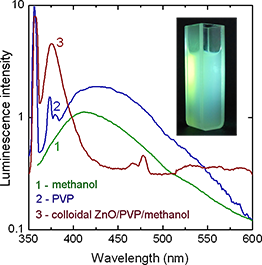
- colloidal solutions with good luminescence properties are obtained by using PVP as stabilizer in the synthesis of ZnO nanoparticles by a sol–gel method assisted by ultrasound. Nanoparticles with sizes of 30–40 nm in a PVP matrix are produced as a solid product. The colloidal ZnO/PVP/methanol solution, apart
- from the most intense PL band at 356 nm coming from the PVP, exhibits a strong PL band at 376 nm (3.30 eV) which corresponds to the emission of the free exciton recombination in ZnO nanoparticles. Keywords: colloidal solutions; nanocomposite; poly(N-vinylpyrrolidone); sol–gel; zinc oxide
- photoluminescence intensity was increased because of the passivation of surface defects in the nanoparticles [7]. Nanohybrid films with resistivity of 108 Ω·cm were obtained by using PVP with molar mass of 400,000 at various Zn2+/PVP ratios [8]. Colloidal solutions of ZnO are obtained by different methods. For


Energy transfer in complexes of water-soluble quantum dots and chlorin e6 molecules in different environments
Beilstein J. Nanotechnol. 2013, 4, 895–902, doi:10.3762/bjnano.4.101
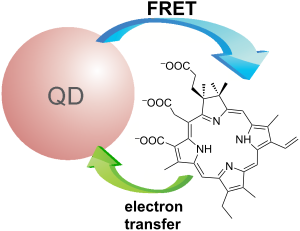
- -terminated polyethylene glycol (PEG-OH)thiol and amino-terminated polyethylene glycol (PEG-NH2)thiol with a ratio of 3 to 1. This enables to obtain stable colloidal solutions of quantum dots. Then the covalent binding of the QD surface amino groups with the Ce6 carboxyl functional groups using EDAC as a


Sub-10 nm colloidal lithography for circuit-integrated spin-photo-electronic devices
Beilstein J. Nanotechnol. 2012, 3, 884–892, doi:10.3762/bjnano.3.98
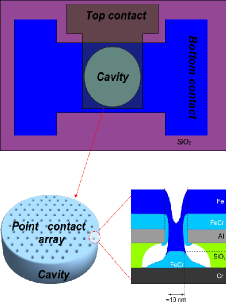
- solution. Such colloidal solutions are commercially available with a variety of concentrations and particle sizes [21]. We used a range of diameters (down to 40 nm) and found the most consistent results in terms of self-assembly for 200 nm diameter and 2% particle concentration. Different methods of


Synthesis and catalytic applications of combined zeolitic/mesoporous materials
Beilstein J. Nanotechnol. 2011, 2, 785–801, doi:10.3762/bjnano.2.87
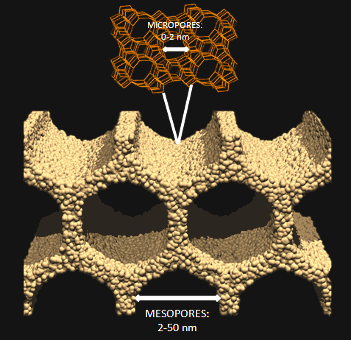
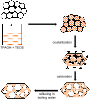
- pores [20]. The first option was applied to reduce the intracrystalline diffusion path length [21]. However, separation of these nanozeolites is difficult, since they tend to aggregate and form colloidal solutions. Moreover, nanozeolites often have different properties compared to their larger




Other Beilstein-Institut Open Science Activities



