


Search results
Search for "covalent functionalization" in Full Text gives 27 result(s) in Beilstein Journal of Nanotechnology.
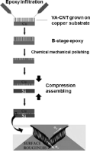
Functionalization of vertically aligned carbon nanotubes
Beilstein J. Nanotechnol. 2013, 4, 129–152, doi:10.3762/bjnano.4.14
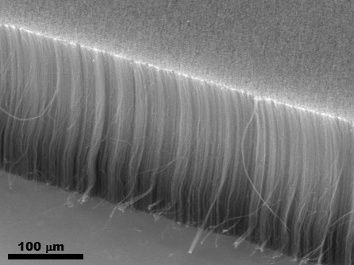
- sidewall of the CNTs is functionalized. During the functionalization, functional groups or nanoparticles can form a covalent (chemical) or a non-covalent (physical) bond with the CNT surface. The covalent functionalization (creation of a chemical bond between the CNT and the functional group or
- nanoparticle) can occur at the fullerenic caps, which are more reactive than the CNT sidewalls [16], at the defects, or exclusively at the sidewalls of the nanotubes. The non-covalent functionalization (creation of a physical bond between the CNT and the chemical group or particle) involves for instance CNTs








How to remove the influence of trace water from the absorption spectra of SWNTs dispersed in ionic liquids
Beilstein J. Nanotechnol. 2011, 2, 653–658, doi:10.3762/bjnano.2.69
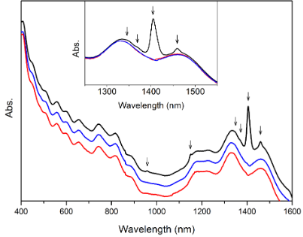
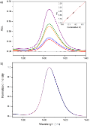
- two or three orders of magnitude higher than other suspension methods, including surfactant dispersion [11][12], DNA wrapping [13][14], polymer wrapping [15], and sidewall covalent functionalization [16][17]. As it does not involve any rigorous sonication, centrifugation, or chemical reaction, the




Other Beilstein-Institut Open Science Activities



