Search results
Search for "cytokines" in Full Text gives 43 result(s) in Beilstein Journal of Nanotechnology.
A review on nanostructured silver as a basic ingredient in medicine: physicochemical parameters and characterization
Beilstein J. Nanotechnol. 2021, 12, 440–461, doi:10.3762/bjnano.12.36
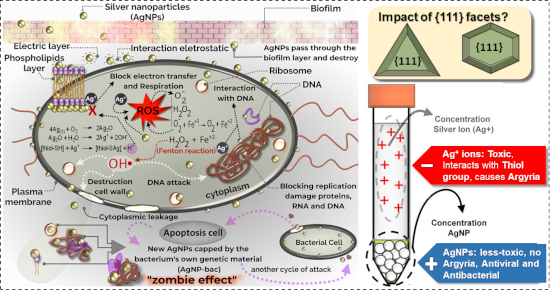
- macrophages to produce activated ISGs and pro-inflammatory cytokines, such as interleukins (IL-6, IL-8) [76][115][116][117]. Several studies have shown that AgNPs can act against various types of viruses, viz. human immunodeficiency virus type 1 (HIV-1) [111][118], monkeypox virus (MPV) [112], herpes simplex
- and uptake by the cells, as shown in Figure 7 [102], and they showed a potent ability to activate macrophages to produce ISGs and pro-inflammatory cytokines [115]. Toxicity of AgNPs For a long time, silver was considered a safe antibacterial agent. The only reported side effect was argyria, which is a
- detected. In addition, no significant changes were observed regarding reactive pulmonary oxygen species or in the increase of pro-inflammatory cytokines [130]. The Australian health agency reports on the oral toxicity of AgNPs say that: “Studies report low toxicity in rats, mice and guinea pigs after


Characterization, bio-uptake and toxicity of polymer-coated silver nanoparticles and their interaction with human peripheral blood mononuclear cells
Beilstein J. Nanotechnol. 2021, 12, 282–294, doi:10.3762/bjnano.12.23
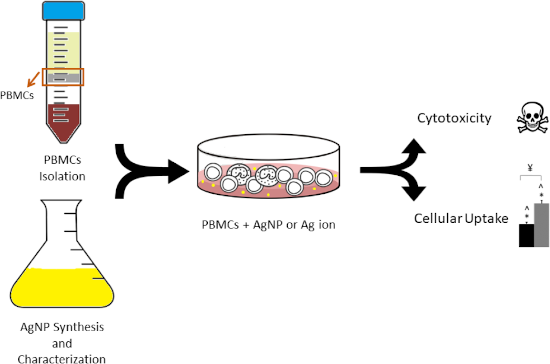
- anti-inflammatory cytokines. Despite the increased usage of and the likely increased exposure to AgNPs, there is a lack of quantitative analysis of bio-uptake and potential cytotoxicity in PBMCs after exposure to well-characterized AgNPs. A number of studies have investigated the bioavailability and



A review on the biological effects of nanomaterials on silkworm (Bombyx mori)
Beilstein J. Nanotechnol. 2021, 12, 190–202, doi:10.3762/bjnano.12.15
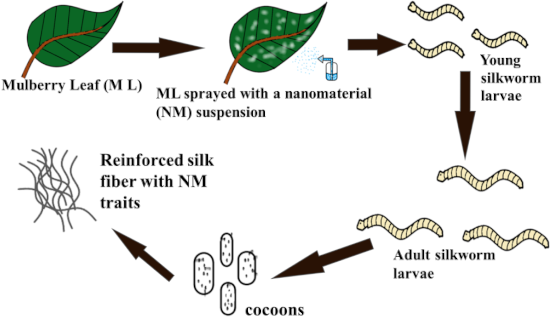
- function of cytokines in the immune response of insects using the Bombyx mori silkworm as a model. It was shown that the activation of a paralytic peptide resulted in cellular and humoral immune responses, which contribute to the host defense in the silkworm Bombyx mori [96]. It was also reported that β


Brome mosaic virus-like particles as siRNA nanocarriers for biomedical purposes
Beilstein J. Nanotechnol. 2020, 11, 372–382, doi:10.3762/bjnano.11.28
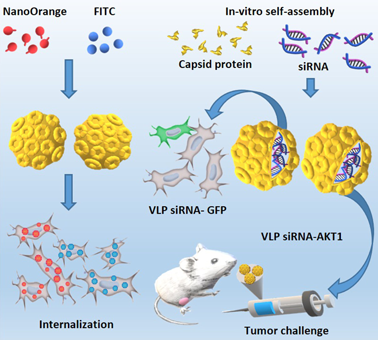
- recognizing intracellular toll-like receptors [45][58][59], or the expression of cytokines and chemokines, which activate infiltrated neutrophils in the tumor producing reactive oxygen species (ROS) [60]. The virus could also modulate and recruit CD8 + T cells, and natural killer cells to generate a cytotoxic


Effects of gold and PCL- or PLLA-coated silica nanoparticles on brain endothelial cells and the blood–brain barrier
Beilstein J. Nanotechnol. 2019, 10, 941–954, doi:10.3762/bjnano.10.95
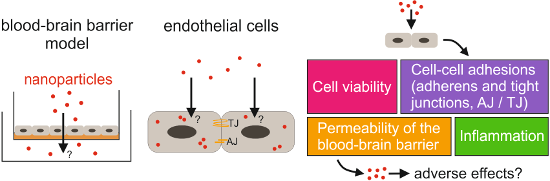
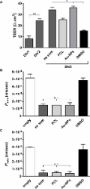
- , oxidative stress and an increase in inflammatory cytokines in dopaminergic neuron-like cells. In vivo intranasal administration of these NPs corroborated these findings and showed localization of Si-NPs mainly in the striatum and hippocampus [13]. As LTS finds its application in vessels of the brain, the



Unraveling the neurotoxicity of titanium dioxide nanoparticles: focusing on molecular mechanisms
Beilstein J. Nanotechnol. 2016, 7, 645–654, doi:10.3762/bjnano.7.57
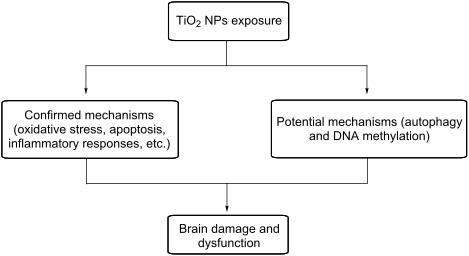
- are considered to be innate immune cells residing in brain. Once they are activated by exogenous substances, pro-inflammatory cytokines are released to induce neuro-inflammation [27][28]. TiO2 NPs acting as a stimulus were able to activate microglia cells. Su et al. [29] treated mice with TiO2 NPs by
- injection, neuro-inflammation was not directly induced by Ti accumulation in the brain, but instead was indirectly stimulated by cytokines or pro-inflammatory mediators in systemic circulation. Hong et al. [56] demonstrated that the decreased cell viability of primary hippocampal neurons was associated with
Pulmonary surfactant augments cytotoxicity of silica nanoparticles: Studies on an in vitro air–blood barrier model
Beilstein J. Nanotechnol. 2015, 6, 517–528, doi:10.3762/bjnano.6.54
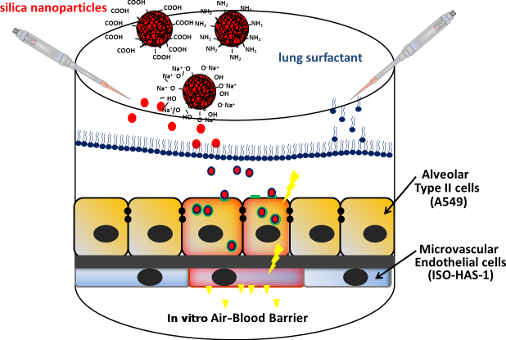
- the Nalp3 inflammasome, thus initiating the release of pro-inflammatory cytokines [37]. Phospholipids such as DPPC are also a crucial component of lung surfactant. Other studies reported that the aSNP-silanol-phospholipid interaction or even aSNP in aqueous solutions have the potential to initiate
- and without Alveofact® to a similar extent, which addresses the hypothesis of a minor membrane perturbation/ disruption, which is sensed by the Nalp3 inflammasome, initiating the release of pro-inflammatory cytokines such al IL-1β, followed by IL-8 [37]. Again, these observations suggest that


Hematopoietic and mesenchymal stem cells: polymeric nanoparticle uptake and lineage differentiation
Beilstein J. Nanotechnol. 2015, 6, 383–395, doi:10.3762/bjnano.6.38
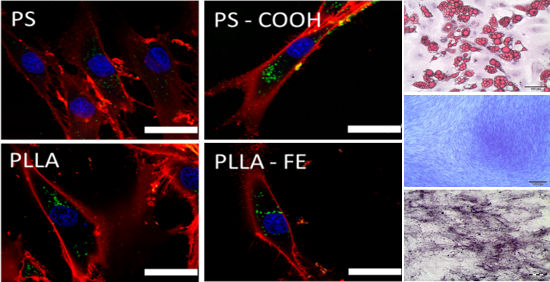
- the differentiation potential or secretion profile of, for example, cytokines. The evaluation of these risks is a milestone for the combination of nanomaterials with stem cells. One of the most widely studied stem cell populations is undoubtedly the human hematopoietic stem cell (hHSC), which has been
- toxicity (Supporting Information File 1, Figure S3). Cytokine secretion of hMSCs and hHSCs To determine if the polymeric nanoparticles have an impact on the cell functionality, IL-6 und IL-8 were chosen as they have been reported to be secreted by hMSCs [21][22]. The concentration of these two cytokines
- process [9]. For polymeric nanoparticles and hHCSs, there are no studies currently available to the authors’ knowledge. Since hMSCs constantly secreted IL-6 and IL-8 [21][22], we therefore investigated these two cytokines. Whereas the secretion of IL-6 was not influenced at all by the polymeric


Proinflammatory and cytotoxic response to nanoparticles in precision-cut lung slices
Beilstein J. Nanotechnol. 2014, 5, 2440–2449, doi:10.3762/bjnano.5.253
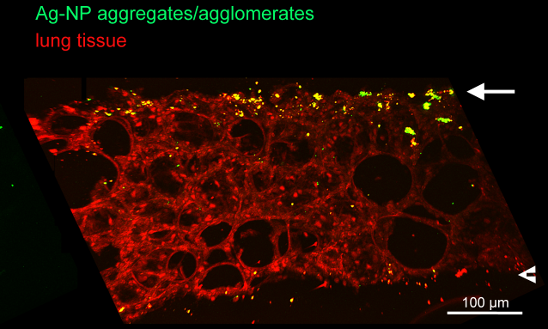
- polyvinylpyrrolidone (PVP)-coated Ag-NPs under submerged culture conditions in vitro. ZnO-NPs (NM110) served as ‘soluble’ and quartz particles (Min-U-Sil) as ‘non-soluble’ control particles. After 4 and 24 h, the cell viability and the release of proinflammatory cytokines was measured. In addition, multiphoton
- types and concentrations need to be tested in further studies. Keywords: cytokines; cytotoxicity; ex vivo; lung slices; nanoparticles; Introduction Nanoparticles (NPs) are defined as materials with one dimension between 1–100 nm that occur naturally or anthropogenically. The class of synthetic NPs can
- , PCLS did not react with the release of proinflammatory cytokines upon exposure to the particles at the concentrations tested here. The low cytotoxic response to Ag-NPs, the absent cytotoxic response to quartz particles, and also the non-existent inflammatory response to all particles are in contrast to


Interaction of dermatologically relevant nanoparticles with skin cells and skin
Beilstein J. Nanotechnol. 2014, 5, 2363–2373, doi:10.3762/bjnano.5.245
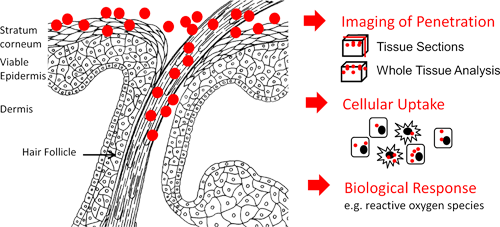
- interactions between proteins in media may occur in a concentration-dependent manner and influence the particle–cell interactions, which is supported by our previous findings on the different aggregation behaviors of particles in biological media. Changes in the release of inflammatory cytokines and cell cycle


Anticancer efficacy of a supramolecular complex of a 2-diethylaminoethyl–dextran–MMA graft copolymer and paclitaxel used as an artificial enzyme
Beilstein J. Nanotechnol. 2014, 5, 2293–2307, doi:10.3762/bjnano.5.238
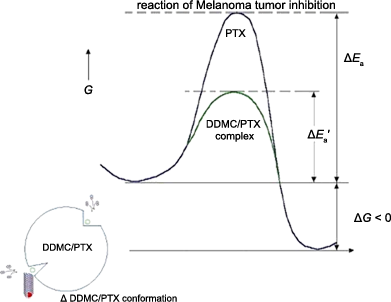
- /RISK” of high polymer DDMC/PTX [49]. It is known that the TLR3/TICAM-1 pathway of M1 macrophages in a tumor is the key to TNF-α production [50]. PTX reportedly affects the native or acquired immune response, thereby inducing M1 macrophages, which secrete NO and proinflammatory cytokines such as IL-1β
- enzyme, a very small amount of proinflammatory cytokines must be released, leading to M2 macrophage differentiation. It seems that it is not very rare to receive useless inflammatory signals in an enzyme reaction model. From another point of view, it is imagined that the production of M2 macrophages by


PVP-coated, negatively charged silver nanoparticles: A multi-center study of their physicochemical characteristics, cell culture and in vivo experiments
Beilstein J. Nanotechnol. 2014, 5, 1944–1965, doi:10.3762/bjnano.5.205
- , i.e., oxidative stress and different pro-inflammatory cytokines/chemokines, were observed. Compared to a representative lung deposition attributable to occupational exposure of 5–100 nm silver nanoparticles calculated after 24 h, as described by Gangwal et al. [131], an expected deposited dose in


Biocompatibility of cerium dioxide and silicon dioxide nanoparticles with endothelial cells
Beilstein J. Nanotechnol. 2014, 5, 1795–1807, doi:10.3762/bjnano.5.190
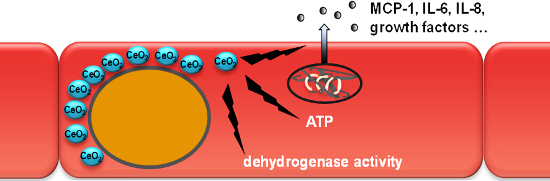
- -inflammatory and pro-thrombotic impact of CeO2 nanoparticles and intracellular ROS generation after CeO2 nanoparticle exposure In order to identify the pro-inflammatory impact of CeO2 nanoparticles, the release of three different cytokines (monocyte chemoattractant protein-1 (MCP-1), interleukin 6 (IL-6), and
- was used (0.2% FBS), since the serum itself could contain cytokines. After the corresponding incubation time, the cell culture supernatants were collected and stored at −80 °C until the human enzyme-linked immunosorbent assays (ELISA) were performed using commercially available kits addressing MCP-1


In vitro and in vivo interactions of selected nanoparticles with rodent serum proteins and their consequences in biokinetics
Beilstein J. Nanotechnol. 2014, 5, 1699–1711, doi:10.3762/bjnano.5.180
- twenty-four hours the viability of the PCLS was tested by lactate dehydrogenase (LDH) analysis for cell membrane damage and a WST-1 assay for mitochondrial activity in the cell culture supernatant as well as the release of the pro-inflammatory cytokines tumor necrosis factor alpha (TNF-α) and interleukin
- -inflammatory cytokines of PCLS exposed to either AgNP or dissolved Ag or mixtures of both. The LDH release of PCLS increased significantly when the rats were instilled with the aqueous supernatants of AgNP centrifugation compared to PCLS of untreated control rats (Figure 7). Consistently, LDH was also
- /digested intracellularly probably faster than the engulfed AgNP that formed Ag+ ions or other reactive Ag species, which apparently caused the increased LDH release and the release of both cytokines [9][27]. Interestingly, instilled silver acetate showed a similar trend as the suspension of the six-month


Silica nanoparticles are less toxic to human lung cells when deposited at the air–liquid interface compared to conventional submerged exposure
Beilstein J. Nanotechnol. 2014, 5, 1590–1602, doi:10.3762/bjnano.5.171
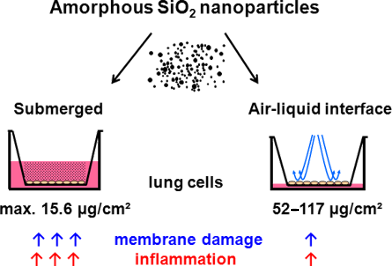
- NPs. The medium was also analysed for the release of the pro-inflammatory cytokines IL-8 and IL-6. Figure 8 shows, that the electrical field and the exposure to clean air had no effect on IL-8 release. The results at the ALI were qualitatively comparable with those obtained under submerged conditions
- without HEPES at 37 °C and 95% humidity and analysed after 24 h. Post-incubation was performed submerged in order to allow optimal release of cytokines into the apical compartment. For comparison, cells grown in Transwell inserts were simultaneously treated under submerged conditions in serum-free RPMI


Mimicking exposures to acute and lifetime concentrations of inhaled silver nanoparticles by two different in vitro approaches
Beilstein J. Nanotechnol. 2014, 5, 1357–1370, doi:10.3762/bjnano.5.149
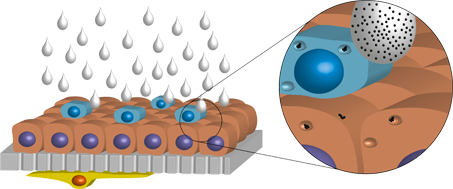
- . As a release of cytokines could not be detected with ELISA we assume that this is a transient and acute effect, which decreases to normal levels within a short time. Dependent on how NPs are applied, i.e., either by submerged or ALI conditions, different toxicological results can be obtained [60
- proliferation and migration (chemotaxis) both decreased, and the release of cytokines was affected. Increased IL-8 and decreased IL-6 and vascular endothelial growth factor (VEGF) levels were detected at high Ag NP concentrations [65]. These studies however, were obtained with human mesenchymal stem cells



Biocalcite, a multifunctional inorganic polymer: Building block for calcareous sponge spicules and bioseed for the synthesis of calcium phosphate-based bone
Beilstein J. Nanotechnol. 2014, 5, 610–621, doi:10.3762/bjnano.5.72
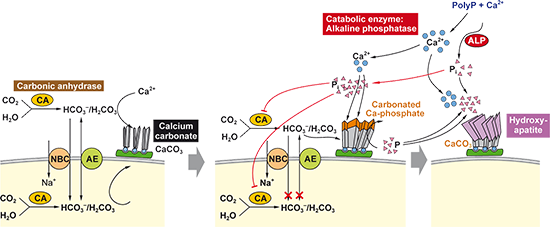
- HA and HA resorption by osteoclasts and osteoblasts in bone tissue are controlled by a network of cytokines and growth factors. The receptor activator of NF-KB (RANK) and its ligand, receptor activator of NF-KB ligand (RANKL) and osteoprotegerin (OPG) play a key function in regulation of bone
- scaffold must possess the inorganic/organic 3D structure of bone and an appropriate porosity [69] that allows the ingrowth of cells and an efficient transport of cytokines, growth factors, and nutrients. To avoid necrosis within larger implants, a suitable scaffold must also allow an efficient



Cytotoxic and proinflammatory effects of PVP-coated silver nanoparticles after intratracheal instillation in rats
Beilstein J. Nanotechnol. 2013, 4, 933–940, doi:10.3762/bjnano.4.105
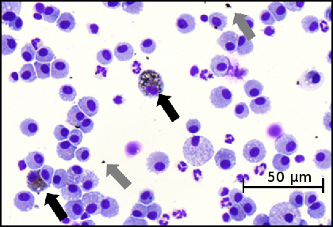
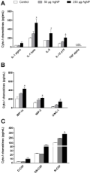
- neutrophil numbers (60-fold) of BALF. Furthermore, while there was no change in BALF cytokine levels after the instillation of 50 µg PVP-AgNP, instillation of 250 µg PVP-AgNP resulted in significantly increased levels of seven out of eleven measured cytokines. These finding suggest that exposure to inhaled
- protein levels (Figure 5). Cytokine levels in BALF To assess the proinflammatory effects of PVP-AgNP, we determined the BALF levels of several cytokines and chemokines after intratracheal instillation. Macrophage activators such as IL-1α, IL-1β, IL-6, and IL-12p70 act as proinflammatory cytokines. Figure
- 6A shows that the instillation of 250 µg PVP-AgNP caused an increase in the BALF levels of all four cytokines as compared to controls that was significant for IL-1β, IL-6, and IL-12p70. TNF-α, another proinflammatory cytokine, was not detectable in BALF. Similarly, significantly elevated levels of