Search results
Search for "detection" in Full Text gives 834 result(s) in Beilstein Journal of Nanotechnology. Showing first 200.
Development and in vitro evaluation of liposomes and immunoliposomes containing 5-fluorouracil and R-phycoerythrin as a potential phototheranostic system for colorectal cancer
Beilstein J. Nanotechnol. 2026, 17, 97–121, doi:10.3762/bjnano.17.7
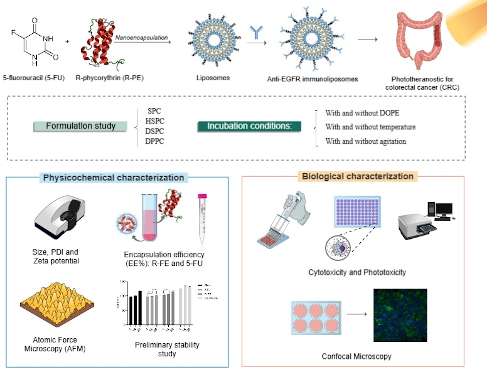
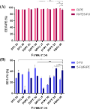
- solution of 1.3 mg/mL of 5-FU in PBS buffer pH 7.4 was prepared. After that, dilutions were carried out obtaining the working solutions used to validate the analytical control: 0.25, 0.5, 1.0, 2.0, 4.0, and 5.0 μg/mL in triplicate. The data obtained was analyzed for precision, linearity, limit of detection
- series of calibration curves for 5-FU and R-PE. Linearity was assessed by least-squares linear regression (calibration equation and correlation coefficient). Precision and accuracy were determined by the analysis of replicates of different concentrations. The detection limit and the quantification limit



Internal 3D temperature mapping in biological systems using ratiometric light-sheet imaging and lipid-coated upconversion nanothermometers
Beilstein J. Nanotechnol. 2025, 16, 2306–2316, doi:10.3762/bjnano.16.159
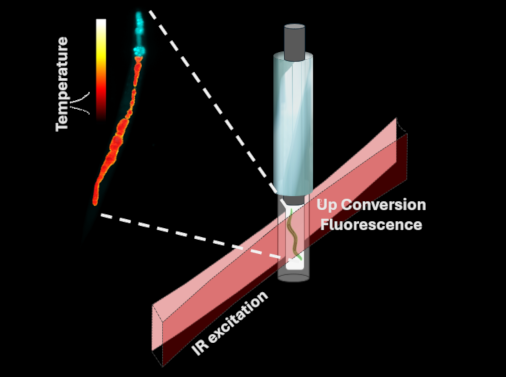
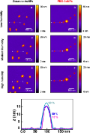
- millimeters [40]. LSFM decouples excitation and detection, illuminating only the focal plane and thereby minimizing photobleaching and photothermal effects while enabling rapid volumetric acquisition. The present work aims to extend this technique to larger biological specimens, specifically C. elegans, an
- currently developing an alternative approach based on color CMOS detection, which retrieves the spectral intensity from a single RGB image and eliminates the need for mechanical filter switching. This strategy, though beyond the scope of the present work, is expected to enable true real-time 3D


Chiral plasmonic nanostructures fabricated with circularly polarized light
Beilstein J. Nanotechnol. 2025, 16, 2245–2264, doi:10.3762/bjnano.16.154
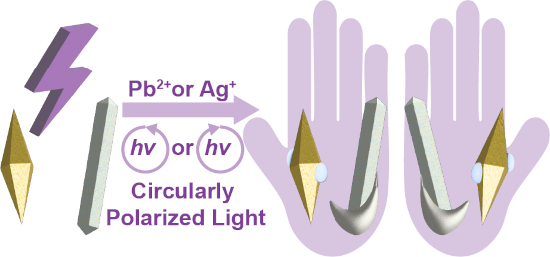
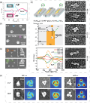
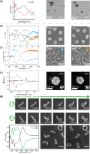
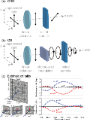
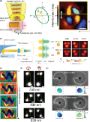
- chiral metal nanostructures; for example, the detection of DNA at attomolar concentrations has been achieved using cPNSs. In recent years, significant advancements have been made in the colloidal synthesis of chiral plasmonic nanostructures. A noteworthy breakthrough involves the use of CPL to fabricate
- to treat morning sickness in pregnant women. One of its enantiomers was found to have sedative effects, while the other was identified as teratogenic, leading to tragic consequences, including over 10,000 severe birth defects in children [4][5][6][7][8]. Promoting the separation and detection of
- in detecting chiral molecules is the limited ability to directly measure the enhanced CD spectra of the analyte. Biomolecule detection primarily relies on changes in the line shape of the metamaterial spectra. This provides limited information about molecular structure [18]. Therefore, additional





Optical bio/chemical sensors for vitamin B12 analysis in food and pharmaceuticals: state of the art, challenges, and future outlooks
Beilstein J. Nanotechnol. 2025, 16, 2207–2244, doi:10.3762/bjnano.16.153
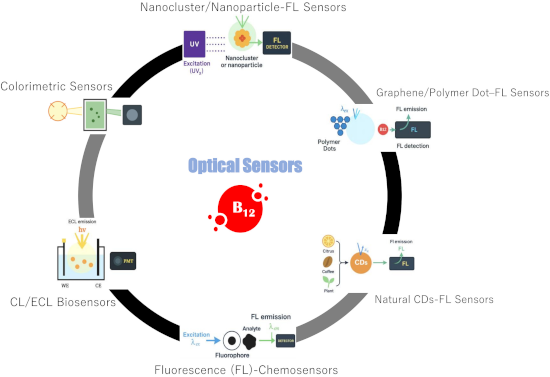
- sensitivity, specificity, rapid detection, and the ability for real-time analysis. CD- and QD-based biosensors with excellent optical properties such as photoluminescence enable the detection of VB12 at negligible concentrations and in real-world samples with complex matrices. Furthermore, integrating these
- reagents, which restrict their practical applications [2][13][28]. Consequently, there is a growing need to develop simple, rapid analytical systems such as biosensors to tackle these challenges by highly selective and sensitive detection of VB12 without requiring specialized skills. Nowadays
- , electrochemical and optical biosensing platforms are one of the best approaches to detect VB12. Various electrochemical methods have been employed for the effective detection of VB12, focusing on its electroactive nature and the redox chemistry of the cobalt atom, primarily utilizing the Co3+/Co2+ and Co2+/Co


Electromagnetic study of a split-ring resonator metamaterial with cold-electron bolometers
Beilstein J. Nanotechnol. 2025, 16, 2199–2206, doi:10.3762/bjnano.16.152
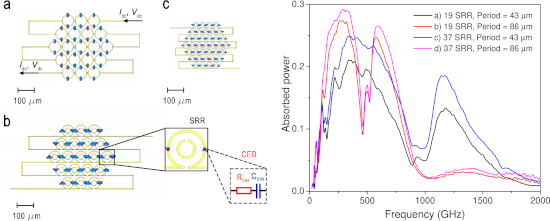
- broadband antenna solutions such as the log-periodic [23][24][25] or spiral antennas [26][27]. These antennas are indeed a well-established technology, providing wideband frequency response and high detection/radiation efficiency. However, their widespread use is subject to a fundamental limitation: The


Ultrathin water layers on mannosylated gold nanoparticles
Beilstein J. Nanotechnol. 2025, 16, 2183–2198, doi:10.3762/bjnano.16.151
- /mL) was loaded in a previously Milli Q-washed microcuvette at 25 °C and a detection angle of 173°. For ZP, 700 µL of the sample was loaded in a dip-cell cuvette. Three runs were performed in three replicates, resulting in nine measurements per sample. The hydrodynamic diameter (z-average) and the NP



Microplastic pollution in Himalayan lakes: assessment, risks, and sustainable remediation strategies
Beilstein J. Nanotechnol. 2025, 16, 2144–2167, doi:10.3762/bjnano.16.148
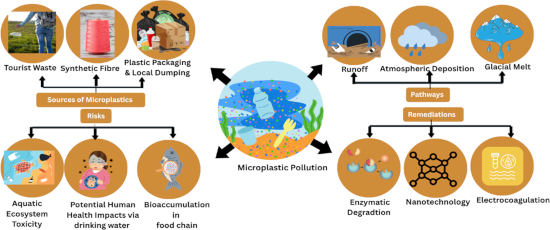
- ) spectroscopy is used regularly to identify the chemical structure of MPs [34]. One of the most important developments for nanoplastic detection in complex environmental matrices is micro-FTIR to analyze particles smaller than 10 µm [35]. Raman spectroscopy improves on FTIR by using higher resolution and the
- technologies are also required since it is challenging to transport samples to well-equipped laboratories from distant locations. Another challenge is that natural particulate matter such as minerals, biological debris, and glacial silt can lead to the interference of MP detection. MPs must be separated by
- , populations residing around Himalayan lakes and dependent on these freshwater basins for agriculture, drinking water, and fishery resources are more likely to be exposed to MPs. Although comprehensive data on MP bioaccumulation in Himalayan populations are currently lacking, the detection of MPs in Himalayan


Quality by design optimization of microemulsions for topical delivery of Passiflora setacea seed oil
Beilstein J. Nanotechnol. 2025, 16, 2116–2131, doi:10.3762/bjnano.16.146
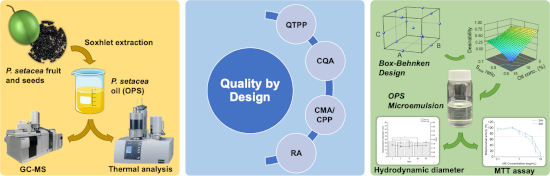
- , Agilent – Santa Clara, USA) coupled with a mass spectrometer (5977B GC/MSD, Agilent – Santa Clara, USA). Prior to injection, samples were dissolved in 1 mL of n-heptane. The GC system operated with helium as the carrier gas at a flow rate of 1 mL·min−1. The injection and detection temperatures were set at


Rapid synthesis of highly monodisperse AgSbS2 nanocrystals: unveiling multifaceted activities in cancer therapy, antibacterial strategies, and antioxidant defense
Beilstein J. Nanotechnol. 2025, 16, 2105–2115, doi:10.3762/bjnano.16.145
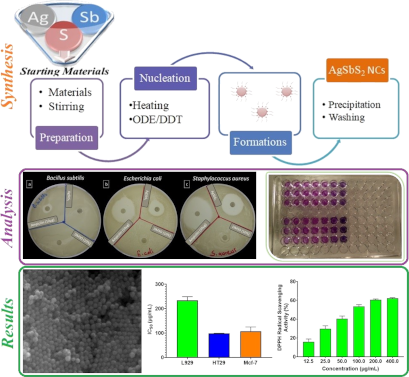
- , these materials have also been used in various imaging applications for the detection of cancer cells. Ag2Te and Ag2S nanocrystals (NCs) were used in cancer imaging studies by Nieves and colleagues. In this study, computed tomography contrasts changes of NCs injected into mice were examined at 2 and 24


Toward clinical translation of carbon nanomaterials in anticancer drug delivery: the need for standardisation
Beilstein J. Nanotechnol. 2025, 16, 2092–2104, doi:10.3762/bjnano.16.144

- , and material purity are essential for translational development. Contaminants such as carboxylated carbonaceous fragments (CCFs) may be introduced during synthesis and processing, and these impurities can alter biological responses or induce toxicity. Their detection and removal should form a routine




Calibration of piezo actuators and systems by dynamic interferometry
Beilstein J. Nanotechnol. 2025, 16, 2086–2091, doi:10.3762/bjnano.16.143
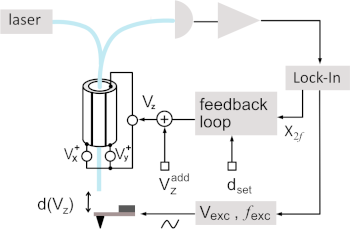
- detection. The fine-positioning z-piezo of the fiber is calibrated by the analysis of measurements of the dynamic interferometer response signal recorded for various cantilever oscillation amplitudes and varied distances between the cantilever and the fiber end. Furthermore, we demonstrate the cantilever
- ; Introduction Interferometric displacement detection stands as a cornerstone in high-precision techniques employed in cantilever-based atomic force microscopy (AFM), since its early days [1][2][3][4][5][6]. This method of cantilever displacement detection is specifically well suited for non-contact atomic force
- the fiber end. Controlling and stabilizing the fiber–cantilever distance is of principal importance for the accurate operation of the interferometric detection system [16]. Here, we address the aspect of calibrating the z-motion of the fiber tube piezo [17][18] with high accuracy to ensure full


Multifrequency AFM integrating PeakForce tapping and higher eigenmodes for heterogeneous surface characterization
Beilstein J. Nanotechnol. 2025, 16, 2077–2085, doi:10.3762/bjnano.16.142
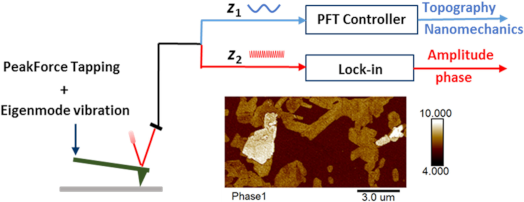
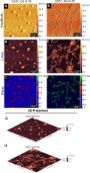
- channels after the pre-amplifier for dedicated, parallel processing of PFT feedback path and high-eigenmode detection path. The channel of the PFT feedback path is processed by the system’s built-in PeakForce electronics. A low-pass filter (200 kHz cut-off) and synchronization algorithms suppress high
- -frequency noise and baseline drift, ensuring stable force feedback for accurate topography and quantitative mechanical mapping. These processing routines are factory-implemented and operate transparently to the user [23]. The unfiltered signal branch of the high-eigenmode detection path is routed directly
- “Experimental setup” effectively separates the composite cantilever deflection signal into two independent channels. The low-frequency path secures stable topographic feedback, while the high-frequency path preserves the eigenmode signals for material-sensitive detection. This combination of physical damping


Laser ablation in liquids for shape-tailored synthesis of nanomaterials: status and challenges
Beilstein J. Nanotechnol. 2025, 16, 1963–1997, doi:10.3762/bjnano.16.137




Low-temperature AFM with a microwave cavity optomechanical transducer
Beilstein J. Nanotechnol. 2025, 16, 1873–1882, doi:10.3762/bjnano.16.130
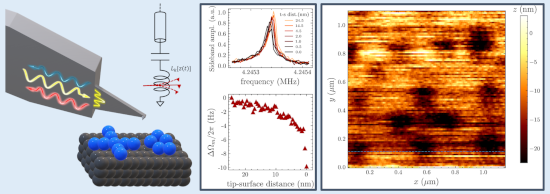
- force-sensor design is a significant improvement over piezoelectric force sensors commonly used in low-temperature AFM. We discuss the potential for further improvement of the sensor design to achieve optimal detection at the standard quantum limit. We demonstrate AFM operation with surface-tracking
- fulfills the specific requirements of the application. The latter is indeed the case for force sensing in atomic force microscopy (AFM). Force transduction at maximum sensitivity requires detecting the position of a “test mass”, while minimizing the added noise introduced by the detection itself [14][15
- -independent added noise of the detection SVV [V2/Hz], which is converted to an equivalent deflection noise via the detector responsivity α [V/m]: Neglecting back action, the noise-equivalent force for a given measurement bandwidth Δf is given by This quantity is minimized at the mechanical resonance


Current status of using adsorbent nanomaterials for removing microplastics from water supply systems: a mini review
Beilstein J. Nanotechnol. 2025, 16, 1837–1850, doi:10.3762/bjnano.16.127
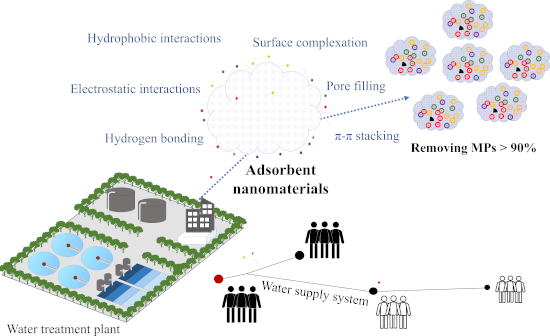
- ]. Finally, along with the development of information technology, the application of artificial intelligence (AI) and machine learning (ML) can transform water treatment. Leveraging pattern detection, ML simplifies MP classification and enhances nanomaterial identification, improving research efficiency and


Phytol-loaded soybean oil nanoemulsion as a promising alternative against Leishmania amazonensis
Beilstein J. Nanotechnol. 2025, 16, 1826–1836, doi:10.3762/bjnano.16.126

- using a Zetasizer Nano ZS instrument (Malvern Instruments, UK) at 25 ± 2 °C, with a detection wavelength of 633 nm and a backscattering angle of 173°. The zeta potential was assessed via electrophoretic mobility measurements using the same equipment under identical temperature conditions. For both


Electrical, photocatalytic, and sensory properties of graphene oxide and polyimide implanted with low- and medium-energy silver ions
Beilstein J. Nanotechnol. 2025, 16, 1794–1811, doi:10.3762/bjnano.16.123
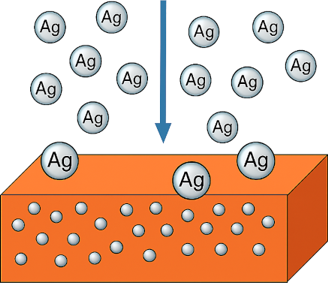
- of GO and PI. Elemental and structural changes induced by implantation were analyzed using Rutherford backscattering spectroscopy, elastic recoil detection analysis, Raman spectroscopy, Fourier-transform infrared spectroscopy, and X-ray photoelectron spectroscopy. Surface morphology was assessed via
- detection analysis (ERDA). The other analytical methods used were Raman spectroscopy, Fourier-transform infrared spectroscopy and X-ray photo-electron spectroscopy (XPS). The electrical properties were investigated by the two-point method. The photocatalytic properties were tested in a dark chamber by


Advances of aptamers in esophageal cancer diagnosis, treatment and drug delivery
Beilstein J. Nanotechnol. 2025, 16, 1734–1750, doi:10.3762/bjnano.16.121
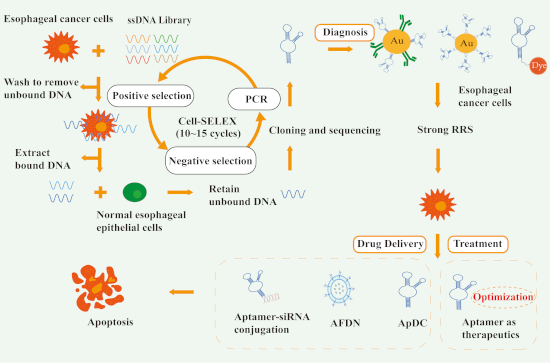
- , leveraging the high target specificity of well-selected aptamers may bring new breakthroughs in the diagnosis, treatment and drug delivery of EC. Keywords: aptamers; detection; drug delivery; esophageal cancer; esophageal squamous cell carcinoma; therapy; Review 1 Introduction Esophageal cancer (EC) is
- subtle, frequently escaping clinical detection. Definitive diagnosis typically requires upper gastrointestinal endoscopy to identify potential early neoplastic changes [7][8]. Barrett’s esophagus is generally considered to be a precancerous lesion of EAC [9][10], while esophageal intraepithelial
- structural modification. [26]. Aptamer-based biosensors [27] fully utilize these characteristics by combining various signal amplification techniques and nanomaterials (such as metal nanoparticles, quantum dots, silica nanoparticles, and carbon nanotubes), enabling highly sensitive detection of biomarkers


Multifunctional anionic nanoemulsion with linseed oil and lecithin: a preliminary approach for dry eye disease
Beilstein J. Nanotechnol. 2025, 16, 1711–1733, doi:10.3762/bjnano.16.120
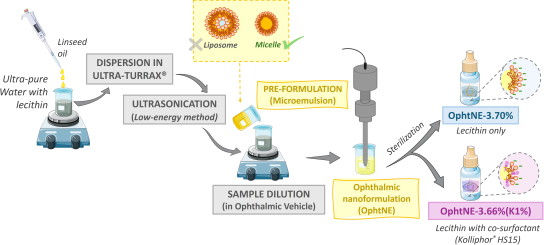
- . These characterizations were performed to ensure the quality and stability of the formulations and to evaluate their suitability for ophthalmic applications. Gas chromatograph with flame ionization detection (GC-FID) LO’s fatty acid methyl esters were transesterified as described in [37][38]. Briefly, 1
- phase. The supernatant was washed three times with 10% (w/v) citric acid and then concentrated via rotary evaporation. A 2 µL aliquot of the supernatant was injected in split injection mode (1:10 in ethyl acetate) into a gas chromatograph with flame ionization detection (GC-FID) model 7290 A (Agilent
- Instruments, UK) at 25 °C. Before analysis, the samples were diluted 1:1000 with Milli-Q water, a standard dilution used to prevent multiple scattering without compromising micelle integrity. Measurements were performed at a 173° backscatter detection angle. Zeta potential and electrical conductivity were



Ambient pressure XPS at MAX IV
Beilstein J. Nanotechnol. 2025, 16, 1677–1694, doi:10.3762/bjnano.16.118
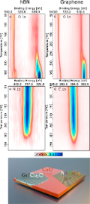
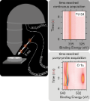
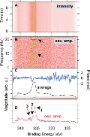
- flakes partially covering an Ir(111) surface, as illustrated in Figure 3 [28]. Although the reaction products (H2O and CO2) were below the APXPS detection limit, the C 1s signal proved sensitive enough to monitor the dynamics of undercover catalysis during gas pulsing (see Figure 4). Their results
- photocatalyst, it is essential to combine the photocatalyst’s performance with mechanistic knowledge under operando reaction conditions. APXPS is uniquely suited to investigate such systems. Its surface sensitivity enables the detection of charge transfer processes, reaction intermediates, and active sites
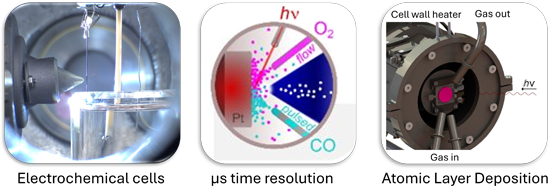
- interface phenomena under realistic environmental conditions. At MAX IV, the synergy between fourth-generation synchrotron source brightness and beamline-specific developments, such as advanced electron analyzers, tailored AP cells, and time-resolved detection schemes, has enabled operando and in situ





Prospects of nanotechnology and natural products for cancer and immunotherapy
Beilstein J. Nanotechnol. 2025, 16, 1644–1667, doi:10.3762/bjnano.16.116

- spectroscopy, TEM, DLS, X-ray diffraction (XRD), and Fourier-transform infrared (FTIR) spectroscopy, revealing a polygonal or oval morphology. To evaluate the antitumor effects, cytotoxicity assays, cellular uptake assays, apoptosis detection, ROS production, qRT-PCR, and Western blotting for gene and protein
- , lignin, cellulose, and starch [155][156]. Furthermore, quantum nanoparticles offer advantages for cancer treatment. They can manipulate emission properties near the infrared region, improving drug targeting and solubility, enhancing tumor detection, and reducing adverse effects on adjacent healthy


Venom-loaded cationic-functionalized poly(lactic acid) nanoparticles for serum production against Tityus serrulatus scorpion
Beilstein J. Nanotechnol. 2025, 16, 1633–1643, doi:10.3762/bjnano.16.115
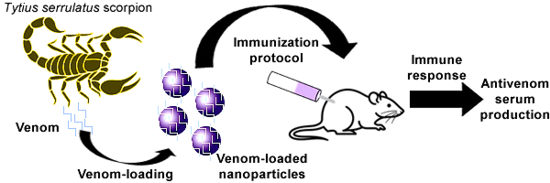
- the plate was incubated at 37 °C for 1 hour. The plate was washed and 50 µL/well of diluted detection antibodies was added and incubated for 3 h. The plate was then washed again, the substrate was added, and the plate was incubated at room temperature for 15 min. The reaction was stopped (H2SO4 4 M


Nanotechnology-based approaches for the removal of microplastics from wastewater: a comprehensive review
Beilstein J. Nanotechnol. 2025, 16, 1607–1632, doi:10.3762/bjnano.16.114
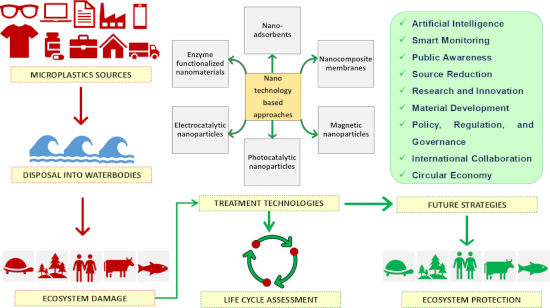
- effectively removing MPs, especially those in the nanosize range. This review presents a detail analysis of the sources, pathways, detection methods, and health impact of MPs, while emphasizing the emerging role of nanotechnology in their remediation. Nanomaterials, including nanoadsorbents, photocatalysts
- various nanoenabled treatment strategies such as adsorption, photocatalysis, and membrane filtration using materials like metal-organic frameworks, carbon-based nanomaterials, MXenes, and metal oxides. It also highlights recent innovations such as microrobotic systems and AI-assisted detection frameworks
- synthesis and characterisation techniques have enabled the detection of materials at the nanoscale, unlocking new opportunities across various streams. In the field of water treatment, nanotechnology is gaining wide attention due to its enhanced efficiency, effectiveness, affordability, and durability. The


Bioinspired polypropylene-based functionally graded materials and metamaterials modeling the mistletoe–host interface
Beilstein J. Nanotechnol. 2025, 16, 1592–1606, doi:10.3762/bjnano.16.113
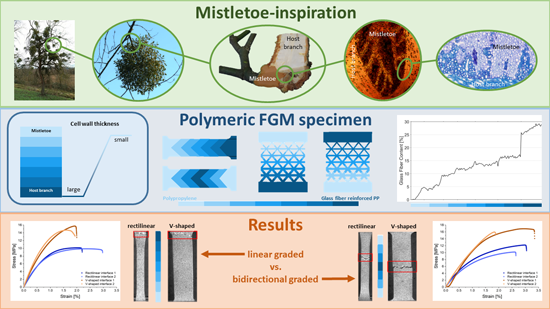
- the GOM correlate software for DIC analysis (version 2018, GOM GmbH, Braunschweig, Germany). A facet size of 20 pixels and a point distance of 14 pixels was used for surface detection, using an image in the undeformed state as reference. The principal engineering strain in the direction of deformation


Cross-reactivities in conjugation reactions involving iron oxide nanoparticles
Beilstein J. Nanotechnol. 2025, 16, 1504–1521, doi:10.3762/bjnano.16.106
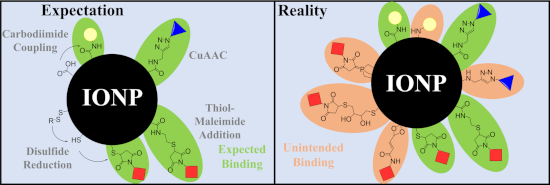
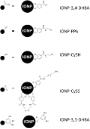
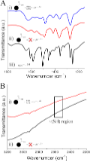
- amides [57]. While FTIR provides some evidence of PPA coupling to the IONP surface, it is not conclusive; thus, we turned to an indirect means of detection by utilizing the CuAAC coupling reaction to bind Cy5-azide dye to the alkyne groups on the IONP surface, if present. The dye can then be detected
- down to 1 mM, limited by the detection limit of Cy5. Our investigation into the EDC coupling of several primary amine-containing dyes shows that care must be taken in choosing an appropriate amine for coupling, as the structure can inhibit coupling through either steric or electronic effects. Our