


Search results
Search for "fabrication" in Full Text gives 918 result(s) in Beilstein Journal of Nanotechnology. Showing first 200.
Advancing nanolithography: a comprehensive review of materials for local anodic oxidation with AFM
Beilstein J. Nanotechnol. 2026, 17, 275–291, doi:10.3762/bjnano.17.19
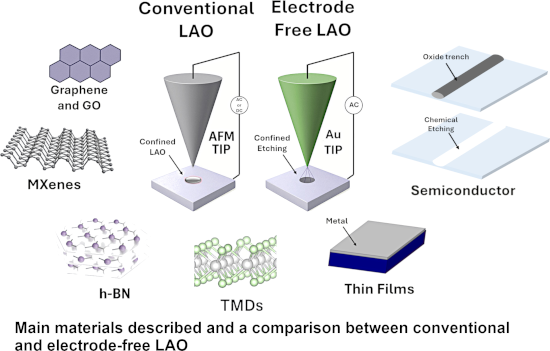
- fabrication techniques, with scanning probe lithography (SPL) [1] gaining prominence as a versatile method for high-resolution patterning, particularly in the early 2000s. SPL encompasses multiple methods, including nanomechanical processing [2], AFM bias-induced lithography [3], dip-pen nanolithography [4
- ] and thermal scanning probe lithography [5], each catering to unique fabrication requirements. Among the bias-driven techniques, local anodic oxidation (LAO) stands out due to its precise, resist-free process and the compatibility with a wide range of materials [6][7][8][9]. LAO uniquely provides
- ][31], gallium arsenide (GaAs) [32][33] and silicon carbide (SiC) [34], meaning that SPL has still the potential to revolutionize nanolithography. In the context of 2D materials, LAO facilitates the fabrication of intricate structures such as nanoribbons and transistors, granting proper operation of


Multilayered hyperbolic Au/TiO2 nanostructures for enhancing the nonlinear response around the epsilon-near-zero point
Beilstein J. Nanotechnol. 2026, 17, 251–261, doi:10.3762/bjnano.17.17
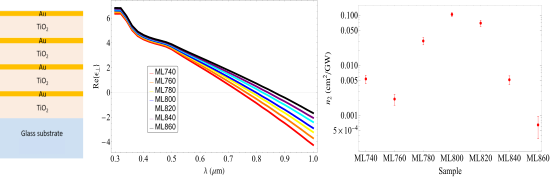
- , Université de Technologie de Troyes, 10004 Troyes, France EUT+ Institute of Nanomaterials and Nanotechnologies-EUTINN, European University of Technology, European Union 10.3762/bjnano.17.17 Abstract In this work, we present the design, fabrication, and study of the optical properties of multilayered metal
- structure so we could only assume that, during the fabrication process, the deposited Ru was oxidized, and the permittivity of the material substantially changed. We studied the nonlinear response of the structure using a tunable femtosecond source and found that, even with the shift in the ENZ point seen
- . Considering our previous findings, in this work, we decided to change the fabrication methods and the metal used to avoid possible contamination due to oxidation. We chose to use gold instead of ruthenium because it is easier to deposit and has the correct permittivity to create a HMM. Gold also has a low


Micro- and nanoscale effects in biological and bioinspired materials and surfaces
Beilstein J. Nanotechnol. 2026, 17, 214–217, doi:10.3762/bjnano.17.14

- sources for bioinspiration based on the understanding of micro- and nanoscale effects in biological systems (“biology push”), numerous advances were achieved on replication of biological principles into artificial replicas [21], as well as studies on bioinspired materials and fabrication methods [22][23
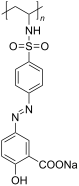
Structure-dependent thermochromism of PAZO thin films: theory and experiment
Beilstein J. Nanotechnol. 2026, 17, 186–199, doi:10.3762/bjnano.17.12
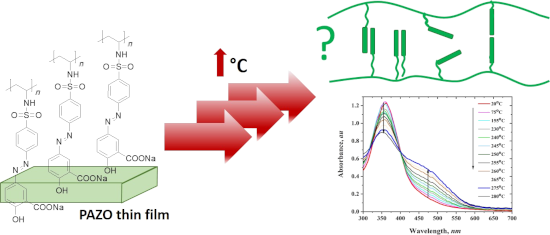
- the sample. Conversely, the increased absorption at 532 nm is advantageous, offering sufficient absorption while allowing deeper light penetration without significant energy loss. This facilitates the efficient use of high-power lasers operating at 532 nm for the fabrication of diffraction gratings


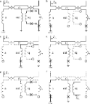
Capabilities of the 3D-MLSI software tool in superconducting neuron design
Beilstein J. Nanotechnol. 2026, 17, 122–138, doi:10.3762/bjnano.17.8

- types of structures designed on the basis of low-Tc Nb–Al multilayer technology similar to that used for RSFQ-circuit fabrication. First, we compare results of experiment and simulation for simple C-shaped two-junction SQUIDs placed over a thick superconducting screen. Then more complicated objects
- suppress capacitive hysteresis in I–V curves. Overall, this fabrication process is a type of one previously used for RSFQ logic circuits [29]. In Figure 2, four types of C-shaped SQUIDs are shown schematically. Each type corresponds to one of the methods of implementation and coupling of inductive elements
- strip lines fabricated in layers M2 and M3). The designed samples included segments of variable length Δx,y (also indicated in Figure 2), which enabled more detailed comparison with the simulation results (see below). For each design type, two series were studied, manufactured in different fabrication



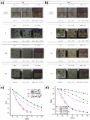
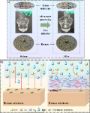
Functional surface engineering for cultural heritage protection: the role of superhydrophobic and superoleophobic coatings – a comprehensive review
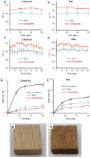
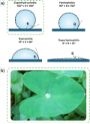
Beilstein J. Nanotechnol. 2026, 17, 63–96, doi:10.3762/bjnano.17.6

- fabrication. Thus, using the ICOM nomenclature, and accordingly to the reported results, the hydroxyapatite–polyelectrolyte multilayer system fulfils several key conservation criteria. It provides optical transparency with minimal alteration of the substrate’s appearance, demonstrates high chemical stability





Terahertz-range on-chip local oscillator based on Josephson junction arrays for superconducting quantum-limited receivers
Beilstein J. Nanotechnol. 2025, 16, 2296–2305, doi:10.3762/bjnano.16.158
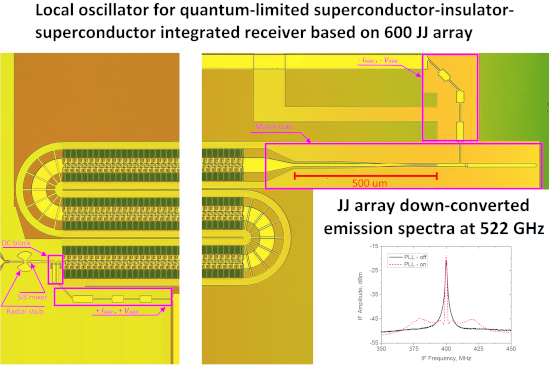
- , Moscow Region, 141701, Russian Federation 10.3762/bjnano.16.158 Abstract In this paper we present the results of the development, fabrication, measurements, and analysis of terahertz-range oscillators based on Josephson junction arrays embedded into the central electrode of a coplanar line. The
- ]. Currently, Josephson junctions (JJ) are mostly fabricated using Nb–Al/AlOx–Nb or Nb–Al/AlN–NbN technologies [19][20]. A number of attempts were made to establish the technology for the fabrication of Nb-based technologies, such as NbTiN–Al/AlN–NbTiN [21], NbN–AlN–NbN [22], NbN–TaN–NbN [23], NbN–MgO–NbN [24
- ]. Nontheless, the use of Nb alloys will only partially solve the problem of high-frequency generation due to high surface losses in NbN and NbTiN [18][25][26]. Note that the use of Nb–Al/AlN–NbN allows for the fabrication of tunnel junctions with a tunnel current density of up to 100 kA/cm2 with a quality


Chiral plasmonic nanostructures fabricated with circularly polarized light
Beilstein J. Nanotechnol. 2025, 16, 2245–2264, doi:10.3762/bjnano.16.154
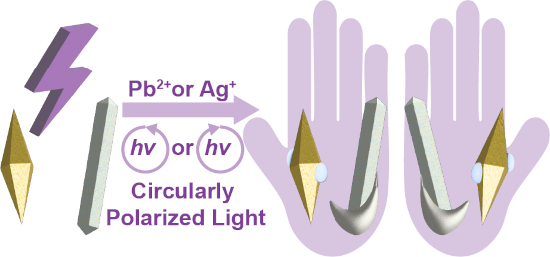
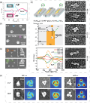
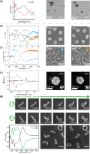
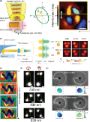
- cPNSs. As a traceless chiral agent, CPL holds great potential for integration with nanofabrication technologies. In this review, we will summarize the progress made in fabricating cPNSs using CPL. We will discuss the mechanisms involved in the CPL-based fabrication process and share our insights
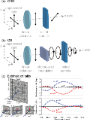
- the advances in the fabrication of cPNSs using CPL. Section 1 will present a brief background that summarizes representative fabrication technologies for cPNSs, which employ various strategies. Section 2 will explore the mechanisms by which CPL leads to the formation of cPNSs and summarize the
- the fabrication details and morphology of the CPL-enabled cPNSs in Section 2. In recent years, chiral assemblies of PNSs from mechanical forces via magnetic fields [60][61] or strain [62][63] have also been demonstrated. Although the cPNSs prepared via mechanical forces are relatively scarce, they





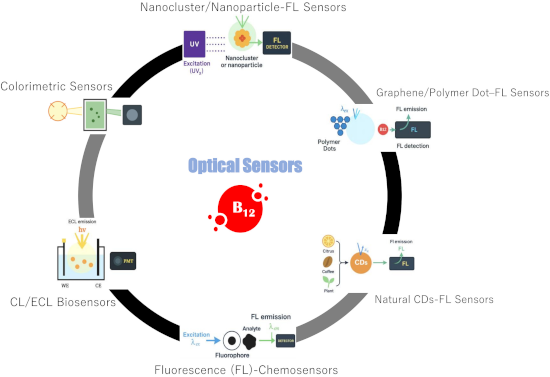
Optical bio/chemical sensors for vitamin B12 analysis in food and pharmaceuticals: state of the art, challenges, and future outlooks
Beilstein J. Nanotechnol. 2025, 16, 2207–2244, doi:10.3762/bjnano.16.153


Electromagnetic study of a split-ring resonator metamaterial with cold-electron bolometers
Beilstein J. Nanotechnol. 2025, 16, 2199–2206, doi:10.3762/bjnano.16.152
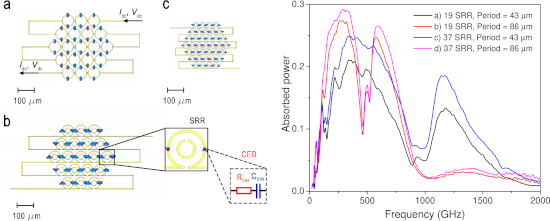
- resistance of the structure at the operating point and increases the current noise contribution of the readout amplifier [17][22]. Furthermore, a larger number of elements increases the fabrication complexity. Crucially, nearly doubling the number of elements (from 19 to 37) does not produce a proportional
- experiments with broadband coaxial dish antennas [31][32]. Future work will focus on the experimental fabrication and characterization of the proposed miniaturized 37-element SRR array to validate these simulation results. Schematic layout of the investigated metamaterial arrays. (a) 19-element array of


Missing links in nanomaterials research impacting productivity and perceptions
Beilstein J. Nanotechnol. 2025, 16, 2168–2176, doi:10.3762/bjnano.16.149
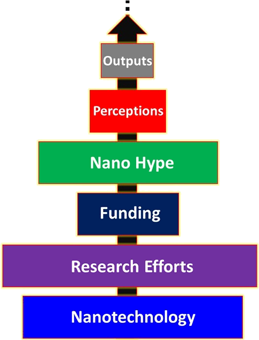
- [22]. Additionally, most nanomaterial fabrication methods are energy-intensive. Techniques such as combustion, arc deposition, solvothermal synthesis, chemical vapor deposition, mechanical milling, and wet chemical methods require high energy input and careful process control. The ultrahigh cost of
Beyond the shell: exploring polymer–lipid interfaces in core–shell nanofibers to carry hyaluronic acid and β-caryophyllene
Beilstein J. Nanotechnol. 2025, 16, 2015–2033, doi:10.3762/bjnano.16.139
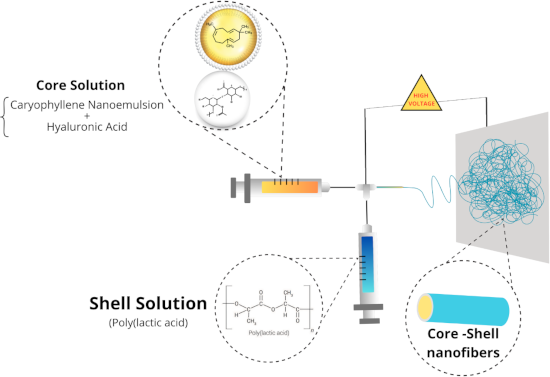
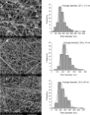
- innovative strategies to ensure their compatibility and sustained activity. This study addresses this critical challenge through the rational design and fabrication of hybrid core–shell nanofibers manufactured via coaxial electrospinning. Poly(lactic acid) (PLA) was used as an outer shell providing
- conventional fibrous materials. Their flexibility in fabrication allows for integration into a broad range of applications, from drug delivery scaffolds to composite biomaterials, contributing to their increasing relevance in both scientific research and industrial development [11][12][13][14]. To leverage the
- the nanoemulsion into the fiber core, 2% and 5% (w/w), of NE relative to the total core solution were added to the HA solution and stirred for 1 h to ensure homogeneity. Fabrication of coaxial nanofibers Coaxial nanofibers were produced using two plastic syringes – one loaded with the PLA shell




The cement of the tube-dwelling polychaete Sabellaria alveolata: a complex composite adhesive material
Beilstein J. Nanotechnol. 2025, 16, 1998–2014, doi:10.3762/bjnano.16.138
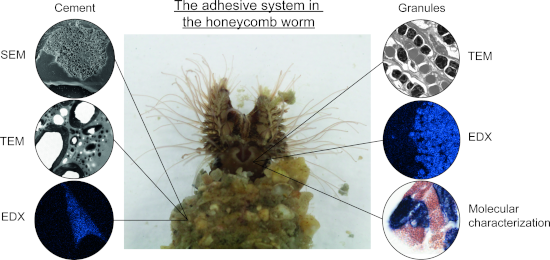
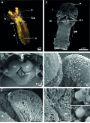
- cement matrix. A better understanding of this complex composite material would provide valuable insights into the physical and chemical processes that underline the assembly of biological materials, which could inspire the design and fabrication of innovative hierarchical materials with diverse




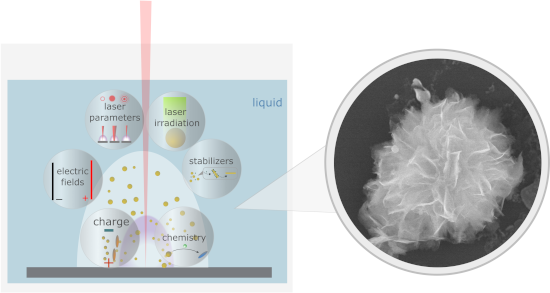
Laser ablation in liquids for shape-tailored synthesis of nanomaterials: status and challenges
Beilstein J. Nanotechnol. 2025, 16, 1963–1997, doi:10.3762/bjnano.16.137






Evaluating metal-organic precursors for focused ion beam-induced deposition through solid-layer decomposition analysis
Beilstein J. Nanotechnol. 2025, 16, 1942–1951, doi:10.3762/bjnano.16.135
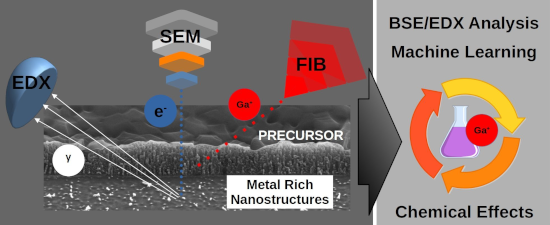
- or ion beam-induced deposition (FEBID/FIBID) allows for the precise fabrication of two- and three-dimensional nanostructures with well-defined shapes and dimensions ranging from 5 to 10 nm [1][5][6][7][8][9][10]. This high spatial resolution is achieved by precisely controlling the position and
- the fabrication or modification of cantilevers in AFM and scanning optical near-field microscopy, and as plasmonic materials [15][16][17][18][19]. FEBID/FIBID techniques combine the advantages of direct-write lithographic processes, for example, high spatial resolution, site-specificity, no need for
- a more in-depth understanding of the proposed pathway for successful testing of the new potential FIBID precursors. The Fabrication of the Precursor Thin Layer The metal-organic precursors films for the FIB/SEM experiments were deposited by sublimation using a glassware sublimation apparatus. The Si


Quantum circuits with SINIS structures
Beilstein J. Nanotechnol. 2025, 16, 1931–1941, doi:10.3762/bjnano.16.134
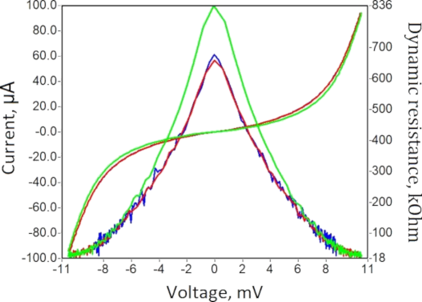
- , nN and nS are the distribution functions of electrons and holes in normal metal and superconductor, respectively. As can be seen from the formula, the electron cooling power depends on both the temperature of the normal metal and the temperature of the superconductor. Fabrication techniques
- not very high reproducibility and stability. Another fabrication method is the Manhattan technology [28] with deep orthogonal groves in the resist, see Figure 1b,c. Both methods are based on thermal evaporation at different angles and rotation of substrate, requiring rather sophisticated and expensive
- , technology with wet etching) that are promising for detectors and electron coolers. More details on various technologies and specific features of the fabrication of tunnel structures are provided in a review publication [29]. Aharonov–Bohm interferometer The Aharonov–Bohm interferometer is a hybrid


Low-temperature AFM with a microwave cavity optomechanical transducer
Beilstein J. Nanotechnol. 2025, 16, 1873–1882, doi:10.3762/bjnano.16.130
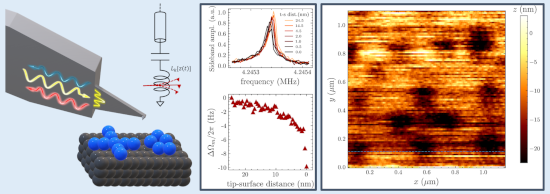
- feedback in both amplitude-modulation and frequency-modulation modes. Keywords: atomic force microscopy; cavity optomechanics; Introduction The past two decades have seen the emergence of a variety of remarkable microscopic and mesoscopic optomechanical devices. Through innovative design and fabrication
- electromechanical coupling (KIMEC), whose design and fabrication were already presented in detail in previous publications by our group [17][18]. Here, we focus on the deployment of the force sensor, demonstrating force-gradient sensing and scanning over a test surface at 10 mK in a closed-cycle dilution


Electrical, photocatalytic, and sensory properties of graphene oxide and polyimide implanted with low- and medium-energy silver ions
Beilstein J. Nanotechnol. 2025, 16, 1794–1811, doi:10.3762/bjnano.16.123
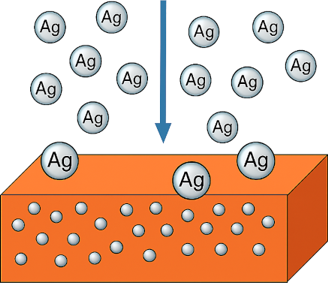
- carbonized matrix, conjugated bonds, and silver cluster structures exhibits dramatically higher conductivity than the unmodified material, which can be exploited, for example, for the fabrication of flexible optoelectronics, thin-film electrodes, or electroactive sensors [12]. In addition to the increase in


Exploring the potential of polymers: advancements in oral nanocarrier technology
Beilstein J. Nanotechnol. 2025, 16, 1751–1793, doi:10.3762/bjnano.16.122
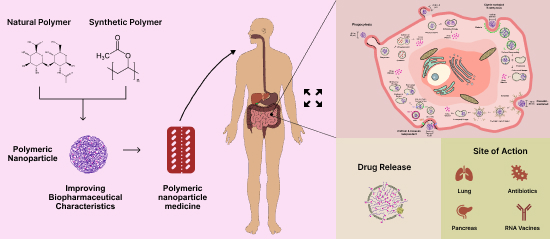
- but also the physicochemical characteristics of the drug, the intended route of administration, the therapeutic target, and the polymer selected as the nanocarrier, which plays a critical role in determining the most appropriate fabrication technique. While drug classification by the BCS remains a


Advances of aptamers in esophageal cancer diagnosis, treatment and drug delivery
Beilstein J. Nanotechnol. 2025, 16, 1734–1750, doi:10.3762/bjnano.16.121

- help of aptamers. Common nanocarrier systems, including micelles, liposomes, metal nanoparticles, and solid lipid nanoparticles, demonstrate well-established fabrication protocols, yet often face challenges with in vivo stability. Emerging nanoplatforms, such as four-way junction RNA nanostructures


Ambient pressure XPS at MAX IV
Beilstein J. Nanotechnol. 2025, 16, 1677–1694, doi:10.3762/bjnano.16.118
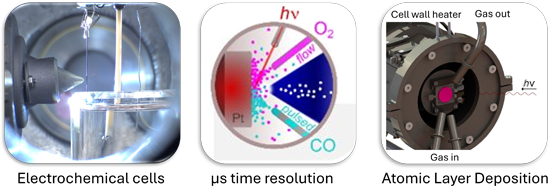
- , even on topologically complex surfaces, making it essential for the fabrication of next-generation devices [46][47][48]. In the semiconductor industry, ALD enables the creation of nanoscale transistors and high-k dielectric materials, essential for shrinking transistor dimensions and enhancing





Nanotechnology-based approaches for the removal of microplastics from wastewater: a comprehensive review
Beilstein J. Nanotechnol. 2025, 16, 1607–1632, doi:10.3762/bjnano.16.114
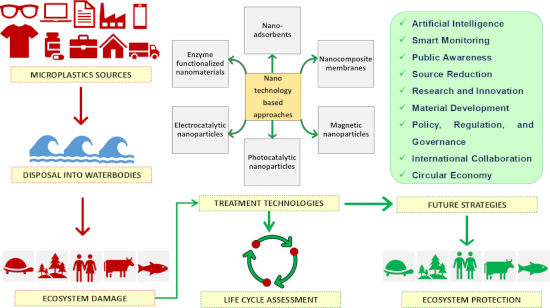
- nanomaterials in membrane fabrication are zeolites, various metals and metal oxides, as well as carbon-based materials such as CNTs and graphene derivatives [86]. The nanomaterials that can be used membrane components for the removal of MPs are discussed in detail below. Metal-organic frameworks: Metal-organic
- fabrication process involves thermally transforming Ti3C2Tx MXene into multilayered TiO2 with photocatalytic properties, followed by coating with platinum and decorating the surface with magnetic γ-Fe2O3 nanoparticles. These engineered γ-Fe2O3/Pt/TiO2 microrobots exhibit light-driven, fuel-free movement with
- health and ecosystems. Additionally, carbon nanomaterials often aggregate in water, diminishing their adsorption efficiency, and their fabrication typically involves advanced techniques and costly equipment, which further limits widespread use [114]. The mechanism involved in the removal of MPs using


Bioinspired polypropylene-based functionally graded materials and metamaterials modeling the mistletoe–host interface
Beilstein J. Nanotechnol. 2025, 16, 1592–1606, doi:10.3762/bjnano.16.113
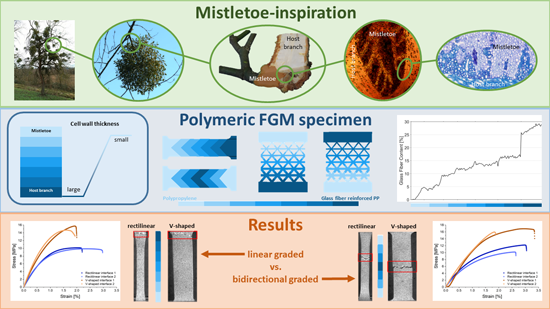
- demonstrated the potential for creating functionally graded structures using multimaterial 3D printing [18][19][20]. However, these methods mainly focus on structural gradients [21] and face significant challenges in part integrity due to the layer-by-layer fabrication process, which results in poor adhesion
- stiffness of elasticity (Eeff) of the triangular mechanical metamaterials was calculated using Equation 1, where Es is the elastic modulus of the bulk material used for fabrication of the metamaterial, η is the slenderness ratio of the metamaterial beams, defined as the ratio of the length to the thickness
- most suitable parameters for material fabrication with a gradient that could be produced as reliably as possible and that was spatially well defined, despite the intermixing of adjacent material compounds. Figure 3 shows the interfaces of hot-pressed specimens and laminates of the different specimens


Modeling magnetic properties of cobalt nanofilms used as a component of spin hybrid superconductor–ferromagnetic structures
Beilstein J. Nanotechnol. 2025, 16, 1557–1566, doi:10.3762/bjnano.16.110
- ], reinforcing, light-reflecting, conductive, and dielectric materials. Their utilization extends to contacts, printed circuit boards, and integrated circuit elements in microelectronics, as well as to the fabrication of optical filters, the component base of optoelectronics, and advanced lithographic processes


Transient electronics for sustainability: Emerging technologies and future directions
Beilstein J. Nanotechnol. 2025, 16, 1545–1556, doi:10.3762/bjnano.16.109
- ; encapsulation; fabrication strategy; transient electronics; Introduction In recent years, a growing global concern has emerged regarding the unintended consequences of material longevity on sustainability initiatives, particularly in light of the escalating crisis of plastic waste accumulation in landfills and
- unfolds on the brain cortex to enable neural signal monitoring following syringe-based implantation [27] (Figure 1d). The exploration of new materials and fabrication techniques has also enabled the realization of large-area transient devices. In particular, the large-area fabrication of 2D materials and
- environment, thus serving as a foundational element in the realization of high-performance bioresorbable electronic systems. Fabrication strategies and scalability of bioresorbable electronics Hybrid architectures that combine the high-performance characteristics of inorganic electronic components with the





