


Search results
Search for "flood gun" in Full Text gives 28 result(s) in Beilstein Journal of Nanotechnology.
Scanning reflection ion microscopy in a helium ion microscope
Beilstein J. Nanotechnol. 2015, 6, 1125–1137, doi:10.3762/bjnano.6.114
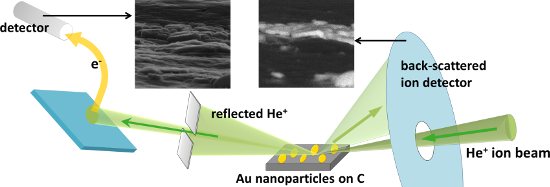
- . The energy of the He ions was 35 keV with a beam current of 0.5 pA. The compensation of the sample charge by the electron flood gun was not possible due to the configuration of the sample holder. The following model test samples were investigated: (1) a Au on carbon SEM test sample from Agar
- compensation by an electron flood gun. Imaging with a flood gun requires accurate adjustment of the flood gun parameters and ion beam parameters to neutralize the surface charge. The scan speed decreases when line-by-line charge compensation is used. The reflected ions are less sensitive to surface charge than
- over the use of a flood gun is determined by the sample surface details. Unfortunately, the construction of the RIM specimen holder does not allow for charge compensation, and a direct comparison of these methods is impossible. Beside the factors mentioned above, the sensitivity and the precision of


Study of mesoporous CdS-quantum-dot-sensitized TiO2 films by using X-ray photoelectron spectroscopy and AFM
Beilstein J. Nanotechnol. 2014, 5, 68–76, doi:10.3762/bjnano.5.6
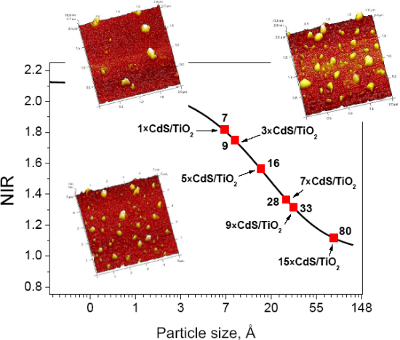
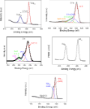
- (1486.6 eV) radiation (10 kV; 22 mA). Charge stabilization was achieved by using an electron flood gun adjusted at 8 eV and placing a nickel grid 3 mm above the sample. Pass energy for the analyzer was set to 160 eV for wide scan. The analyzed area was approximately 1.4 mm2 and the pass energy was set to


Mechanical characterization of carbon nanomembranes from self-assembled monolayers
Beilstein J. Nanotechnol. 2011, 2, 826–833, doi:10.3762/bjnano.2.92
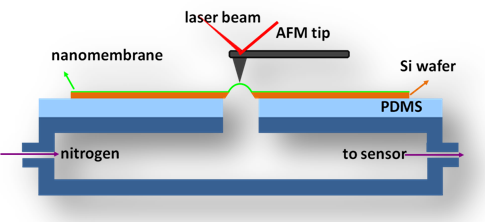
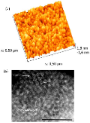
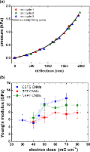
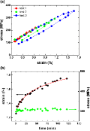
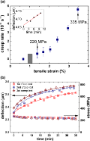
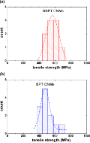
- dimethylformamide (DMF) with 10 mmol BPT or NBPT molecules for 72 h in a sealed flask under nitrogen atmosphere. Cross-linking was achieved in high vacuum (<5 × 10⁻⁸ mbar) with an electron flood gun at an electron energy of 100 eV and a current of 3 mA. Freestanding CBPS CNMs were obtained by dissolving the Si3N4

Other Beilstein-Institut Open Science Activities



