


Search results
Search for "hierarchical" in Full Text gives 190 result(s) in Beilstein Journal of Nanotechnology.
Functional fibrillar interfaces: Biological hair as inspiration across scales
Beilstein J. Nanotechnol. 2024, 15, 664–677, doi:10.3762/bjnano.15.55
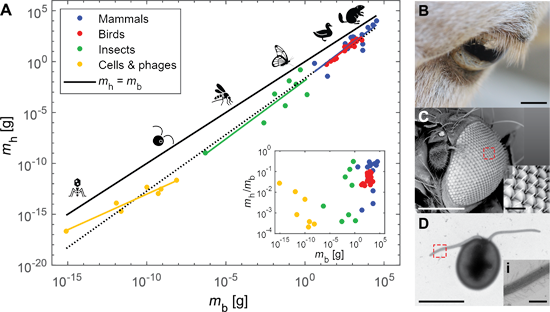
- providing insulation (Figure 2A), prevent the penetration of water through hierarchical superhydrophobicity (Figure 2B), or provide protection from predators or disease vectors through mechanical interactions (Figure 2C). Thermoregulation Regarding thermal regulation, mammals have evolved certain traits


Comparative analysis of the ultrastructure and adhesive secretion pathways of different smooth attachment pads of the stick insect Medauroidea extradentata (Phasmatodea)
Beilstein J. Nanotechnol. 2024, 15, 612–630, doi:10.3762/bjnano.15.52
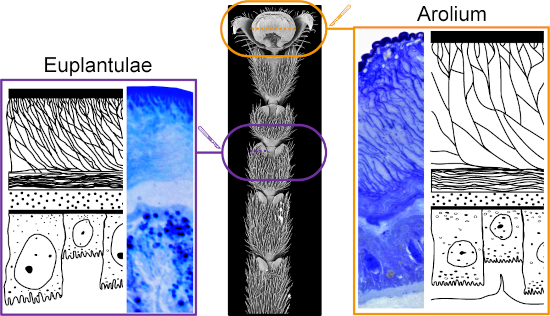
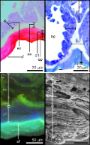
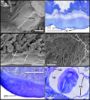
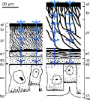
- distinct structures, thereby augmenting the actual contact area and, consequently, enhancing attachment. Smooth attachment pads accomplish this through hierarchical organization and the viscoelastic properties of the cuticle [1][2][72][73]. Differences between the two attachment pad types Despite the
- 5 (euplantulae)). In general, the hierarchical organization of the fibres enables local deformation to adjust to the surface profile of the substrate (e.g., [20][45][70]). This results in anisotropic material properties (i.e., the pads are soft during compression); however, those withstand high



Hierarchically patterned polyurethane microgrooves featuring nanopillars or nanoholes for neurite elongation and alignment
Beilstein J. Nanotechnol. 2023, 14, 1157–1168, doi:10.3762/bjnano.14.96
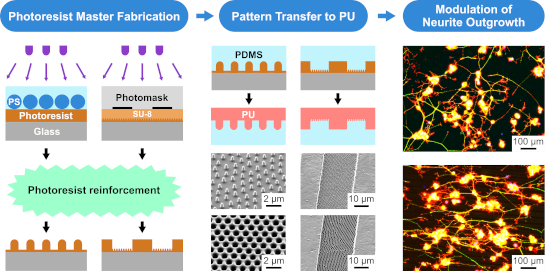
- patterned nano-/microstructured PU films enhance both PC12 neurite elongation and alignment, showing the potential use of our proposed method for the micro-/nanopatterning of polymers for nerve tissue engineering. Keywords: hierarchical; nanopatterning; neurite alignment; neurite outgrowth; topography
- , the question arises: Can discrete structures be combined with continuous structures for possible synergistic effects? Indeed, several studies have fabricated hierarchical discrete nanostructures on continuous microstructures in order to better mimic the micro- and the nanostructure of the native nerve
- nerves are few and far between. Thus, further work is necessary to ascertain the potential of such structures for peripheral nerve regeneration. One of the reasons for the limited work on discrete nanostructures and hierarchical structures may be the expensive or non-versatile techniques for substrate


Biomimetics on the micro- and nanoscale – The 25th anniversary of the lotus effect
Beilstein J. Nanotechnol. 2023, 14, 850–856, doi:10.3762/bjnano.14.69

- colour is produced by the hierarchical micro- and nanostructure of the surface. The reflection of light depends on the angle of incidence. In addition to superhydrophobicity, these results suggest that the scales have another function – their hierarchical structures produce the brilliant white colour


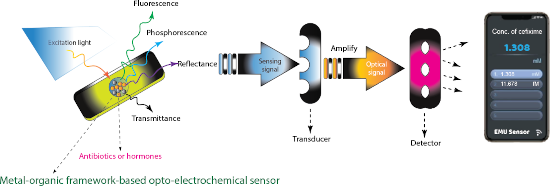
Metal-organic framework-based nanomaterials as opto-electrochemical sensors for the detection of antibiotics and hormones: A review
Beilstein J. Nanotechnol. 2023, 14, 631–673, doi:10.3762/bjnano.14.52


ZnO-decorated SiC@C hybrids with strong electromagnetic absorption
Beilstein J. Nanotechnol. 2023, 14, 565–573, doi:10.3762/bjnano.14.47
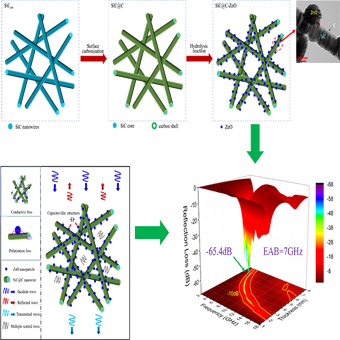
- same time, wide effective absorption bandwidth (EAB ≥ 7 GHz) remains a great challenge. A good strategy is to form hierarchical heterostructures, characterized by diverse components, abundant heterogeneous interfaces, multiple reflective paths, and enrichment of structural defects [18][19][20


The origin of black and white coloration of the Asian tiger mosquito Aedes albopictus (Diptera: Culicidae)
Beilstein J. Nanotechnol. 2023, 14, 496–508, doi:10.3762/bjnano.14.41
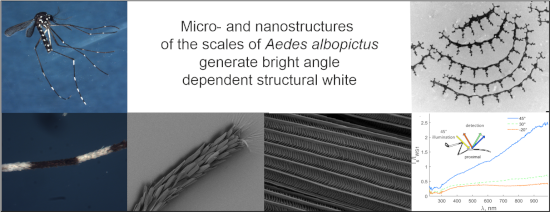
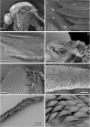
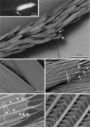
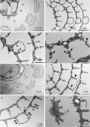
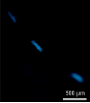
- hierarchical randomized multiscale 3D structures (Figure 4a–d, Figure 3d). The coherent contribution (interference), which was estimated to be around 10%, appears due to structure regularity. Functional significance of the mosquito leg scale system Structural colors producing matte white and bright silver



Molecular nanoarchitectonics: unification of nanotechnology and molecular/materials science
Beilstein J. Nanotechnol. 2023, 14, 434–453, doi:10.3762/bjnano.14.35
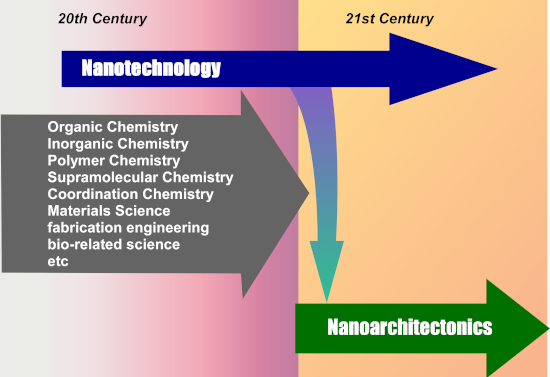
- asymmetric and hierarchical. Compared to structures created by self-assembly based on simple equilibrium processes, more hierarchical and complex structures are obtained in nanoarchitectonics processes [54]. In addition, several uncertainties in the nanoscale world from which architectures are derived have a
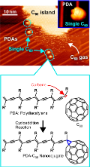
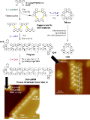
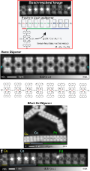
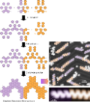
- synthesis are usually difficult to incorporate into functional nanodevices because of the random arrangement of the heterojunctions. Bronner, Fischer, Crommie, and co-workers have developed a single hierarchical fabrication strategy via on-surface synthesis of graphene nanoribbons with a single
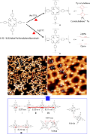
- changing size and topology of inner and outer rims in their structures. Especially, extended hexagonal coronoids with zigzag outer edges still pose synthetic challenges. Sun, Yan, Yu, and co-workers have successfully synthesized a C144 hexagon with a zigzag outer edge by hierarchical Ullmann coupling and





Evaluation of electrosynthesized reduced graphene oxide–Ni/Fe/Co-based (oxy)hydroxide catalysts towards the oxygen evolution reaction
Beilstein J. Nanotechnol. 2023, 14, 420–433, doi:10.3762/bjnano.14.34
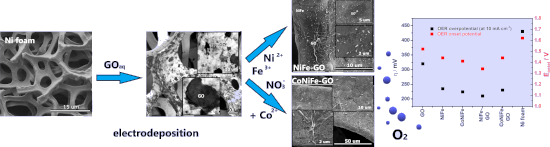
- 260 mV (Tafel slope: 72 mV·dec−1) and 320 mV (65 mV∙dec−1) determined at 10 mA·cm−2 in 1 M potassium hydroxide (KOH), respectively. In another work, nickel/nickel oxide (Ni-NiO) and cobalt/cobalt oxide (Co-CoO) were chemically synthesized with three-dimensional hierarchical porous graphene (3DHPG) on




Plasmonic nanotechnology for photothermal applications – an evaluation
Beilstein J. Nanotechnol. 2023, 14, 380–419, doi:10.3762/bjnano.14.33




Bismuth-based nanostructured photocatalysts for the remediation of antibiotics and organic dyes
Beilstein J. Nanotechnol. 2023, 14, 291–321, doi:10.3762/bjnano.14.26
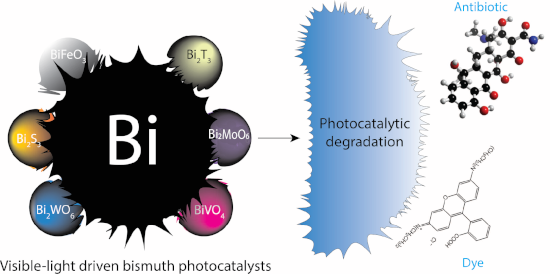
- of the host material, enhancing charge carrier dynamics [20][146]. In contrast to undoped Bi2WO6, visible light-driven 3-D hierarchical Ag-doped Bi2WO6 nanoparticles showed improved photocatalytic performance by destroying 95% of tetracycline in only 70 min, according to Shen and co-workers [147
- concentrations. A similar trend was reported by Huang and co-workers [190]. According to the authors, the percentage of photocatalytic degradation using a hierarchical Z-scheme AgBr-Bi2WO6 photocatalyst decreased from 88% to 54% when the concentration of tetracycline was increased from 20 to 60 mol/L. The


Atmospheric water harvesting using functionalized carbon nanocones
Beilstein J. Nanotechnol. 2023, 14, 1–10, doi:10.3762/bjnano.14.1
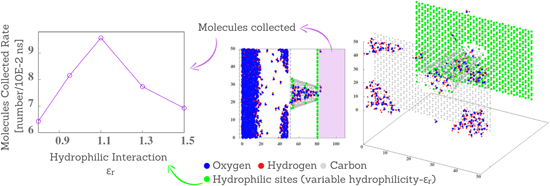
- ), which use hierarchical nano/microstructures to collect water. Some examples are the Trifolium pratense plant, the Cotula fallax cactus, and the Uloborus walckenaerius spider [14][15][16]. Usually, these biomimetic designs have an asymmetrical shape that energetically drives the directional transport of




Recent trends in Bi-based nanomaterials: challenges, fabrication, enhancement techniques, and environmental applications
Beilstein J. Nanotechnol. 2022, 13, 1316–1336, doi:10.3762/bjnano.13.109
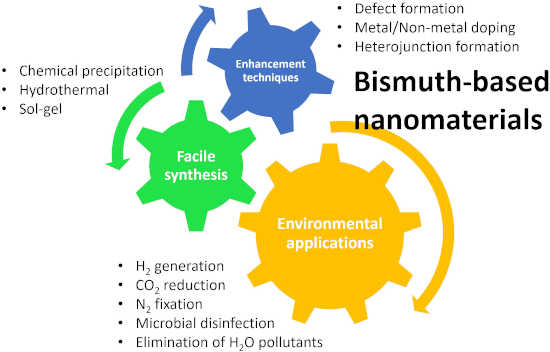
- applications [62]. A very good micro-/nanoscale hierarchical Bi7O9I3/NTC photocatalyst was created in a one-step, easy, and environmentally friendly way by Hou et al., who used an in situ ion exchange–recrystallization approach [63]. The used buffer provided a relatively stable environment for producing
- both the surface and the inside. When exposed to visible light, Bi7O9I3/NTC displayed higher photocatalytic activity owing to the synergistic effect of the micro-/nanoscale hierarchical structure, low iodine content, and well-contacted interface. 93.5% methyl orange (MO) and 96.6% RhB were eliminated
- generation of Bi2WO6. It has been observed that the newly generated Bi2WO6 has a greater BET surface area and superior charge transfer kinetics. These properties point to an increase in photocatalytic activity. Other Bi-based hollow hierarchical structures, such as BiVO4, have the potential to be synthesized




Growing up in a rough world: scaling of frictional adhesion and morphology of the Tokay gecko (Gekko gecko)
Beilstein J. Nanotechnol. 2022, 13, 1292–1302, doi:10.3762/bjnano.13.107
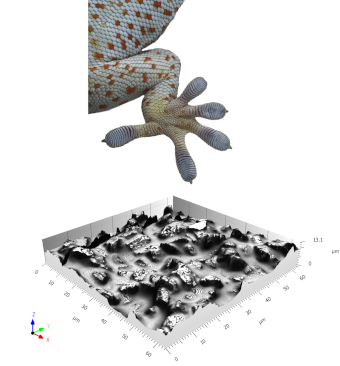
- Anthony J. Cobos Timothy E. Higham Department of Evolution, Ecology, and Organismal Biology, University of California, Riverside, CA 92521, USA 10.3762/bjnano.13.107 Abstract Many geckos have the remarkable ability to reversibly adhere to surfaces using a hierarchical system that includes both


Laser-processed antiadhesive bionic combs for handling nanofibers inspired by nanostructures on the legs of cribellate spiders
Beilstein J. Nanotechnol. 2022, 13, 1268–1283, doi:10.3762/bjnano.13.105
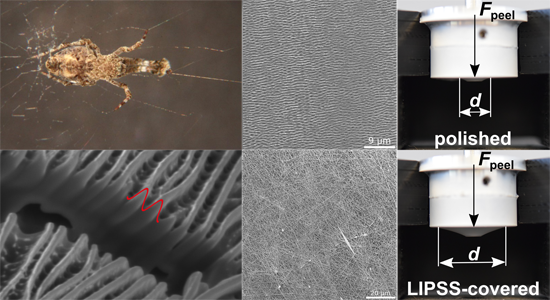
- interaction and, thus, the design of a suitable surface structure to prevent sticking of an artificially nonwoven of nanofibers. Similar to the description of the Lotus effect [20][21][22][23], where the wettability of the hierarchical surface structure of the lotus leaf can be described with an energy






Roll-to-roll fabrication of superhydrophobic pads covered with nanofur for the efficient clean-up of oil spills
Beilstein J. Nanotechnol. 2022, 13, 1228–1239, doi:10.3762/bjnano.13.102
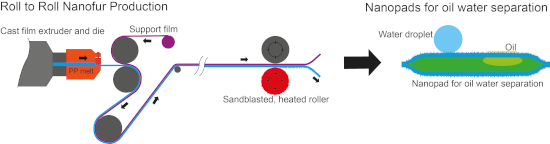
- unwanted dirt [5][6]. The lotus effect is commonly achieved by hierarchical nano- and micro-structuring of surfaces made from materials with low surface energy leading to very high contact angles (above 150°). This strategy is inspired by the lotus leaf [1] but can be found on many other surfaces in nature




Design of a biomimetic, small-scale artificial leaf surface for the study of environmental interactions
Beilstein J. Nanotechnol. 2022, 13, 944–957, doi:10.3762/bjnano.13.83
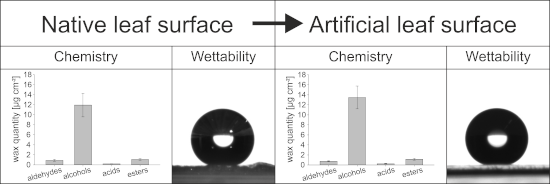
- °), hydrophobic (90° ≤ θ < 150°), and superhydrophobic (150° ≤ θ < 180°) [27]. Due to its chemical composition, the cuticle is generally a hydrophobic surface. However, plant surfaces show a large variability of cell shapes, surface structures, and hierarchical structures (a combination of micro- and
Bioselectivity of silk protein-based materials and their bio-inspired applications
Beilstein J. Nanotechnol. 2022, 13, 902–921, doi:10.3762/bjnano.13.81
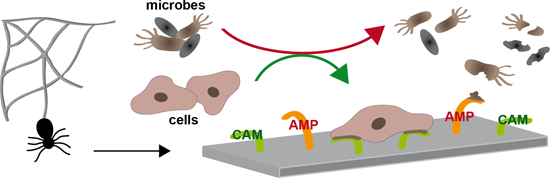
- interactions (e.g., van der Waals forces), and adhesive chemistry of biopolymers (various types of glues) [5]. On the level of tissues, multiple cell types work together to perform complex tasks, based on their hierarchical arrangement governing the exchange of information between different cell types. To


Hierachical epicuticular wax coverage on leaves of Deschampsia antarctica as a possible adaptation to severe environmental conditions
Beilstein J. Nanotechnol. 2022, 13, 807–816, doi:10.3762/bjnano.13.71
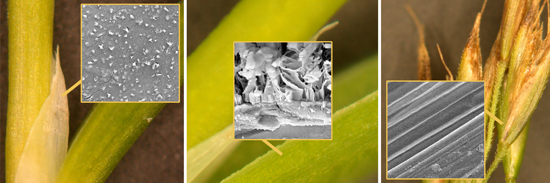
- hierarchical structure of the wax coverage on both leaf surfaces is described in D. antarctica for the first time. Keywords: cryo-SEM; microstructure; plant; surface; wax projection; Introduction The Antarctic hair grass Deschampsia antarctica É. Desv. (Poaceae) is one of the only two flowering plants native
- sample preparation for conventional scanning electron microscopy. This method provided qualitatively new information about the superficial layers on vegetative organs studied in this plant species. Based on the obtained results and literature data, we discuss a possible role of the complex, hierarchical
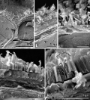
- /damaged, another layer of projections called here the lower (inner) wax layer became exposed (Figure 2f). The fractured samples clearly show the hierarchical organization of the wax coverage on both leaf lamina sides, which is composed of the two superimposed layers of wax projections (Figure 3a,b,d




Hierarchical Bi2WO6/TiO2-nanotube composites derived from natural cellulose for visible-light photocatalytic treatment of pollutants
Beilstein J. Nanotechnol. 2022, 13, 745–762, doi:10.3762/bjnano.13.66
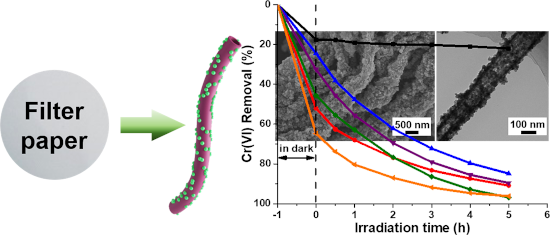
- natural cellulose as the template had enhanced the photocatalytic activities. This was due to the uniform and stable integration among their components, which is mainly attributed to the hierarchical micro-to-nanoscale structure replicated from the original cellulose template [31][32][33]. This structural
- reduction of Cr(VI) or degradation of rhodamine B (RhB) under visible-light irradiation (λ > 420 nm), they exhibited excellent photocatalytic activities. This was due to the unique hierarchical network structures of the composite as well as the uniformly and compactly built heterostructures in between TiO2
- deposited onto cellulose nanofiber templates by the surface sol−gel method according to a previous report (Figure 1a, Figure 1b) [31]. The as-prepared TiO2-gel/cellulose-fiber composite was calcined in air at 450 °C (heating rate: 1 °C/min) for 6 h to give the hierarchical structure of TiO2 nanotubes


Micro- and nanotechnology in biomedical engineering for cartilage tissue regeneration in osteoarthritis
Beilstein J. Nanotechnol. 2022, 13, 363–389, doi:10.3762/bjnano.13.31
- hierarchical structure of articular cartilage from its surface to the subchondral bone shows a depth-dependent transition and anisotropic integrity composed of four distinct zones; namely, superficial, middle, deep, and calcified cartilage [11][12] (Figure 2). The arrangement, composition, and content of the
- express hypertrophic markers such as type X collagen and alkaline phosphatase (ALP). Mineralization occurs after the tidemark, which is a thin wavy layer between the deep zone and calcified layer [15]. Overall, the complexity of the hierarchical structure and considerable differences visible in the gene
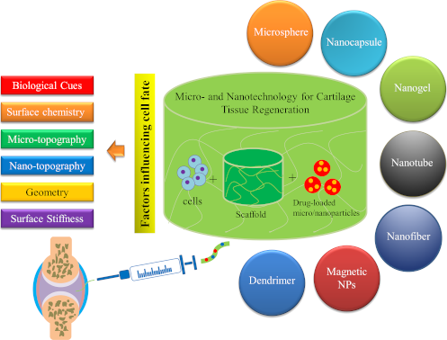
- nature. They are constructed as NPs, nanofibers, nanocrystals, nanotubes, and nanofilms by high-tech methods of photolithography, electrospinning, nanoimprinting, and phase separation. Due to the hierarchical structure of articular cartilage ECM, there is considerable enthusiasm regarding the use of


Engineered titania nanomaterials in advanced clinical applications
Beilstein J. Nanotechnol. 2022, 13, 201–218, doi:10.3762/bjnano.13.15
- their use as a matrix for immobilizing enzymes for maintaining their biocatalytic activity for a longer duration [16]. Chen et al. describe the use of TiO2 as a molecular sieve by designing flower-like microspheres consisting of a magnetic Fe3O4 core and a hierarchical mesoporous and macroporous TiO2


Tin dioxide nanomaterial-based photocatalysts for nitrogen oxide oxidation: a review
Beilstein J. Nanotechnol. 2022, 13, 96–113, doi:10.3762/bjnano.13.7
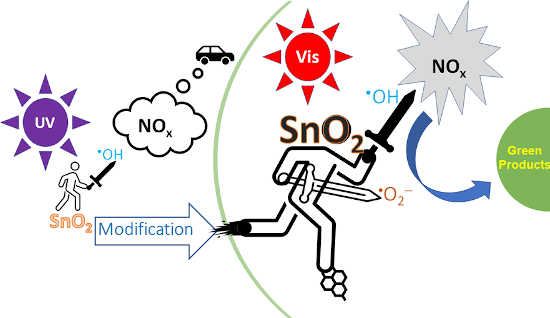
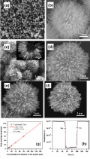
- ] synthesized SnO2 microspheres on a fluorine-doped tin oxide (FTO) substrate and the SEM images (Figure 6) show SnO2 microspheres with an average diameter of 2.0–2.5 μm. By using SnO2 microsphere photocatalysts for the photocatalytic oxidation of NO, Le et al. [67] indicated that 3D hierarchical flower-like


Morphology-driven gas sensing by fabricated fractals: A review
Beilstein J. Nanotechnol. 2021, 12, 1187–1208, doi:10.3762/bjnano.12.88
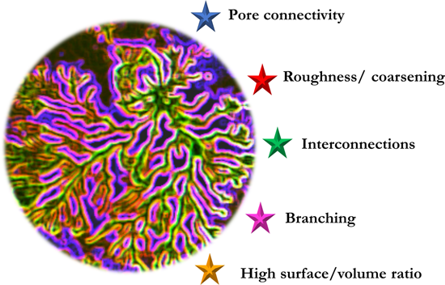
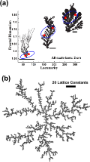
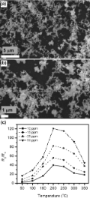
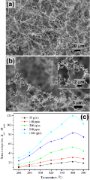
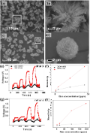
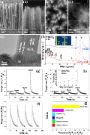
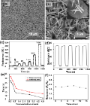
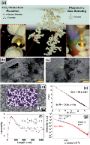
- to some excellent articles on hierarchical gas sensors that address such geometries [8][30][33][37]. Tin oxide-based fractals Yin et al. reported SnO2 nanoparticles with and without platinum (Pt) decoration synthesized using a sol–gel hydrothermal technique for gas sensing applications [63]. Figure
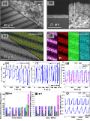
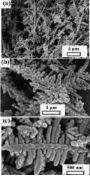
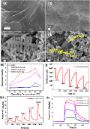
- had minimum influence. Thus, better interaction between NO2 and the sensor surface was achieved. The SnO2 DNWs were estimated to have a fractal dimension of 1.82. In 2017, Zang et al. fabricated SnO2 leaf-like hierarchical structures by hydrothermal synthesis [67]. Figure 7a–f shows SEM images of SnO2
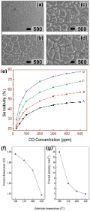
- structures after different reaction times. Figure 7g shows a schematic of the formation of hierarchical SnO2 structures. Figure 7h–j illustrate the response curves as function of the temperature (Figure 7h), of the time at 65 °C to 500 ppb NO2 exposure (Figure 7i), and of the NO2 concentration (Figure 7j










First-principles study of the structural, optoelectronic and thermophysical properties of the π-SnSe for thermoelectric applications
Beilstein J. Nanotechnol. 2021, 12, 1101–1114, doi:10.3762/bjnano.12.82
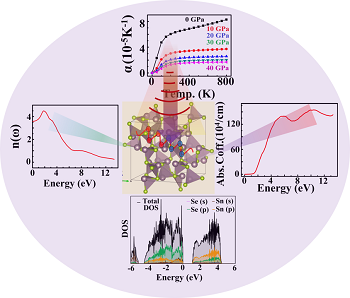
- hierarchical architecture [2][11][12] as well as through nanostructuring [13][14][15]), retaining the hole mobility [16][17], and by improving the value of the Seebeck coefficient (by tuning the band structure [18] along with a large conduction (valence) band convergence [19][20], electron energy barrier





