


Search results
Search for "hyaluronic acid" in Full Text gives 34 result(s) in Beilstein Journal of Nanotechnology.
Cytotoxicity of doxorubicin-conjugated poly[N-(2-hydroxypropyl)methacrylamide]-modified γ-Fe2O3 nanoparticles towards human tumor cells
Beilstein J. Nanotechnol. 2018, 9, 2533–2545, doi:10.3762/bjnano.9.236
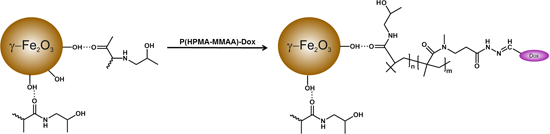
- high molecular weight, such as silica, chitosan, poly(amino acids), poly(acrylic acid), hyaluronic acid, alginic acid, poly(vinyl alcohol), polyethylenimine, dextran, or poly(ethylene glycol) (PEG) [10][11][12]. The latter one is known to escape recognition by reticuloendothelial system prolonging thus


Nanoparticle delivery to metastatic breast cancer cells by nanoengineered mesenchymal stem cells
Beilstein J. Nanotechnol. 2018, 9, 321–332, doi:10.3762/bjnano.9.32
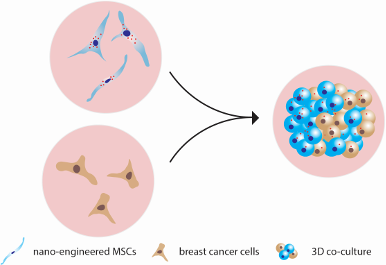
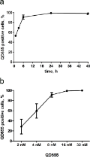
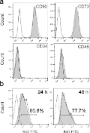
- , thymus, skin, adipose tissue, umbilical cord and placenta [5]. MSCs express CD105 (SH2 or endoglin), CD73 (SH3 and SH4), CD106 (VCAM-1), CD44 (hyaluronic acid receptor), CD90 (Thy 1.1), CD29, CD146 and CD166 surface markers and can be induced to differentiate in vitro into diverse lineages of mesodermal
- natural compounds, such as chitosan and hyaluronic acid, or synthetic agents, such as polyHEMA and poly(vinyl alcohol) (PVA) [14][36]. PolyHEMA has been widely used to induce spheroid formation in cancer cells and cells from healthy tissue [37][38]. Notably, the cell morphology and even phenotype changes


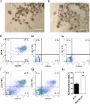

Nano-engineered skin mesenchymal stem cells: potential vehicles for tumour-targeted quantum-dot delivery
Beilstein J. Nanotechnol. 2017, 8, 1218–1230, doi:10.3762/bjnano.8.123
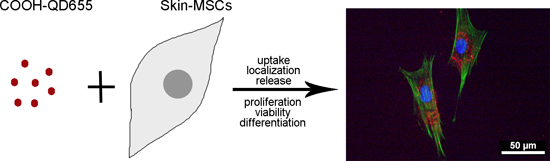
- and dental pulp. According to current understanding, MSCs are defined as adherent cells with a spindle-like morphology, expressing CD105 (SH2 or endoglin), CD73 (SH3 and SH4), CD106 (VCAM-1), CD44 (hyaluronic acid receptor), CD90 (Thy 1.1), CD29, CD146 and CD166 surface markers [7][8]. MSCs can be





Nanoscale isoindigo-carriers: self-assembly and tunable properties
Beilstein J. Nanotechnol. 2017, 8, 313–324, doi:10.3762/bjnano.8.34
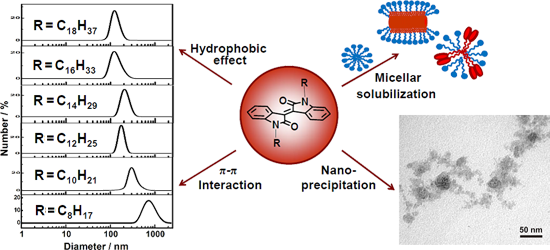
- , hyaluronic acid, and heparin, also amphiphilic prodrugs, and supramolecular hydrogels) [38][39][40]. One of the main strategies deals with the creation of self-assembled supramolecular structures with tunable morphologies (e.g., nanospheres, rods, nanofibers or nanotubes) adapted to the administration route




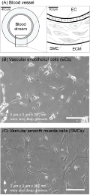
Nano- and microstructured materials for in vitro studies of the physiology of vascular cells
Beilstein J. Nanotechnol. 2016, 7, 1620–1641, doi:10.3762/bjnano.7.155
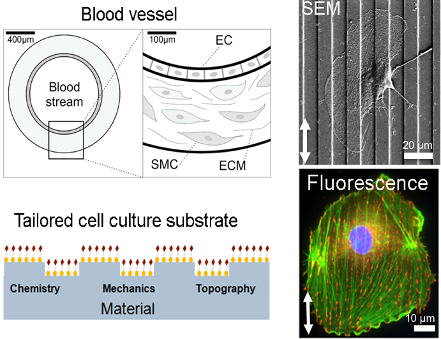
- . Additional examples for materials are listed in Table 1 and in some other review articles [4][5][46][47][71][86][87] Polymers from natural sources can be divided in either protein-based (e.g., collagen, fibrin, matrigel, elastin), polysaccharide-based (e.g., hyaluronic acid, chitin, agar, dextran, alginate



Multiwalled carbon nanotube hybrids as MRI contrast agents
Beilstein J. Nanotechnol. 2016, 7, 1086–1103, doi:10.3762/bjnano.7.102
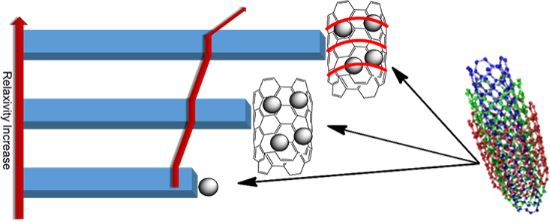
- covalent transformations, e.g., the data were shown to couple oxidized SWCNT with hyaluronic acid containing amino groups [44]. Liu described interesting mass growth during the heating of SPIO–MWCNT hybrids above 400 °C in TGA, which was explained as oxidation of iron(II) in Fe3O4 to iron(III) in Fe2O3

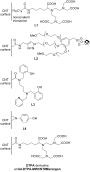


Morphology control of zinc oxide films via polysaccharide-mediated, low temperature, chemical bath deposition
Beilstein J. Nanotechnol. 2015, 6, 799–808, doi:10.3762/bjnano.6.83
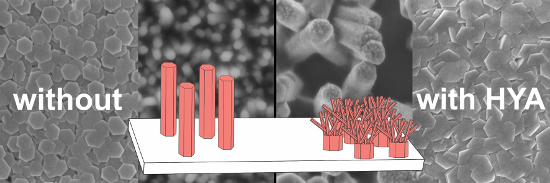
- , namely hyaluronic acid, is used to manipulate the morphology of the films. Previous experiments revealed a strong influence of this polysaccharide on the formation of zinc oxide crystallites. The present work aims to transfer this gained knowledge to the formation of zinc oxide films. The influence of
- hyaluronic acid and the time of its addition on the morphology of the resulting ZnO film were investigated. By meticulous adjustment of the parameters in this step, the film morphology can be tailored to provide an optimal growth platform for the third step (a subsequent chemical bath deposition step). In
- measurements of the electrical conductivity. Keywords: chemical bath deposition; hyaluronic acid; polysaccharide; transparent conductive oxide; zinc oxide; Introduction Zinc oxide is a unique material with a number of interesting properties such as piezo- and pyro-electricity [1][2], high optical




Controlling mechanical properties of bio-inspired hydrogels by modulating nano-scale, inter-polymeric junctions
Beilstein J. Nanotechnol. 2014, 5, 887–894, doi:10.3762/bjnano.5.101
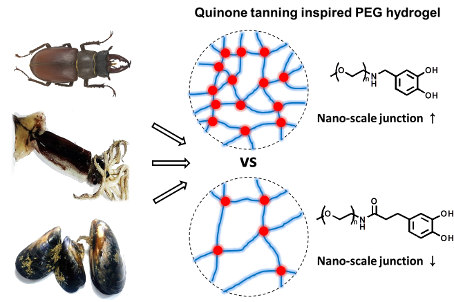
- general approach for creating novel catecholaminergic derivatives of biopolymers such as alginate, hyaluronic acid, chitosan, dextran, and other synthetic or proteineous materials for a variety of applications. Quinone, an oxidized form of catechol, is reactive to nucleophiles such as hydroxyl, amine, and
- , 10 kDa), 16.5 min for 4Arm-PEG-NH2 (star shaped, 20 kDa). Our GPC column approximately separated the 100 Da molecular weight after 30 min elution time, calculated by using a standard curve of 130 kDa, 30 kDa, 20 kDa, and 5 kDa molecular weight hyaluronic acid and PEGs. (Supporting Information File 1



Growth behaviour and mechanical properties of PLL/HA multilayer films studied by AFM
Beilstein J. Nanotechnol. 2012, 3, 778–788, doi:10.3762/bjnano.3.87
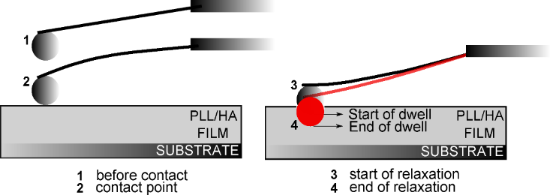
- relatively harder one [3][6][25]. Richert et al. showed that chondrosarcoma cells adhere much more strongly on chemically cross-linked poly(L-lysine)/hyaluronic acid PLL/HA films than on native PLL/HA films due to the elasticity difference between the two structures, the cross-linked surface being harder [6


Other Beilstein-Institut Open Science Activities



