Search results
Search for "interfaces" in Full Text gives 471 result(s) in Beilstein Journal of Nanotechnology. Showing first 200.
Multifunctional anionic nanoemulsion with linseed oil and lecithin: a preliminary approach for dry eye disease
Beilstein J. Nanotechnol. 2025, 16, 1711–1733, doi:10.3762/bjnano.16.120
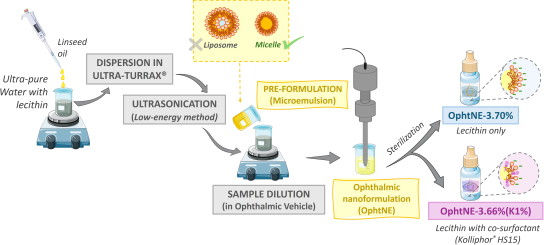
- phase (represented by pre-formulations O/W(L-1%) and O/W(L-2%)) exhibits inadequate lecithin levels to entirely coat the oil droplet interfaces. The subsequent phase (represented by pre-formulation O/W(L-3%)) reveals a saturation point of lecithin concentration at the oil droplet interfaces, ensuring




Beyond the bilayer: multilayered hygroscopic actuation in pine cone scales
Beilstein J. Nanotechnol. 2025, 16, 1695–1710, doi:10.3762/bjnano.16.119
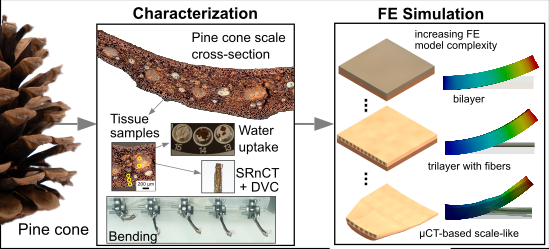
- is crucial for the accuracy and thus the informative value of the simulation. It should also be mentioned that most simulations assume clear boundaries between individual tissues/components and thus can only partially represent the natural models and their complex, often graded interfaces
- question to be answered. The data presented should demonstrate the importance of considering geometries. It should be noted that simplifying each tissue as a homogeneous layer still does not fully represent biological samples. Our approach does not consider internal gradients and gradual interfaces, which


Ambient pressure XPS at MAX IV
Beilstein J. Nanotechnol. 2025, 16, 1677–1694, doi:10.3762/bjnano.16.118
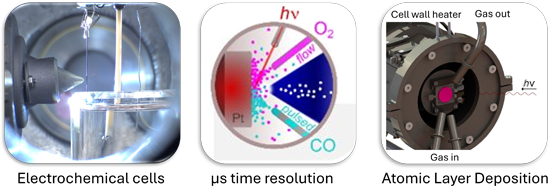
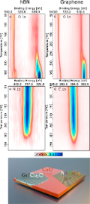
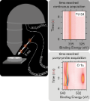
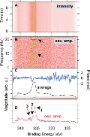
- representative studies at MAX IV, including investigations of single-atom catalysts, confined catalysis, time-resolved catalysis, atomic layer deposition, and electrochemical interfaces, showcasing the role of APXPS in advancing material and surface science. Keywords: 2D materials; atomic layer deposition
- material interfaces under more realistic conditions, which is a critical advancement in material research, gaining increasing popularity across various fields. APXPS is crucial for studying dynamic processes in catalysis, environmental science, and energy materials, where reactions typically occur at or
- –gas, solid–liquid, and liquid–gas interfaces in situ and under operando conditions. In this review, we highlight exemplary APXPS experiments conducted in different environments to study solid–gas and solid–liquid interfaces. APXPS at MAX IV is making a considerable contribution in various scientific





Bioinspired polypropylene-based functionally graded materials and metamaterials modeling the mistletoe–host interface
Beilstein J. Nanotechnol. 2025, 16, 1592–1606, doi:10.3762/bjnano.16.113
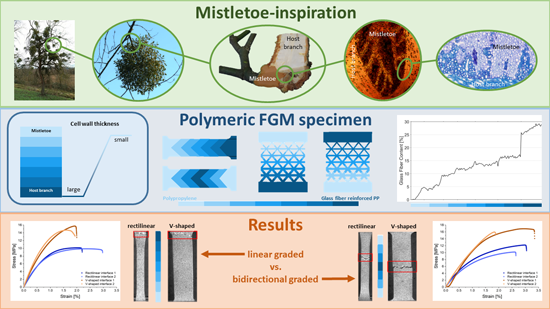
- showed that both Young’s modulus (by 38%) and ultimate tensile strength (by 62%) could be increased by introducing V-shaped interfaces. Digital image correlation analysis and the fracture images showed that the positioning of the area with the highest glass fiber content can lead to spatial control over
- colleagues have also structured the interfaces of the gradients in their work on bioinspired 3D-printed fused deposition modeling materials, incorporating different patterns such as collagen-like triple helices into their geometric design, resulting in a 50% toughness increase compared to the non-graded
- polymers. To obtain laminates with either rectilinear or V-shaped sinker-inspired interfaces, two grids were 3D-printed using PLA polymeric filament, each with seven compartments and corresponding interface structures (Figure 2A,B). In both designs, the extruded polymer blends were distributed between the


Modeling magnetic properties of cobalt nanofilms used as a component of spin hybrid superconductor–ferromagnetic structures
Beilstein J. Nanotechnol. 2025, 16, 1557–1566, doi:10.3762/bjnano.16.110
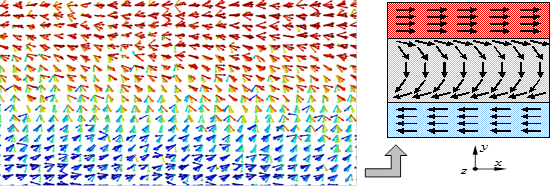
- materials for implementation in spintronics, thermoelectricity, and optoelectronics” (samples preparation and investigation of Nb/Co interfaces).


Transient electronics for sustainability: Emerging technologies and future directions
Beilstein J. Nanotechnol. 2025, 16, 1545–1556, doi:10.3762/bjnano.16.109

- , limiting their mechanical compatibility with soft, flexible bioelectronic systems. Additionally, challenges in fully sealing encapsulation interfaces remain unresolved. To address these issues, hybrid organic–inorganic materials have been proposed to enhance barrier performance by artificially increasing
- and actively regulating aqueous environments, further expanding the functional scope of bioresorbable electronics. Looking ahead, the evolution of protective barriers toward intelligent interfaces that can sense, control, or even manipulate aqueous environments may further extend the applicability of


Laser processing in liquids: insights into nanocolloid generation and thin film integration for energy, photonic, and sensing applications
Beilstein J. Nanotechnol. 2025, 16, 1428–1498, doi:10.3762/bjnano.16.104






Automated collection and categorisation of STM images and STS spectra with and without machine learning
Beilstein J. Nanotechnol. 2025, 16, 1367–1379, doi:10.3762/bjnano.16.99
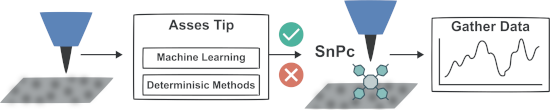
- procedures were created using LabVIEW, which interfaces directly with the Nanonis controller. The process of the dataset generation was performed in a manner similar to that described in Barker et al. [19], with some minor alterations, as described below. The process of the automated dataset generation is





Soft materials nanoarchitectonics: liquid crystals, polymers, gels, biomaterials, and others
Beilstein J. Nanotechnol. 2025, 16, 1025–1067, doi:10.3762/bjnano.16.77
- factors that influence the electrolyte properties. The findings demonstrated that, in general, the solids displayed remarkable thermal stability and exhibited high plasticity and ionic conductivity across a broad temperature range. It has been proposed that the formation of disordered interfaces of
- organic ionic plastic crystals/Li on LLZO particles enhances the ionic conductivity. In systems with disordered interfaces, an increase in the amount of additive results in a reduction in the distance between particles and a gradual interconnection of the interfaces, thereby enhancing the ionic
- conductivity. However, above the percolation threshold, the additive particles begin to overlap, resulting in the formation of isolated, disordered interfaces and an increase in the volume of less conductive material. Accordingly, the highest value of ionic conductivity is observed at moderate concentrations




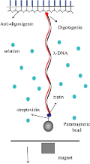


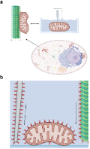
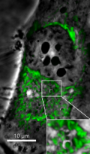
Shape, membrane morphology, and morphodynamic response of metabolically active human mitochondria revealed by scanning ion conductance microscopy
Beilstein J. Nanotechnol. 2025, 16, 951–967, doi:10.3762/bjnano.16.73
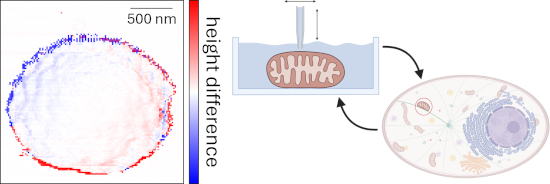
- ) Collaborative Research Centre (CRC) 1477 “Light-Matter Interactions at Interfaces”, project number 441234705 and the CRC 1270/2 “Electrically Active Implants”, project number 299150580.

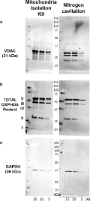


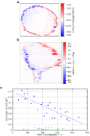


Insights into the electronic and atomic structures of cerium oxide-based ultrathin films and nanostructures using high-brilliance light sources
Beilstein J. Nanotechnol. 2025, 16, 860–871, doi:10.3762/bjnano.16.65

- sensitivity of the method and to selectively probe the surface and or deeper layers, like buried interfaces. Since the early studies of epitaxial cerium oxide films by Mullins and coworkers [22], it became clear that synchrotron radiation could provide high-resolution Ce 3d, Ce 4d, and valence band spectra


Supramolecular hydration structure of graphene-based hydrogels: density functional theory, green chemistry and interface application
Beilstein J. Nanotechnol. 2025, 16, 806–822, doi:10.3762/bjnano.16.61
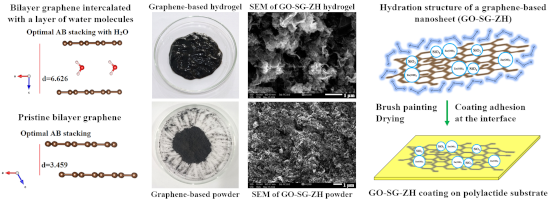
- circular economy [18][19][20][21]. Especially, GO nanosheets decorated with SG-ZH nanoparticles have hydrophilic surfaces to retain hydration layers in the hydrogel structure of the GO-SG-ZH nanocomposite. Hydration layers in the GO-SG-ZH hydrogel also function as lubricants at the nanomaterials interfaces
- the GO-SG-ZH hydrogel on PLA films produced an antibacterial coating on the substrate. Antibacterial tests of uncoated and coated PLA films are described in Figure 10, where the interfaces between PLA films and agar/E. coli plates are displayed. Before the incubation process, E. coli bacteria did not
- stability, and enhanced tensile properties. In summary, the supramolecular hydration structure of graphene-based hydrogels is a prospective nanotechnology approach to advance nanoscale structures and interfaces for a variety of applications. DFT modelling of AB bilayer graphene structures. The AB bilayer


Thickness dependent oxidation in CrCl3: a scanning X-ray photoemission and Kelvin probe microscopies study
Beilstein J. Nanotechnol. 2025, 16, 749–761, doi:10.3762/bjnano.16.58
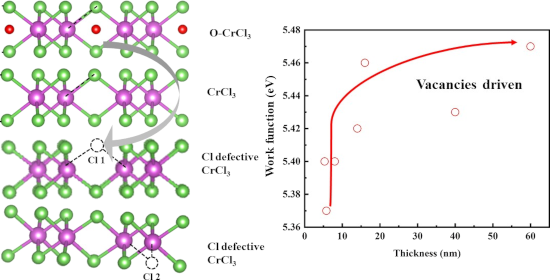
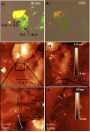
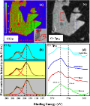
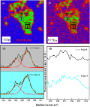
- investigates interfaces made by dry transfer of CrCl3 flakes in an atmospheric environment. Cl vacancies and the formation of O/CrCl3 are induced, serving as dissociation centers that facilitate the migration of Cl vacancies between the top and bottom surfaces. By manipulating 2D atomic layers via surface





Nanostructured materials characterized by scanning photoelectron spectromicroscopy
Beilstein J. Nanotechnol. 2025, 16, 700–710, doi:10.3762/bjnano.16.54
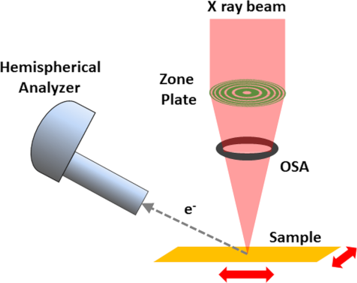
- charge distribution, to list the most important features. If the building blocks are crystallites, any change in the structure or chemical composition may lead to the formation of incoherent or coherent interfaces among them which may influence the final properties of the material. Often the volumes of
- footprint allows for the combination of different materials with dislocation-free interfaces and to form axial or radial heterostructures of varying material, doping, or crystal phase [17][18][19]. Nanowire heterostructures based on III–V semiconductors are especially promising for electronic
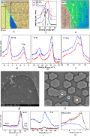


The impact of tris(pentafluorophenyl)borane hole transport layer doping on interfacial charge extraction and recombination
Beilstein J. Nanotechnol. 2025, 16, 678–689, doi:10.3762/bjnano.16.52
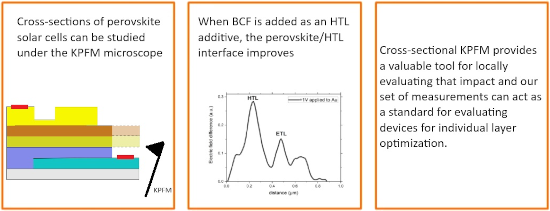
- strong influence on the overall efficiency and stability in perovskite solar cell devices. Specifically, the charge extraction and recombination occurring at the interfaces between the perovskite and these materials can be a limiting factor for performance. A lot of effort has been put into improving the
- as grain boundaries and interfacial defect states that hinder performance. Specifically, since the interaction of adjacent layers at the interfaces of a solar cell is an important limiting factor for its operation, there is a need for dedicated studies regarding interfacial behavior. Kelvin probe
- about charge generation and transport within the absorber material, as well as charge extraction to the relevant interfaces [9][10][11][12]. The details of interfacial electronic carrier extraction at the junctions of the perovskite with the electron and hole transport layers (ETL, HTL) define the


Biomimetics and bioinspired surfaces: from nature to theory and applications
Beilstein J. Nanotechnol. 2025, 16, 418–421, doi:10.3762/bjnano.16.32
- . Bioinspired nanotechnology plays a crucial role by harnessing nanoscale properties and processes to create highly effective surfaces and interfaces at various scales. In May 2023, the Beilstein Nanotechnology Symposium “Functional Micro- and Nanostructured Surfaces: from Biology to Biomimetics” gathered
- mammals while addressing the functional fibrillar interfaces in biological hair. Presenting one applied example for biomimetic approaches, Ali et al. [7] used the hydrophobicity of the integument of spring tail (Collembola) as a template for the bioinspired development of nanofilament coatings that reduce

Pulsed laser in liquid grafting of gold nanoparticle–carbon support composites
Beilstein J. Nanotechnol. 2025, 16, 349–361, doi:10.3762/bjnano.16.26
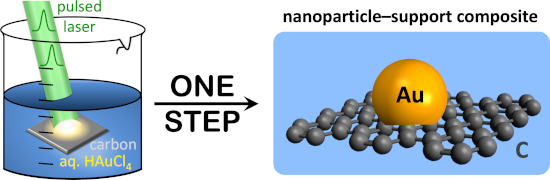
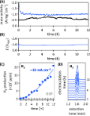
- resistances (R) and capacitances at all interfaces and the electrolyte. In our EIS measurements, the most relevant circuit element is the charge transfer resistance (Rct) between the gold nanoparticles and the graphitic carbon support, measured at open circuit potential so that electrochemical reactions do


Emerging strategies in the sustainable removal of antibiotics using semiconductor-based photocatalysts
Beilstein J. Nanotechnol. 2025, 16, 264–285, doi:10.3762/bjnano.16.21
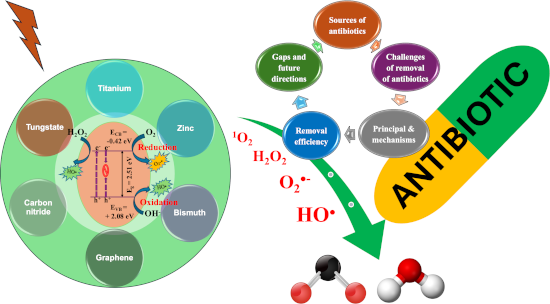
- ). Among the derivatives of graphene, GO and rGO are frequently used to support photoactive materials and immobilize pollutants. Additionally, they serve as crucial interfaces for electron carriers, augmenting light absorption and antibiotic adsorption through their functional groups [110]. Graphene



A review of metal-organic frameworks and polymers in mixed matrix membranes for CO2 capture
Beilstein J. Nanotechnol. 2025, 16, 155–186, doi:10.3762/bjnano.16.14
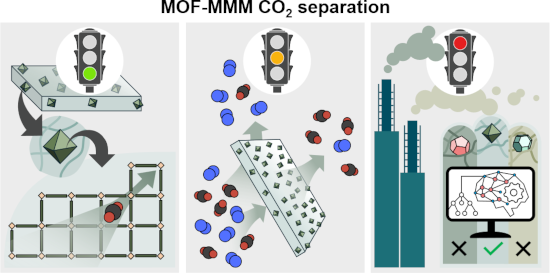
- solubility through the polymer matrix of the MMM [27]. Moreover, the MOF and polymer must be sufficiently compatible to avoid the formation of defects due to poor MOF–polymer matrix interfaces [90]. Notably, in addition to the benefit of providing LBSs for CO2 adsorption described in section 2, amino
- another polymer solution with 2-methylimidazole. Nucleation and MOF growth occurred in situ within the polymer matrix upon combining the two precursor solutions. This approach resulted in nearly perfect MOF–polymer interfaces in an 8 wt % ZIF-8 MMM. For evaluating the gas separation performance, the
- application of the IL demonstrated effective adhesion between MOF–IL and IL–polymer interfaces. This resulted in a noticeable reduction of interfacial voids within the membrane, thereby facilitating a significant increment in CO2 selectivity [132]. The use of ILs (e.g., [P(3)Him][Tf2N], [Bmim][Tf2N], and




Comparison of organic and inorganic hole transport layers in double perovskite material-based solar cell
Beilstein J. Nanotechnol. 2025, 16, 119–127, doi:10.3762/bjnano.16.11
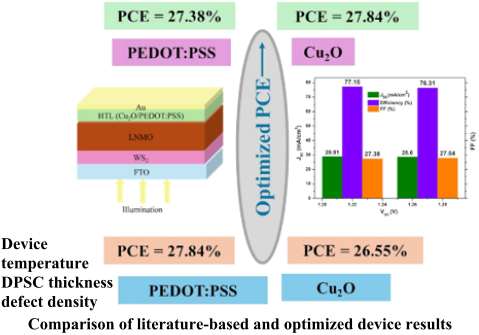
- perfect material properties, such as uniformity in thickness, defect density, and material interfaces, which do not represent real-world conditions. Further, complicated interfacial effects between the active layer and the HTLs, such as chemical interactions, degradation, or the existence of intermediary


Bioinspired nanofilament coatings for scale reduction on steel
Beilstein J. Nanotechnol. 2025, 16, 25–34, doi:10.3762/bjnano.16.3

- interfaces, the flow velocity is assumed to be zero when modeling viscous drag, on super-hydrophobic surfaces the shear is reduced, leading to slip of the liquid across the surfaces and a non-zero flow velocity [26]. Flow at the material interface can hinder or prevent settling, nucleation, and growth of


Integrating high-performance computing, machine learning, data management workflows, and infrastructures for multiscale simulations and nanomaterials technologies
Beilstein J. Nanotechnol. 2024, 15, 1498–1521, doi:10.3762/bjnano.15.119
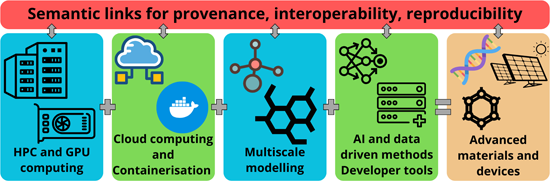
- materials across a broad range of length and time scales [4][18]. Furthermore, the development of user-friendly interfaces and visualization tools has improved the accessibility and usability of these advanced hardware and software technologies [19][20]. In parallel to the use of large-scale computing
- . Ready-to-use software packages provide pre-implemented algorithms and methods, eliminating the need for researchers to develop complex simulation platforms from scratch. The availability of software platforms and packages and interfaces enables a more efficient translation of scientific and
- expertise. Efforts to enhance the accessibility and affordability of HPC resources, along with user-friendly software interfaces, can help overcome these challenges [19][42][43]. Moreover, the integration of experimental and computational data presents a significant hurdle. Aligning experimental protocols


Effect of radiation-induced vacancy saturation on the first-order phase transformation in nanoparticles: insights from a model
Beilstein J. Nanotechnol. 2024, 15, 1453–1472, doi:10.3762/bjnano.15.117

- (dpa) (equivalent to 40 years of service). Under irradiation, the main point defects are vacancies and interstitials. Point defects can develop into clusters of dislocations, stacking faults, or voids. They can also relax onto existing sinks such as dislocation loops, grain boundaries, phase interfaces
- literature review reveals that the stability of materials under irradiation is influenced by numerous factors. Some of these characteristic factors include the elemental composition and chemical structure, the microstructure of the material (including grain boundaries, defects, dislocations, and interfaces
- tolerance is anticipated in nanocrystalline materials compared to bulk solids with conventional grain sizes. Therefore, it is expected that interfaces such as coherent and incoherent boundaries in HDCMs will act as sinks to promote point defect annihilation [6]. In many cases, multicomponent alloys and


Nanotechnological approaches for efficient N2B delivery: from small-molecule drugs to biopharmaceuticals
Beilstein J. Nanotechnol. 2024, 15, 1400–1414, doi:10.3762/bjnano.15.113
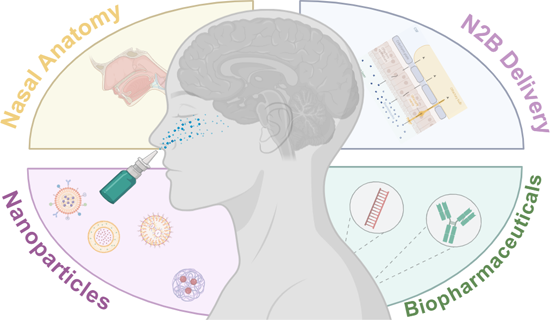
- for CNS targeting. For example, size, shape, and surface characteristics of a DDS directly affect cellular transport and uptake, biodistribution, and the interaction with biological interfaces [64][65]. Regarding particle size, NPs with a size of approx. 15 nm or below were observed to penetrate the


Quantum-to-classical modeling of monolayer Ge2Se2 and its application in photovoltaic devices
Beilstein J. Nanotechnol. 2024, 15, 1153–1169, doi:10.3762/bjnano.15.94
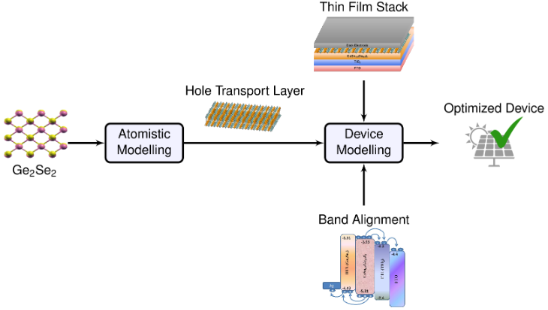
- the optimum performance of the proposed device, we have optimized the performance of the cell module by varying the layer thicknesses of HTL, ETL, and absorber. Also, we have tested the performance of the device under the influence of varying defects densities in the active layer and the interfaces
- between active and transport layers The photovoltaic behavior of halide perovskites is significantly affected by the properties of the interfaces. This is because a majority of defects arises at the junction between two layers during the fabrication of the device, caused by mismatches in the lattice
- the ETL and the interface between the absorber and the HTL. We analyzed the device performance by varying the defect densities at both interfaces within the range of 106 cm−3 to 1015 cm−3. Because of the ultrathin HTL layer, the absorber/HTL interface is more sensitive, and the device performance is