


Search results
Search for "lateral forces" in Full Text gives 34 result(s) in Beilstein Journal of Nanotechnology.
Exploring the retention properties of CaF2 nanoparticles as possible additives for dental care application with tapping-mode atomic force microscope in liquid
Beilstein J. Nanotechnol. 2014, 5, 36–43, doi:10.3762/bjnano.5.4
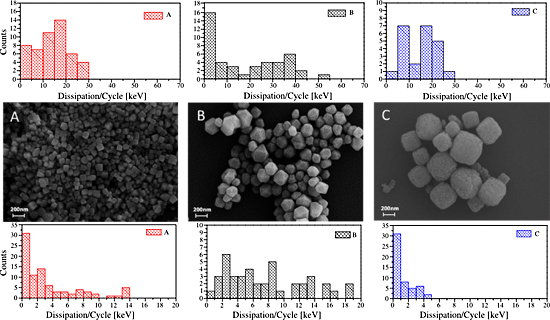
- polymers or biomolecules. Compared to contact mode AFM the destructive lateral forces are virtually eliminated in tapping mode as the probing tip has a much lower contact time while mapping the surface, which results in a much more gentle sensing of the investigated surface [1][2]. AM-AFM has the ability


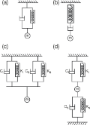
Dynamic nanoindentation by instrumented nanoindentation and force microscopy: a comparative review
Beilstein J. Nanotechnol. 2013, 4, 815–833, doi:10.3762/bjnano.4.93
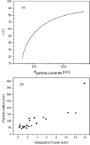
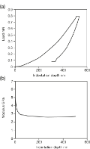
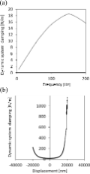
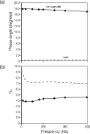
- also widely in the literature [63][64][117]. Lateral forces can arise because of the angle between the cantilever and the sample owing to the instrumental configuration. But this can be compensated for by controlling the angular path of the loading curve [118]. Even with such a correction the




Optimal geometry for a quartz multipurpose SPM sensor
Beilstein J. Nanotechnol. 2013, 4, 370–376, doi:10.3762/bjnano.4.43
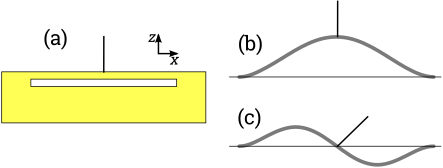
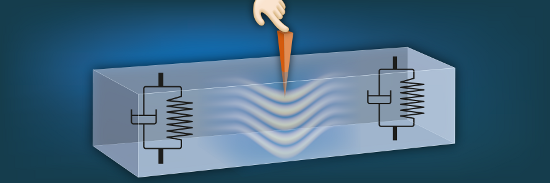
- a lateral mode without the need to excite torsional modes. The symmetry allows normal and lateral motion to be completely isolated, even when introducing large tips to tune the dynamic properties to optimal values. Keywords: atomic force microscopy; lateral force microscopy; lateral forces
- component to the motion of the tip apex in the first eigenmode [2]. This lateral component is perpendicular to the torsional eigenmode, thus making it impossible to truly separate the normal and lateral forces. This problem is exacerbated if the tip length is further increased to increase sensitivity to
- lateral forces by reducing the lateral spring constant, as snap to contact is not an issue in the lateral direction. Increasing the ratio of thickness to width reduces the required tip length, but at the expense of introducing normal eigenfrequencies above 1 MHz, pushing torsional eigenfrequencies to


Calculation of the effect of tip geometry on noncontact atomic force microscopy using a qPlus sensor
Beilstein J. Nanotechnol. 2013, 4, 10–19, doi:10.3762/bjnano.4.2
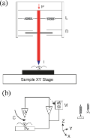
- lateral component, raising interesting questions for both calibration and force-spectroscopy measurements. Keywords: atomic force microscopy; force spectroscopy; lateral forces; mechanical vibrations; qPlus; Introduction From imaging of individual chemical bonds [1] to subatomic resolution of the
- for tip motion parallel to the cantilever oscillation. However, if lateral forces are present, then these will also affect the frequency shift. Effect on calibration Amplitude calibration in qPlus AFM is usually performed by measuring the z extension needed to maintain a constant value for [10]. As
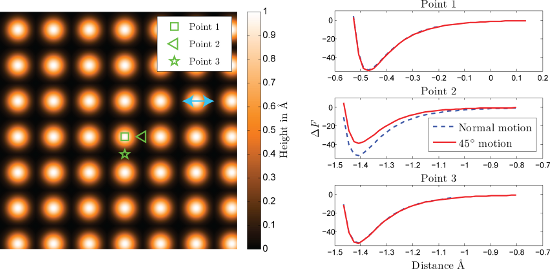
- with theoretical force measurements [7]. However, the lateral motion has a large effect on any data when lateral forces are present, requiring both careful analysis of experimental results and knowledge of the sensor and tip geometry. (a) Diagram of theoretical model. dax is the distance from the


Probing three-dimensional surface force fields with atomic resolution: Measurement strategies, limitations, and artifact reduction
Beilstein J. Nanotechnol. 2012, 3, 637–650, doi:10.3762/bjnano.3.73
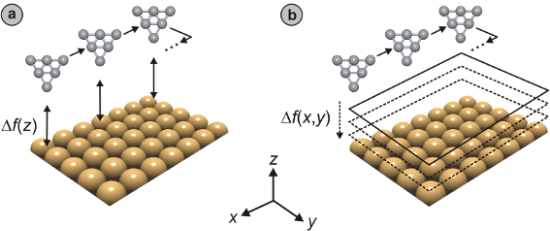
- ], naphthalocyanine [31], and individual carbon nanotubes [32][33]. Moreover, differentiating the tip–sample interaction energy data in the lateral (x, y) directions has enabled the determination of atomic-scale lateral forces experienced by the probe tip [12]. From such data, the forces required to manipulate single
- discarded. For the analysis of data acquired with tips that display only minor gradual contrast changes with distance, lateral tip apex bending may arise from two sources: (i) lateral forces inducing atomic-scale relaxations in the last few atomic layers of the tip apex, based on the local position of the
- for if the lateral stiffness of the apex were known, which it is usually not. However, if measurements are restricted to distances at which low site-specific lateral forces manifest, rough estimations of the expected deformations using typical values [59][60] suggest that they may be small enough to




Mapping mechanical properties of organic thin films by force-modulation microscopy in aqueous media
Beilstein J. Nanotechnol. 2012, 3, 464–474, doi:10.3762/bjnano.3.53
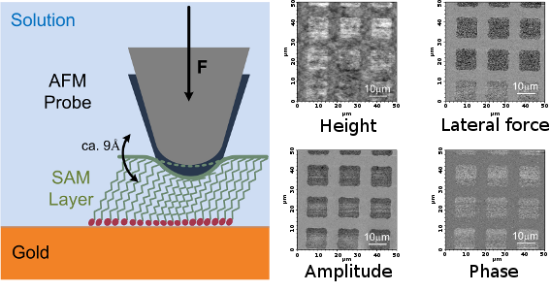
- lateral resolution, is ideally suited to map these properties. Intermittent AFM imaging modes, such as tapping mode [22][23][24], and pulsed-force mode [12][25][26][27][28], have been developed for soft, often biological, samples in liquid environments. Although these imaging modes reduce the lateral
- forces, they often do not allow direct interpretation of the data in terms of the surface mechanical properties, due to cantilever damping in solution and the complex forces that the probe experiences when jumping in and out of contact with the surface. Alternatively, dynamic variations of contact mode



Theoretical study of the frequency shift in bimodal FM-AFM by fractional calculus
Beilstein J. Nanotechnol. 2012, 3, 198–206, doi:10.3762/bjnano.3.22
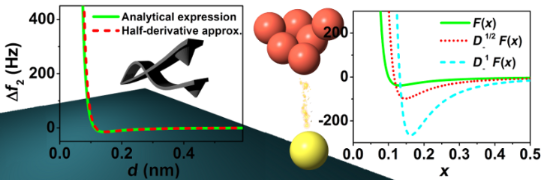
- of soft samples. On the other hand, AFM techniques based on dynamic AFM modes have the ability to make fast and noninvasive measurements. They are potentially faster because the quantitative measurements can be acquired simultaneously with the topography. In addition, the lateral forces applied to


The atomic force microscope as a mechano–electrochemical pen
Beilstein J. Nanotechnol. 2011, 2, 659–664, doi:10.3762/bjnano.2.70
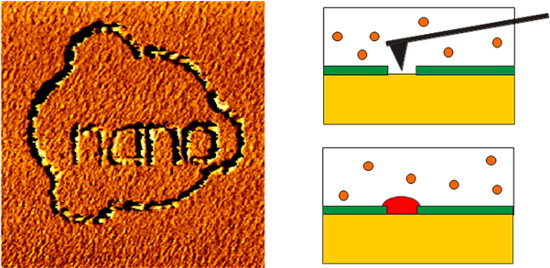
- AFM tip and the sample surface. Instead, a passivated sample surface is activated locally due to lateral forces between the AFM tip and the sample surface. In this way, the area of tip–sample interaction is narrowly limited by the mechanical contact between tip and sample, and well-defined metallic
- layer is disrupted locally. This would explain the selective local copper deposition along the lines were the tip was scanned. This explanation is also in agreement with the observation that lateral forces occurring between tip and sample during the scanning process can be used to induce rupture of
- scanner and a beam-deflection detection system with a four-quadrant photodetector, allowing the simultaneous detection of topography and lateral forces. The AFM was used in the contact mode both for lithography and for imaging. Contact-mode V-shaped silicon nitride cantilevers with pyramidal tips, and


The description of friction of silicon MEMS with surface roughness: virtues and limitations of a stochastic Prandtl–Tomlinson model and the simulation of vibration-induced friction reduction
Beilstein J. Nanotechnol. 2010, 1, 163–171, doi:10.3762/bjnano.1.20
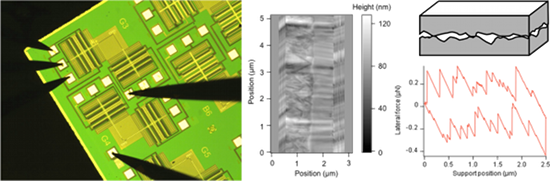
- ], it has become possible to study the friction processes on the atomic scale that count as one of the fundamental aspects of everyday friction. The FFM (an atomic force microscope (AFM) that is sensitive to the lateral forces at the tip) can probe the interactions of an (almost) atomically sharp tip


Other Beilstein-Institut Open Science Activities



