


Search results
Search for "mechanical energy" in Full Text gives 29 result(s) in Beilstein Journal of Nanotechnology.
Velocity dependence of sliding friction on a crystalline surface
Beilstein J. Nanotechnol. 2017, 8, 2186–2199, doi:10.3762/bjnano.8.218
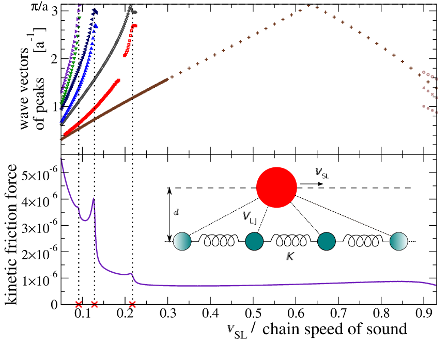
- , the slider mechanical energy is converted into crystal vibrational energy without any artificial viscous damping term affecting the slider itself. Of course, without any mechanism for dissipating this vibrational energy, the elastic substrate would eventually heat up as discussed above. For this


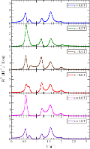
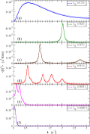

![[Graphic 31]](/bjnano/content/inline/2190-4286-8-218-i50.svg?max-width=637&scale=1.18182) as functions of vSL. Panels (c) and (d): detail ...
as functions of vSL. Panels (c) and (d): detail ...

![[Graphic 34]](/bjnano/content/inline/2190-4286-8-218-i53.svg?max-width=637&scale=1.18182) , with the dynamic friction Fd as a function of vSL...
, with the dynamic friction Fd as a function of vSL...


![[Graphic 40]](/bjnano/content/inline/2190-4286-8-218-i59.svg?max-width=637&scale=1.18182) (symbols), compared with the values of k of the phonons who...
(symbols), compared with the values of k of the phonons who...


Metal hydrides: an innovative and challenging conversion reaction anode for lithium-ion batteries
Beilstein J. Nanotechnol. 2015, 6, 1821–1839, doi:10.3762/bjnano.6.186
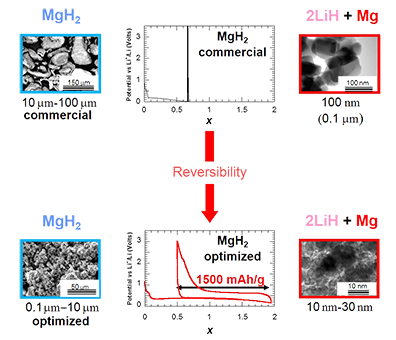
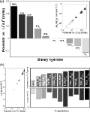
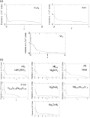
- d(002) drastically increases (step B). Firstly, The mechanical energy transferred to the carbon produces an exfoliation of the graphene layer. Then, the cumulated mechanical energy coming from the grinding is sufficient to promote fissure propagation within the graphene layer, resulting in the










Synthesis of boron nitride nanotubes and their applications
Beilstein J. Nanotechnol. 2015, 6, 84–102, doi:10.3762/bjnano.6.9
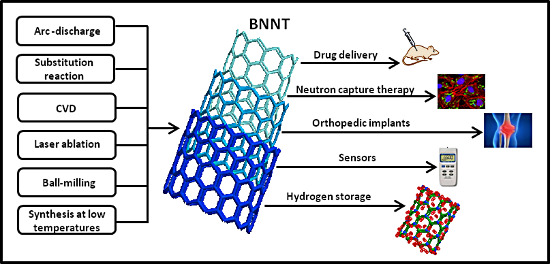
- transfers a high amount of mechanical energy to the boron powder, which results in an increased surface area and increased number of contact points among the catalyst, boron and nitrogen precursors, resulting in improved yield and product quality [31]. The structural changes in the boron compounds in the




Model systems for studying cell adhesion and biomimetic actin networks
Beilstein J. Nanotechnol. 2014, 5, 1193–1202, doi:10.3762/bjnano.5.131
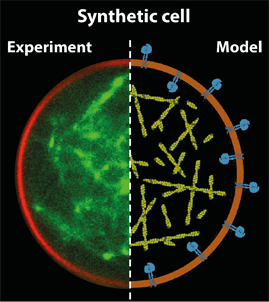
- proteins like integrin is important for cell shape and migration. The actin-based motility of cells is driven by myosin, a molecular motor, which converts chemical energy in the form of ATP to mechanical energy, thus generating force and movement [20]. When integrins have created a cell–ECM contact they


Other Beilstein-Institut Open Science Activities



