


Search results
Search for "molecular adsorption" in Full Text gives 31 result(s) in Beilstein Journal of Nanotechnology.
Influence of the solvent on the stability of bis(terpyridine) structures on graphite
Beilstein J. Nanotechnol. 2013, 4, 269–277, doi:10.3762/bjnano.4.29
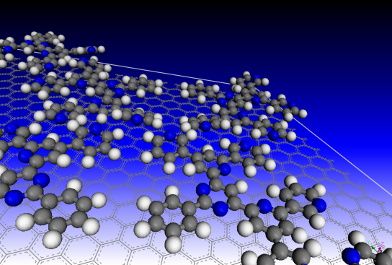
- adsorption of BTP on graphite in the presence of a liquid phase in order to assess the explicit influence of the solvent on the molecular adsorption at the solid/liquid interface. Note that the modeling of a liquid requires the determination of free energies instead of just total energies, which means that


Macromolecular shape and interactions in layer-by-layer assemblies within cylindrical nanopores
Beilstein J. Nanotechnol. 2012, 3, 475–484, doi:10.3762/bjnano.3.54
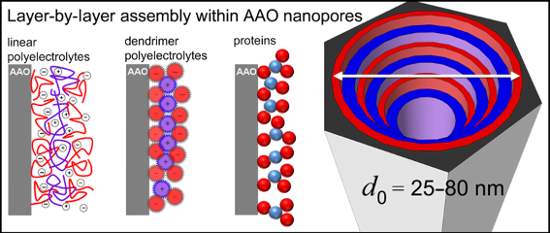
- -filling buffer. Recursively applying Equation 3 and Equation 4 for the organic-filled AAO pores, using a new effective ε′pore for the pore interior, provides εAAO after molecular adsorption. Protein and linear-PE LbL experiments Avidin was dissolved in phosphate buffer (20 mM NaH2PO4/Na2HPO4, 100 mM NaCl




An NC-AFM and KPFM study of the adsorption of a triphenylene derivative on KBr(001)
Beilstein J. Nanotechnol. 2012, 3, 221–229, doi:10.3762/bjnano.3.25
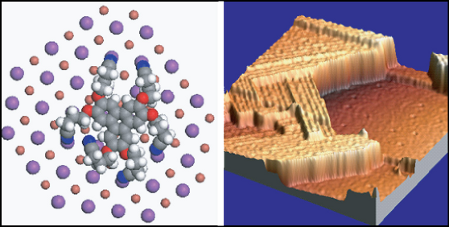
- strong intermolecular interaction due to π-stacking. Keywords: atomic force microscopy; insulating surfaces; Kelvin force probe microscopy; molecular adsorption; Introduction The study of molecular adsorption on atomically clean, well-defined surfaces of bulk insulators is progressing rapidly due to
- combined with NC-AFM [16][17][18][19] to investigate metallic or semiconducting surfaces, as well as adsorbates [20][21] or thin insulating films on metals [18][22][23]. But its application to bulk insulating surfaces [24][25][26] is only beginning, and studies of molecular adsorption on these surfaces are
- due to their high electrostatic energy. They can be stabilized only by charged species, in the present case by adsorption of the negatively charged N atoms of the CN groups. This observation also points to a massive KBr surface mass transfer during the annealing of the substrate due to molecular




Effect of the environment on the electrical conductance of the single benzene-1,4-diamine molecule junction
Beilstein J. Nanotechnol. 2011, 2, 755–759, doi:10.3762/bjnano.2.83
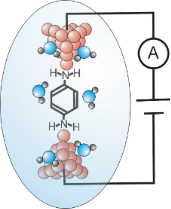
- junction and molecular adsorption at the metal electrodes. First, the atomic and molecular motion of the single molecule junction was suppressed in the following order: N2 gas, water, mesitylene, and tetraglyme. This was done in order to reflect the molecular weight and viscosity of the solvent; the


Femtosecond time-resolved photodissociation dynamics of methyl halide molecules on ultrathin gold films
Beilstein J. Nanotechnol. 2011, 2, 618–627, doi:10.3762/bjnano.2.65
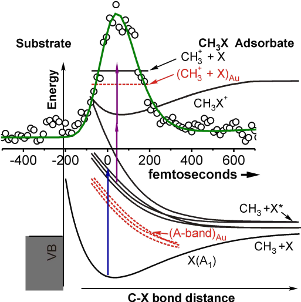
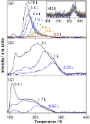
- prepared as an ultrathin film on Mo(100). The molecular adsorption behavior was characterized by coverage dependent temperature programmed desorption spectroscopy. Submonolayer preparations were irradiated with UV light of 266 nm wavelength and the subsequently emerging methyl fragments were probed by
- insight into fundamental issues of the ultrafast reaction dynamics of molecules on metallic surfaces and the influence of organic-molecule–inorganic-substrate interactions on the molecular photoreaction dynamics. Results and Discussion In the following, the results of the molecular adsorption studies and


Terthiophene on Au(111): A scanning tunneling microscopy and spectroscopy study
Beilstein J. Nanotechnol. 2011, 2, 561–568, doi:10.3762/bjnano.2.60
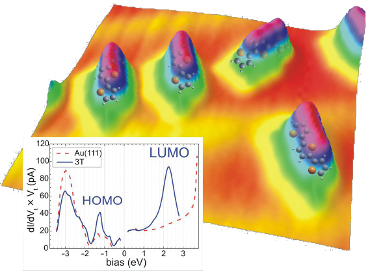
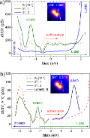
- ) are almost identical to those of bare Au(111) (Figure 3) in the bias range −1 eV to +1.5 eV, one concludes that STM performed at low bias on 3T/Au(111) senses a Au surface state that is modified by the molecular adsorption. Assuming, similarly to the case of 4-mercaptopyridine (4MPy) on Au(111) [12



Other Beilstein-Institut Open Science Activities



