


Search results
Search for "nano-objects" in Full Text gives 35 result(s) in Beilstein Journal of Nanotechnology.
Nanometer-resolved mechanical properties around GaN crystal surface steps
Beilstein J. Nanotechnol. 2014, 5, 2164–2170, doi:10.3762/bjnano.5.225
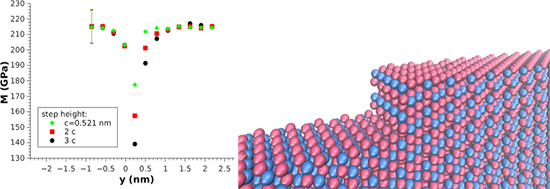
- the indentation modulus. Acknowledgements Fruitful discussions with M. Hennes are gratefully acknowledged. This work was performed within the Leipzig Graduade School of Natural Sciences “Building with Molecules and Nano-objects” (BuildMoNa), established by the German Science Foundation (DFG) within


![[Graphic 3]](/bjnano/content/inline/2190-4286-5-225-i13.png?max-width=637&scale=1.18182) along the y-axis of the upper Ga atom...
along the y-axis of the upper Ga atom...


Nano-rings with a handle – Synthesis of substituted cycloparaphenylenes
Beilstein J. Nanotechnol. 2014, 5, 1320–1333, doi:10.3762/bjnano.5.145
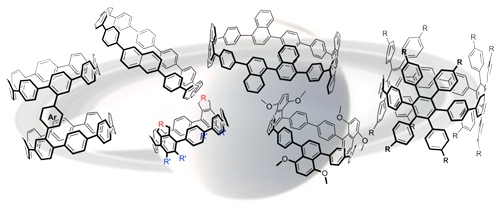
- blocks different from phenyl rings bear challenges of their own. Such structures, however, are highly interesting, as they allow for an incorporation of CPPs as defined nano-objects for other applications. Therefore, this review provides a status report about the current efforts in synthesizing CPPs


Scale effects of nanomechanical properties and deformation behavior of Au nanoparticle and thin film using depth sensing nanoindentation
Beilstein J. Nanotechnol. 2014, 5, 822–836, doi:10.3762/bjnano.5.94
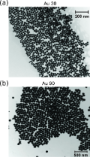
- Dave Maharaj Bharat Bhushan Nanoprobe Laboratory for Bio-& Nanotechnology and Biomimetics (NLBB), The Ohio State University, 201 W.19th Avenue, Columbus, Ohio 43210-1142, USA 10.3762/bjnano.5.94 Abstract Nanoscale research of bulk solid surfaces, thin films and micro- and nano-objects has shown
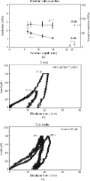
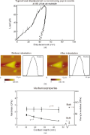
- . Repeated compression tests of nanoparticles were performed that showed a strain hardening effect and increased pop-ins during subsequent loads. Keywords: gold (Au); Hall–Petch; hardness; nanoindentation; nano-objects; Introduction The characterization of mechanical properties is crucial for a fundamental
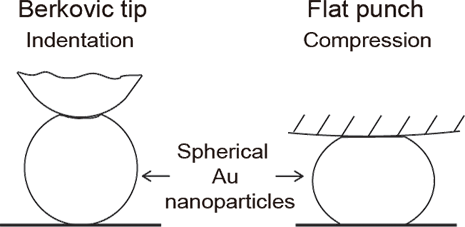
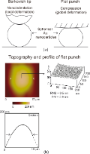
- nano-objects that are continually being developed and incorporated into a wide variety of macro- to nanoscale systems [3]. With the depth-sensing nanoindenter, indentation studies with a sharp three-sided pyramidal Berkovich tip and compression studies with a flat punch have been performed. The sharp






Optical near-fields & nearfield optics
Beilstein J. Nanotechnol. 2014, 5, 186–187, doi:10.3762/bjnano.5.19

- radiation could emerge from such structures (so-called spasers). The mechanical effects of the optical near-fields can be substantial. Examples are specially shaped nano-holes, studied by Rosa et al. [7], which can be much more efficiently used as plasmonic optical tweezers for nano-objects than the usual
Manipulation of nanoparticles of different shapes inside a scanning electron microscope
Beilstein J. Nanotechnol. 2014, 5, 133–140, doi:10.3762/bjnano.5.13
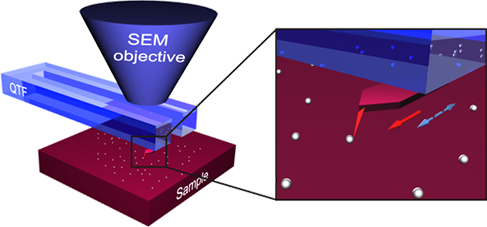
- method for the investigation of the mobility of nano-objects on solid substrates and it is contributing to a deeper understanding of nanomechanics and nanotribology [1]. Thanks to the rapid progress in the synthesis of NPs, there is a wide choice of materials, structures, compositions, shapes and


Towards atomic resolution in sodium titanate nanotubes using near-edge X-ray-absorption fine-structure spectromicroscopy combined with multichannel multiple-scattering calculations
Beilstein J. Nanotechnol. 2012, 3, 789–797, doi:10.3762/bjnano.3.88
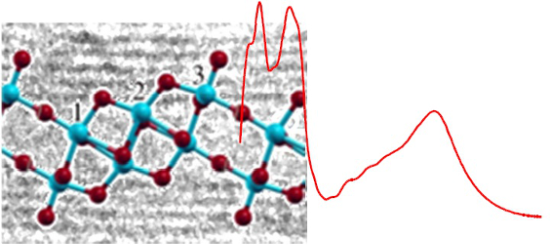
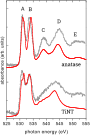
- Functional Materials, Albert-Einstein-Str. 15, 12489 Berlin, Germany 10.3762/bjnano.3.88 Abstract Recent advances in near-edge X-ray-absorption fine-structure spectroscopy coupled with transmission X-ray microscopy (NEXAFS–TXM) allow large-area mapping investigations of individual nano-objects with spectral



Effect of spherical Au nanoparticles on nanofriction and wear reduction in dry and liquid environments
Beilstein J. Nanotechnol. 2012, 3, 759–772, doi:10.3762/bjnano.3.85
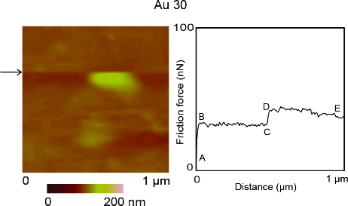
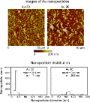
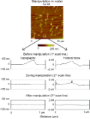
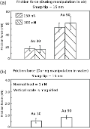
- ; nanomanipulation; Introduction Nano-objects are continually studied in tribological applications and increasingly in other applications that require controlled manipulation and targeting in liquid environments. The need for suitable forms of lubrication for micro/nanoelectromechanical systems (MEMS/NEMS) and the
- ability to control and transport nano-objects in liquids, requires an understanding of nano-object behavior, with regards to friction, adhesion and wear, which is essential to their successful and continued application. Increasing the lifetime and efficiency of individual components of systems is crucial
- needed become high, which can hinder device operation and reliability [2]. The choice of a suitable lubricant on these scales becomes crucial. Nano-objects are also used for applications that require controlled manipulation and targeting mechanisms in biomedicine and the oil industry. Applications



Transport through molecular junctions
Beilstein J. Nanotechnol. 2011, 2, 691–692, doi:10.3762/bjnano.2.74
- research, where molecule-specific properties can be engineered and studied. The most prominent property that distinguishes organic molecules from inorganic quantum dots and nanowires is that they are floppy nano-objects with a strong coupling between charge transport and vibrational degrees of freedom
Manipulation of gold colloidal nanoparticles with atomic force microscopy in dynamic mode: influence of particle–substrate chemistry and morphology, and of operating conditions
Beilstein J. Nanotechnol. 2011, 2, 85–98, doi:10.3762/bjnano.2.10
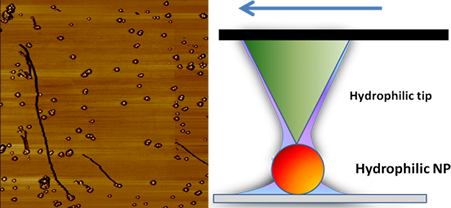
- Science Center Road, Corning, NY 14831, USA 10.3762/bjnano.2.10 Abstract One key component in the assembly of nanoparticles is their precise positioning to enable the creation of new complex nano-objects. Controlling the nanoscale interactions is crucial for the prediction and understanding of the
- nanoscale objects (nano-objects), we mean using external force for positioning or assembling objects in two (2-D) or three (3-D) dimensions by twisting, bending, picking-and-placing, or pushing and pulling them [3]. Nanomanipulation is a complex 3-D problem. Because mechanical and chemical properties of
- substrates, probing tools and nano-objects (especially ‘particles’) are combined, different results are expected depending on the environmental and operating conditions. Numerous methods exist for the manipulation of nanostructures and can be classified into two categories as non-contact and contact


A collisional model for AFM manipulation of rigid nanoparticles
Beilstein J. Nanotechnol. 2010, 1, 158–162, doi:10.3762/bjnano.1.19
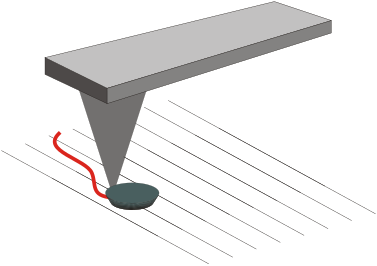
- microscopy; nanomanipulation; nanoparticles; Introduction Quite soon after its invention, it became clear that atomic force microscopy (AFM) could be used not only for maging but also for manipulating nano-objects [1][2]. This possibility has produced spectacular results and last, but not least, it has





