


Search results
Search for "nanocapsules" in Full Text gives 30 result(s) in Beilstein Journal of Nanotechnology.
Targeting strategies for improving the efficacy of nanomedicine in oncology
Beilstein J. Nanotechnol. 2019, 10, 168–181, doi:10.3762/bjnano.10.16
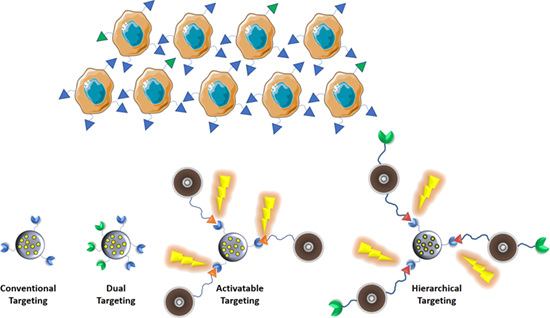
- tissue [13] to the previous administration of proteolytic enzymes that digest the ECM [14]. As an example, Villegas et al. have reported the use of pH-sensitive polymeric nanocapsules that are able to release collagenase once they arrive at the tumoral tissue due to the mild acidic conditions present
- there [15]. These nanocapsules were anchored on the surface of mesoporous silica nanoparticles (MSN) coated with a lipid bilayer (protocells) enhancing their penetration into 3D tumoral tissue models, which yielded a significant enhancement of the therapeutic efficacy of these nanodevices (Figure 1) [16
- the incorporation of pH-responsive collagenase nanocapsules. This image has been adapted from [15], copyright 2015 American Chemical Society. Left: tumoral zone monitored by bioluminescence and nanoparticle accumulation detected by IVIS® Spectrum in vivo imaging system. Group IV exhibited strong


Development of polycationic amphiphilic cyclodextrin nanoparticles for anticancer drug delivery
Beilstein J. Nanotechnol. 2017, 8, 1457–1468, doi:10.3762/bjnano.8.145
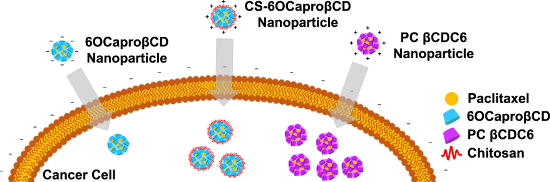
- [19][20][21][22]. In the literature, amphiphilic CDs were reported to spontaneously self-assemble in the form of nanospheres or nanocapsules and overcome haemolytic activity on blood cells for eventual injectable nanoparticulate drug delivery [23][24][25]. The aim of this study was to evaluate and
- cells [36]. In another study, a polycationic, amphiphilic, cyclodextrin derivative was used to prepare nanospheres and nanocapsules as drug delivery systems. When the results are compared with this study in terms of particle size, it can be concluded that the use of surfactant is linearly correlated
- ]. As a result of the surface coating with chitosan, the zeta potential value of 6OCaproβCD nanoparticles increased from −29 mV to +44 mV as seen in Table 3. Unal et al., prepared uncoated and CS-coated 6OCaproβCD nanocapsules for oral camptothecin delivery. They reported that the CS coating increased


Cationic PEGylated polycaprolactone nanoparticles carrying post-operation docetaxel for glioma treatment
Beilstein J. Nanotechnol. 2017, 8, 1446–1456, doi:10.3762/bjnano.8.144
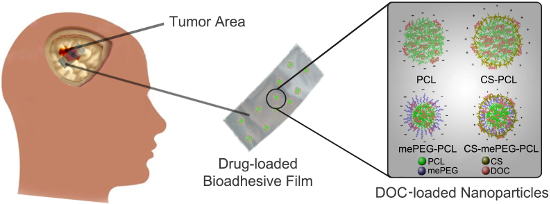
- studied for targeting and delivery of chemotherapeutic drugs for glioma treatment. Fang et al. prepared core–shell nanocapsules for co-delivery of the hydrophilic drug doxorubicin, and the hydrophobic drug curcumin. Their results showed that the synergistic cytotoxic effect on RG2 glioma cells was
- obtained by dual drug targeting. Besides that, the magnetic and ligand targeting resulted in elevated cellular uptake of nanocapsules in glioma treatment [26]. Yang et al. successfully obtained targeted and traceable core–shell nanoparticles for carmustine (BCNU) delivery. These systems prolonged the half




PLGA nanoparticles as a platform for vitamin D-based cancer therapy
Beilstein J. Nanotechnol. 2015, 6, 1306–1318, doi:10.3762/bjnano.6.135
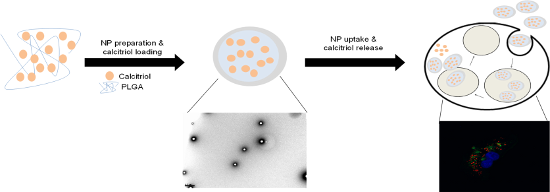
- therapy [22]. A few years later, Almouazen et al. developed a formulation using PLA nanoparticles of about 200 nm [14]. This study proved that PLA nanocapsules are a suitable choice for controlled delivery of antineoplastic agents, namely the nanoencapsulated calcidiol induced a significant growth


Biopolymer colloids for controlling and templating inorganic synthesis
Beilstein J. Nanotechnol. 2014, 5, 2129–2138, doi:10.3762/bjnano.5.222
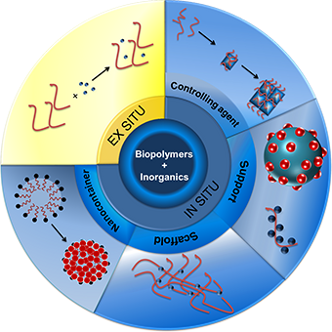
- microspheres by using immobilized protein templates. Reprinted with permission from [61]. Copyright 2008 Elsevier. Schematic representation of the procedure applied for synthesizing starch/Ag nanocapsules. Reprinted with permission from [63]. Copyright 2014 The Royal Society of Chemistry. Products obtained


Other Beilstein-Institut Open Science Activities



