


Search results
Search for "optical imaging" in Full Text gives 31 result(s) in Beilstein Journal of Nanotechnology.
Oxygen-plasma-modified biomimetic nanofibrous scaffolds for enhanced compatibility of cardiovascular implants
Beilstein J. Nanotechnol. 2015, 6, 254–262, doi:10.3762/bjnano.6.24
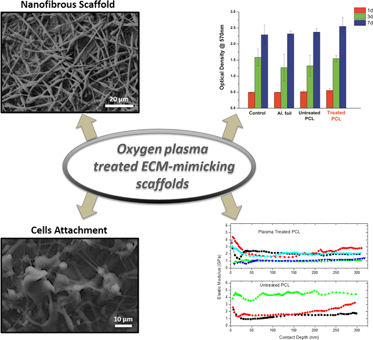
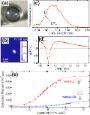
- to the reference wavelength of 690 nm. Data (n = 3) were presented as means of O.D. values as well as normalized according to the control and presented as % cell viability. Optical imaging through methylene blue staining: Once fibroblasts were seeded onto either unmodified or surface-modified
- assay of L929 cells in direct contact with the examined systems after 1, 3 and 7 days, in terms of optical density values as well as the normalized % cell viability, respectively, and (c) optical imaging of the cell morphology in the predetermined time periods for the untreated and the plasma treated


Inorganic Janus particles for biomedical applications
Beilstein J. Nanotechnol. 2014, 5, 2346–2362, doi:10.3762/bjnano.5.244
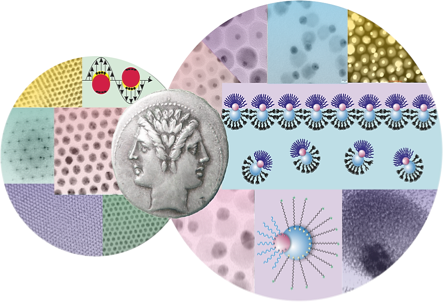
- interaction at the nano-interface as shown for the exceptionally large T2-relaxation times of Co@Fe2O3 as compared to commonly available iron based MRI agents [59]. The most common metal nanoparticles for optical imaging with a long history are gold nanoparticles owing to their strong surface plasmon






Localized surface plasmon resonances in nanostructures to enhance nonlinear vibrational spectroscopies: towards an astonishing molecular sensitivity
Beilstein J. Nanotechnol. 2014, 5, 2275–2292, doi:10.3762/bjnano.5.237
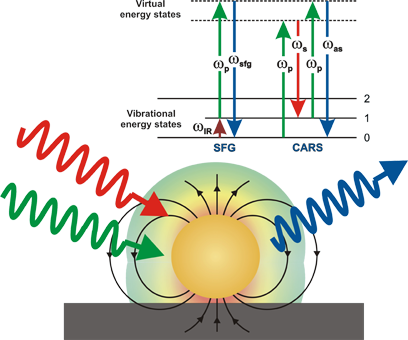
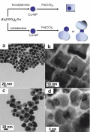
- the studied surface and achieved enhanced optical imaging at high resolution. This method also provided an enhanced CARS imaging of carbon nanotubes [86]. In 2011, Liu et al. demonstrated an advantageous configuration that coupled the use of SPP waves to generate a four-wave mixing SE-CARS signal from




In vitro toxicity and bioimaging studies of gold nanorods formulations coated with biofunctional thiol-PEG molecules and Pluronic block copolymers
Beilstein J. Nanotechnol. 2014, 5, 546–553, doi:10.3762/bjnano.5.64
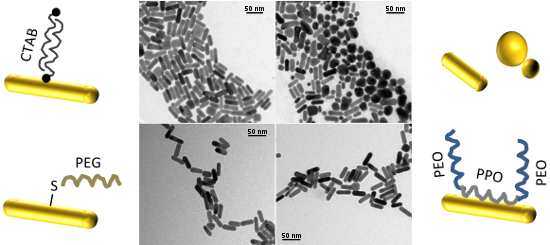
- Tianxun Gong Douglas Goh Malini Olivo Ken-Tye Yong Bio-Optical Imaging Group, Singapore Bioimaging Consortium (SBIC), Agency for Science Technology and Research (A*STAR), 11 Biopolis Way, 138667 Singapore School of Electrical and Electronic Engineering, Nanyang Technological University, 639798


Near-infrared dye loaded polymeric nanoparticles for cancer imaging and therapy and cellular response after laser-induced heating
Beilstein J. Nanotechnol. 2014, 5, 313–322, doi:10.3762/bjnano.5.35
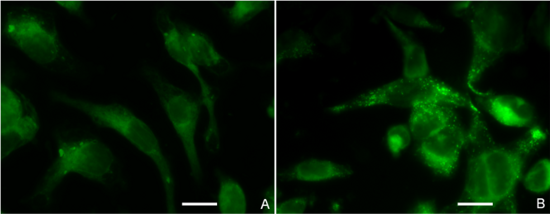
- optical imaging. Conclusion: IR820-PGMD NPs were developed and used for both imaging and therapy purposes. Rapid and short-term laser/NP HT, with a low thermal dose, does not up-regulate HIF-1 and VEGF expression, whereas slow and long term incubator HT, with a high thermal dose, enhances the expression
- synthesis of PGMD polymer, PGMD NPs were also successfully formulated. Optical imaging has several advantages over more traditional imaging techniques (MRI, PET, CT, etc.), such as high spatial resolution, real time imaging, and systems that are usually smaller and less expensive. Near-infrared imaging dyes
- fluorescence yield and results in a lower temperature increase after laser exposure compared to ICG, we have found that either 5 µM IR820 or ICG can be used successfully for in vitro and in vivo optical imaging, and the increased temperature created by IR820 laser exposure is still within the range (usually 41


Diamond nanophotonics
Beilstein J. Nanotechnol. 2012, 3, 895–908, doi:10.3762/bjnano.3.100
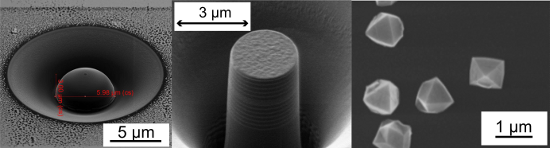
- relation between illumination intensity and observed fluorescence, which enables one to overcome the Rayleigh resolution limit of classical optical imaging. The image is generated by scanning the beam in the image plane. The resulting fluorescence image is the doughnut-shaped illumination pattern
- wavelength. At higher laser power, the nonlinearity of the saturation function becomes important and the central dark spot shrinks well below the optical wavelength, providing super-resolution optical imaging capability. This technique is suitable to determine the position of an implanted color center with





Other Beilstein-Institut Open Science Activities



