


Search results
Search for "optical sensing" in Full Text gives 26 result(s) in Beilstein Journal of Nanotechnology.
Plasmonics-based detection of H2 and CO: discrimination between reducing gases facilitated by material control
Beilstein J. Nanotechnol. 2012, 3, 712–721, doi:10.3762/bjnano.3.81
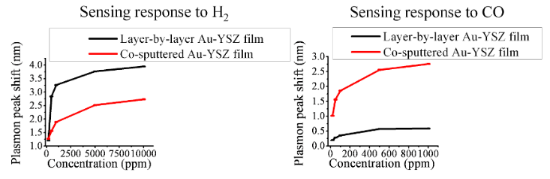
- been a principal area of research in optical sensing devices [1][2][3][4]. The catalytic activity of highly dispersed gold particles either supported on metal oxides or embedded in metal oxides as discovered by Haruta et al. [5] served as pioneering work in the field of noble-metal catalysis in general
- . The co-sputtered film was shown to have 9 atom % Au. Optical sensing apparatus The sensing apparatus used for the experiments is shown in Figure 9. The setup consists of, from right to left, an Ocean Optics tungsten halogen source with an emission wavelength range of 360–2500 nm; the quartz flow cell
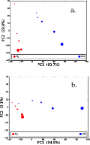
- separation between the H2 (red) and CO (blue) markers is a qualitative measure of the difference in response of the sample to the two gases. Optical sensing apparatus. From left: UV–vis source, quartz flow cell with gas inlet and outlet ports, tube furnace, focusing lenses, beam splitters and spectrometers





Other Beilstein-Institut Open Science Activities



