


Search results
Search for "plasmonic nanoparticles" in Full Text gives 27 result(s) in Beilstein Journal of Nanotechnology.
Green preparation and spectroscopic characterization of plasmonic silver nanoparticles using fruits as reducing agents
Beilstein J. Nanotechnol. 2015, 6, 293–299, doi:10.3762/bjnano.6.27
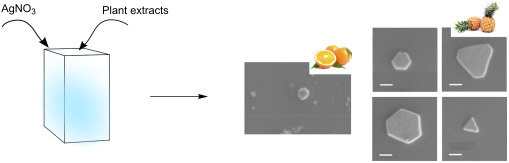
- assigned to small silver clusters. The correlation between the evolution of the surface plasmon band and the decrease of the silver cluster band in the UV confirms the conversion of silver clusters to plasmonic silver nanoparticles. Remaining single small silver clusters on the surface of the plasmonic
- nanoparticles give rise to a strong surface enhanced multicolor luminescence. Experimental Preparation of fruit extract Ananas comosus: The pineapple extract was prepared by cutting away all parts except the yellow pulp of the pineapple. This was then sliced and blended after which the pulp was filtered through


Nanostructure sensitization of transition metal oxides for visible-light photocatalysis
Beilstein J. Nanotechnol. 2014, 5, 696–710, doi:10.3762/bjnano.5.82
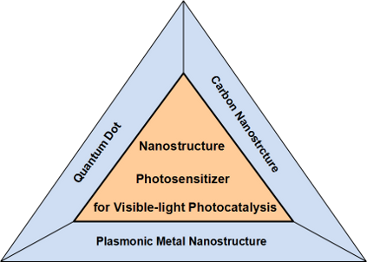
- ][86][87]. In comparison with quantum dots sensitized semiconductors the usage of plasmonic nanoparticles as photosensitizers is more stable and environmentally friendlier. The shortcoming of these plasmonic metals is their high price. This holds true for gold in particular. Moreover, the
- photoconversion efficiency of plasmonic nanoparticles photosensitized semiconductors is not as good as that of quantum dots sensitized semiconductors. Plasmon-enhanced photocatalysis is still in an early research stage and the underlying mechanism is unclear. Furthermore, there are contradictory phenomena
- that the resonant wavelength and SPR intensity depend not only on the nature of the metal, but also on the size and shape of the metallic nanostructures. The control of parameters such as composition, size and shape of plasmonic nanoparticles facilitates the design of nanostructures interacting with




Other Beilstein-Institut Open Science Activities



