


Search results
Search for "poly(lactic acid)" in Full Text gives 29 result(s) in Beilstein Journal of Nanotechnology.
PLGA nanoparticles as a platform for vitamin D-based cancer therapy
Beilstein J. Nanotechnol. 2015, 6, 1306–1318, doi:10.3762/bjnano.6.135
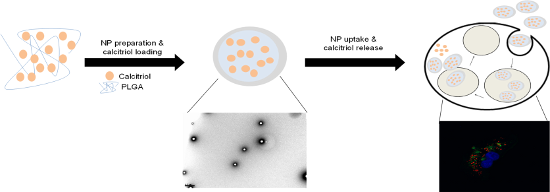
- biocompatibility, biodegradability, mechanical strength, FDA approval and low synthesis complexity. One of the most attractive candidates is poly(lactic-co-glycolic acid) (PLGA), which is a copolymer of poly(lactic acid) (PLA) and poly(glycolic acid) (PGA) [18][19]. We expect that vitamin D3 encapsulation in these


Interaction of dermatologically relevant nanoparticles with skin cells and skin
Beilstein J. Nanotechnol. 2014, 5, 2363–2373, doi:10.3762/bjnano.5.245
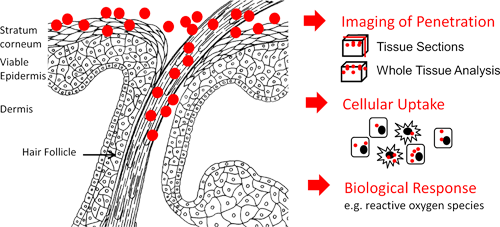
- cell culture conditions are not always predictive for ex vivo or in vivo tissue studies. For example, in previous studies on skin interactions with biodegradable poly(lactic acid) (PLA) particles loaded with different fluorescent dyes, we found that although mono-dispersed and stable in aqueous


Imaging the intracellular degradation of biodegradable polymer nanoparticles
Beilstein J. Nanotechnol. 2014, 5, 1905–1917, doi:10.3762/bjnano.5.201
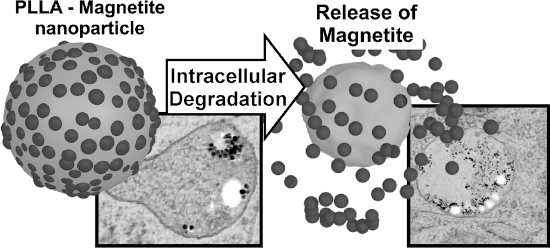
- living organisms, for example, the decomposition dynamics of resorbable threads in surgery or the surface compatibility of bone implants. In particular, materials based on poly(ε-caprolacton) and poly(lactic acid) have found their way as resorbable materials into medical applications. Preferentially, the


Antimicrobial nanospheres thin coatings prepared by advanced pulsed laser technique
Beilstein J. Nanotechnol. 2014, 5, 872–880, doi:10.3762/bjnano.5.99
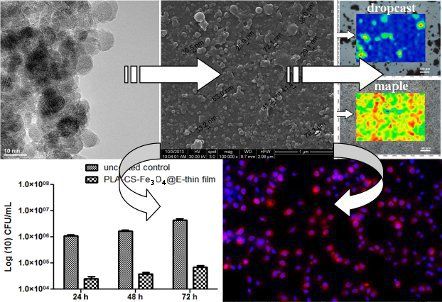
- materials [37], metaloporphyrines [38] and for biomolecules, e.g., poly(lactic acid) (PLA) [39], poly(lactic-co-glycolic acid) PLGA [40], polyvinyl alcohol (PVA) [41] and fibrinogen [42]. Our recent reports have highlighted the capability of the laser processing technique to prepare thin coatings based on




Other Beilstein-Institut Open Science Activities



