


Search results
Search for "polyester" in Full Text gives 29 result(s) in Beilstein Journal of Nanotechnology.
Coating with luminal gut-constituents alters adherence of nanoparticles to intestinal epithelial cells
Beilstein J. Nanotechnol. 2014, 5, 2308–2315, doi:10.3762/bjnano.5.239
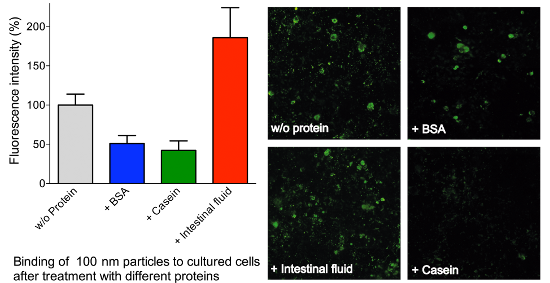
- were seeded at 7.5 × 10⁴ cells/cm2 on transwell inserts of 24 well plates (polyester membrane, pore size 0.4 µm; Corning Life Sciences, Amsterdam, Netherlands) and cultured until the cells formed a confluent monolayer and further 7, 14 or 21 days. For transmission electron microscopical analysis, the


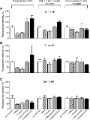

Silica nanoparticles are less toxic to human lung cells when deposited at the air–liquid interface compared to conventional submerged exposure
Beilstein J. Nanotechnol. 2014, 5, 1590–1602, doi:10.3762/bjnano.5.171
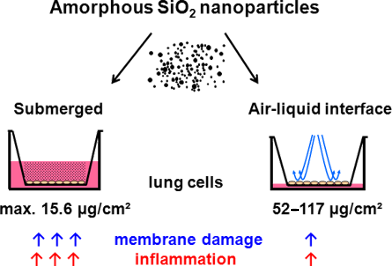
- ) detection system from GE Healthcare (Freiburg, Germany) were used. Transwell® inserts containing polyester membranes of 24 mm diameter and with pores of 0.4 µm (Cat.No. 3450) were from Corning Life Sciences (Amsterdam, The Netherlands). 75-mesh formvar-coated copper grids for transmission electron


Organic and inorganic–organic thin film structures by molecular layer deposition: A review
Beilstein J. Nanotechnol. 2014, 5, 1104–1136, doi:10.3762/bjnano.5.123
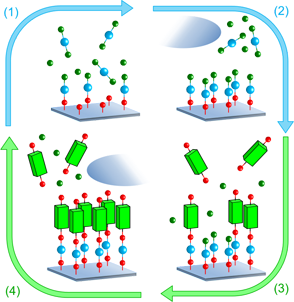
- corresponding to a vapor pressure of 2 mbar, which is a rather typical pressure used for ALD/MLD depositions. Organic thin films So far MLD has been used to produce polyamide, polyimide, polyimide–amide, polyurea, polyurethane, polythiurea, polyester and polyimine thin films. In Table 2, we list the
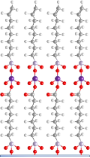
- comparing to the calculated chain length of 13.8 Å [75]. Polyesters Polyesters are commonly made with reactions between various acids and alcohols. The only MLD polyester reported is polyethylene terephthalate (PET), which is an industrially widely used polymer. The precursors employed for the fabrication




Cyclodextrin-poly(ε-caprolactone) based nanoparticles able to complex phenolphthalein and adamantyl carboxylate
Beilstein J. Nanotechnol. 2014, 5, 651–657, doi:10.3762/bjnano.5.76
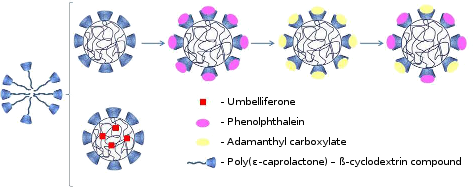
- complex phenolphthalein and adamantyl carboxylate. The nanoparticles are characterized by a distinct morphology, i.e., a hydrophobic core formed by the polyester chain and a shell containing the CD part. Moreover, the formed nanoparticles have been proven to encapsulate umbelliferone in the polyester
- studied and used is poly(ε-caprolactone), a linear aliphatic polyester, obtained by ring-opening polymerization of ε-caprolactone. Poly(ε-caprolactone) was used in several combinations, including click reaction products. Functionalized polyester was obtained, which was further used for grafting β-CD on it
- important tool for the synthesis of new polymeric structures over the past years [9] and represents an attractive method for bonding a polyester chain with a hydrophilic compound [10]. The use of propargylic alcohol as an initiator leads to a polyester with an acetylenic end group, which allows its use as a


Other Beilstein-Institut Open Science Activities



