Search results
Search for "polyvinyl alcohol" in Full Text gives 46 result(s) in Beilstein Journal of Nanotechnology.
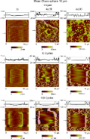
Nanoscale friction and wear of a polymer coated with graphene
Beilstein J. Nanotechnol. 2022, 13, 63–73, doi:10.3762/bjnano.13.4
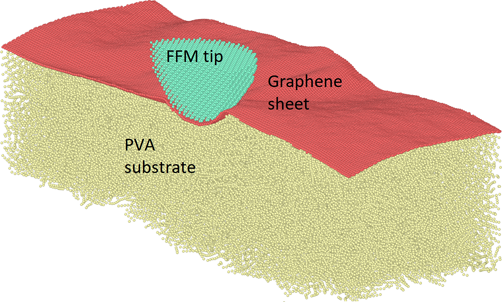
- challenging problem due to the complex viscoelastic properties and structure. Using molecular dynamics simulations, we investigate how a graphene sheet on top of the semicrystalline polymer polyvinyl alcohol affects the friction and wear. Our setup is meant to resemble an AFM experiment with a silicon tip. We
- of depositing, indenting, and sliding on graphene. In the final section, we draw some conclusions. Simulation Setup We simulate a slab of polyvinyl alcohol (PVA) coated with a single layer of graphene and a counterbody representing an AFM tip consisting of silicon. The simulations were performed
- by this mechanism, as it is harder to penetrate. Coarse grained model for polyvinyl alcohol (PVA, C2H4O)x). Red atoms are oxygen, dark gray are carbon, and light gray are hydrogen. One green circle represents one coarse-grained particle, which replaces the group of atoms C2H4O. Snapshot of the


Electrical, electrochemical and structural studies of a chlorine-derived ionic liquid-based polymer gel electrolyte
Beilstein J. Nanotechnol. 2021, 12, 1252–1261, doi:10.3762/bjnano.12.92
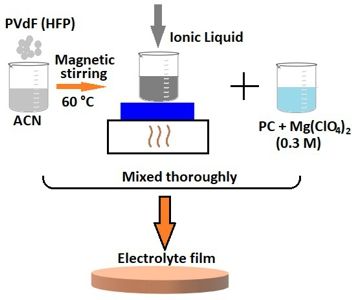
- -dimethylimidazolium chloride ([BDiMIM][Cl]), tested its application in polymer electrolytes, and obtained a maximum room-temperature conductivity of 2.7 × 10⁻⁶ S·cm−1. Among various polymer matrix systems, such as polyethylene oxide (PEO) [18][19], polyvinyl alcohol (PVA) [20][21], and polyvinylpyrrolidone (PVP) [22



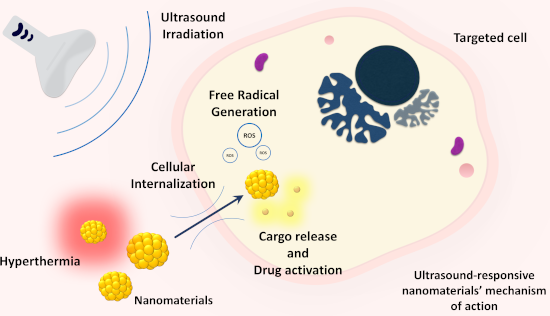
Comprehensive review on ultrasound-responsive theranostic nanomaterials: mechanisms, structures and medical applications
Beilstein J. Nanotechnol. 2021, 12, 808–862, doi:10.3762/bjnano.12.64


A review on the green and sustainable synthesis of silver nanoparticles and one-dimensional silver nanostructures
Beilstein J. Nanotechnol. 2021, 12, 102–136, doi:10.3762/bjnano.12.9
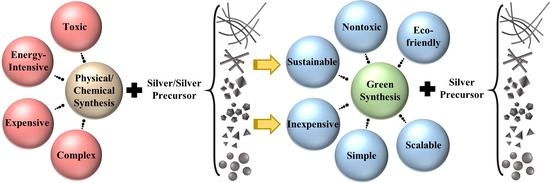
- AgNPs from 5 to 45 nm using the same method. In more recent works by Tseng et al. [132][133], AgNPs were produced using a micro-electrical discharge machining system and by adding polyvinyl alcohol (PVA) as the capping agent. They obtained AgNPs with a diameter of 50–100 nm when PVA was not used, and a


Applications of superparamagnetic iron oxide nanoparticles in drug and therapeutic delivery, and biotechnological advancements
Beilstein J. Nanotechnol. 2020, 11, 1092–1109, doi:10.3762/bjnano.11.94
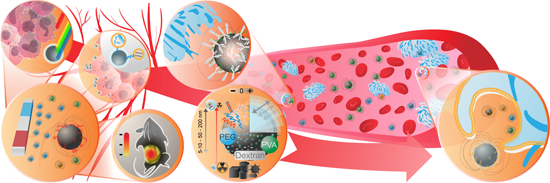
- with polyethyleneimine and conjugated with CD44 siRNA can be used as non-viral gene therapy vectors. Polyethylene imine is the material of choice for nucleic acid intracellular delivery, as it gives a positive charge to the nanoparticle surface [41]. Polyvinyl alcohol (PVA)-coated SPIONs were tested as


Gold and silver dichroic nanocomposite in the quest for 3D printing the Lycurgus cup
Beilstein J. Nanotechnol. 2020, 11, 16–23, doi:10.3762/bjnano.11.2
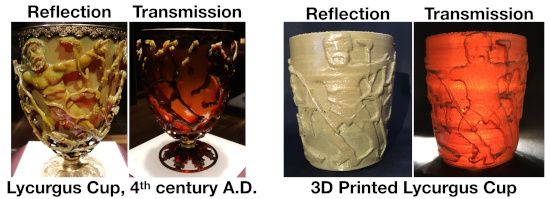
- hoped dichroic effect, and the nanoparticles precipitated out of solution as a black solid. A low amount of reducing agent in the presence of polyvinyl alcohol (PVA) as stabiliser agent, which would be the 3D printable material, also did not suffice to keep the nanoparticles in solution. After multiple


Facile synthesis of carbon nanotube-supported NiO//Fe2O3 for all-solid-state supercapacitors
Beilstein J. Nanotechnol. 2019, 10, 1923–1932, doi:10.3762/bjnano.10.188
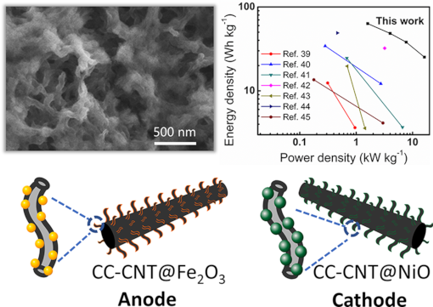
- . All-solid-state asymmetric supercapacitor An all-solid-state asymmetric supercapacitor (ASC) was constructed with CC-CNT@Fe2O3 as the negative electrode, CC-CNT@NiO as the positive electrode, potassium hydroxide/polyvinyl alcohol gel (KOH/PVA, 1:1 mass ratio) as the electrolyte, and a cellulose


Growth dynamics and light scattering of gold nanoparticles in situ synthesized at high concentration in thin polymer films
Beilstein J. Nanotechnol. 2019, 10, 1768–1777, doi:10.3762/bjnano.10.172
- components as a reducing agent for the metal salt. We therefore need a matrix that plays the role of reducing agent but also contributes to the stabilization of the NPs. Polymers like poly(vinylpyrrolidone) (PVP) or polyvinyl alcohol (PVA) are good candidates for this purpose. The self-stabilization process


Novel hollow titanium dioxide nanospheres with antimicrobial activity against resistant bacteria
Beilstein J. Nanotechnol. 2019, 10, 1716–1725, doi:10.3762/bjnano.10.167
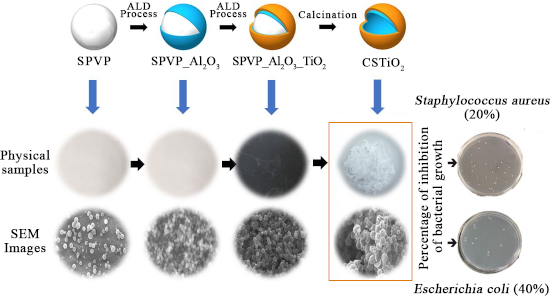
- were (0.16 ± 0.02)% and (23.41 ± 0.47)% with respect to the polymer weight, respectively. The deposition of titania, when compared to our previous work, confirmed that the deposition onto the PVP polymer and polyvinyl alcohol presented a similar rate and it was mainly dependent on the number of cycles


Correlation of surface-enhanced Raman scattering (SERS) with the surface density of gold nanoparticles: evaluation of the critical number of SERS tags for a detectable signal
Beilstein J. Nanotechnol. 2019, 10, 1016–1023, doi:10.3762/bjnano.10.102
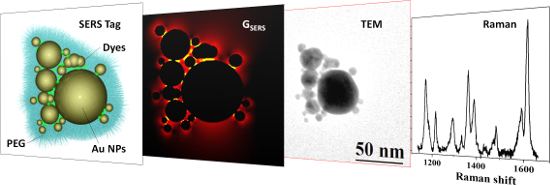
- samples for TEM analysis were obtained by mixing the AuNT solution (0.2 mg/mL in Au) 1:5 with a 10 mg/mL aqueous solution of polyvinyl alcohol (PVA, 200,000 Mw, on average, from Fluka) and depositing one drop on a copper grid coated with a holey carbon film, according to a well-established procedure which


Gold nanoparticles embedded in a polymer as a 3D-printable dichroic nanocomposite material
Beilstein J. Nanotechnol. 2019, 10, 442–447, doi:10.3762/bjnano.10.43
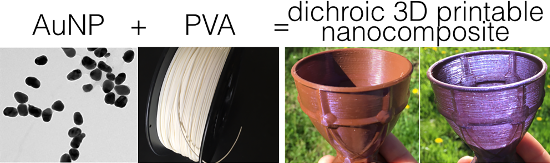
- standard off-the-shelf fused deposition modeling (FDM) 3D printer. We chose to use polyvinyl alcohol (PVA) as the nanoparticle carrier, because it is one of the most used 3D printing materials, it is water soluble, thus mixable with the AuNPs without the need to change solvents, and because it is known



Temperature-tunable lasing from dye-doped chiral microdroplets encapsulated in a thin polymeric film
Beilstein J. Nanotechnol. 2018, 9, 379–383, doi:10.3762/bjnano.9.37
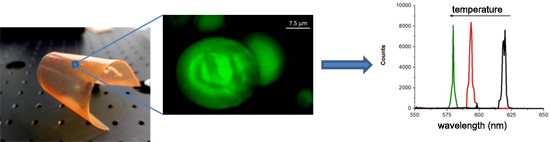
- from an emulsion having a mixture of water and polyvinyl alcohol as isotropic matrix has been reported. After the water evaporation, a polymeric film in which the microdroplets are encapsulated has been obtained. Bragg-type laser emission has been recorded from the emulsion as well as from the thin
- : 70.5 wt % ZLI-1939 + 29.5 wt % ZLI-811. The chiral dopant is chosen for its well-known temperature-dependent solubility [9]. The chiral mixture is confined inside a 36 μm cell the internal surfaces of which are covered with a rubbed thin layer of polyvinyl alcohol (PVA). The PVA (Sigma-Aldrich) is


Cationic PEGylated polycaprolactone nanoparticles carrying post-operation docetaxel for glioma treatment
Beilstein J. Nanotechnol. 2017, 8, 1446–1456, doi:10.3762/bjnano.8.144
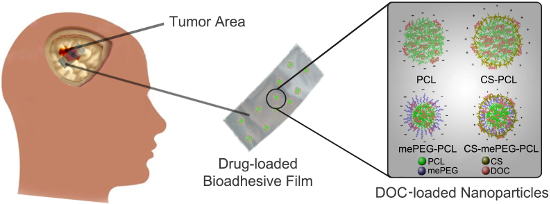
- stirring. This organic phase (5 mL) was added to ultrapure water (20 mL) containing PF68 (1% v/w) and polyvinyl alcohol (0.1% v/w) and emulsified by ultraturrax at 13,000 rpm. The organic solvent was evaporated under vacuum at 40 °C. The formulations were filtered through a 0.45 μm pore filter to eliminate
- was emulsified by ultraturrax at 13,000 rpm. This primary emulsion was added to 20 mL ultrapure water containing PF68 (1% w/v) and polyvinyl alcohol (0.1% w/v) and emulsified by ultraturrax at 13,000 rpm. The organic solvent was evaporated under vacuum at 40 °C. The formulations were filtered through




Photocatalysis applications of some hybrid polymeric composites incorporating TiO2 nanoparticles and their combinations with SiO2/Fe2O3
Beilstein J. Nanotechnol. 2017, 8, 272–286, doi:10.3762/bjnano.8.30
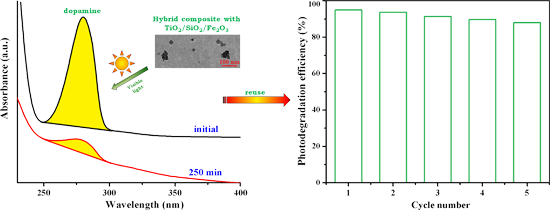
- polymethylmethacrylate, polyurethanes, polyvinylidene fluoride, polyethersulfone, cellulose acetate, and polyvinyl alcohol [42][43], together with their testing in water treatment were reported in literature. The aim of this study was to develop new hybrid polymeric materials with four types of titania nanoparticles


Nanofibers for drug delivery – incorporation and release of model molecules, influence of molecular weight and polymer structure
Beilstein J. Nanotechnol. 2015, 6, 1939–1945, doi:10.3762/bjnano.6.198
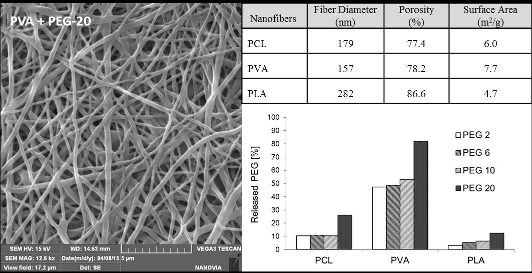
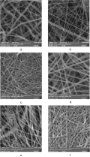
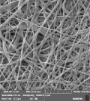
- , Charles University in Prague, Albertov 2030, 128 43 Prague 2, Czech Republic Nanovia Ltd., Podkrusnohorska 271, 436 03 Litvinov-Chuderin, Czech Republic 10.3762/bjnano.6.198 Abstract Nanofibers were prepared from polycaprolactone, polylactide and polyvinyl alcohol using NanospiderTM technology
- amount of released molecules after 72 hours. However, the influence of the chemical composition of nanofibers was even more distinct – the highest amount of polyethylene glycol molecules released from polyvinyl alcohol nanofibers, the lowest amount from polylactide nanofibers. Keywords: nanofibers
- implants [26]. In present work the PEGs were added to the solutions of polymers and were incorporated in nanofibers made from polycaprolactone (PCL), polylactide (PLA) and polyvinyl alcohol (PVA) during electrospinning. The release behavior of these molecules into the water environment was investigated and



Radiation losses in the microwave Ku band in magneto-electric nanocomposites
Beilstein J. Nanotechnol. 2015, 6, 1700–1707, doi:10.3762/bjnano.6.173
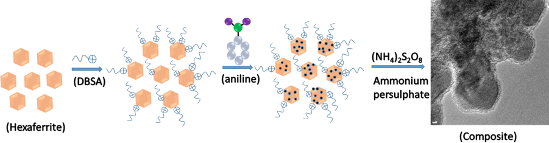
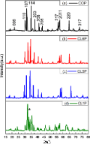
- , samples have been moulded in rectangular shape using an aluminium die. Polyvinyl alcohol (PVA) is used as a hardener to enhance the strength of the pellet. The incident electromagnetic wave continually gets reflected and scattered within the PANI and embedded particles and get entrapped causing a loss of


Model systems for studying cell adhesion and biomimetic actin networks
Beilstein J. Nanotechnol. 2014, 5, 1193–1202, doi:10.3762/bjnano.5.131
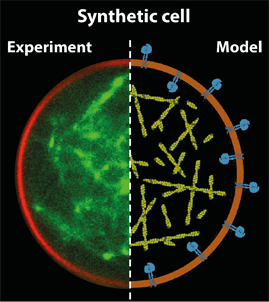
- later presented by Weinberger et al. Lipid precursor films were spread onto polyvinyl alcohol (PVA) films and placed in a swelling buffer containing different biorelevant molecules such as actin. This gel-assisted electroformation of GUVs enabled the fast growth of polymer-free vesicles with high yields


Organic and inorganic–organic thin film structures by molecular layer deposition: A review
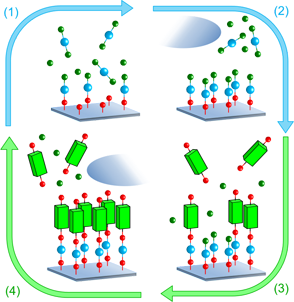
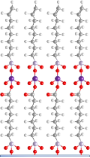
Beilstein J. Nanotechnol. 2014, 5, 1104–1136, doi:10.3762/bjnano.5.123




Antimicrobial nanospheres thin coatings prepared by advanced pulsed laser technique
Beilstein J. Nanotechnol. 2014, 5, 872–880, doi:10.3762/bjnano.5.99
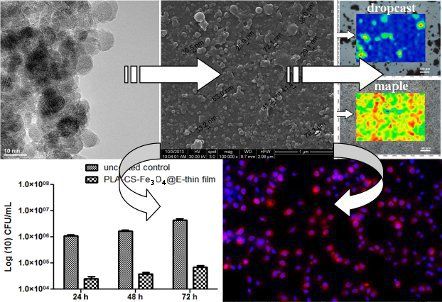
- materials [37], metaloporphyrines [38] and for biomolecules, e.g., poly(lactic acid) (PLA) [39], poly(lactic-co-glycolic acid) PLGA [40], polyvinyl alcohol (PVA) [41] and fibrinogen [42]. Our recent reports have highlighted the capability of the laser processing technique to prepare thin coatings based on
- Polylactic acid (PLA), polyvinyl alcohol (PVA), chitosan (CS), eugenol (EUG), FeCl3, FeSO4·7H2O, NH4OH (25%), chloroform and n-hexane were purchased from Sigma-Aldrich. Preparation of magnetite nanostructures A well-known procedure described in our previous work was used to synthesize the magnetite


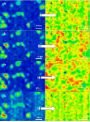


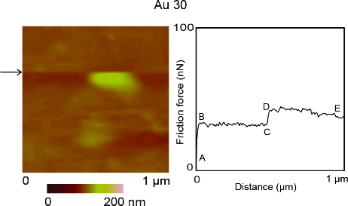
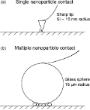
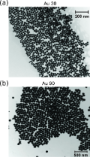
Effect of spherical Au nanoparticles on nanofriction and wear reduction in dry and liquid environments
Beilstein J. Nanotechnol. 2012, 3, 759–772, doi:10.3762/bjnano.3.85
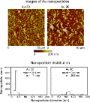
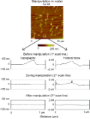
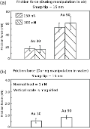
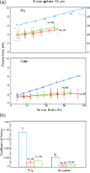
- adhesion to cell walls [5][11], which are important factors for effective drug delivery. In oil-detection studies, as in the example shown in Figure 1b, oxidized carbon-black nanoparticles with a polyvinyl alcohol shell are coated with an oil-detecting agent (2,2’,5,5’-tetrachlorobiphenyl (PCB)). The



Precursor concentration and temperature controlled formation of polyvinyl alcohol-capped CdSe-quantum dots
Beilstein J. Nanotechnol. 2010, 1, 119–127, doi:10.3762/bjnano.1.14
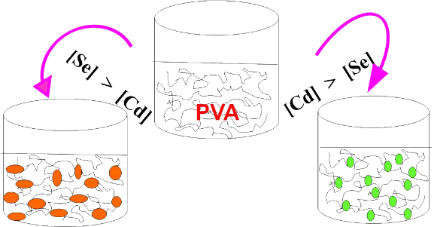
- Chetan P. Shah Madhabchandra Rath Manmohan Kumar Parma N. Bajaj Radiation and Photochemistry Division, Bhabha Atomic Research Centre, Trombay, Mumbai - 400 085, India 10.3762/bjnano.1.14 Abstract Polyvinyl alcohol-capped CdSe quantum dots, with a size within their quantum confinement limit, were
- to the nanoscale, and the nanomaterials behave like guests in the polymer host. For this purpose, a water-soluble monomer or a polymer compound is generally employed, along with the reagents required for the synthesis of the nanoparticles. Recently, researchers have used a polyvinyl alcohol thin film
- , to stabilize CdSe quantum dots [25]. In this paper, we report a simple and environmentally friendly method for the synthesis of polyvinyl alcohol-capped CdSe nanoparticles in aqueous medium, under ambient conditions. The effects of the concentrations of the precursors, the aging time and the reaction