


Search results
Search for "polyvinyl alcohol (PVA)" in Full Text gives 30 result(s) in Beilstein Journal of Nanotechnology.
Nanofibers for drug delivery – incorporation and release of model molecules, influence of molecular weight and polymer structure
Beilstein J. Nanotechnol. 2015, 6, 1939–1945, doi:10.3762/bjnano.6.198
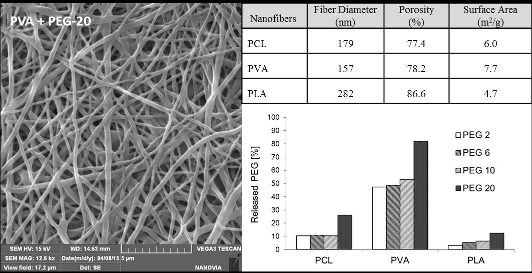
- implants [26]. In present work the PEGs were added to the solutions of polymers and were incorporated in nanofibers made from polycaprolactone (PCL), polylactide (PLA) and polyvinyl alcohol (PVA) during electrospinning. The release behavior of these molecules into the water environment was investigated and

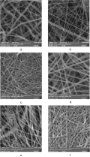


Radiation losses in the microwave Ku band in magneto-electric nanocomposites
Beilstein J. Nanotechnol. 2015, 6, 1700–1707, doi:10.3762/bjnano.6.173
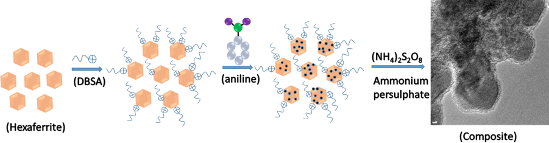
- , samples have been moulded in rectangular shape using an aluminium die. Polyvinyl alcohol (PVA) is used as a hardener to enhance the strength of the pellet. The incident electromagnetic wave continually gets reflected and scattered within the PANI and embedded particles and get entrapped causing a loss of


Model systems for studying cell adhesion and biomimetic actin networks
Beilstein J. Nanotechnol. 2014, 5, 1193–1202, doi:10.3762/bjnano.5.131
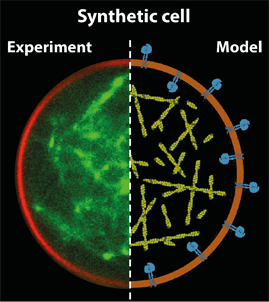
- later presented by Weinberger et al. Lipid precursor films were spread onto polyvinyl alcohol (PVA) films and placed in a swelling buffer containing different biorelevant molecules such as actin. This gel-assisted electroformation of GUVs enabled the fast growth of polymer-free vesicles with high yields


Antimicrobial nanospheres thin coatings prepared by advanced pulsed laser technique
Beilstein J. Nanotechnol. 2014, 5, 872–880, doi:10.3762/bjnano.5.99
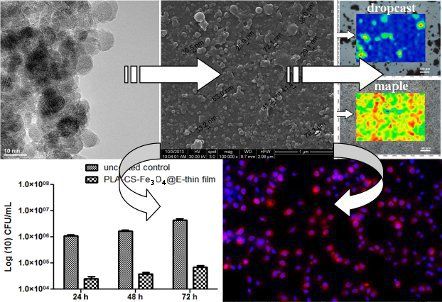
- materials [37], metaloporphyrines [38] and for biomolecules, e.g., poly(lactic acid) (PLA) [39], poly(lactic-co-glycolic acid) PLGA [40], polyvinyl alcohol (PVA) [41] and fibrinogen [42]. Our recent reports have highlighted the capability of the laser processing technique to prepare thin coatings based on
- Polylactic acid (PLA), polyvinyl alcohol (PVA), chitosan (CS), eugenol (EUG), FeCl3, FeSO4·7H2O, NH4OH (25%), chloroform and n-hexane were purchased from Sigma-Aldrich. Preparation of magnetite nanostructures A well-known procedure described in our previous work was used to synthesize the magnetite




Precursor concentration and temperature controlled formation of polyvinyl alcohol-capped CdSe-quantum dots
Beilstein J. Nanotechnol. 2010, 1, 119–127, doi:10.3762/bjnano.1.14
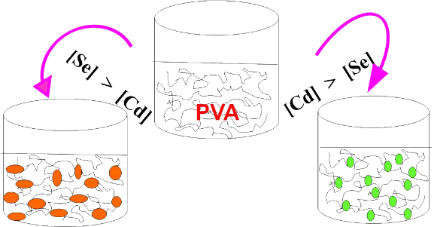
- CdSe quantum dots of very small size, without the use of harsh experimental conditions, generally employed in the reported methods. Experimental Polyvinyl alcohol (PVA) (molecular weight 125,000) and cadmium acetate (Cd(OAc)2) were obtained from S.D.Fine-Chem Ltd., Mumbai, India, and were used as




Other Beilstein-Institut Open Science Activities



