


Search results
Search for "regenerative medicine" in Full Text gives 33 result(s) in Beilstein Journal of Nanotechnology.
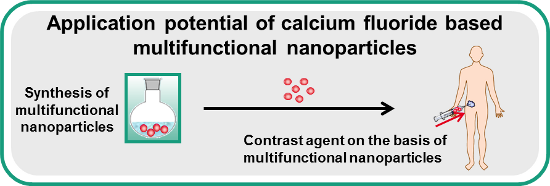
Calcium fluoride based multifunctional nanoparticles for multimodal imaging
Beilstein J. Nanotechnol. 2017, 8, 1484–1493, doi:10.3762/bjnano.8.148
- Translational Center Wuerzburg “Regenerative Therapies for Oncology and Musculosceletal Diseases”, Branch of Fraunhofer Institute for Interfacial Engineering and Biotechnology IGB, 97070 Wuerzburg, Germany University Hospital Wuerzburg, Chair Tissue Engineering and Regenerative Medicine, Roentgenring 11, 97070
- different imaging techniques, such as photoluminescence (PL) microscopy and magnetic resonance imaging (MRI), open new possibilities for medical imaging, e.g., in the fields of diagnostics or tissue characterization in regenerative medicine. The focus of this study is on the synthesis and characterization
- nanoparticles; magnetic resonance imaging (MRI); multifunctional nanoparticles; multimodal imaging; photoluminescence; Introduction In recent years, medical imaging has become an important approach in the fields of diagnostics, therapy and regenerative medicine. Besides the classical technology of X-ray


Influence of hydrothermal synthesis parameters on the properties of hydroxyapatite nanoparticles
Beilstein J. Nanotechnol. 2016, 7, 1586–1601, doi:10.3762/bjnano.7.153
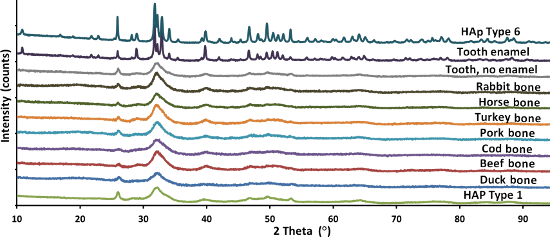
- and investors. Hydroxyapatite is characterized by its biocompatibility and osteoconductivity. The material has been commonly and successfully used in regenerative medicine and in drug delivery systems [3][4]. Nanostructured hydroxyapatite particles can be applied as building blocks for damaged enamel


Improved biocompatibility and efficient labeling of neural stem cells with poly(L-lysine)-coated maghemite nanoparticles
Beilstein J. Nanotechnol. 2016, 7, 926–936, doi:10.3762/bjnano.7.84
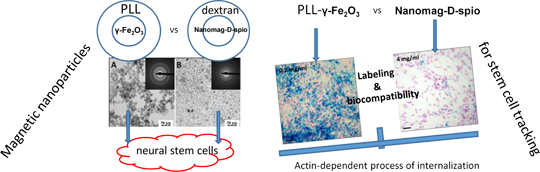
- labeling makes poly(L-lysine)-coated maghemite nanoparticles appropriate candidates for future neural stem cell in vivo tracking studies. Keywords: dextran; maghemite; nanoparticles; neural stem cells; poly(L-lysine); Introduction Stem cell-based therapy is a developing area of regenerative medicine with




Pulmonary surfactant augments cytotoxicity of silica nanoparticles: Studies on an in vitro air–blood barrier model
Beilstein J. Nanotechnol. 2015, 6, 517–528, doi:10.3762/bjnano.6.54
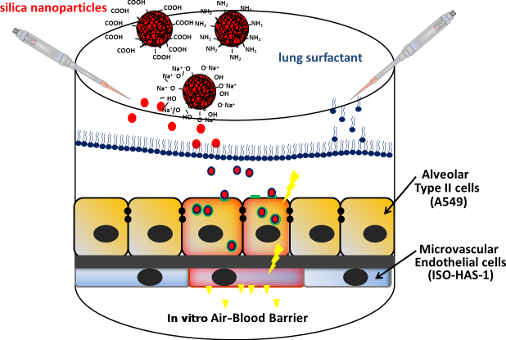
- Abstract The air–blood barrier is a very thin membrane of about 2.2 µm thickness and therefore represents an ideal portal of entry for nanoparticles to be used therapeutically in a regenerative medicine strategy. Until now, numerous studies using cellular airway models have been conducted in vitro in order
- cytotoxicity of aSNP-surfactant interaction on cell cultures kept on the air–liquid interface (ALI). On ALI the epithelial cells develop a physiological surfactant monolayer as it occurs in vivo. Prospectively, the results are relevant for the field of regenerative medicine, in which nanoparticles could be


Hematopoietic and mesenchymal stem cells: polymeric nanoparticle uptake and lineage differentiation
Beilstein J. Nanotechnol. 2015, 6, 383–395, doi:10.3762/bjnano.6.38
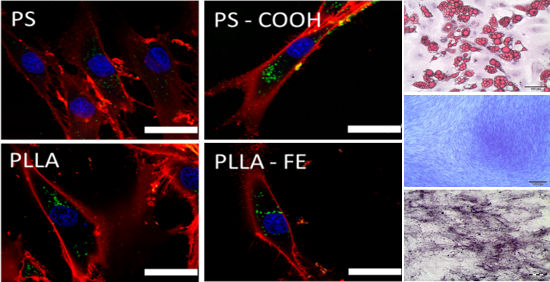
- great interest for tissue engineering approaches (e.g., for defects of bone or cartilage). Over 100 clinical trials employing hMSCs for regenerative medicine, for instance, after stroke and myocardial infarction [17], demonstrate that the clinical use of these cells is of utmost interest. Therefore, the


Oxygen-plasma-modified biomimetic nanofibrous scaffolds for enhanced compatibility of cardiovascular implants
Beilstein J. Nanotechnol. 2015, 6, 254–262, doi:10.3762/bjnano.6.24
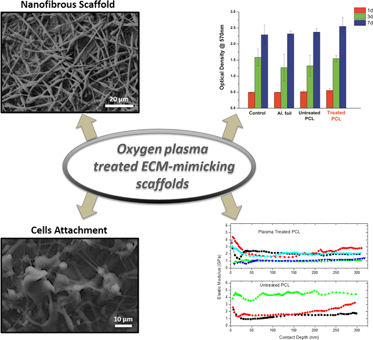
- treatment conditions are the most appropriate for enhancing the surface functionality without affecting the morphological properties and chemical structure of the polymer. Mechanical behavior of the plasma-treated scaffolds A basic principle in regenerative medicine is to maintain the structural integrity


Formation of stable Si–O–C submonolayers on hydrogen-terminated silicon(111) under low-temperature conditions
Beilstein J. Nanotechnol. 2015, 6, 19–26, doi:10.3762/bjnano.6.3
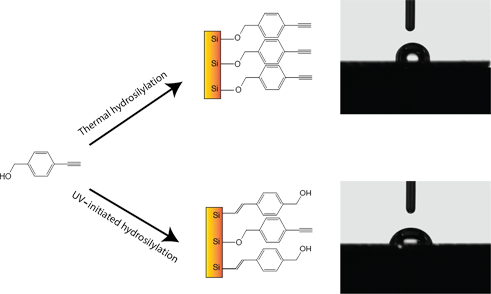
- Yit Lung Khung Siti Hawa Ngalim Andrea Scaccabarozzi Dario Narducci University of Milan-Bicocca, Department of Materials Science, Via R. Cozzi 53, I-20125 Milan, Italy Regenerative Medicine Cluster, Advanced Medical and Dental Institute (AMDI), Universiti Sains Malaysia, Penang, Malaysia 10.3762


Imaging the intracellular degradation of biodegradable polymer nanoparticles
Beilstein J. Nanotechnol. 2014, 5, 1905–1917, doi:10.3762/bjnano.5.201
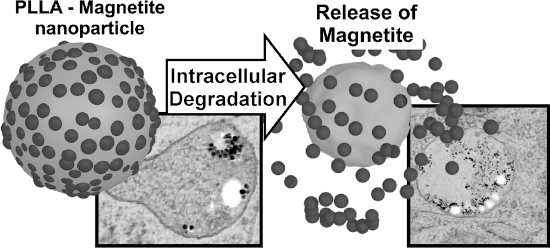
- cells (MSCs) were chosen because they are promising candidates for regenerative medicine [18][19] and they show a moderate cleavage rate without addition of transfection agents or mitotic inhibitors [20][21]. Common strategies to monitor and quantify the nanoparticle load on a single cell level are


Other Beilstein-Institut Open Science Activities



