


Search results
Search for "regulations" in Full Text gives 42 result(s) in Beilstein Journal of Nanotechnology.
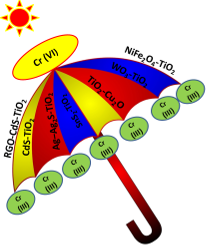
Cr(VI) remediation from aqueous environment through modified-TiO2-mediated photocatalytic reduction
Beilstein J. Nanotechnol. 2018, 9, 1448–1470, doi:10.3762/bjnano.9.137
- crisis [50]. The conventional processes, such as steam reforming, partial oxidation, coal gasification, etc. used for production of H2 from fossil fuels (natural gas and coal), are limited because of high cost and stringent environmental regulations [51]. Photocatalytic water splitting for the production


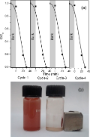
Review on nanoparticles and nanostructured materials: history, sources, toxicity and regulations
Beilstein J. Nanotechnol. 2018, 9, 1050–1074, doi:10.3762/bjnano.9.98

- reactions associated with NPs and NSMs and the regulations implemented by different countries to reduce the associated risks are also discussed. Keywords: nanomaterial classification; nanomaterial history; nanotoxicity; oxidative stress; reactive oxygen species; regulations; Review Introduction


A review of carbon-based and non-carbon-based catalyst supports for the selective catalytic reduction of nitric oxide
Beilstein J. Nanotechnol. 2018, 9, 740–761, doi:10.3762/bjnano.9.68
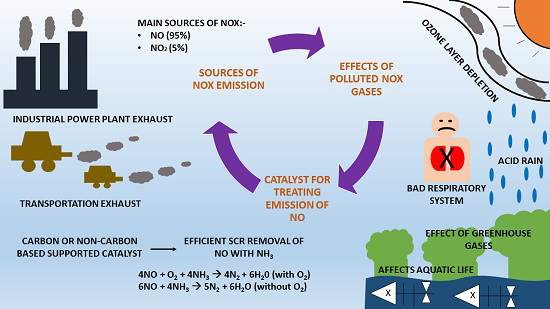
- standards for NOx emissions have been reinforced in the transportation sector. These guidelines and regulations must be adhered to and numerous efforts taken in order to reduce NOx emissions in the atmosphere. However, more beneficial and economic ways to remove NO are still lacking and are yet to be
Liquid-crystalline nanoarchitectures for tissue engineering
Beilstein J. Nanotechnol. 2018, 9, 205–215, doi:10.3762/bjnano.9.22
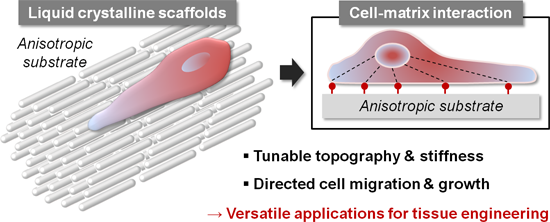
- structures [32]. Soft connective tissues Mesophase organizations of the ECM fibers can play important roles not only in the optimization of mechanical properties of the tissue itself, but also in the regulations of functions of embedded cells [65]. The assembly structure of oriented collagen fibers in


Evaluating the toxicity of TiO2-based nanoparticles to Chinese hamster ovary cells and Escherichia coli: a complementary experimental and computational approach
Beilstein J. Nanotechnol. 2017, 8, 2171–2180, doi:10.3762/bjnano.8.216
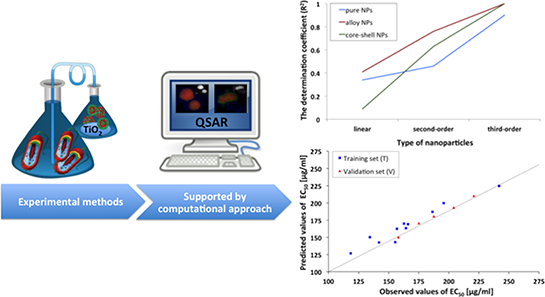
- Chemicals) regulations, which pronounce that information about risk assessment of chemicals should be generated whenever possible by means other than vertebrate animal tests, through the use of alternative methods, for example quantitative structure–activity relationship models (QSAR) [25][26]. This


Bi-layer sandwich film for antibacterial catheters
Beilstein J. Nanotechnol. 2017, 8, 1982–2001, doi:10.3762/bjnano.8.199
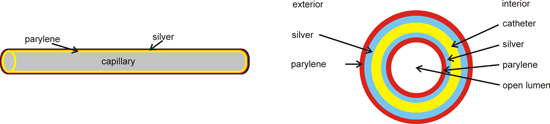
- , silver is also toxic. 5. The whole film may not deteriorate the qualities of conventional catheters, in particular, it must remain biocompatible with materials that are admitted by the FDA regulations. Our answers to these challenges are: 1. We consider necessary a double-sided coating for optimum impact
- in the uriniferous system is different from oral ingestion or intravenous injections. 5. Among the thousands of possible organic materials, just a few remain fulfilling the requirements of biocompatibility and of the FDA regulations. For the CVD deposition we chose poly(p-xylylene) N, PPX-N or


Needs and challenges for assessing the environmental impacts of engineered nanomaterials (ENMs)
Beilstein J. Nanotechnol. 2017, 8, 989–1014, doi:10.3762/bjnano.8.101

Low temperature co-fired ceramic packaging of CMOS capacitive sensor chip towards cell viability monitoring
Beilstein J. Nanotechnol. 2016, 7, 1871–1877, doi:10.3762/bjnano.7.179
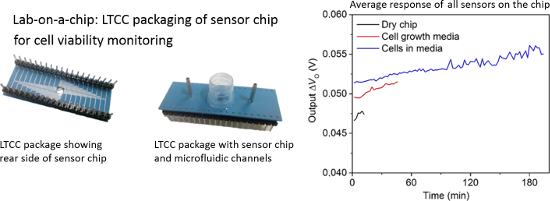
- medium above the capacitors. Moreover, the manufacturing of microfluidic channels in the LTCC package was demonstrated. Keywords: capacitance sensing; cell viability; lab-on-a-chip; low temperature co-fired ceramic (LTCC); Introduction Biosafety regulations require ethical, simple, rapid, and cost


Nano- and microstructured materials for in vitro studies of the physiology of vascular cells
Beilstein J. Nanotechnol. 2016, 7, 1620–1641, doi:10.3762/bjnano.7.155
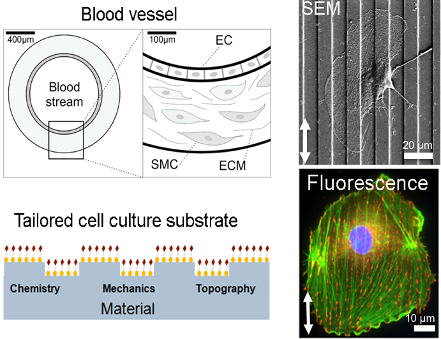
- chromosomes repositioning [276]. Some different gene regulations were attributed to these changes in chromosomes positions [276]. In a different work, a dramatic drop of SMC proliferation on micropillars was reported and was argued that the deformation of the nuclear lamin was responsible of this change in



Unraveling the neurotoxicity of titanium dioxide nanoparticles: focusing on molecular mechanisms
Beilstein J. Nanotechnol. 2016, 7, 645–654, doi:10.3762/bjnano.7.57
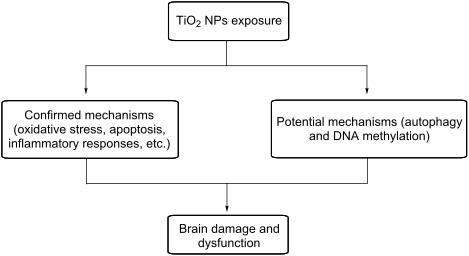
- investigate the relationship between brain damage and TiO2 NPs-mediated autophagy dysfunction. Epigenetics Another potential mechanism of TiO2 NPs is epigenetic regulations. Epigenetic changes were reported to be implicated in nanotoxicity [10][11]. Epigenetics refers to all heritable alternations in gene
Nanotechnology in the real world: Redeveloping the nanomaterial consumer products inventory
Beilstein J. Nanotechnol. 2015, 6, 1769–1780, doi:10.3762/bjnano.6.181
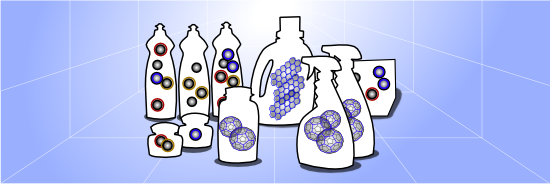
- Classification, Labeling, and Packaging (CLP) regulations when those are classified by the Commission as hazardous chemical substances [15]. The Biocidal Products Regulation (BPR) has special provisions for biocidal materials that consist of nanoparticles, aggregates, or agglomerates in which at least 50% of



Gas sensing properties of nanocrystalline diamond at room temperature
Beilstein J. Nanotechnol. 2014, 5, 2339–2345, doi:10.3762/bjnano.5.243
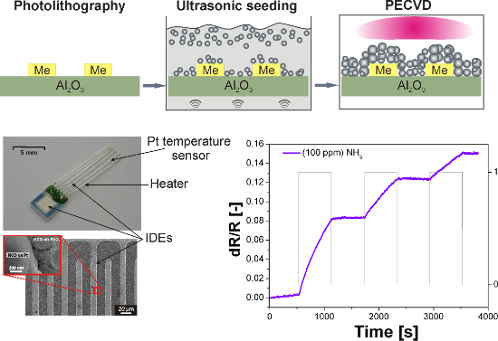
- devices to improve the environmental and safety regulations of toxic gases in particular within buildings, underground structures, and airports. Semiconducting solid-state gas sensors can be considered as the most promising, portable, miniaturized gas sensors because of their minimal power requirements


Anticancer efficacy of a supramolecular complex of a 2-diethylaminoethyl–dextran–MMA graft copolymer and paclitaxel used as an artificial enzyme
Beilstein J. Nanotechnol. 2014, 5, 2293–2307, doi:10.3762/bjnano.5.238
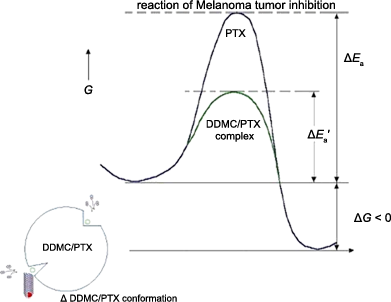
- regulations for animal experiments and related activities at Oita University (license no. N009001). To evaluate the antitumor effect of the DDMC/PTX complex, tumor-bearing mice were prepared by inoculating B16F10 melanoma cells subcutaneously in the back of C57BL/6 female mice (2.0 × 10⁶ cells/mouse). On


A reproducible number-based sizing method for pigment-grade titanium dioxide
Beilstein J. Nanotechnol. 2014, 5, 1815–1822, doi:10.3762/bjnano.5.192
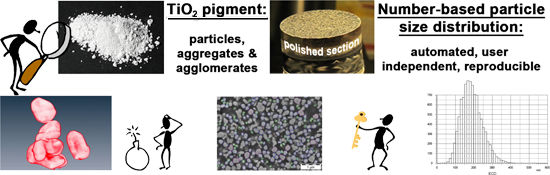
- of forthcoming national and international regulations concerning the classification of nanomaterials. Scientific efforts towards standardized number-based sizing methods have so far been concentrated on model systems, such as spherical gold or silica nanoparticles. However, for industrial particulate
- example, and therefore allows reliable classification of this material according to forthcoming regulations. Keywords: electron microscopy; particle size; pigment; sizing; titanium dioxide; Introduction Titanium dioxide is among the ten most abundant materials on the Earth [1]. In the form of a fine
- for the characterization of particulate materials is triggered by the prospect of forthcoming national and international regulations concerning the classification of nanomaterials [3][4][5][6]. Scientific efforts to establish standardized methods for determining number-based size distributions have so


Applicability and costs of nanofiltration in combination with photocatalysis for the treatment of dye house effluents
Beilstein J. Nanotechnol. 2014, 5, 476–484, doi:10.3762/bjnano.5.55
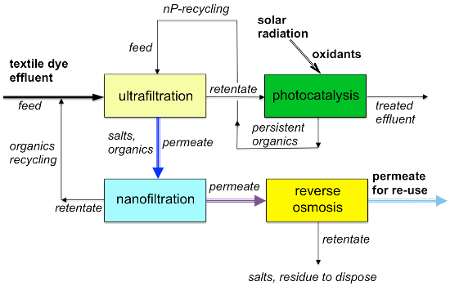
- and finally disposed according to local regulations. The permeate stream, which is already reduced in colour and in dissolved organic compounds, is post-treated in the photocatalysis, which can again be classified as a polishing step. A more sophisticated concept is shown in Figure 4. A submerged UF
- , which is required, even if the membrane plant is not in operation. As for the amortization period, we have generously taken a 10-year period, which might not be generally applicable depending on local situations or financial regulations. Figure 5 is a compilation of empirical data of realized membrane
- out in large-volume tanks. Secondly various residual dyes from different sources have to be separated or oxidized more or less at the end of the pipe after a biological treatment step to fulfil regulations or to achieve an almost colourless effluent. The treatment of diluted systems after the


Near-infrared dye loaded polymeric nanoparticles for cancer imaging and therapy and cellular response after laser-induced heating
Beilstein J. Nanotechnol. 2014, 5, 313–322, doi:10.3762/bjnano.5.35
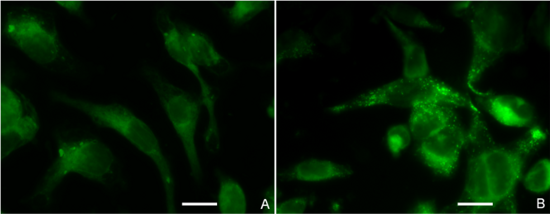
- VEGF amount was normalized to SRB value and the calculated results were normalized to controls. In vivo optical imaging Animal studies were performed following the regulations of the Institutional Animal Care and Use Committee. Twenty-four Nd4 Swiss Webster mice (25–30 grams, 9 weeks old) were


FTIR nanobiosensors for Escherichia coli detection
Beilstein J. Nanotechnol. 2012, 3, 485–492, doi:10.3762/bjnano.3.55
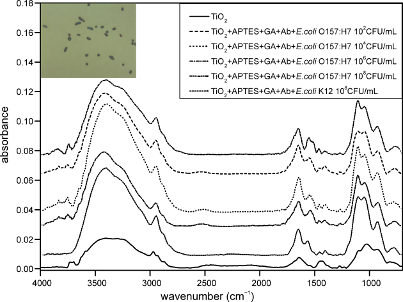
- comply with the safety regulations of the food and water supply chain. In addition, these methods are expensive, complicated, time-consuming, and require skilled personnel with expertise in molecular biology. To overcome these problems, devices that can be used in situ, and that are simple, highly





