


Search results
Search for "removal efficiency" in Full Text gives 29 result(s) in Beilstein Journal of Nanotechnology.
Photocatalytic and adsorption properties of TiO2-pillared montmorillonite obtained by hydrothermally activated intercalation of titanium polyhydroxo complexes
Beilstein J. Nanotechnol. 2018, 9, 364–378, doi:10.3762/bjnano.9.36
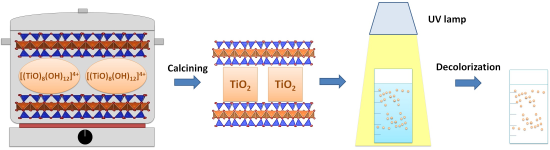
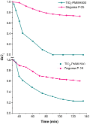
- equilibrium. The photocatalytic effect and adsorption for the two types of dyes are substantially different. For example, a total MO removal efficiency of 64% by the TiO2-PMM500 sample breaks down into 14% adsorption and 86% photocatalytic decomposition, whereas in the case of removing RhB a total efficiency






Sugarcane juice derived carbon dot–graphitic carbon nitride composites for bisphenol A degradation under sunlight irradiation
Beilstein J. Nanotechnol. 2018, 9, 353–363, doi:10.3762/bjnano.9.35
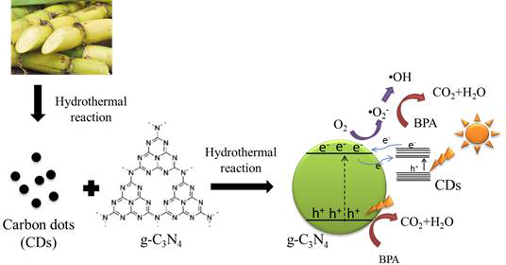
- increased with the increasing concentration of CDs, which correlated well with UV–vis DRS results. The higher coverage of CDs exerted a stronger photosensitizing effect in CD/g-C3N4(0.5) to overcome its inefficient charge carrier separation, improving the BPA removal efficiency by 3.87-fold as compared to g


Facile synthesis of silver/silver thiocyanate (Ag@AgSCN) plasmonic nanostructures with enhanced photocatalytic performance
Beilstein J. Nanotechnol. 2017, 8, 2781–2789, doi:10.3762/bjnano.8.277
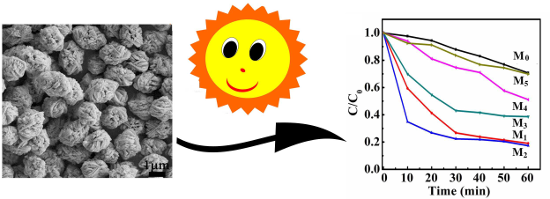
- intensively investigated in recent years, and various methods such as adsorption, biodegradation, photocatalytic degradation and chemical oxidation have been developed [1][2][3][4]. Among them, photocatalytic degradation is considered as one of the most effective strategies due to its high removal efficiency


Fabrication of carbon nanospheres by the pyrolysis of polyacrylonitrile–poly(methyl methacrylate) core–shell composite nanoparticles
Beilstein J. Nanotechnol. 2017, 8, 1897–1908, doi:10.3762/bjnano.8.190

- wavelength of 664 nm (Supporting Information File 1, Figure S1, Figure S2, Table S1). The adsorption capacity and removal efficiency of MB for carbon nanospheres were obtained via the following equations. where Qe (mg/g) is the adsorption capacity, c0 (mg/L) and ce (mg/L) are the initial and equilibrium
- as a model for organic pollutants) from water. The absorption of MB on CP6 was very fast; the adsorption capacity and the removal efficiency of MB after 2 h of adsorption reached 190.0 mg/g and 96.1%, respectively. The MB adsorption capacity of CP6 is higher than most of those reported carbon



Other Beilstein-Institut Open Science Activities



