


Search results
Search for "solid electrolyte" in Full Text gives 33 result(s) in Beilstein Journal of Nanotechnology.
Electrocatalysis on the nm scale
Beilstein J. Nanotechnol. 2015, 6, 1008–1009, doi:10.3762/bjnano.6.103

- description of processes occurring at the electrochemical solid–liquid interface. The experimental methods provide, at least in principle, the opportunity to gain insight into the processes occurring at the solid–electrolyte interface on an unprecedented, atomic/molecular level. The theory has not only
Multiscale modeling of lithium ion batteries: thermal aspects
Beilstein J. Nanotechnol. 2015, 6, 987–1007, doi:10.3762/bjnano.6.102
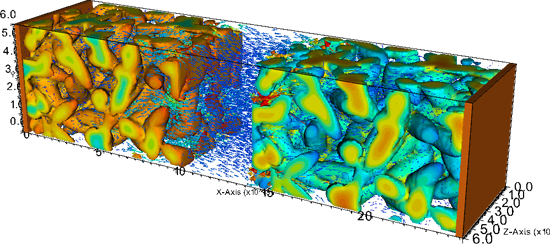
- under high voltages and chemical compatible with the chosen electrode materials. Thus, additives are used in order to enhance the ionic conductivity and to improve the chemical compatibility. Also the properties of the solid electrolyte interphase (SEI) on the negative electrodes, which is essential for


Stick–slip behaviour on Au(111) with adsorption of copper and sulfate
Beilstein J. Nanotechnol. 2015, 6, 820–830, doi:10.3762/bjnano.6.85
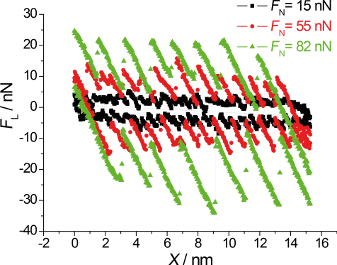
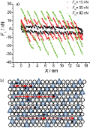
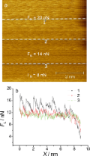
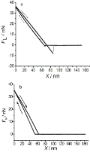
- obtained at the solid/gas interface are also valid at the solid electrolyte interface. In this paper we present the results of investigations of friction forces during UPD and dissolution of Cu/Au(111) and also during sulfate adsorption in sulfuric acid solution. We extend previous measurements to lower





Magnesium batteries: Current state of the art, issues and future perspectives
Beilstein J. Nanotechnol. 2014, 5, 1291–1311, doi:10.3762/bjnano.5.143
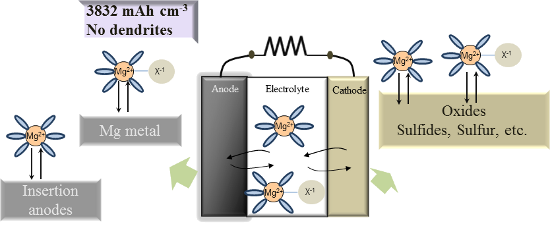
- metal as the layer formed, referred to as SEI or solid electrolyte interface, allows for lithium ion diffusion and was proven critical in preventing further decomposition of the electrolyte in the highly reducing environment during lithium plating [5][6]. The challenge resulting from the electrolyte


The role of oxygen and water on molybdenum nanoclusters for electro catalytic ammonia production
Beilstein J. Nanotechnol. 2014, 5, 111–120, doi:10.3762/bjnano.5.11
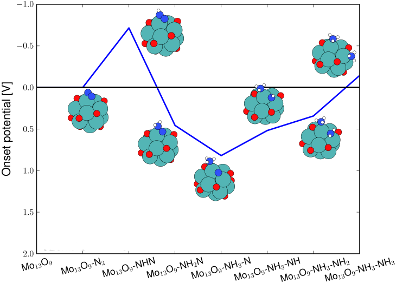
- electrochemical ammonia production with seemingly low Faradaic losses to hydrogen evolution [1][2]. To produce ammonia electrochemically, one can either use a liquid or a solid electrolyte, but these effectively require wet conditions to obtain sufficient protonic conduction [3][4]. The presence of water may give
- production [5][6]. In this paper, the presence of oxygen species, e.g., resulting from a dehydrogenation reaction of residual water from a solid electrolyte or an aqueous electrolyte, will be investigated to understand the implications it has on the catalytic properties for electrochemical ammonia production


Synthesis and electrochemical performance of Li2Co1−xMxPO4F (M = Fe, Mn) cathode materials
Beilstein J. Nanotechnol. 2013, 4, 860–867, doi:10.3762/bjnano.4.97
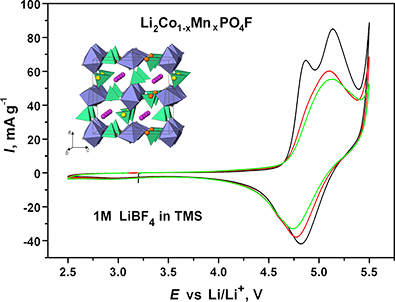
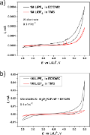
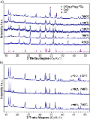
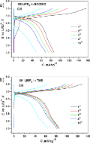
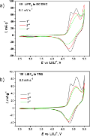
- electrolyte. The decrease of the irreversible capacity, which leads to the high columbic efficiency, implies that this electrolyte forms a stable solid-electrolyte interface on the electrode surface, but this suggestion should be further investigated and confirmed. A preliminary investigation of the



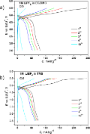
A facile synthesis of a carbon-encapsulated Fe3O4 nanocomposite and its performance as anode in lithium-ion batteries
Beilstein J. Nanotechnol. 2013, 4, 699–704, doi:10.3762/bjnano.4.79
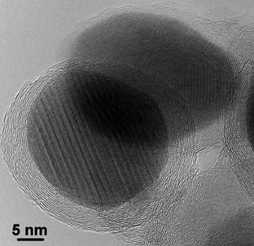
- → LixFe3O4} [24]. The long plateau corresponds to the conversion reaction and the sloping part of the discharge curve can be assigned to the formation of the solid electrolyte interface (SEI) layer, as well as to the formation of a gel-like film through the reaction of Fe0 and electrolyte [7][8][9][10][11


Large-scale atomistic and quantum-mechanical simulations of a Nafion membrane: Morphology, proton solvation and charge transport
Beilstein J. Nanotechnol. 2013, 4, 567–587, doi:10.3762/bjnano.4.65
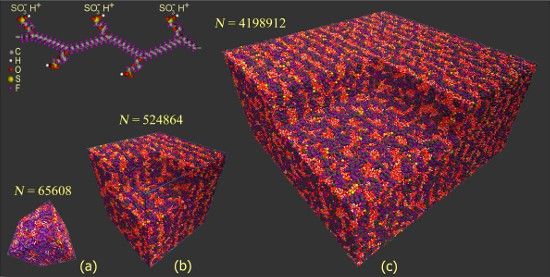
- –. The hydrated polymer membrane behaves as a solid electrolyte: it swells in the presence of water and passes through into cathode compartment only positively charged protons. On the cathode catalyst, they react exothermically with oxygen molecules and electrons (which have traveled through the external


Other Beilstein-Institut Open Science Activities



