


Search results
Search for "theranostics" in Full Text gives 30 result(s) in Beilstein Journal of Nanotechnology.
Nano-engineered skin mesenchymal stem cells: potential vehicles for tumour-targeted quantum-dot delivery
Beilstein J. Nanotechnol. 2017, 8, 1218–1230, doi:10.3762/bjnano.8.123
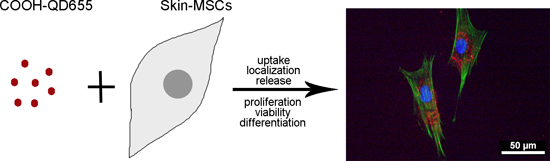
- QDs indicate their great potential in cancer diagnostics. The photoluminescence spectrum of carboxyl QD655 makes them ideal candidates for cancer theranostics as it overlaps with the optical transparency window of biological tissue [11]. Additionally, large and easily altered surfaces facilitate
- propose that cancer cell and MSC co-culture model could be used to demonstrate the applicability of QD-labelled MSCs for cancer theranostics. For example, Pietila et al. have demonstrated that direct cell–cell contact is required for QD–mortalin antibody transfer from nano-engineered MSCs to the breast





Microwave synthesis of high-quality and uniform 4 nm ZnFe2O4 nanocrystals for application in energy storage and nanomagnetics
Beilstein J. Nanotechnol. 2016, 7, 1350–1360, doi:10.3762/bjnano.7.126
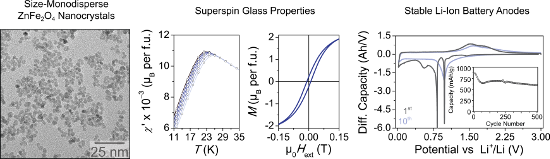
- nanoparticles provide an attractive platform for future magnetic data storage and theranostics (that is, imaging and therapy in biomedicine). The challenges and prospects in using Fe-based nanoparticles for such applications have been described in excellent papers elsewhere and will therefore not be discussed


Organized films
Beilstein J. Nanotechnol. 2016, 7, 406–408, doi:10.3762/bjnano.7.35

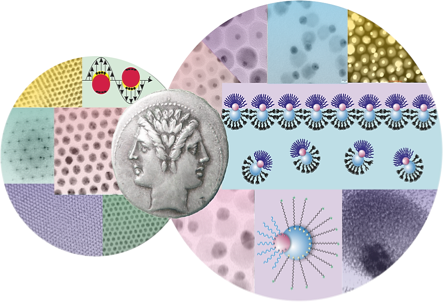
- with specific functionalities for applications in strategic technology fields as varied as theranostics, energy production and storage, and photovoltaics. Similar trajectories were observed for SAMs, with increasing attention on new combinations of functional molecules and substrates, new analysis
Silica micro/nanospheres for theranostics: from bimodal MRI and fluorescent imaging probes to cancer therapy
Beilstein J. Nanotechnol. 2015, 6, 546–558, doi:10.3762/bjnano.6.57
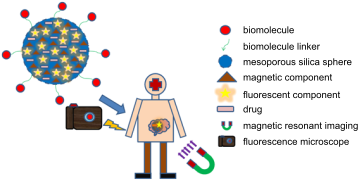
- Shanka Walia Amitabha Acharya Biotechnology Division, CSIR - Institute of Himalayan Bioresource Technology (CSIR - IHBT), Post Box No. 6, Palampur (H.P.) 176 061, India 10.3762/bjnano.6.57 Abstract Nano-theranostics offer remarkable potential for future biomedical technology with simultaneous
- ; organic dyes; quantum dots; silica nanospheres; theranostics; Review 1 Introduction In the modern era of medical diagnosis, X-rays have long played a major role in the clinical imaging of anatomical details of disease sites [1]. However, the development of suitable molecular diagnostic systems for
- stages of growth and, thus, plays an integral part in medical diagnosis. All the currently available diagnostic imaging methods have their intrinsic advantages and disadvantages. The combination of multimodal imaging and theranostics will lead to cutting-edge technologies in which the potential of the


Inorganic Janus particles for biomedical applications
Beilstein J. Nanotechnol. 2014, 5, 2346–2362, doi:10.3762/bjnano.5.244
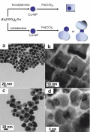
- precursors were mixed simultaneously. Janus particles as multimodal contrast agents Recent developments in the field of nanoparticles for biomedical applications have increased the interest in multifunctional nanoparticles for theranostics, a combination of therapy and diagnostics, which was realized with
- theranostics [113]. The analysis of the protein corona of nanoparticles shows that the binding profiles do not reflect the relative protein concentrations of the plasma. Recently, Tenzer et al. showed that there is no direct correlation of the surface charge and the isoelectric point of proteins enriched in






Other Beilstein-Institut Open Science Activities



