


Search results
Search for "Ag NPs" in Full Text gives 57 result(s) in Beilstein Journal of Nanotechnology.
Influence of size, shape and core–shell interface on surface plasmon resonance in Ag and Ag@MgO nanoparticle films deposited on Si/SiOx
Beilstein J. Nanotechnol. 2015, 6, 404–413, doi:10.3762/bjnano.6.40
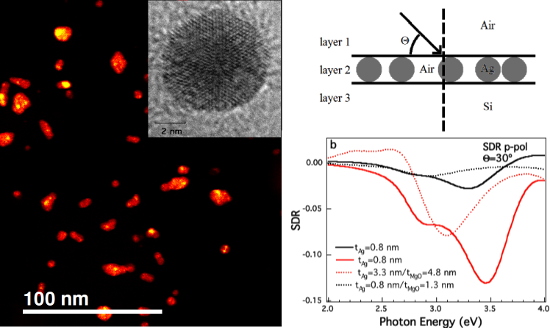
- nanoparticles (NPs) with a diameter of d = 3–10 nm were obtained by physical synthesis methods and deposited on Si with its native ultrathin oxide layer SiOx (Si/SiOx). Scanning electron microscopy and transmission electron microscopy (TEM) images of bare Ag NPs revealed the presence of small NP aggregates
- caused by diffusion on the surface and agglomeration. Atomic resolution TEM gave evidence of the presence of crystalline multidomains in the NPs, which were due to aggregation and multitwinning occurring during NP growth in the nanocluster source. Co-deposition of Ag NPs and Mg atoms in an oxygen
- atmosphere gave rise to formation of a MgO shell matrix surrounding the Ag NPs. The behaviour of the surface plasmon resonance (SPR) excitation in surface differential reflectivity (SDR) spectra with p-polarised light was investigated for bare Ag and Ag@MgO NPs. It was shown that the presence of MgO around



Proinflammatory and cytotoxic response to nanoparticles in precision-cut lung slices
Beilstein J. Nanotechnol. 2014, 5, 2440–2449, doi:10.3762/bjnano.5.253
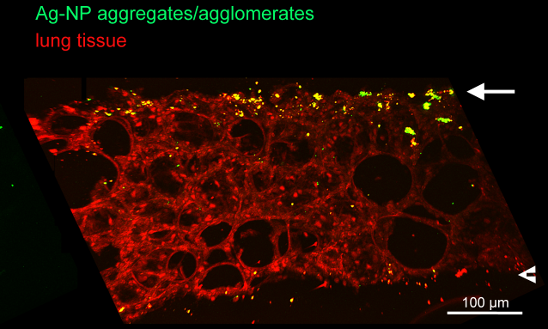
- Papeterie CP 209, 1723 Marly, Switzerland 10.3762/bjnano.5.253 Abstract Precision-cut lung slices (PCLS) are an established ex vivo alternative to in vivo experiments in pharmacotoxicology. The aim of this study was to evaluate the potential of PCLS as a tool in nanotoxicology studies. Silver (Ag-NPs) and
- polyvinylpyrrolidone (PVP)-coated Ag-NPs under submerged culture conditions in vitro. ZnO-NPs (NM110) served as ‘soluble’ and quartz particles (Min-U-Sil) as ‘non-soluble’ control particles. After 4 and 24 h, the cell viability and the release of proinflammatory cytokines was measured. In addition, multiphoton
- microscopy was employed to assess the localization of Ag-NPs in PCLS after 24 h of incubation. Exposure of PCLS to ZnO-NPs for 4 and 24 h resulted in a strong decrease in cell viability, while quartz particles had no cytotoxic effect. Moreover, only a slight cytotoxic response was detected by LDH release


Effect of silver nanoparticles on human mesenchymal stem cell differentiation
Beilstein J. Nanotechnol. 2014, 5, 2058–2069, doi:10.3762/bjnano.5.214
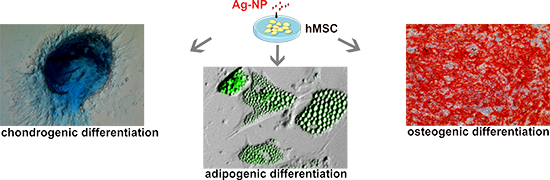
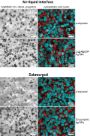
- with specific organelle markers. Laser scanning microscopy and phase-contrast microscopy were performed in parallel on identical cell areas (Figure 1A). In cells cultured in the presence of Ag-NPs, agglomerated nanoparticles were visible in a region close to the cell nucleus but not in the cell culture
- were compared with cells cultured without differentiation medium in the presence of RPMI/10% FCS and Ag-NP/Ag+ ions and with cells incubated without Ag-NPs/ Ag+ ions in the presence of the differentiation medium alone (100% differentiation). Measurement of cell viability The viability of the incubated


Effects of surface functionalization on the adsorption of human serum albumin onto nanoparticles – a fluorescence correlation spectroscopy study
Beilstein J. Nanotechnol. 2014, 5, 2036–2047, doi:10.3762/bjnano.5.212
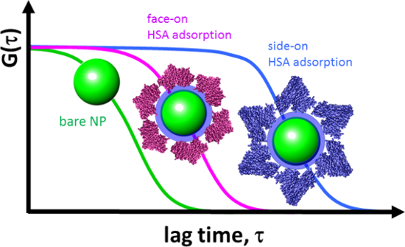
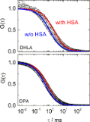
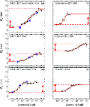
- ≈ 1.6 nm) NCs is much higher than that toward the QDs, which may be due to the different NP sizes. The Au– and Ag–NPs are much smaller than the DHLA–QDs, and even smaller than an HSA molecule. The protein surface appears to be randomly covered with positively and negatively charged regions. The modified



Synthesis of hydrophobic photoluminescent carbon nanodots by using L-tyrosine and citric acid through a thermal oxidation route
Beilstein J. Nanotechnol. 2014, 5, 1513–1522, doi:10.3762/bjnano.5.164
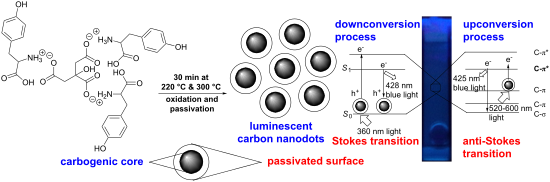
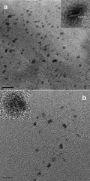
- nanoparticles (Ag NPs). The luminescence properties of the composite material solution were investigated and a quenching of emission intensity was observed. Results and Discussion Synthesis Hydrophobic photoluminescent CNDs were synthesized by a thermal oxidation process in air using citric acid and L-tyrosine
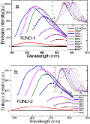
- the broadness of the band. This feature is also observed at other excitation wavelengths in the region between 280 and 460 nm (Figure S3 and Figure S4, See Supporting Information File 1). Sinha et al. reported the synthesis of Ag NPs by using sodium dodecyl sulfate (SDS) as both reducing and capping
- agent in water [40]. Freshly prepared Ag NPs solution (20 mL) with 60 mm SDS and 10−3 M Ag NO3 was mixed with 20 mL of aqueous TCND-1 solution (10 mg sample + few drops of 0.4 M NaOH) and subjected to stirring for 4 h. The absorption spectra of the resulting composite solution, the individual precursor






Mimicking exposures to acute and lifetime concentrations of inhaled silver nanoparticles by two different in vitro approaches
Beilstein J. Nanotechnol. 2014, 5, 1357–1370, doi:10.3762/bjnano.5.149
- Medicine, Department of Clinical Research, Inselspital University Hospital, University of Bern, Murtenstrasse 50, 3008 Bern, Switzerland 10.3762/bjnano.5.149 Abstract In the emerging market of nano-sized products, silver nanoparticles (Ag NPs) are widely used due to their antimicrobial properties. Human
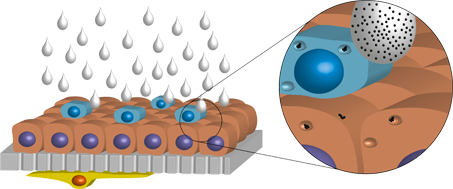
- interaction with Ag NPs can occur through the lung, skin, gastrointestinal tract, and bloodstream. However, the inhalation of Ag NP aerosols is a primary concern. To study the possible effects of inhaled Ag NPs, an in vitro triple cell co-culture model of the human alveolar/airway barrier (A549 epithelial
- cells, human peripheral blood monocyte derived dendritic and macrophage cells) together with an air–liquid interface cell exposure (ALICE) system was used in order to reflect a real-life exposure scenario. Cells were exposed at the air–liquid interface (ALI) to 0.03, 0.3, and 3 µg Ag/cm2 of Ag NPs



Manipulation of nanoparticles of different shapes inside a scanning electron microscope
Beilstein J. Nanotechnol. 2014, 5, 133–140, doi:10.3762/bjnano.5.13
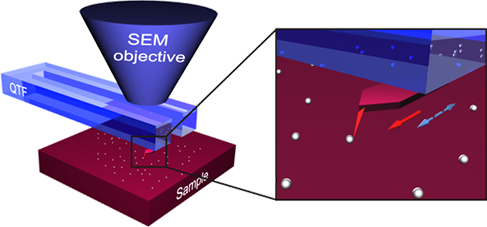
- studies of metal NPs. The forces needed to overcome static friction and move individual polyhedron-like Au and sphere-like Ag NPs on an oxidized Si surface are measured and analyzed with respect to the morphology of the NPs. Experimental The 150 nm Au NPs (BBI International) were deposited from solution
- onto oxidized silicon wafers (Semiconductor Wafer Inc., 50 nm of thermal oxide). The samples were annealed for 1 h at 500 °C prior to every experiment to remove the surfactant. Rounded Ag NPs were produced by laser-induced (532 nm, Expla, NL200) partial melting [19] of pentagonal Ag nanowires (Blue
- morphology of Ag NPs was determined by the conditions of the laser annealing of the target nanowires [21][22]. At a relatively small laser pulse energy, rounded structures formed on both ends of nanowires (Figure 3a). At a higher pulse energy the whole NW melted into separated round NPs due to Plateau


Other Beilstein-Institut Open Science Activities



