


Search results
Search for "amino groups" in Full Text gives 104 result(s) in Beilstein Journal of Nanotechnology.
Enzymatically promoted release of organic molecules linked to magnetic nanoparticles
Beilstein J. Nanotechnol. 2018, 9, 986–999, doi:10.3762/bjnano.9.92
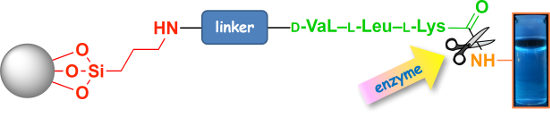
- and the ε-lysine amino groups. Particularly crucial is the latter, since it was planned to be removed as the last step after linking to the nanoparticles. We selected tert-butyloxycarbonyl (Boc) thanks to its easy removal that releases no side products. Moreover, we chose to perform the synthesis from




L-Lysine-grafted graphene oxide as an effective adsorbent for the removal of methylene blue and metal ions
Beilstein J. Nanotechnol. 2017, 8, 2680–2688, doi:10.3762/bjnano.8.268
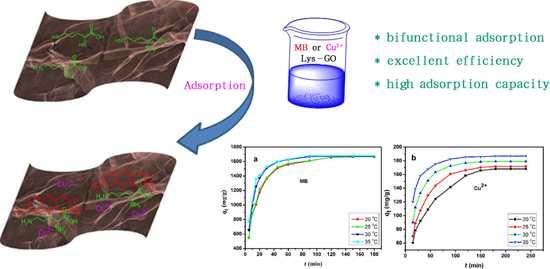
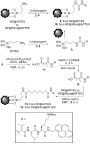
- ) used as an adsorbent for the removal of methyl orange and amaranth in 2017 [22]. The maximum adsorption capacities of PFGA for methyl orange and amaranth were as high as 3059.2 mg/g and 2043.7 mg/g, respectively. Herein, we inferred that grafting amino groups onto graphene might enhance the performance


Strategy to discover full-length amyloid-beta peptide ligands using high-efficiency microarray technology
Beilstein J. Nanotechnol. 2017, 8, 2446–2453, doi:10.3762/bjnano.8.243
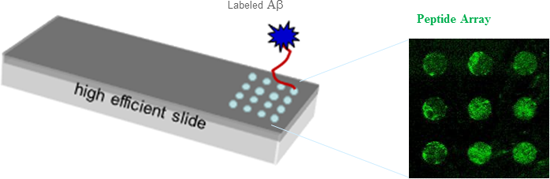
- can be reactive against several environmental species, e.g., water; the silanization process may instead generate a certain number of reactive epoxide groups, randomly oriented at the silicon surface, which may react with the basic amino groups of the full-length amyloid peptide and therefore


Advances and challenges in the field of plasma polymer nanoparticles
Beilstein J. Nanotechnol. 2017, 8, 2002–2014, doi:10.3762/bjnano.8.200
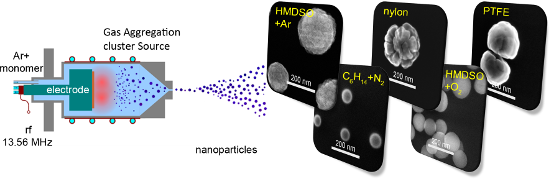
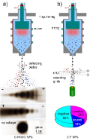
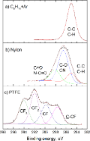
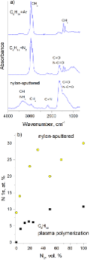
- of the plasma and that amino groups overwhelmingly reported for plasma polymers are actually other nitrogen-containing functionalities [70]. The data obtained for the NPs confirm that plasma polymerization of n-hexane in N2 does not lead to the substantial retention of amines as can be seen from the






Carbon nano-onions as fluorescent on/off modulated nanoprobes for diagnostics
Beilstein J. Nanotechnol. 2017, 8, 1878–1888, doi:10.3762/bjnano.8.188
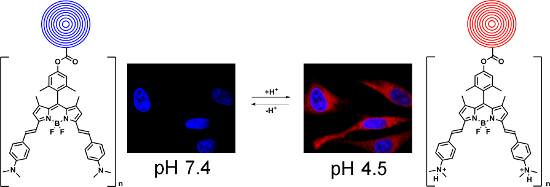
- a variation of the intramolecular electron redistribution of the molecule. Accordingly, the amino groups of the dye attract electrons due to their electron-withdrawing characteristic, which led to an emission of BODIPY 3 at longer wavelengths (Table 1). This effect is reversed when the amino groups
- are protonated (BODIPY 4). Despite the desired NIR window emission spectrum of BODIPY 3, its quantum yield (ΦF) in DMSO is very low (ΦF = 0.05), due to the active PET groups (amino groups), which causes a pH-dependent quenching of the fluorescent dyes. Overall, the non-protonated form of the dye




Self-assembly of chiral fluorescent nanoparticles based on water-soluble L-tryptophan derivatives of p-tert-butylthiacalix[4]arene
Beilstein J. Nanotechnol. 2017, 8, 1825–1835, doi:10.3762/bjnano.8.184
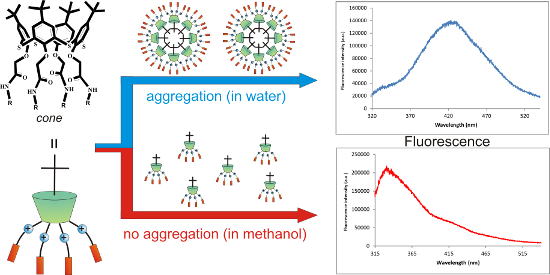
- -butylthiacalix[4]arene with the subsequent interaction of the resulting amine with various alkylating reagents by the Menshutkin reaction. In order to obtain quaternary ammonium salts, the macrocycles 4–7, containing both secondary amide and tertiary amino groups at the lower rim in cone and 1,3-alternate
- acetonitrile under 8 h reflux. In the case of the initial tetraamines 4 and 5, the ammonium derivatives 8 and 9 were obtained with high yields. The dimethyl-substituted tertiary amino groups at the lower rim in thiacalix[4]arenes 4 and 5 were found to be more reactive than the analogous diethyl-substituted
- amino groups in compounds 6 and 7. This is probably caused by the different steric hindrance at the tertiary amino groups. Increasing the reaction time from 8 to 40 h afforded compounds 10 and 11 in high yields (Scheme 1). It should be noted that despite of the bulk lipophilic indole fragment in the



Methionine-mediated synthesis of magnetic nanoparticles and functionalization with gold quantum dots for theranostic applications
Beilstein J. Nanotechnol. 2017, 8, 1734–1741, doi:10.3762/bjnano.8.174
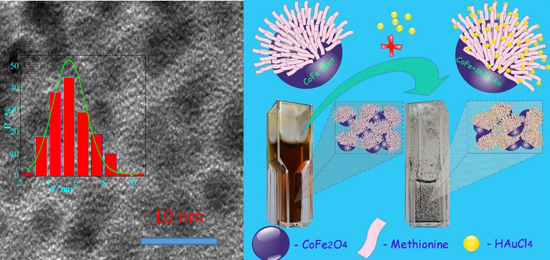
- , peaked near 1515 cm−1, belongs to δs(NH3) mode and is indicative of the presence of charged amino groups [35][37]. The symmetric C–H deformation mode is also observed at 1341 cm−1 in the FTIR spectra of both pure methionine and CoFe2O4@Met. The attachment of methionine molecules during the synthesis of


Two-dimensional carbon-based nanocomposites for photocatalytic energy generation and environmental remediation applications
Beilstein J. Nanotechnol. 2017, 8, 1571–1600, doi:10.3762/bjnano.8.159
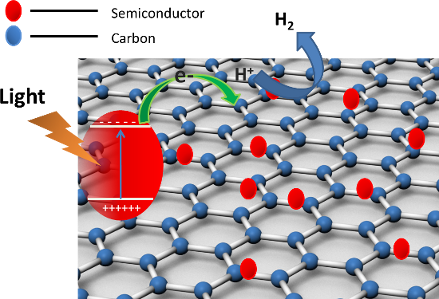
- structure, while other five phases have indirect band gaps in their bulk structures [62]. It is noteworthy to mention here that the polymeric graphitic carbon nitride (g-C3N4) has been reported as the most stable, highly ordered polymeric structure with pendant amino groups and tri-s-triazine (C6N7) as the


Development of polycationic amphiphilic cyclodextrin nanoparticles for anticancer drug delivery
Beilstein J. Nanotechnol. 2017, 8, 1457–1468, doi:10.3762/bjnano.8.145
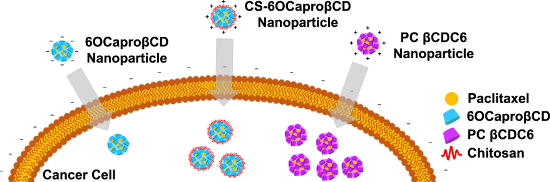
- therapy can be provided with lower drug dose. Zeta potential measurements indicate that 6OCaproβCD has a negative surface charge unlike the other formulations. In this study, PC βCDC6 has a strong positive surface charge owing to polycationic amino groups. This amphiphilic CD derivative was previously


Micro- and nano-surface structures based on vapor-deposited polymers
Beilstein J. Nanotechnol. 2017, 8, 1366–1374, doi:10.3762/bjnano.8.138
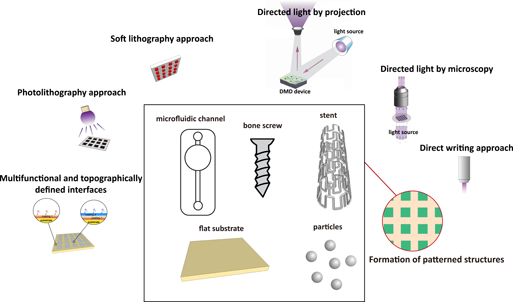
- polymerization chamber to form a multi-phasic reactive species (monomer vapors). The copolymerization processes spontaneously occur when the multicomponent copolymer coatings form on substrates [41][46][47]. A wide range of functionalities was demonstrated: combinations of active esters, carbonyls, amino groups


Recombinant DNA technology and click chemistry: a powerful combination for generating a hybrid elastin-like-statherin hydrogel to control calcium phosphate mineralization
Beilstein J. Nanotechnol. 2017, 8, 772–783, doi:10.3762/bjnano.8.80
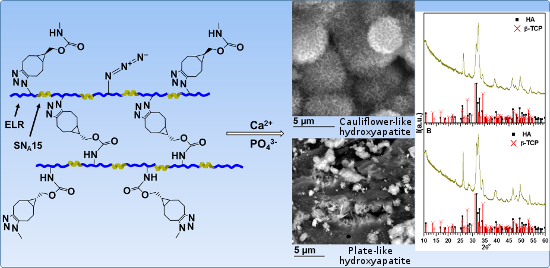
- modify 60% of the amino groups distributed along the recombinamer chain was dissolved in 1 mL of dimethylformamide (DMF). This solution was then added to a solution of the ELR at 25 mg/mL in DMF. The reaction was performed under an inert atmosphere and with continuous stirring at room temperature for 48
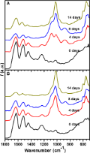
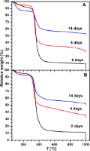
- by adding cyclooctyne groups by amidation, with the ε-amino groups of the lysine residues being converted into cyclooctyne bearing an activated carboxyl group (N-succinimidyl ester), as described elsewhere [25], to form component 2 (Figure 1B). Azide derivatization of ELRs is indicated by an increase



First examples of organosilica-based ionogels: synthesis and electrochemical behavior
Beilstein J. Nanotechnol. 2017, 8, 736–751, doi:10.3762/bjnano.8.77
- sulfonate groups, but also to amino groups of the linker and on to other sulfonates from there. This effect may contribute to the rather efficient conduction but the details are currently under investigation using solid-state NMR spectroscopy. The hypothesis of very mobile protons is however qualitatively


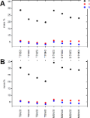


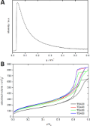


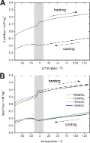


Dispersion of single-wall carbon nanotubes with supramolecular Congo red – properties of the complexes and mechanism of the interaction
Beilstein J. Nanotechnol. 2017, 8, 636–648, doi:10.3762/bjnano.8.68
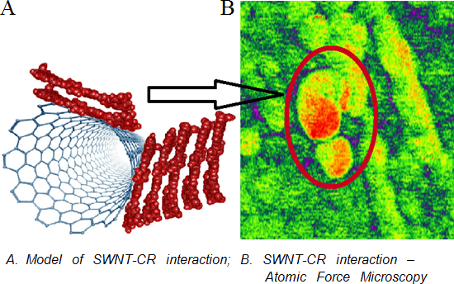
- red spectrum after acidification to pH 4.3 (B); free SWNT suspension spectrum (C). Congo red structure: (A) at physiological pH; (B) ionization of the amino groups at acidic pH and conversion to the quinoid form leading to the change of colour. Binding of CR to SWNTs in solutions of different ionic


Comparison of four methods for the biofunctionalization of gold nanorods by the introduction of sulfhydryl groups to antibodies
Beilstein J. Nanotechnol. 2017, 8, 372–380, doi:10.3762/bjnano.8.39
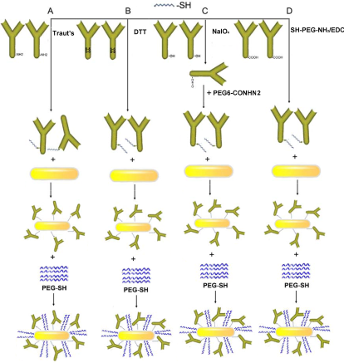
- solution and the CTAB bilayer density [15]. The common ligand exchange is the replacement of the CTAB of GNR with thiol-terminated ligands, such as thiolated poly(ethylene glycol) and mercaptoundecanoic acid [10][11]. These agents can link the amino groups of biomolecules with the carboxylic group from
- -thiolated antibodies has also been developed [18]. However, the reaction between bi-functional linkers of Traut’s reagent and the primary amino groups on the antibody occurs randomly. Thus, the antibody activity would be lost when the amino groups were excessively thiolated in antigen-binding regions [19
- functionalization strategy is through the reaction of amino groups of thiol-poly(ethylene glycol)amine (SH-PEG-NH2) with carboxyl groups in the anti-IgG by using EDC. The thiol moiety of SH-PEG-NH2 can be directly conjugated to GNRs through the Au–S bond. In the current work, we compared the four abovementioned


Tailoring bifunctional hybrid organic–inorganic nanoadsorbents by the choice of functional layer composition probed by adsorption of Cu2+ ions
Beilstein J. Nanotechnol. 2017, 8, 334–347, doi:10.3762/bjnano.8.36
- useful in further grafting of new functions via organic condensation reactions [30]. In the studies examining one-step preparations of nanoparticles bearing 3-aminopropyl groups it was shown that heating a suspension in DMF at 100 °C for 24 h did not increase the content of surface amino groups, but
- improved the stability of the surface layer [28]. It was shown [27] that the introduction of 3-aminopropyltriethoxysilane (APTES) to TEOS sol in ethanol in a molar ratio of 1:1 yielded nanoparticles with an average diameter around 66 nm, but their surface layer contained almost no amino groups. At a TEOS
- /APTES molar ratio of 3:1, the surface layer did contain amino groups (1.56 mmol/g), but the particle size decreases to about 9 nm. When the order of components introduction was changed, the content of functional groups increased to 3.2 mmol/g. However, according to 29Si NMR spectroscopy, the content of


Comparison of four functionalization methods of gold nanoparticles for enhancing the enzyme-linked immunosorbent assay (ELISA)
Beilstein J. Nanotechnol. 2017, 8, 244–253, doi:10.3762/bjnano.8.27
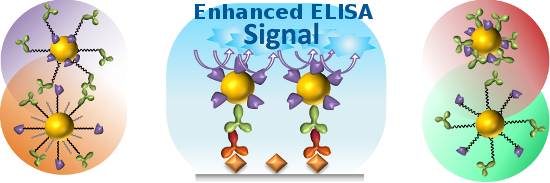
- of free amine groups (few lysine amino acid residues) compared to the antibody molecule. The lower availability of free amino groups could hamper the attachment of peroxidase in the covalent strategy (Figure 1c), although more experiments should be performed to confirm this. Consequently, this would


Streptavidin-coated gold nanoparticles: critical role of oligonucleotides on stability and fractal aggregation
Beilstein J. Nanotechnol. 2017, 8, 1–11, doi:10.3762/bjnano.8.1
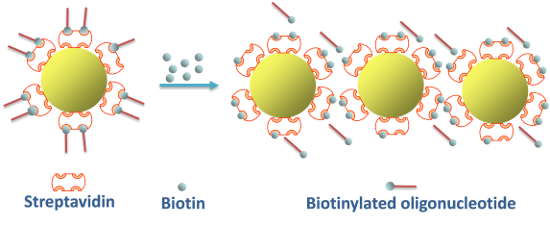
- has been demonstrated that the interaction between proteins and citrate-stabilized AuNPs occurs through a mechanism involving carboxylate–ammonium interactions established between citrate and lysine or histidine amino groups on the protein surface. The mechanism also includes contributions from steric




Chitosan-based nanoparticles for improved anticancer efficacy and bioavailability of mifepristone
Beilstein J. Nanotechnol. 2016, 7, 1861–1870, doi:10.3762/bjnano.7.178
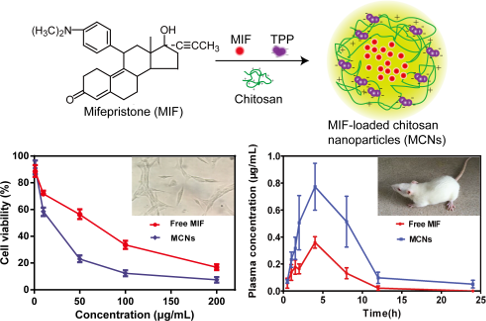
- reactive amino side groups, chitosan could be made available via chemical modifications or ionic interactions [14]. Chitosan-bearing protonated amino groups could interact with a wide variety of natural or synthetic anionic species, such as negatively charged proteins, DNA [15][16][17][18][19], and some


Effective intercalation of zein into Na-montmorillonite: role of the protein components and use of the developed biointerfaces
Beilstein J. Nanotechnol. 2016, 7, 1772–1782, doi:10.3762/bjnano.7.170
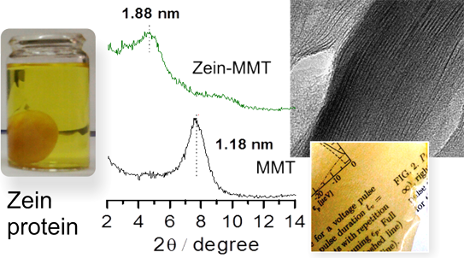
- ninhydrin spray solution as revealing agent confirmed the presence of protein in the extracted liquid phase, showing a purplish color resulting from reaction between ninhydrin and free amino groups from amino acids of solubilized zein (Supporting Information File 1, Figure S2). The molecular weight of the
- signals between 173–175 ppm due to carbonyls present in the peptide groups in both the main chain and the protein side chains. The signals at 128 ppm, those from 45 to 70 and those from 15 to 45 ppm are assigned to amino acid aromatic side chains, α-carbons linked to amino groups, and carbons from the
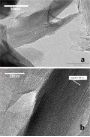
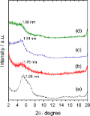
- values, reaching wavenumber values of 1664 cm−1 in the biohybrids (Figure 3b–d). This shift may be a consequence of the perturbation introduced in the amide group by interactions between the involved protonated amino groups and the negatively charged sites in the clay structure. Similar results involving




An efficient recyclable magnetic material for the selective removal of organic pollutants
Beilstein J. Nanotechnol. 2016, 7, 1447–1453, doi:10.3762/bjnano.7.136
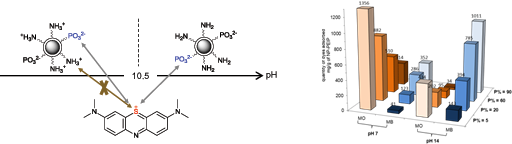
- , respectively. Referring back to Figure 3, the repulsion between negative charges increases with the number of introduced phosphonate groups. At pH 14, we observe a similar evolution, but all values of qmax are much lower because of the absence of electrostatic attraction, whereas all the amino groups are


High antiviral effect of TiO2·PL–DNA nanocomposites targeted to conservative regions of (−)RNA and (+)RNA of influenza A virus in cell culture
Beilstein J. Nanotechnol. 2016, 7, 1166–1173, doi:10.3762/bjnano.7.108
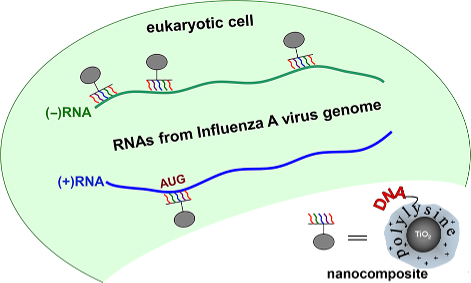
- noncovalently immobilized on TiO2 nanoparticles (≈5 nm in diameter) in the anatase form [17] due to the affinity of polylysine to the TiO2 surface. This affinity can be explained in all likelihood by the electrostatic interaction between the positively charged amino groups of PL and the negatively charged TiO2
- surface at neutral pH [22]. Since the PL–DNA conjugate contains a 100-fold excess of the amino groups over an oligonucleotide [17], the majority of the amino groups are free to interact with the negatively charged surface of the TiO2 nanoparticles. The resultant TiO2·PL–DNA nanocomposite was used to


Multiwalled carbon nanotube hybrids as MRI contrast agents
Beilstein J. Nanotechnol. 2016, 7, 1086–1103, doi:10.3762/bjnano.7.102
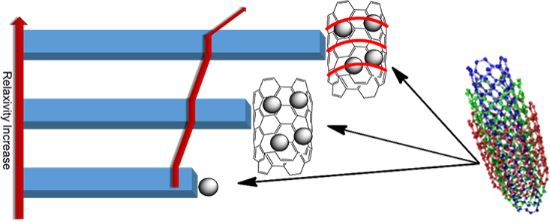
- covalent transformations, e.g., the data were shown to couple oxidized SWCNT with hyaluronic acid containing amino groups [44]. Liu described interesting mass growth during the heating of SPIO–MWCNT hybrids above 400 °C in TGA, which was explained as oxidation of iron(II) in Fe3O4 to iron(III) in Fe2O3



Facile synthesis of water-soluble carbon nano-onions under alkaline conditions
Beilstein J. Nanotechnol. 2016, 7, 758–766, doi:10.3762/bjnano.7.67
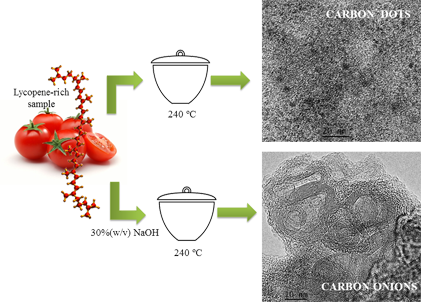
- , using the bottom-up approach, we prepared C-dots based on the thermal carbonization of a mixture of nitrogen-containing organic compounds, ethyleneglycol bis(2-aminoethyl ether)-N,N,N′,N′-tetraacetic acid (EGTA) and Tris, thus providing them not only with surface hydroxy but also with amino groups


Chemiresistive/SERS dual sensor based on densely packed gold nanoparticles
Beilstein J. Nanotechnol. 2015, 6, 2498–2503, doi:10.3762/bjnano.6.259
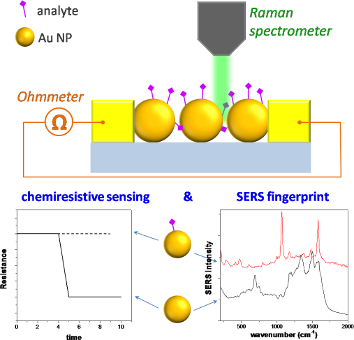
- , this stability decreases proportionally. Hence, to increase the stability of the concentrated collidal solution, the originally citrate-capped AuNPs were functionalized with folic acid molecules by electrostatic interaction between the negative surface of the particles and the positive amino groups of


Self-organization of gold nanoparticles on silanated surfaces
Beilstein J. Nanotechnol. 2015, 6, 2345–2353, doi:10.3762/bjnano.6.242
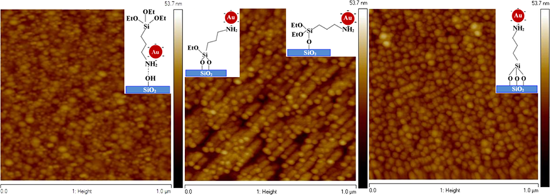
- be covalently bonded to the oxygen from the SiO2 surface as a tripod structure (shown as type IV) with higher available amino groups oriented away from the substrate thus being available for binding gold nanoparticles [24]. These different types of orientation of APTES molecules could play an





