


Search results
Search for "blade" in Full Text gives 59 result(s) in Beilstein Journal of Nanotechnology.
AFM as an analysis tool for high-capacity sulfur cathodes for Li–S batteries
Beilstein J. Nanotechnol. 2013, 4, 611–624, doi:10.3762/bjnano.4.68
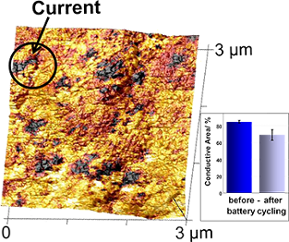
- samples prepared by either suspension-spraying or doctor-blade coating with different binders. Morphological studies of the cathodes before and after the electrochemical tests were performed by using AFM and scanning electron microscopy (SEM). The cathodes that contained polyvinylidene fluoride (PVDF) and
- the battery, whose cathode was coated by hand (doctor-blade coated, referred to as DBC-PVDF), has a high initial discharge capacity (872 mAh·g−1), the capacity decreases significantly upon cycling. After 50 cycles, the remaining capacity is only 242 mAh·g−1. This behaviour is quite typical for the Li
- sample that was coated by the doctor blade technique are displayed. Before cycling, the height differences are larger than in the SC-PVDF sample. However, the highest current of 1.7 nA is much smaller than the 30 nA measured at the SC-PVDF sample. Most of the surface has similar hardness and low energy



Large-scale atomistic and quantum-mechanical simulations of a Nafion membrane: Morphology, proton solvation and charge transport
Beilstein J. Nanotechnol. 2013, 4, 567–587, doi:10.3762/bjnano.4.65
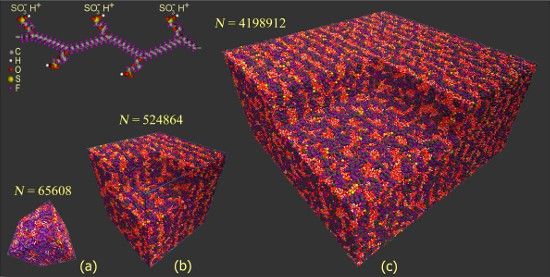
- . The computations reported in this study were performed on the massively parallel supercomputer "Lomonosov" (at Moscow State University) which is based on a hybrid blade system TB2/TB1.1/TB2-TL from T-Platforms equipped with 4,446 X86 compute nodes (Intel Xeon X5570/X5670 2.93 GHz CPUs, 35 568


Deformation-induced grain growth and twinning in nanocrystalline palladium thin films
Beilstein J. Nanotechnol. 2013, 4, 554–566, doi:10.3762/bjnano.4.64
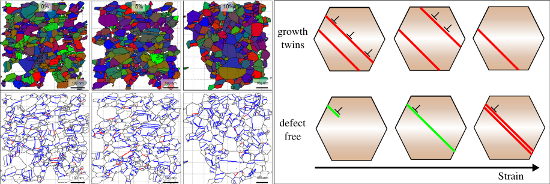
- blade, cleaned in an ultrasonic acetone bath for 15 min, and rinsed with isopropanol on a resist spinner. This cleaning procedure, developed by Lohmiller et al. [20], provides enhanced adhesive support of the thin metallic film preventing strain localization and film delamination, allowing for a


A nano-graphite cold cathode for an energy-efficient cathodoluminescent light source
Beilstein J. Nanotechnol. 2013, 4, 493–500, doi:10.3762/bjnano.4.58
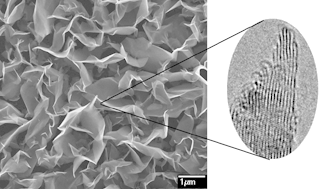
- generating intense electron beams virtually without any energy consumption because of the quantum tunneling nature of the FE effect [6]. Individual field emitters are required to have a needle- or blade-shape with a high aspect ratio in order to provide a sufficient intensity of the electric field at


Ultraviolet photodetection of flexible ZnO nanowire sheets in polydimethylsiloxane polymer
Beilstein J. Nanotechnol. 2012, 3, 353–359, doi:10.3762/bjnano.3.41
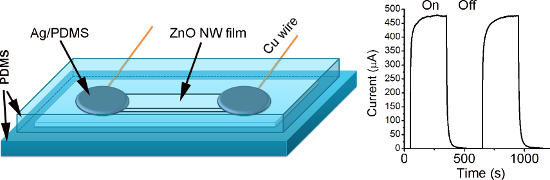
- atmospheric pressure and result in a cotton-like product consisting of ZnO nanowires. The nanowires were processed into free-standing thin sheets, which can be cut by a blade into any shape [16]. The optical photograph in Figure 1a shows a strap-shaped nanowire sheet held by a tweezer. Scanning electron


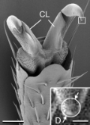
Impact of cell shape in hierarchically structured plant surfaces on the attachment of male Colorado potato beetles (Leptinotarsa decemlineata)
Beilstein J. Nanotechnol. 2012, 3, 57–64, doi:10.3762/bjnano.3.7
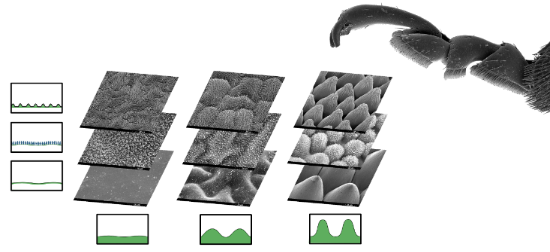
- , leaf samples were dehydrated in methanol [31] and critical point dried (LPD 030, Bal-Tec). For cross-section analysis of plant surfaces, the critical-point-dried samples were cut with a razor blade. Samples were mounted on aluminium stubs by means of conductive double-sided adhesive tabs (Plano


An MCBJ case study: The influence of π-conjugation on the single-molecule conductance at a solid/liquid interface
Beilstein J. Nanotechnol. 2011, 2, 699–713, doi:10.3762/bjnano.2.76
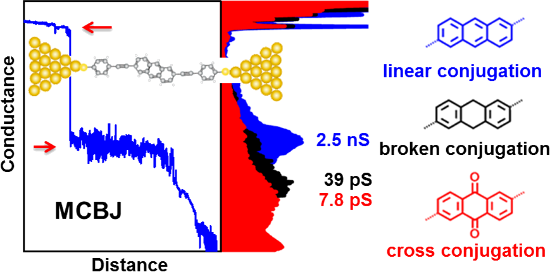
- glue was adjusted to be less than 500 μm. Next, the sample was conditioned overnight at 60 °C for epoxy polymerization. The freely suspended part of the wire was notched with a scalpel blade under an optical microscope to fabricate a constriction point. The as-prepared sample sheets were cleaned in


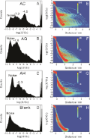


The effect of surface anisotropy in the slippery zone of Nepenthes alata pitchers on beetle attachment
Beilstein J. Nanotechnol. 2011, 2, 302–310, doi:10.3762/bjnano.2.35
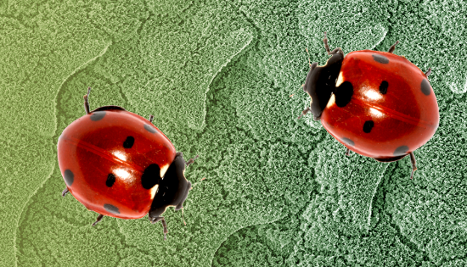
- used for traction tests with insects: (1) intact slippery zone of N. alata pitchers, (2) de-waxed slippery zone, and (3) polymer replicas of the de-waxed slippery zone. Three strips, each 7–8 cm long and 1.5–2 cm wide, were cut with a razor blade from the slippery zone of three pitchers from three



Determination of object position, vortex shedding frequency and flow velocity using artificial lateral line canals
Beilstein J. Nanotechnol. 2011, 2, 276–283, doi:10.3762/bjnano.2.32
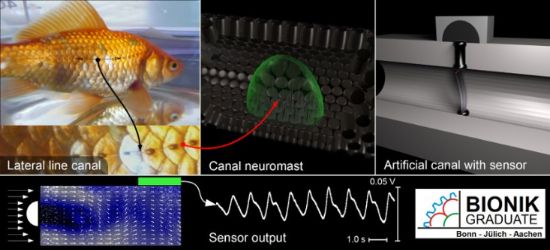
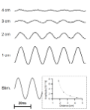
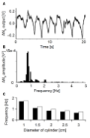
- ]. Researchers also have built artificial lateral line neuromasts. Campenhausen et al. [19] built an artificial SN that consisted of a needle that connected a plastic blade (the artificial cupula) with a piece of paper that partly intercepted a light beam. In standing water, this system was able to sense



Other Beilstein-Institut Open Science Activities



