Search results
Search for "cysteine" in Full Text gives 61 result(s) in Beilstein Journal of Nanotechnology.
Functionalization of α-synuclein fibrils
Beilstein J. Nanotechnol. 2015, 6, 124–133, doi:10.3762/bjnano.6.12
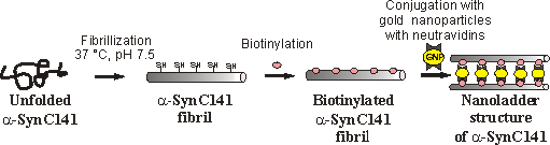
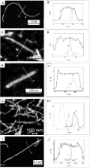
- -synuclein that contains an additional cysteine residue. The fibrils have been biotinylated via thiol groups and subsequently joined with neutravidin-conjugated gold nanoparticles. Atomic force microscopy and transmission electron microscopy confirmed the expected structure – nanoladders. The ability of
- multicomponent biocomplexes that can be employed in a broad range of applications. In this paper, we report the construction of a new nanostructure – nanoladders, which was generated from amyloid fibrils formed by the α-SynC141 mutant protein. Genetically inserted cysteine residue allowed the chemical
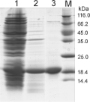
- -SynC141 is 14.562 kDa. The presence of the introduced cysteine residue was confirmed by mass spectroscopy analysis (data not shown). Investigation of self-assembly of α-SynC141 According to the literature, the rapid fibril formation is usually initiated at low pH [12]. However, SDS-PAGE analysis showed


PVP-coated, negatively charged silver nanoparticles: A multi-center study of their physicochemical characteristics, cell culture and in vivo experiments
Beilstein J. Nanotechnol. 2014, 5, 1944–1965, doi:10.3762/bjnano.5.205
- as reducing sugar, and cysteine as a model compound for sulfur-containing proteins. H2O2 was used as strongly oxidizing compound. Furthermore, we analyzed the behavior of silver nanoparticles after their immersion in cell culture media (DMEM, RPMI and LB medium) [20]. Figure 3A shows that the
- , the dissolution rate is strongly increased. On the other hand, the dissolution is significantly slower in the presence of dissolved NaCl, a fact that may be due to the formation of insoluble silver chloride. An even stronger inhibiting effect is exerted by the sulfur-containing amino acid cysteine. We


In vitro and in vivo interactions of selected nanoparticles with rodent serum proteins and their consequences in biokinetics
Beilstein J. Nanotechnol. 2014, 5, 1699–1711, doi:10.3762/bjnano.5.180
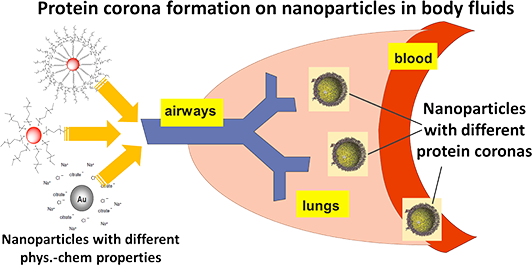
- ; Thbs1: thrombospondin 1; HPX: hemopexin; Apoh: apolipoprotein H; Apob: apolipoprotein B; Serping1: serine (or cysteine) peptidase inhibitor; Apoa1: apolipoprotein A1; C4b: complement component 4b; Hbb-b1: hemoglobin, beta adult major chain; Plg: plasminogen; Cfb: complement factor b; Kng1: kininogen 1


Protein-coated pH-responsive gold nanoparticles: Microwave-assisted synthesis and surface charge-dependent anticancer activity
Beilstein J. Nanotechnol. 2014, 5, 1452–1462, doi:10.3762/bjnano.5.158
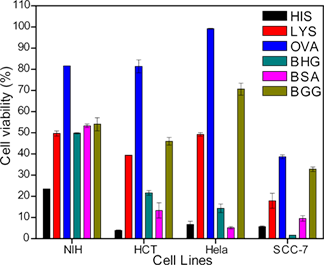
- remaining proteins are expected to retain their amino acid sequence and not have extensive changes in their properties, such as their intrinsic pH and isoelectric points. Composition of amino acid residues Recent reports suggest that amino acid residues, such as aspartic acid, cysteine, glutamic acid


Mimicking exposures to acute and lifetime concentrations of inhaled silver nanoparticles by two different in vitro approaches
Beilstein J. Nanotechnol. 2014, 5, 1357–1370, doi:10.3762/bjnano.5.149
- biological media, it was able to show that the dissolution in chloride-containing media is reduced, probably due to the formation of AgCl. In contrast, glucose has no significant effect. Cysteine as a sulphur-containing molecule can decelerate the dissolution process, possibly by blocking of the NP surface



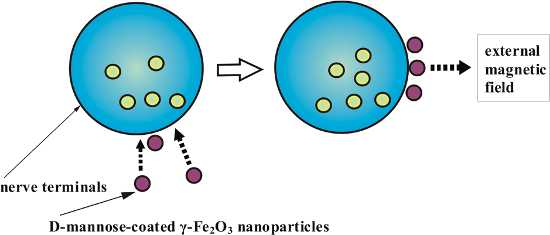
Manipulation of isolated brain nerve terminals by an external magnetic field using D-mannose-coated γ-Fe2O3 nano-sized particles and assessment of their effects on glutamate transport
Beilstein J. Nanotechnol. 2014, 5, 778–788, doi:10.3762/bjnano.5.90
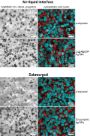
- through swelling-activated anion channels, cysteine/glutamate exchange, trans-membrane diffusion and volume-sensitive Cl− channels [19][20][21]. In this set of experiments, the extracellular level and unstimulated release of glutamate from nerve terminals in the presence of D-mannose-coated γ-Fe2O3



Biomolecule-assisted synthesis of carbon nitride and sulfur-doped carbon nitride heterojunction nanosheets: An efficient heterojunction photocatalyst for photoelectrochemical applications
Beilstein J. Nanotechnol. 2014, 5, 770–777, doi:10.3762/bjnano.5.89
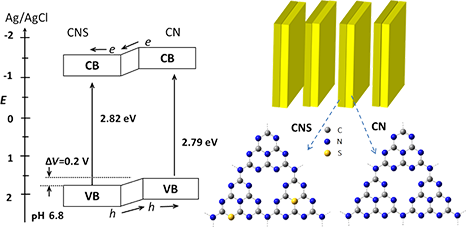
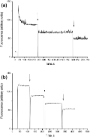
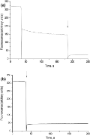
- ]. Herein, we employ a biomolecule-assisted (L-cysteine) pyrolysis method to synthesize sulfur-doped carbon nitride (CNS) nanosheets, which can serve as the framework to grow CN to form an all CN-based heterojunction composite. The formation of CN/CNS heterojunctions significantly improves the
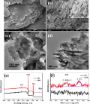
- carbon nitride (CNS), 222 mg of L-cysteine was blended with 2 g of melamine in an agate mortar, wherein L-cysteine acts as the sulfur source for sulfur doping. During the pyrolysis process, the –SH functional group in L-cysteine reacts with the amine group in melamine to substitute the N atoms and to


Energy transfer in complexes of water-soluble quantum dots and chlorin e6 molecules in different environments
Beilstein J. Nanotechnol. 2013, 4, 895–902, doi:10.3762/bjnano.4.101
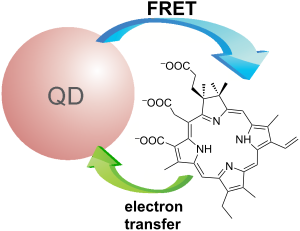
- quantum dots and Ce6 molecules two methods of QD solubilization were used. In the case of covalent binding the hydrophobic CdSe/ZnS/TOPO QDs with a core diameter of 3.5 nm were initially solubilized by L-cysteine. In the second step, the L-cysteine molecules were replaced with molecules of hydroxy


Apertureless scanning near-field optical microscopy of sparsely labeled tobacco mosaic viruses and the intermediate filament desmin
Beilstein J. Nanotechnol. 2013, 4, 510–516, doi:10.3762/bjnano.4.60
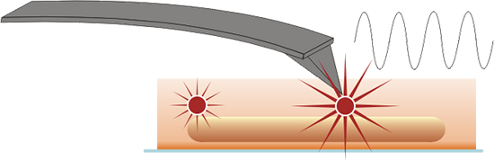
- the cantilever tip and dye increase the radiative decay rate and thus enhance the quantum yield [34]. Sample preparation The desmin protein was expressed in E.coli, isolated and purified as reported recently [20]. Desmin monomers expose a single cysteine, which is an ideal anchor for dye attachment


Mapping mechanical properties of organic thin films by force-modulation microscopy in aqueous media
Beilstein J. Nanotechnol. 2012, 3, 464–474, doi:10.3762/bjnano.3.53
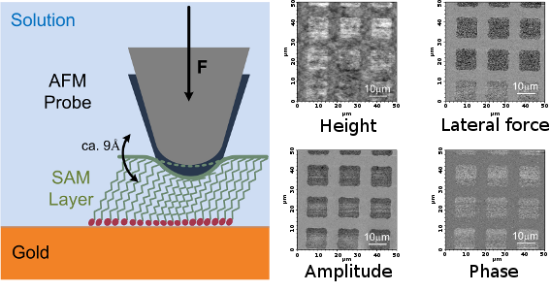
- thermal evaporator (Kurt Lesker PVD 75), and subsequently cleaned by ozone plasma ashing (Emitech K-1050X). Protein monolayer Five tandem B-domains of staphylococcal protein A were expressed and purified from E. coli. The C-terminus of the terminal protein was modified with cysteine to enable protein



Magnetic nanoparticles for biomedical NMR-based diagnostics
Beilstein J. Nanotechnol. 2010, 1, 142–154, doi:10.3762/bjnano.1.17
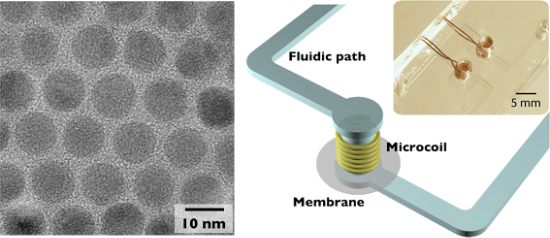
- . This sequence served as a linker, binding both an avidin-conjugated CLIO population (via the biotin/avidin interaction) as well as a second CLIO population (via the thiol provided by the terminal cysteine on the peptide) [13]. The subsequent addition of caspase-3 disassembled the aggregates by cleaving