


Search results
Search for "glutathione" in Full Text gives 59 result(s) in Beilstein Journal of Nanotechnology.
The influence of phthalocyanine aggregation in complexes with CdSe/ZnS quantum dots on the photophysical properties of the complexes
Beilstein J. Nanotechnol. 2016, 7, 1018–1027, doi:10.3762/bjnano.7.94
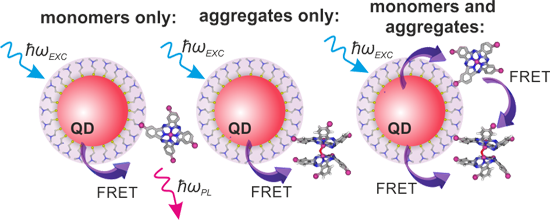
- ][21]. This statement was recently supported by the Nyokong group [22] where FRET efficiencies up to 93% were predicted in nanocomposites based on glutathione-capped CdTe/CdS/ZnS QDs covalently linked with aluminium sulfonated phthalocyanine. However, analysis of donor PL quenching and acceptor PL



Unraveling the neurotoxicity of titanium dioxide nanoparticles: focusing on molecular mechanisms
Beilstein J. Nanotechnol. 2016, 7, 645–654, doi:10.3762/bjnano.7.57
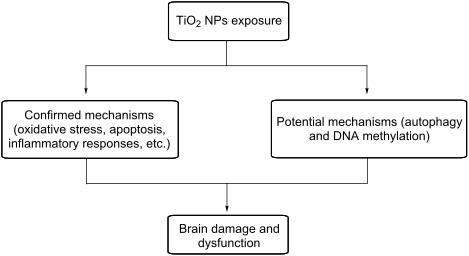
- metabolism [15][16]. However, these free radicals can interact within biological systems, resulting in oxidative damage to the organism. These harmful effects can be counteracted by biological antioxidants, including superoxide dismutase (SOD), catalase (CAT), glutathione peroxidase (GSH-Px), the expression
- injection, the level of aromatase was reduced and glutathione peroxidase and reductase activities were suppressed, implying that the regulation of oxidative stress in the brain was disturbed. In this study, the angiotensin system was disrupted as well. In addition, after Shrivastava et al. [23] treated male
- . This was accompanied by elevated levels of ROS, MDA, constitutive nitric oxide synthase (cNOS), induced nitric oxide synthase (iNOS), and nitric oxide (NO), and inhibited activities of SOD, CAT, ascorbate peroxidase (APX), glutathione peroxidase (GSH-Px), total antioxidant capacity (T-AOC), and AChE
Novel roles for well-known players: from tobacco mosaic virus pests to enzymatically active assemblies
Beilstein J. Nanotechnol. 2016, 7, 613–629, doi:10.3762/bjnano.7.54
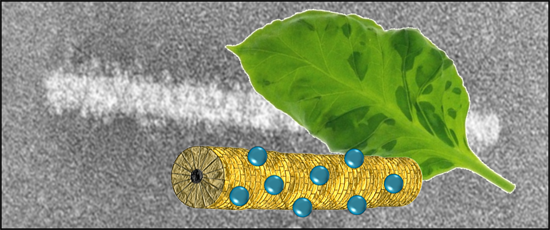
- nanometric grooves and cavities (see [46] for the most recent high-resolution cryo-EM reconstruction of TMV at 3.35 Å resolution). These have inspired a striking piece of investigation, as one of the repetitively arranged depressions resembles the substrate-binding site of glutathione peroxidase (GPx, EC
- 1.11.1.9), a natural selenoenzyme: Computer-aided design identified adjacent, adequately positioned amino acids of the viral CP which offered the chance to be modified into a glutathione-attracting pocket containing a catalytic selenocysteine (Sec) moiety [133]. A corresponding project thus investigated if
- exposed serine by a cysteine residue, which then was equipped with its analogue Sec through heterologous expression in a bacterial system auxotrophic in cysteine (Figure 7). Not only did this protein organize itself into higher-order complexes under suitable conditions, after trapping reduced glutathione


Nanostructured surfaces by supramolecular self-assembly of linear oligosilsesquioxanes with biocompatible side groups
Beilstein J. Nanotechnol. 2015, 6, 2377–2387, doi:10.3762/bjnano.6.244
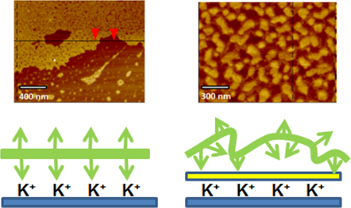
- -acetylcysteine, cysteine hydrochloride or glutathione) can form specific, self-assembled nanostructures when deposited on mica by dip coating. The mechanism of adsorption is based on molecule-to-substrate interactions between carboxylic groups and mica. Intermolecular cross-linking by hydrogen bonds was also
- derivatives of N-acetylcysteine (NAC), cysteine hydrochloride (Cys-HCl) and glutathione (GSH). Such self-assembled PSAMs based on polysilsesquioxane materials are attractive for surface nanopatterning and bioengineering, including preparation of surfaces rich in organic groups typical of the extracellular
- silsesquioxanes (LPSQ-COOH/X) were prepared (Scheme 1, Table 1) by the two-step addition of organic thio-derivatives, i.e., thioglycolic acid, N-acetylcysteine (NAC), glutathione (GSH) and cysteine hydrochloride (Cys-HCl), to the side chains of vinyl-containing LPSQ precursors obtained by polycondensation of




An ISA-TAB-Nano based data collection framework to support data-driven modelling of nanotoxicology
Beilstein J. Nanotechnol. 2015, 6, 1978–1999, doi:10.3762/bjnano.6.202
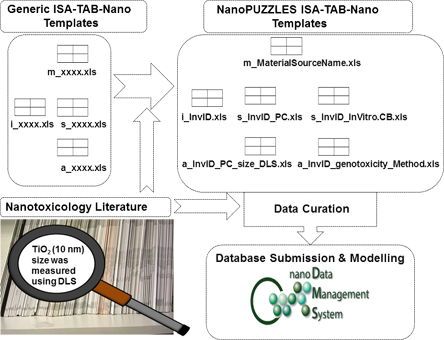
- . For example, oxidative stress and inflammation might be detected via measuring the level of glutathione or various cytokine biomarkers respectively [97]. (These sub-lethal phenomena would not be considered “cytotoxicity” by all researchers [84].) The manner in which this template was designed to
- capture sub-lethal cytotoxicity data is similar to the design of the genotoxicity Assay file template discussed above: the “Parameter Value [Biomarker]” column entries would state, for example, “glutathione” (depending upon the assay), with “Measurement Value […]” columns recording the “increase in



Anticancer efficacy of a supramolecular complex of a 2-diethylaminoethyl–dextran–MMA graft copolymer and paclitaxel used as an artificial enzyme
Beilstein J. Nanotechnol. 2014, 5, 2293–2307, doi:10.3762/bjnano.5.238
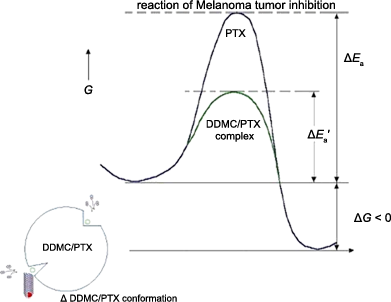
- from the bark of the yew tree, and it combines with β-tubulin to promote polymerization by stopping the treadmill of tubulin protomers. MDR of cancer cells to PTX is based on the presence of, for example, mutant tubulin, or by a glutathione-mediated reaction. Enzyme–substrate interactions Thus, the
- corresponds to a conformation change of a β-tubulin subtype and reacts quickly to it. Therefore, it will not lose its efficacy as a drug [24][62][63]. Conclusion Above all, with respect to MDR of cancer cells by the existence of β-tubulin mutations or a glutathione-mediated reaction, the supramolecular DDMC


PVP-coated, negatively charged silver nanoparticles: A multi-center study of their physicochemical characteristics, cell culture and in vivo experiments
Beilstein J. Nanotechnol. 2014, 5, 1944–1965, doi:10.3762/bjnano.5.205

- nanoparticles neither caused toxicity nor oxidative stress, while an incubation for 4 h with 100 µM (10.8 µg mL−1) silver in the form of silver nitrate strongly damaged cultured astrocytes and deprived these cells almost completely of the important antioxidant glutathione [108]. The high resistance of cultured


Donor–acceptor graphene-based hybrid materials facilitating photo-induced electron-transfer reactions
Beilstein J. Nanotechnol. 2014, 5, 1580–1589, doi:10.3762/bjnano.5.170
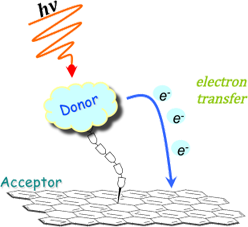
- fluorescence quenching of the coumarin moiety. However, fluorescence is activated (on) and significantly enhanced inside the cells by glutathione-initiated dissociation. Donor–acceptor hybrids based on exfoliated graphene However, as mentioned earlier, the surface defects in the sp2-network of GO influence the


In vitro interaction of colloidal nanoparticles with mammalian cells: What have we learned thus far?
Beilstein J. Nanotechnol. 2014, 5, 1477–1490, doi:10.3762/bjnano.5.161
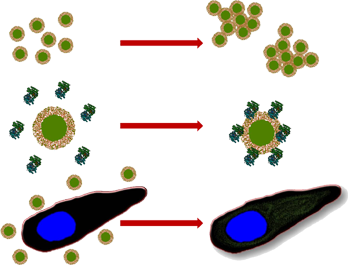
- the reductive capacity of glutathione (the cytosolic concentration of which is between 5 and 10 mM) may be used to displace a fluorescence resonance energy transfer (FRET) acceptor on the surface of the NP as confirmation of a successful NP localization to the cytosol [55]. Such experiments are in
- to positively charged NPs [121][122]. iii) Lipids present in membranes or second-messenger lipids wrap around NPs driven by hydrophilic/hydrophobic interaction and often result in formation of micelles [123][124]. iv) Thiols, present in glutathione or reduced proteins bind to the surface of noble


Other Beilstein-Institut Open Science Activities



