


Search results
Search for "heavy metals" in Full Text gives 59 result(s) in Beilstein Journal of Nanotechnology.
Monolayer graphene/SiC Schottky barrier diodes with improved barrier height uniformity as a sensing platform for the detection of heavy metals
Beilstein J. Nanotechnol. 2016, 7, 1800–1814, doi:10.3762/bjnano.7.173
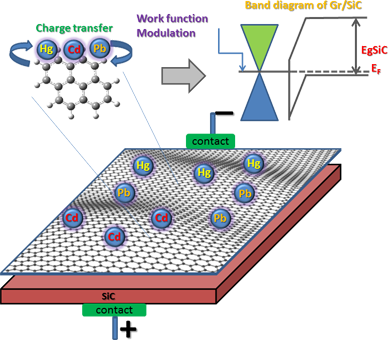
- behaviour and a good quality of ohmic palladium–graphene contacts. Keeping in mind the strong sensitivity of graphene to analytes we propose the possibility to use the graphene/SiC Schottky diode as a sensing platform for the recognition of toxic heavy metals. Using density functional theory (DFT
- ) calculations we gain insight into the nature of the interaction of cadmium, mercury and lead with graphene as well as estimate the work function and the Schottky barrier height of the graphene/SiC structure before and after applying heavy metals to the sensing material. A shift of the I–V characteristics of
- the graphene/SiC-based sensor has been proposed as an indicator of presence of the heavy metals. Since the calculations suggested the strongest charge transfer between Pb and graphene, the proposed sensing platform was characterized by good selectivity towards lead atoms and slight interferences from




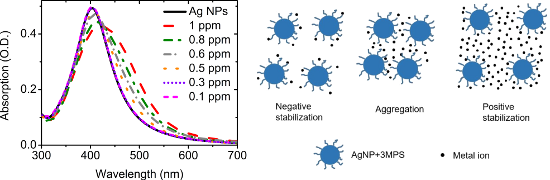
Hydrophilic silver nanoparticles with tunable optical properties: application for the detection of heavy metals in water
Beilstein J. Nanotechnol. 2016, 7, 1654–1661, doi:10.3762/bjnano.7.157


Influence of hydrothermal synthesis parameters on the properties of hydroxyapatite nanoparticles
Beilstein J. Nanotechnol. 2016, 7, 1586–1601, doi:10.3762/bjnano.7.153
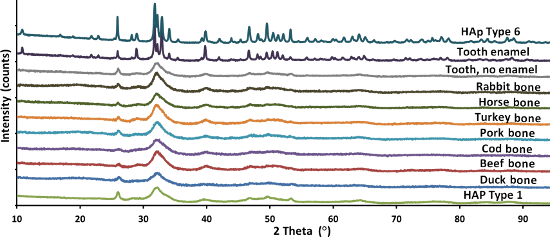
- management and catalyst production [13][14] because of HAp’s high sorption activity to numerous ions including several heavy metals and radionuclides [15]. A model compound reflecting bone mineral phase is a nonstoichiometric hydroxyapatite with a molar ratio different than 1.67. Nevertheless, regarding


Development of adsorptive membranes by confinement of activated biochar into electrospun nanofibers
Beilstein J. Nanotechnol. 2016, 7, 1556–1563, doi:10.3762/bjnano.7.149
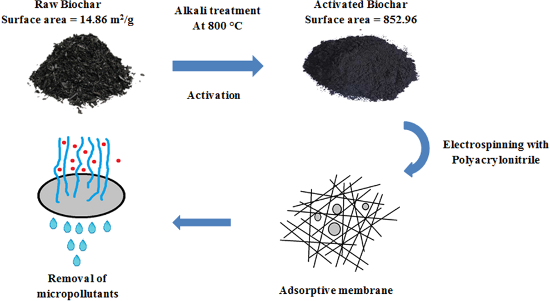
- ) that are produced by electrospinning can impact the performance of separation technologies because of their high surface to volume ratio, the tunability of pore sizes and the ease of functionalization [9]. Adsorptive NFMs can be used for removal of heavy metals, organic compounds, microorganisms and
- atrazine from water [10]. Kampalanonwat and Supaphol and also Neghlani et al. used aminated polyacrylonitrile (PAN) nanofibers to remove heavy metals from water and achieved up to 150 mg/g adsorption capacity for copper [11][12]. Haider and Park fabricated chitosan nanofibers to take advantage of its
- Solutions Inc., 2300, rue Jean-Perrin, Québec, Québec G2C 1T9, Canada Department of Civil Engineering, University of Nebraska-Lincoln, N104 SEC PO Box 886105, Lincoln, NE 68588-6105, USA 10.3762/bjnano.7.149 Abstract Adsorptive membranes have many applications in removal of contaminants, such as heavy




The cell-type specific uptake of polymer-coated or micelle-embedded QDs and SPIOs does not provoke an acute pro-inflammatory response in the liver
Beilstein J. Nanotechnol. 2014, 5, 1432–1440, doi:10.3762/bjnano.5.155
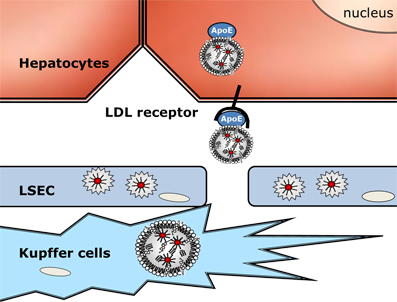
- metals such as cadmium released from QDs or iron released from SPIOs did not acutely influence the inflammatory status of the liver. However, specific target cells can be of transient relevance and heavy metals released after QDs or SPIOs uptake may traverse through different target cell types in a time
- demonstrating effective ablation of Kupffer cells in our system (Figure 6A). Furthermore, consecutive injections of pure lipid micelles or micelles containing either QDs or SPIOs in the presence or absence of Kupffer cells had no acute influence on TNFα or Cxcl10 expression (Figure 6B, C) indicating that heavy


Direct nanoscale observations of the coupled dissolution of calcite and dolomite and the precipitation of gypsum
Beilstein J. Nanotechnol. 2014, 5, 1245–1253, doi:10.3762/bjnano.5.138
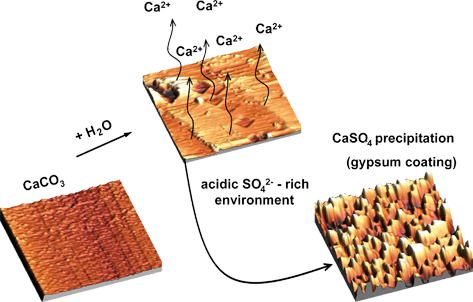
- and precipitation of gypsum is relevant in environmental settings, such as the treatment of acid mine drainage (AMD), geological CO2 sequestration and monument preservation. The use of limestone (calcite) in the treatment of AMD with elevated concentrations of heavy metals and sulfate is common [1][2


Pyrite nanoparticles as a Fenton-like reagent for in situ remediation of organic pollutants
Beilstein J. Nanotechnol. 2014, 5, 855–864, doi:10.3762/bjnano.5.97
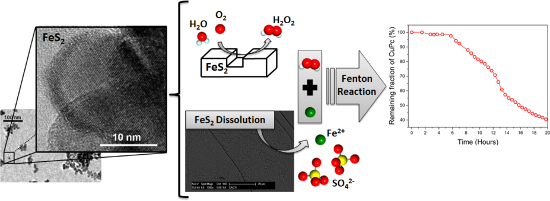
- alternative to conventional Fenton procedures for use in wastewater treatment, avoiding the potential risks caused by the release of heavy metals upon dissolution of natural pyrites. Keywords: copper phthalocyanine; Fenton-like reagent; hydrogen peroxide; nanoparticles; pyrite; Introduction There has been


Nanostructure sensitization of transition metal oxides for visible-light photocatalysis
Beilstein J. Nanotechnol. 2014, 5, 696–710, doi:10.3762/bjnano.5.82
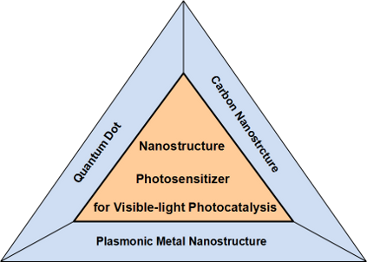
- dramatically improves their visible-light photocatalytic abilities. Yet, this method also has some inherent shortcomings. One drawback is that most quantum dots are composed of heavy metals like Cd and Pb, which gives rise to environmental concerns. The other one is the photoelectrochemical stability of




A nano-graphite cold cathode for an energy-efficient cathodoluminescent light source
Beilstein J. Nanotechnol. 2013, 4, 493–500, doi:10.3762/bjnano.4.58
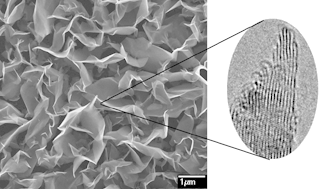
- principles of nature, the energy efficient generation of light requires the usage of extremely toxic materials (mercury, heavy metals and others). This leads to the necessity of expensive and laborious efforts to dispose of the mercury-based fluorescent devices and the semiconductor-based light emitting


Other Beilstein-Institut Open Science Activities



